Category Archives: Reader Questions

A Few Thoughts On EVF Versus OVF Cameras

This is one of my occasional posts adapted from something I wrote elsewhere but felt might we worth sharing here on the blog.

A person had asked about “switching” from a Canon DSLR to a Fujifilm mirrorless camera, and some others had replied with points about the ergonomics of the smaller cameras along with some comments about using electronic viewfinders (EVF) in place of optical viewfinders (OVF). Since I use both (OVF and EFV, Canon and Fujifilm) I thought my thoughts might be relevant. 

Note: A few details of the article were updated on March 8, 2018 to reflect more recent developments – for example, referring to contemporary products from companies mentioned here.

EDITING CURRENTLY UNDERWAY


If the goal is a smaller camera and you already are invested in a Canon DSLR system, one option is to consider one of the much smaller Canon bodies. I know a couple of serious photographers who use the little SL1 for travel and certain other kinds of photography, often with smaller and lighter lenses. This gives you a traditional SLR OVF if you are concerned about using an EVF.

Here are some thoughts about perceived/real potential “downsides” (from some perspectives”) of the Fujifilm x-trans cameras specifically and regarding mirrorless cameras in general:

The EVF — The EVF versus OVF issue is complicated and, in a number of ways, subjective. Early on there was a lot of resistance to the EVF products — I think it was a combination of resistance to something new along with the relatively poorer performance of the initial versions. (They were slow, had lower resolution, and generally did not provide as positive of an experience.) I had such cameras a long time ago. (Does anyone else recall the Canon Pro1 of a dozen years ago?) More recent EVFs are far better in every measurable way — though they still won’t be for ideal everyone.

EVFs have pluses and minuses. In the minus category…

  • they show you a video image of the world, rather than an optical view of the “actual” subject
  • as video devices they are never be truly realtime displays — there is always at least some display latency
  • it takes more battery power to drive a video display.

In the plus category…

  • they are usable in extremely low light due to exposure simulation
  • additional useful data can be overlaid on the scene image
  • useful focusing aids can be incorporated into the display, etc.
  • they can reduce the size/weight of the camera and permit use of smaller lenses

In the end, you simply have to try an EVF camera for a while. Lots of people are fine with them, and even some of us who prefer the quality of an OVF are happy to use EVF if it is part of a package that has other advantages for the kinds of photography we are doing. Continue reading A Few Thoughts On EVF Versus OVF Cameras
Visiting (And Photographing) Yosemite In Summer

Today I’m sharing something I wrote elsewhere in response to a question by someone who plans to visit and photograph Yosemite National Park in late August. I have changed elements of the original post, shortening the original question and editing my own response a bit. Enjoy!

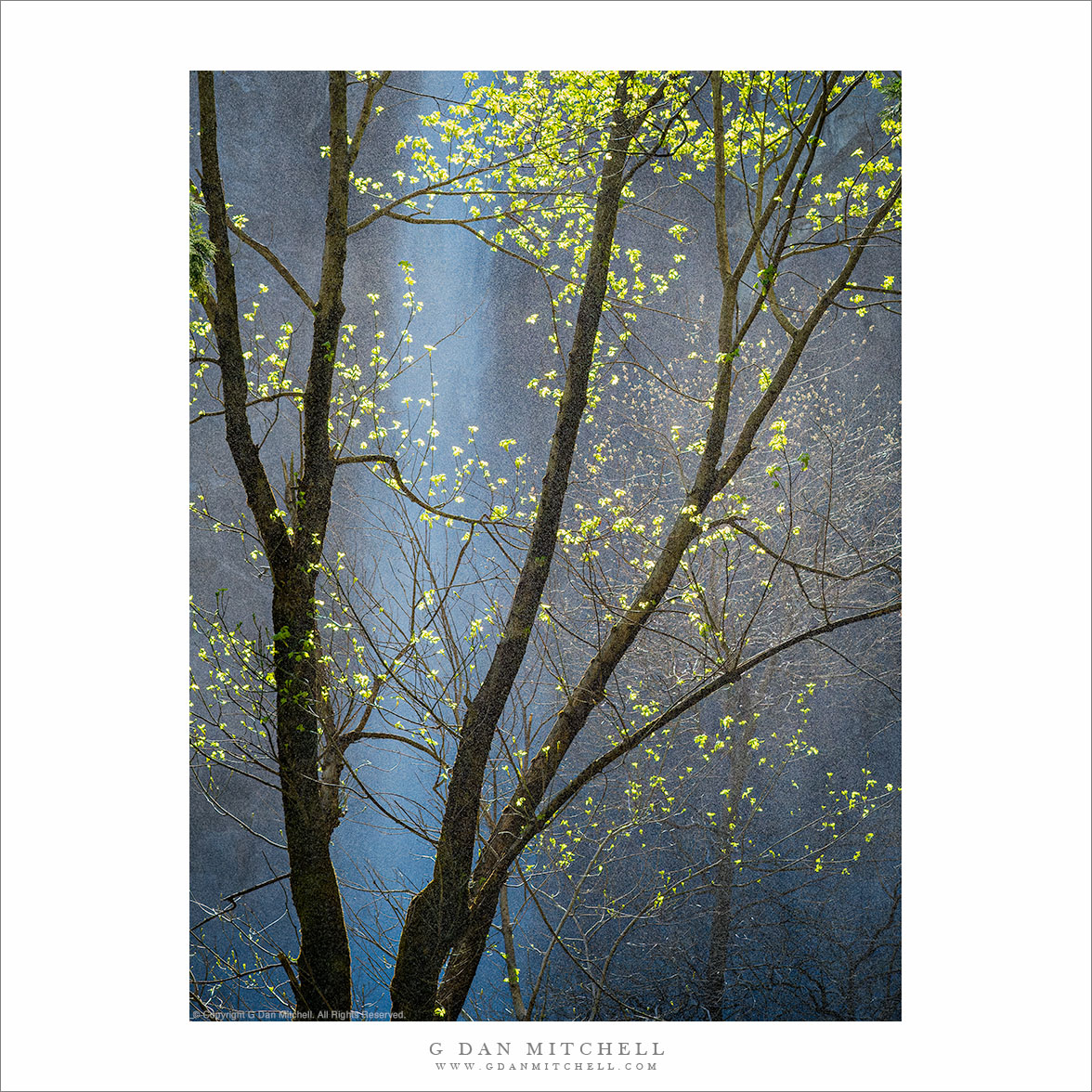
Spring Trees, Waterfall Mist
“Spring Trees, Waterfall Mist ” — Waterfall mist fills the air around sunlit maple trees with new spring leaves, Yosemite National Park

I’ve never been to Yosemite but I have a chance to visit for a week in late August. I’ve heard that’s a very busy time, but that’s the time I have available and I’d love to see it.

I’ve ordered Michael Frye’s book  but am hoping for some additional information. I’m thinking of coming in the south entrance and am wondering of this is a good approach. Also, if anyone has any lodging ideas I’d love to hear them.

Michael’s book (“The Photographers Guide to Yosemite“) is a great place to start. It will help you find some of the subjects that you probably have in mind to photograph, and it is full of Michael’s general situational knowledge and experience about the park. Michael has an intimate knowledge of the place — not just of locations, but of daily and seasonal variations and more.

You are right that this will be a very busy time in Yosemite — it is more or less peak season! This affects not only the Valley, but also high country areas such as Tuolumne Meadows. Here are some thoughts about your visit.

Continue reading Visiting (And Photographing) Yosemite In Summer

Why Fujifilm Mirrorless?

(When I started this post I thought it would be short — but it grew and grew and grew! In addition, right now and for a couple of days after the publication date, there is a Fujifilm instant rebate promotion that takes hundreds of dollars off the prices of lenses and cameras and bundles. See a list of links at the end of the article.)

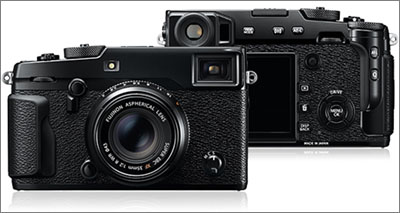
Fujifilm X-Pro2
Fujifilm X-Pro2

My friend “Pat” sent me an email recently with the following question:

I hope you have been well. I was hoping you could offer your thoughts on ‘why Fujifilm’ for your walk-around/street photography system. I have been reading (perhaps a little too obsessively) many rave reviews on their cameras and consistently love the look of images that are shared. (Kevin Mullins, Zack Arias and many others) have professed their love for the Fujifilm system.) While my G.A.S. has been in remission lately, I know I am susceptible to a relapse-I’m not sure if I’m looking for you to talk me off the ledge or give me a solid shove. Why do you choose Fujifilm instead of using a couple of the smaller (non-L) primes with your 5D series? I shoot the 6D as my primary body and have been saving for a 24-70 f2.8 (to replace my 24-105) but the current sale on the Fujifilm at Adorama has me thinking. 

As I thought about my reply it occurred to me that others might be interested in the answer, too. With that in mind, I’m sharing my reply. The main context of your question seems to be focused on street and “walk around” photography, and Fujifilm is now my primary system for what I refer to as “street photography and travel photography.”

And, yes, G.A.S. (Gear Acquisition Syndrome) can afflict all of us. Let’s see if I turn out to offer an antidote… or become your enabler!

Settle back. This won’t be brief.

Continue reading Why Fujifilm Mirrorless?

Canon EOS 5DsR/5Ds: My Experience

These days I use the Canon EOS 5DsR for much of my photography — particularly my landscape, nature, wildlife, and long-exposure night photography. Since people often ask me about the camera, I have decided to offer this write-up. I’ll try to cover some things about the camera that work well for me, acknowledge one or two very small issues, and consider the kinds of photographers for whom it (or its near-twin, the Canon EOS 5Ds)  might be a great choice. (This isn’t the first time I’ve written about aspects of this camera’s performance, and I have included a list of some of my other posts near the end of this article.)

The 5Ds and 5DsR are both 51 megapixel (MP) full frame DSLR bodies from Canon. They currently provide the highest sensor resolution available from a full frame digital camera and, as such, are targeted to photographers who need particularly high image resolution and who will photograph and post-process in ways that provide this. The 5DsR cancels the effect of the anti-aliasing filter found in the 5Ds — more on that subject below.

It is probably fair to say that the main attraction of these cameras is that high-resolution sensor, a fact that might lead some photographers to ask whether or not they will be able to take advantage of the high-resolution. Compared to earlier 5D-series cameras, the 5Ds/5DsR provide some other improvements, too. The autofocus (AF) system has been updated, noise handling is very good, and the  camera produces high dynamic range files that can be pushed and pulled quite a bit in post. Some updates have been made to the hardware and software interface of the camera, too.

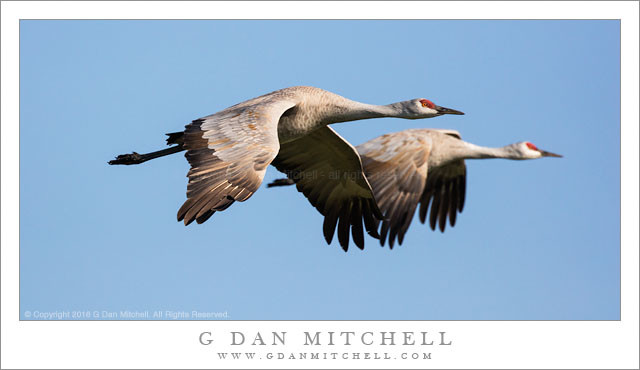
Two Sandhill Cranes in Flight
A pair of lesser sandhill cranes in flight above California’s San Joaquin Valley

Sensor Resolution

There is no question that these cameras can produce very high-resolution images. Photographers who work carefully and who make very large prints will be pleased. I have made test prints equivalent to 30″ x 45″ prints that look very good and it is possible to go even larger. However, before you jump at the highest resolution full frame camera purely on the basis of higher resolution, you should ask yourself a few serious questions.

Continue reading Canon EOS 5DsR/5Ds: My Experience