
Category Archives: Reader Questions

Reader Question: Sony Versus Fujifilm

6/28/16: Slightly updated on 6/28/16 to reflect my acquisition of the Fujifilm X-Pro2  (B&H | Adorama) and a few other things.


Today I am sharing  another reader question and my response. This one came from “Greg” in a response to a post on my Facebook page:

Hi Dan, have heard good things about the Fuji cameras. Have also heard good things about the SONY cameras. Both are mirrorless, but the SONY is a full-frame while the Fuji is APC/1.5X. Is there a reason you would choose the Fuji over the SONY – you indicated in the article you have been using the  X-Pro1 and will be moving up to the  X-Pro2… Illuminate me on the subject

That is a great subject to consider, Greg. Both Sony and Fujifilm are making some very fine mirrorless cameras these days, but for my purposes the Fujifilm is a better fit than, say, the Sony a7R II full frame mirrorless camera that Greg is thinking of. (Small correction: I have not been using the X-Pro1. I have used the X-E1 for the past three years and I now use the X-Pro2.)

Before I explain, I must acknowledge that the Sony is an excellent body, and another photographer may well find it to be the best choice for his/her needs. The Sony a7R II is, as you point out, a full frame body and the current version has a 42MP sensor rather than a 24MP sensor. The sensor is known for its low noise and excellent dynamic range. Sony has some native lenses, but lots of folks are using their Sony cameras with a range of third party lenses, including those from their Canon and (now) Nikon DSLRs.

So, with all of those positives, why Fujifilm?

Continue reading Reader Question: Sony Versus Fujifilm
Reader Question: 5Ds/5DsR Print Quality

Reader “Tom” writes to ask:

I’ve read your reports on the 5Dsr.  I assume by now you have one?  Maybe you have different thoughts now, but you seem to point to the new body being good for large print/detail, but maybe not so great for fine art print. 

If that’s still the case, what would you opt for if leaning towards fine art prints, large, maybe a heavily cropped slice measuring say 16″ x 72″ or so? Minus a mf body. 

I’m looking to switch bodies and thinking the 5dsr or possibly the Nikon d810.  Just curious what your thoughts might be if you ever had time. Thanks.

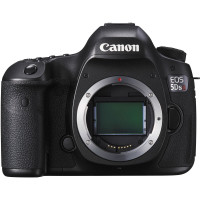
Canon EOS 5Ds DSLR
Canon EOS 5Ds DSLR

It has been a while since I’ve written about the Canon 5DS and the 5DsR cameras here, but since you asked I’ll share more based on my extensive use of the 5DsR over the past months. I have used it to photography everything from landscapes to people to wildlife. I think I see several sub-questions here, so let me respond to each of them.

Are the 5DsR and  5DS good for large prints? Continue reading Reader Question: 5Ds/5DsR Print Quality

Reader Question: About Depth of Field

Lupine, Upper Sabrina Basin

I recently received an email from David, who has some questions about depth of field:

As you have a lot of experience of using the Fuji X-E1, may I please ask you for some advice regarding landscape focusing.

My aim is to use the 18-55mm kit lens with the majority of shots taken at the widest end. I have in mind setting the lens at Hyperfocal distances, based on a crop factor of 1.5 and a circle of confusion of 0.02. I think the first figure is reliable, but I’m not sure about the second in relation to the X-E1 – perhaps you could confirm.

I have already done some testing at home using the attached table (which come from the well respected DOFmaster site).

In my experiment I carefully measured distances at apertures of f8 and f11 using a tripod and a printed card as the subject. I set the lens manually at the hyperfocal distance, using the EVF distance scale. I was disappointed to find that the closest point of focus was not as sharp as I had hoped. Have you any idea why this may be?

I did a further test on aperture f11 and this time set the distance scale at 4 feet (2/3 of the way between 3 and 5 feet). This resulted in a sharp image from 3.5 feet. This would suggest that the distance scale is not accurate.

Any suggestions you have to overcome the problem would be much appreciated.

Let me preface my response on the depth of field (DOF) issue by congratulating you for taking the time to conduct your own experiments. One of the great things about digital cameras is that we don’t have to trust what we read — we can easily and quickly conduct the experiments ourselves. In addition to getting the answer to the question at hand, we end up knowing our gear at a much deeper and even intuitive level, which is extremely important when we are in the field and we don’t have time to ponder and calculate, but must instead make a photograph in the moment.

The rest of this post is going to be somewhat involved, so let me share a quick thought right at the beginning:

The usefulness of DOF calculators is very limited, as they are based on subjective assumptions that may not match what you are doing with your photographs. The best way to align your expectations with exposure choices is to test them yourself and evaluate images in the form that you most often produce — and not just at 100% magnification on a computer screen.

What is DOF? Essentially the depth of field is the distance range in front of and behind (unless you focus at infinity) the focus point within which subjects are likely to sharp enough to seem in focus when the photograph is viewed at some arbitrary magnification. This size of this range increases as we stop down (for example, going from f/2.8 to f/8 expands the DOF) and decreases as we open the aperture (going from f/8 to f/2.8 contracts DOF). This is a source of creative control for the photographer. A smaller aperture can allow subjects across a greater distance range to appear relatively sharp, while a larger aperture can keep the primary subject in focus while pleasingly “un-focusing” elements in front of and behind the primary focus point. Continue reading Reader Question: About Depth of Field

Reader Questions: Landscape Lenses

From time to time I get questions from readers, and I usually like to share the answers so that other might learn something, too.

Recently “Gregory” wrote:

I just read one of your articles on appropriate lenses to use for landscape photography. I’m a hobbyist photographer in California that has a passion for landscape photography. I sold my Canon equipment and will be purchasing some Nikon lenses and camera body. I wanted to get your input as to what the majority of landscape photographers use – prime lenses or zoom lenses? Based on my limited budget, here is what I am thinking of:

Option A — Primes: 20mm, 28mm, 50mm, 85mm
Option B — Zooms: 24-70mm, 70-200mm
Option C — Zooms: 16-35mm, 24-70mm

I don’t have the budget to purchase both a super wide zoom AND a telephoto. I’ll have to settle for one of these and then acquire an additional zoom later on. I’m thinking the primes maybe slightly sharper in the borders and lighter to carry, but what about the hassle of constantly switching lenses back and forth? Not sure I want to do this. I would appreciate any recommendations/suggestion you might have.

Before I reply here, let me share a couple of articles that I wrote about more or less this topic:

By the end of this article… I probably will not tell you which lenses to select! But perhaps I’ll help you consider factors that will assist in making a good personal decision that is right for your photography.

To a great extent, many of these decisions are personal and they come down to your own personal preferences and the ways in which you approach your subjects. Some people have reasons for preferring prime lenses, some have reasons for preferring zooms, and others have good reasons for wanting both. Some are comfortable working with a relatively narrow range of focal lengths, while other feel the need for a wider range. Some have a predilection for wide-angle lenses, while others are drawn to longer focal lengths. And this doesn’t even get into the questions about tilt/shift lenses and other variables.

I mention this for a couple of reasons. First, there are going to be people who disagree with my preferences — listen to their perspectives, too, and then use your own judgment. Second, consider your own preferences at least as much. Continue reading Reader Questions: Landscape Lenses