Tag Archives: zoom

Travel Photography Gear

It can be difficult to figure out what gear will work well for photography while traveling, what kind of camera and what lenses to take. I do a fair amount of travel photography, and I’ll going this use this article to summarize a few approaches that can work. (Article updated April 25, 2026.)

Je Suis Bleu, Paris
“Je Suis Bleu” — Sidewalk, graffiti covered wall, and women (virtual and real) on a Paris street

A starting assumption: There is no one “right” or “best” approach to photography while traveling, and what works for me may be far from ideal for you. I’m hopeful that this article may help you figure out about what fits your approach to travel.

Continue reading Travel Photography Gear

Fujifilm GFX and Canon 5DsR part II

Earlier I shared the beginning of an article that compares the Fujifilm GFX 50S and the Canon 5DsR, two cameras with different formats but approximately the same sensor resolution. That article (“Fujifilm GFX and Canon 5DsR” wasn’t complete … and now I’m back with one more point of reference.
When it comes to resolution, making judgments based on screen images has its limits. For example, 100% magnification crops “show” you things that won’t be visible even in  a very large print, and in many cases you must interpret what you see in the screen image in order to speculate about what the print will look like. As we say, “The proof is in the print.”

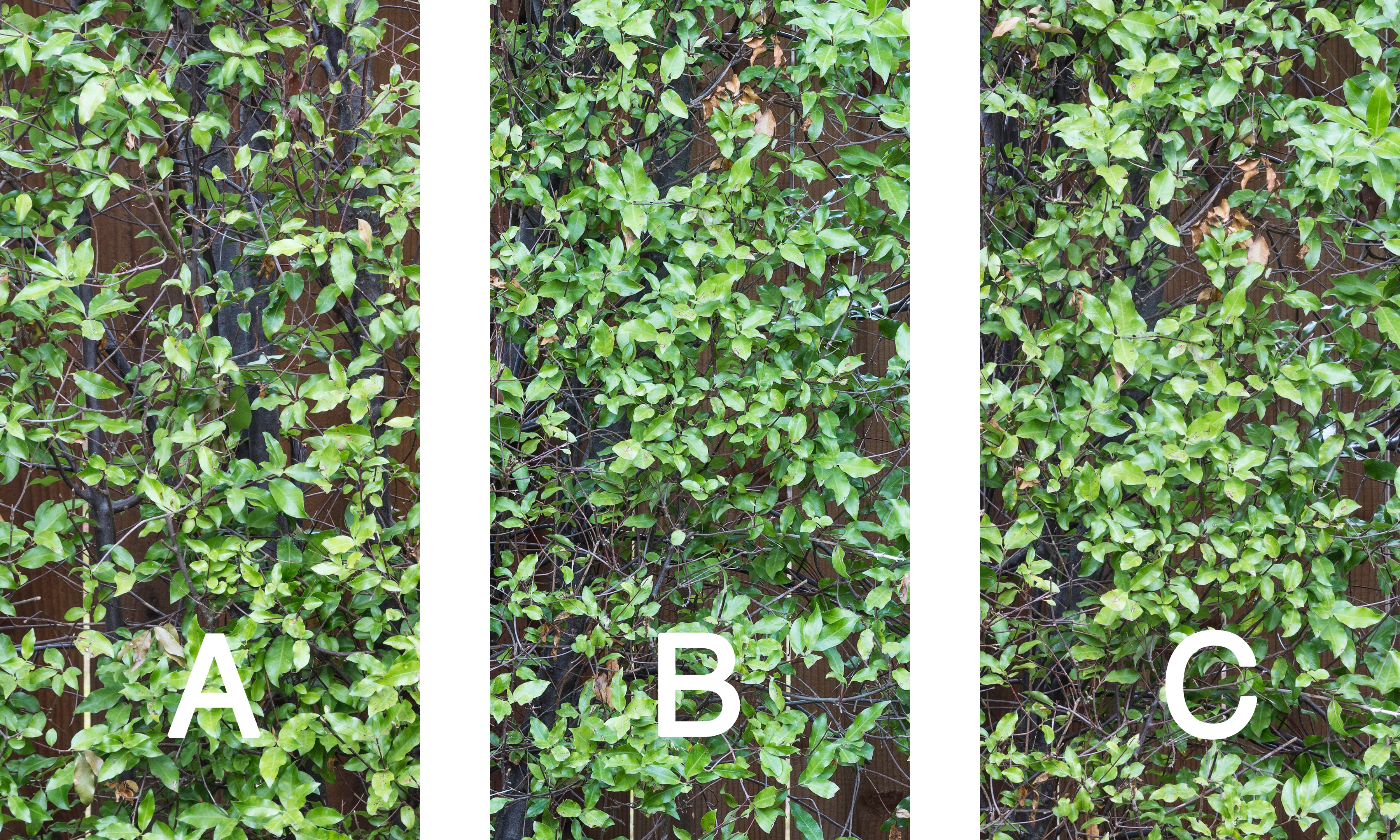
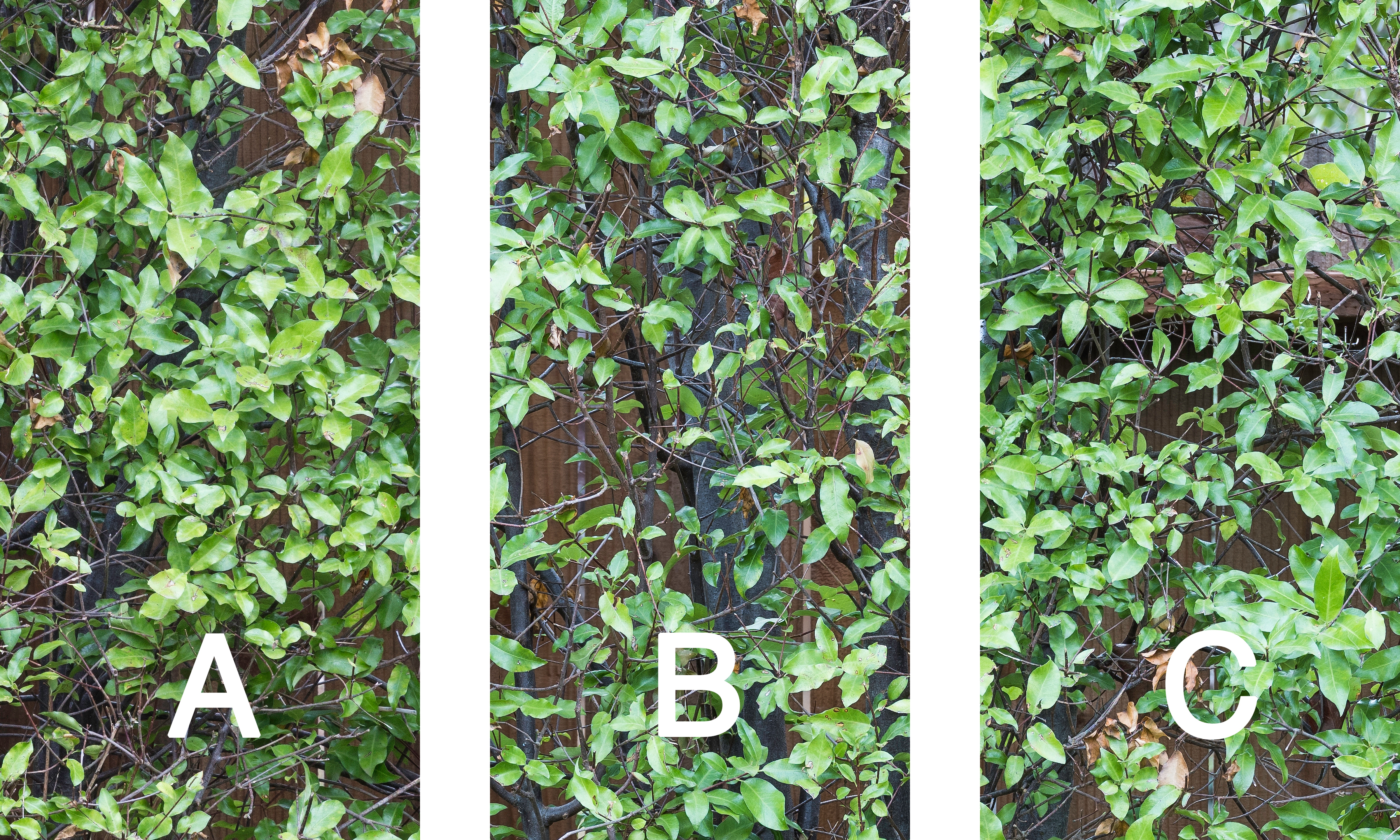
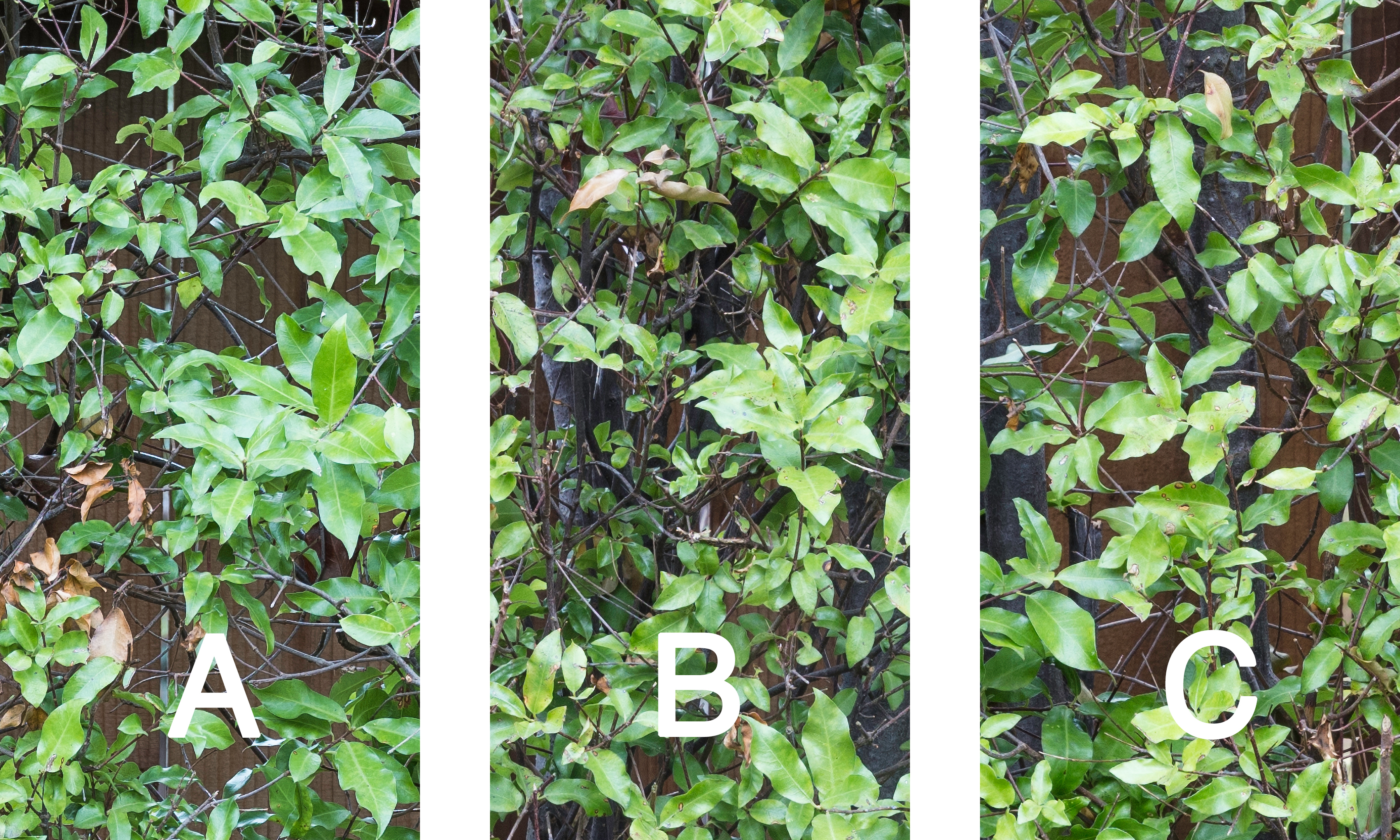
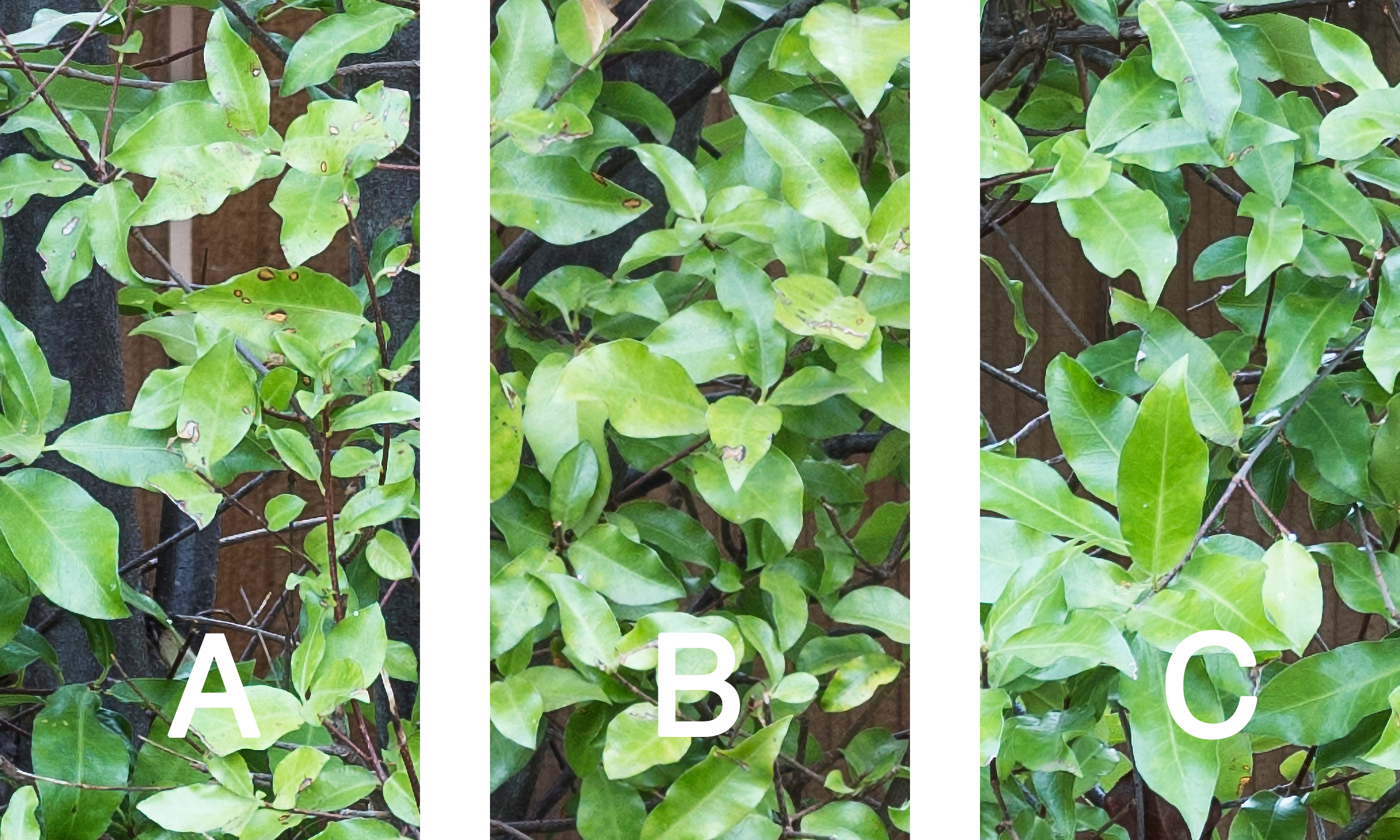
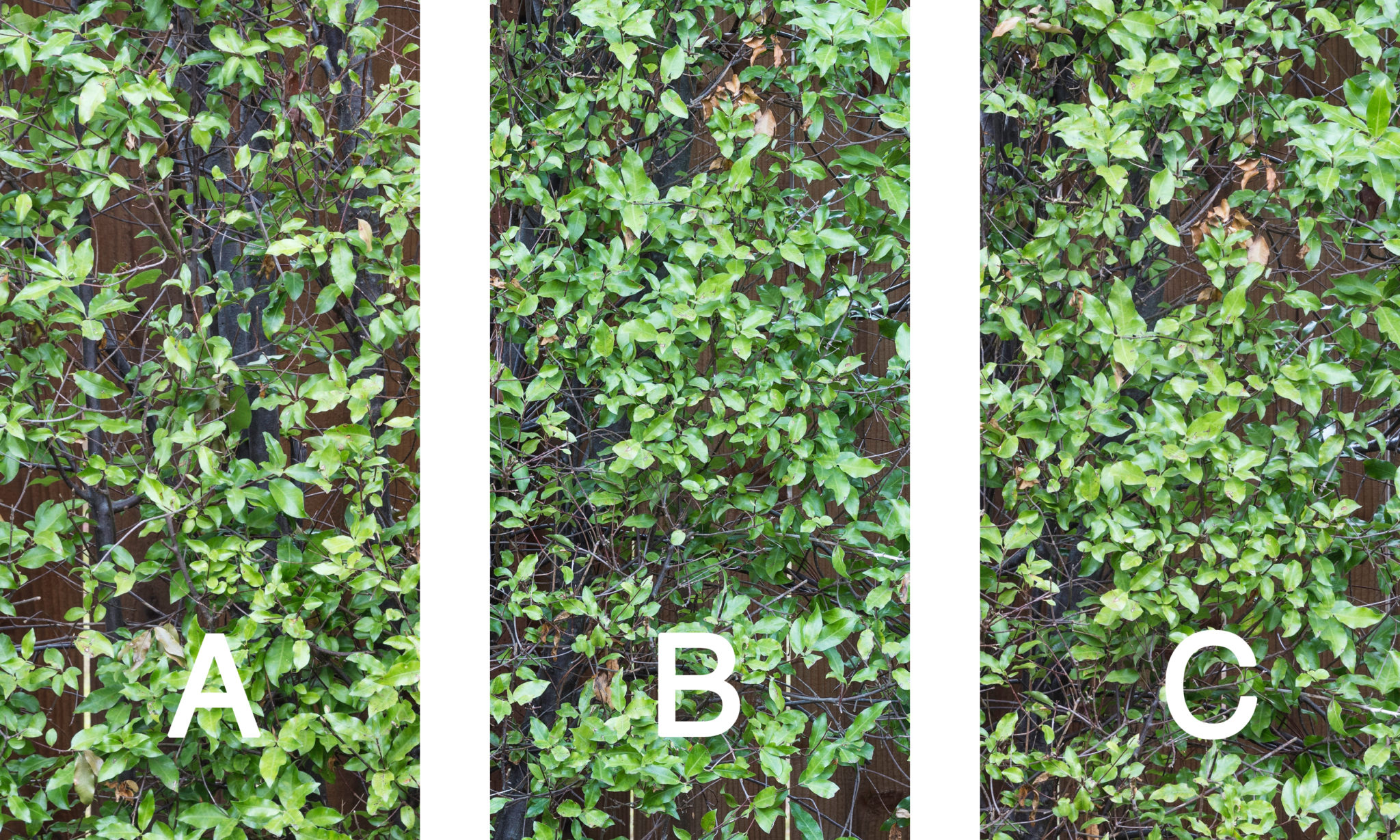
With that in mind, I have prepared some files that may be useful for comparing print resolution from Fujifilm GFX 50S and the Canon 5DsR. These files each hold three “test strips” labeled A, B, and C. The files have been formatted for producing prints with a print area of 10″ wide and 6″ tall (use letter-size paper) when printed at a resolution of 360. They are sRGB color files in the highest quality (Photoshop: 12) jpg format.

There are four files. Let’s call them:

(Click on the links to see and download the files.)

IMPORTANT NOTE: When first posted, these links went to downsized files rather than the full size print-ready files. This was corrected on 1/21/18. The print areas of these files should be 3600 pixels on the long side, for printing 10″ long at 360 ppi.

Viewing them on screen is not the object here — in fact, for reasons I won’t go into here, trying to evaluate that way is of very limited value and may mislead you. (For example, the files have been optimized for print in ways that may make them look poor on screen at 100% magnification.)

You will need to print.

Since there are four samples, you’ll need to make four letter-size prints. The correct settings will probably be entered automatically, but check that the print area is 10″ wide and 6″ tall and that the resolution is set to 360.  As you download and print the files you may wish to make a note on each (in pencil or ink) indicating which file it is — sample 1, sample 2, sample 3, and sample 4.

Observe each print carefully. Note anything you can see related to the resolution of each printed strip A, B, and C. (Note that this is only a resolution test — don’t worry about things like image size, brightness, color, and so forth.)

In order to avoid confirmation bias I’m not going to reveal anything else about the files at this time. Once a few people (or a lot of people?) have weighed in with their observations — please use the comments below — I’ll reveal more important information about what you are looking at.


G Dan Mitchell is a California photographer and visual opportunist. His book, “California’s Fall Color: A Photographer’s Guide to Autumn in the Sierra” is available from Heyday Books and Amazon.
Blog | About | Flickr | Twitter | FacebookGoogle+ | LinkedIn | Email


All media © Copyright G Dan Mitchell and others as indicated. Any use requires advance permission from G Dan Mitchell.

A Small Test: Fujifilm X-Pro2 Mirrorless and Active Subjects

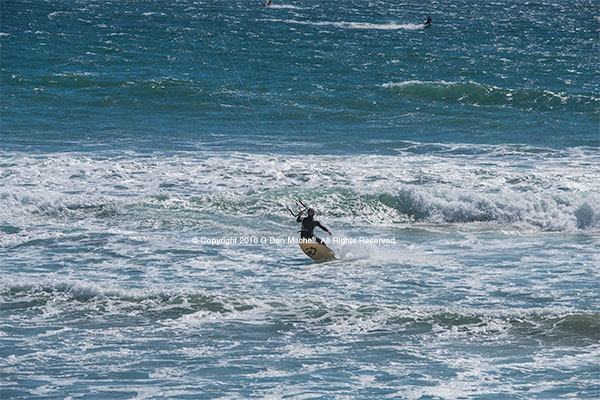
I want to share the results of a little informal test I did today using my Fujifilm X-Pro2 (B&H | Adorama) mirrorless interchangeable lens camera and a Fujifilm zoom lens to photograph an active subject. First, here is an unremarkable photograph, aside from the fact that I would probably not have used my previous mirrorless camera to photograph this subject.

Fujifilm X-Pro2, ISO 400, f/8, 50-140mm lens at 140mm, handheld

Read on to find out why I photographed this and what I learned from it.

Background

I first used a mirrorless digital camera way back before the 21st century began — before there were DSLRs there were a number of early digital cameras, and my first was an Apple QuickTake! I used several others from a range of manufacturers before I acquired my first DSLR in about 2003.

As a group, mirrorless cameras have had some problems. One of the most glaring has long been slow autofocus (AF) speeds. Those very early cameras were often just plain awful in this regard, but they got better over the years.

Until recently I used a Fujifilm X-E1 mirrorless interchangeable lens camera, and it was my primary camera for travel and street photography for about 3 1/2 years. Its AF was fine for most things, but I also had to learn to adapt to slow AF in low light and with low contrast subjects — and the issue was more acute with some lenses than with others. For this reason — and a few others, including electronic viewfinder (EVF) display latency — I would never have thought to use that camera for photograph active subjects.

Continue reading A Small Test: Fujifilm X-Pro2 Mirrorless and Active Subjects

Reminder: Fujifilm X-Series Discounts

I recently posted an article about  the Fujifilm X-Series camera system that included a list of some impressive price reductions that are part of a current Fujifilm promotion. These prices are still available, making this a great time to acquire a Fujifilm X-Series camera or lenses. Here is the list once again.

X-Pro1: Fujifilm’s innovative interchangeable lens camera combining an optical rangefinder design with an electronic viewfinder.

X-T1: Fujifilm’s flagship interchangeable lens mirrorless camera

X100T: Fujifilm’s compact rangefinder fixed lens camera. Street photographer’s love it.

X-T10: A less expensive but very capable camera modeled on the X-T1.

X-E2: A very compact interchangeable lens mirrorless camera. (I use the X-E1, the predecessor of this model.)

X-30: A very compact mirrorless camera with a smaller sensor and a zoom lens.

Fujifilm lenses for X Series interchangeable lens cameras

Summary: Based on my own experience with a number of the lenses and confirmed by many other reports, the Fujifilm lenses provide first-rate optical performance. The range from very small prime lenses up to large aperture zooms that are competitive with the best from the DSLR manufacturers. I have marked lenses that I own and use with asterisks — *.

This list was compiled carefully, but errors could occur, so verify all prices and other information directly with the linked vendor(s).


Taking Stock of the Fujifilm X-E1, X-E2, S-T1 Mirrorless Cameras — My article with more information about the X-trans cameras from Fujifilm.


Links go to site-affiliate B&H Photo, and purchases through these links return a small percentage of the sale price to support this website. Your price will be the same as if you clicked directly on the vendors own links. Thanks for your support!


G Dan Mitchell is a California photographer and visual opportunist. His book, “California’s Fall Color: A Photographer’s Guide to Autumn in the Sierra” is available from Heyday Books and Amazon.
Blog | About | Flickr | Twitter | Facebook | Google+ | 500px.com | LinkedIn | Email