Category Archives: Reviews

Fujifilm X-Pro2

Fujifilm just released their newest camera, the X-Pro2. Since I have been relying on an earlier Fujifilm camera (the original X-E1) for over three years — and liking the results a whole lot — it seemed like time to move up to the newer, more refined body. My new X-Pro2 arrived a few days ago, and so far I’m quite impressed. (My time with the camera has been limited thus far, and I’ll share a much more detailed report once I have had a chance to use it extensively.)

Fujifilm X-Pro2
Fujifilm X-Pro2 with the new XF 35mm f/2 WR lens

The Fujifilm “x-trans” sensor cameras are appealing for a number of reasons:

  • Small, light mirrorless designs offer an alternative to larger DSLR systems.
  • The x-trans sensor produces excellent image quality and uses a photo site layout that is designed to minimize aliasing without using anti-aliasing filters.
  • The Fujifilm lenses are truly top-notch, from primes to zooms, and there is a complete and diverse selection of available lenses.

Until now all of these cameras have use 16 megapixel (MP) 1.5x cropped sensor designs. 16MP is plenty for almost all photographers, and I make beautiful 18″ x 24″ prints from the files. One of the main updates on the X-Pro2 is the addition of an optimized 24MP sensor. If anything, this sensor improves the low light performance and dynamic range of the 16MP versions, and it provides a bit more resolution.

The X-Pro2 also improves on many of the ideas behind the original (and now a bit long in the tooth, though quite inexpensive) X-Pro1. Both cameras use a hybrid viewfinder that incorporates both an optical viewfinder (OVF) and an electronic viewfinder (EVF), both of which have advantages in various situations. The OVF works beautifully with many primes, eliminates shutter blackout, and allows the photographer to see what is going on just outside the borders of the image. The design overlays an electronic display on top of the optical image. These features are very useful to those doing street photography and similar things.

The EVF works well with all lenses, from ultra wide to telephoto and especially with zoom lenses. It can be advantageous in very low light, such as night street photography. It also shows the precise frame edge lines and can display even more image data than the OVF.

The camera feels light but also solid and well-constructed, and it recalls classic rangefinder cameras.

I got mine with the new XF 35mm f/2 WR lens, one of five newer lenses that are optimized to autofocus more quickly on the X-Pro2 (and, presumably, future X-series cameras). It is also weather resistant. I can report that it focuses quickly and accurately in a wide range of situations. Since I also have my older XF 35mm f/1.4 lens, I haven’t yet decided whether I will end up valuing the extra stop of the f/1.4 lens enough to give up the faster AF and smaller size of the new f/2 lens.

That’s all I’ll say for now, but expect more in the not-too-distant future as I gain more experience with the camera. For now, I don’t see any reason to not recommend it.

  • Fujifilm X-Pro2 digital camera body — $1699 at B&H or Adorama
  • Fujinon XF 35mm f/2 WR lens — $399 / $299* with X-Pro2 at B&H or Adorama (*limited time offer)

(If you find this website and posts like this useful and you are going to get one of these products, consider making your purchase through links on this site. Your price will be the same, but the purchases help support the operation of the site. Thanks!)

Also see:  Taking Stock of the Fujifilm X-E1, X-E2, S-T1 Mirrorless Cameras


G Dan Mitchell is a California photographer and visual opportunist. His book, “California’s Fall Color: A Photographer’s Guide to Autumn in the Sierra” is available from Heyday Books and Amazon.
Blog | About | Flickr | Twitter | FacebookGoogle+ | 500px.com | LinkedIn | Email


All media © Copyright G Dan Mitchell and others as indicated. Any use requires advance permission from G Dan Mitchell.
Canon EOS 5DsR/5Ds: My Experience

These days I use the Canon EOS 5DsR for much of my photography — particularly my landscape, nature, wildlife, and long-exposure night photography. Since people often ask me about the camera, I have decided to offer this write-up. I’ll try to cover some things about the camera that work well for me, acknowledge one or two very small issues, and consider the kinds of photographers for whom it (or its near-twin, the Canon EOS 5Ds)  might be a great choice. (This isn’t the first time I’ve written about aspects of this camera’s performance, and I have included a list of some of my other posts near the end of this article.)

The 5Ds and 5DsR are both 51 megapixel (MP) full frame DSLR bodies from Canon. They currently provide the highest sensor resolution available from a full frame digital camera and, as such, are targeted to photographers who need particularly high image resolution and who will photograph and post-process in ways that provide this. The 5DsR cancels the effect of the anti-aliasing filter found in the 5Ds — more on that subject below.

It is probably fair to say that the main attraction of these cameras is that high-resolution sensor, a fact that might lead some photographers to ask whether or not they will be able to take advantage of the high-resolution. Compared to earlier 5D-series cameras, the 5Ds/5DsR provide some other improvements, too. The autofocus (AF) system has been updated, noise handling is very good, and the  camera produces high dynamic range files that can be pushed and pulled quite a bit in post. Some updates have been made to the hardware and software interface of the camera, too.

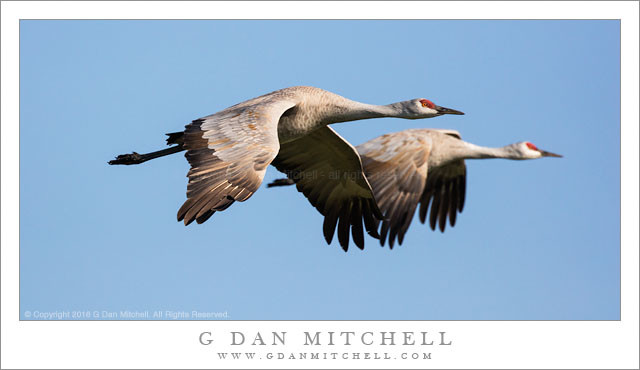
Two Sandhill Cranes in Flight
A pair of lesser sandhill cranes in flight above California’s San Joaquin Valley

Sensor Resolution

There is no question that these cameras can produce very high-resolution images. Photographers who work carefully and who make very large prints will be pleased. I have made test prints equivalent to 30″ x 45″ prints that look very good and it is possible to go even larger. However, before you jump at the highest resolution full frame camera purely on the basis of higher resolution, you should ask yourself a few serious questions.

Continue reading Canon EOS 5DsR/5Ds: My Experience

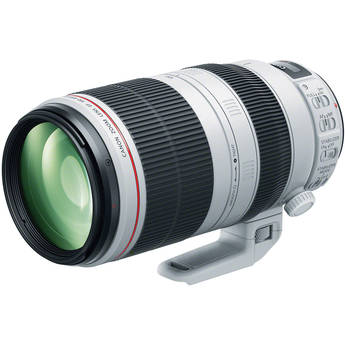
Canon EF 100-400mm f/4.5-5.6L IS II Lens — A First Look

(Note: Updated 12/24/14 to add thoughts about “who should buy” this lens.)

Canon 100-400mm f/4.5-5.6L IS IICanon EF 100-400mm f/4.5-5.6L IS II

Canon recently released the successor to their venerable 100-400mm telephoto zoom lens, the new EF 100-400mm f/4.5-5.6L IS II lens. I have relied on the older model for some time now… but my copy of the new lens arrived a few days ago. Now that I have used it for a day of wildlife and landscape photography I would like to share some first impressions

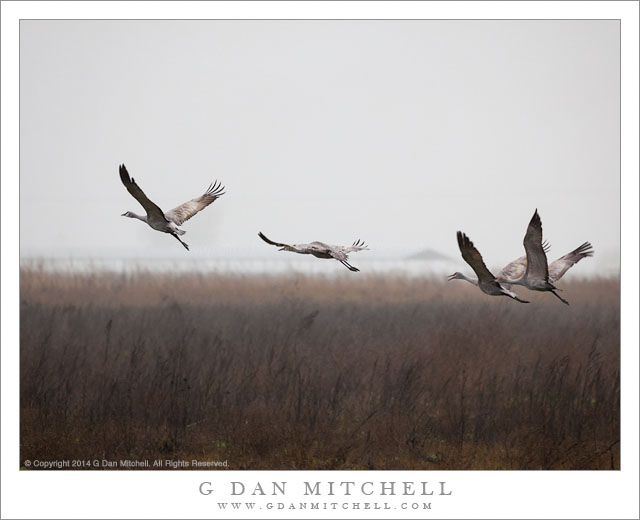
Four Sandhill Cranes

Four Sandhill Cranes. San Joaquin Valley, California. December 22, 2014.
© Copyright 2014 G Dan Mitchell — all rights reserved.

First, a few technical details. The new lens covers essentially the same range as the older model — a focal length range of 100mm to 400mm and a variable aperture range of f/4.5 (at 100mm) to f/5.6 (at 400mm). Both lenses use a zoom mechanism that extends at longer focal lengths. However, there are some technical differences:

Continue reading Canon EF 100-400mm f/4.5-5.6L IS II Lens — A First Look

Canon EF 16-35mm f/4 L IS: First Thoughts

(This article has been slightly updated since it was originally posted i 2014.)

Canon has released a new ultra-wide zoom lens, the Canon EF 16-35mm f/4 L IS lens.*  There has been a lot of excitement about this lens among Canon photographers since it addresses some weaknesses in previous Canon lenses of this type, including the EF 16-35mm f/2.8 L II and the venerable EF 17-40mm f/4 L. Each of those can produce fine photographs, but each also has its issues, mostly related to corner resolution. Early tests of the new 16-35mm f/4 L IS suggest that it performs much better in the corners. (In the first months following introduction, there were some issues with corner performance on some copies, but those have been addressed.) The lens also adds “IS” (image-stabiliztion), which is useful if you use it for handheld photography.

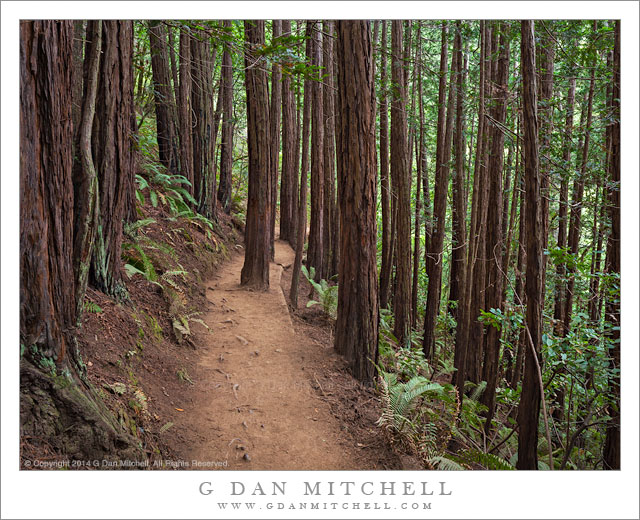
With this in mind, I did something I rarely do, and I purchased a newly-released lens right when it came out. Mine arrived last week, but I did not have a good opportunity to put it to real photography use until several days later when I took it out for a morning of redwood forest photography at the Muir Woods National Monument. (I did snap a few promising handheld shots right after I unpacked it, but such things rarely tell the whole story.) I did something else that is a bit unusual for me — I stuck the ultra-wide zoom on the camera at Muir Woods and shot with only that lens instead of the longer focal lengths that I more typically use.

Ocean View Trail
Ocean View Trail

Corner performance has been one of the main issues with the older Canon ultra-wide zoom lenses. The 17-40mm f/4 is known for soft corners at the largest apertures. It is always sharp in the center, but I most often shot mine stopped down, often at f/16 for landscape photography when maximizing depth of field. At smaller apertures the corners improve a lot, but they are never as good as what we see on more recent lenses with short focal lengths.  Canon’s f/2.8 16-35 L II starts out fairly well at f/2.8 — in fact, its performance at f/2.8 is arguably its chief virtue compared the previous f/2.8 version — but performance stopped down isn’t any better than that of the less expensive 17-40. The promise of the new 16-35 f/4 lens, and the assessment in many early articles about it, is that it offers significantly better corner performance. Many who used early copies reported that it provides good resolution all the way into the corners, even wide open at f/4 and at all focal lengths. So I wanted to try it out in real-world shooting of the sort I’m most likely to do with such a lens, and see how it stacks up against my 17-40 lens on my full frame camera.

Continue reading Canon EF 16-35mm f/4 L IS: First Thoughts