Tag Archives: fujifilm

Considering the Fujifilm X-E5

Fujifilm recently announced the X-E5, the latest camera in their X-E series. I think this model series is intriguing.. It is small and lightweight, well designed. has a lot of useful features, incorporates a high resolution sensor and IBIS (in body image stabilization) , and is compatible with Fujifilm’s excellent lenses. It has a few other features that may or may not appeal, along with one “elephant in the room” issue.

Fujifilm XE5 Silver Body
Fujifilm XE5 Silver body. (Used with permission from Fujifilm.)

(Notes: I omit the hyphens between X and E in this article. I have rounded prices to the nearest dollar. Photographs of Fujifilm products used by permission from Fujifilm. Affiliate links in this article lead to B&H Photo — they return a small fee to this website if you use them to make a purchase — thanks in advance!.)

Right up front, let me be clear about one thing: I have not had my hands on the XE5 yet. I owned the XE1, my first Fujifilm camera, about a dozen years ago. Our photographic household has had the XE2, XE3, and XE4, and I have recommended all of them to various potential buyers over the years. While I cannot give a “hands on” review of the new camera at this point — hey Fujifilm, I’m here if you have one to loan! — I am qualified to comment on its features and who may find them appealing.

The XE Series

Let’s start with a bit of XE history. The original XE1 camera came out in 2012. At that time it was one of only two interchangeable lens x-trans* cameras from Fujifilm — the other was the more expensive “flagship model,” the XPro1. The XE1 was a smaller, less-expensive alternative for those who wanted a Fujifilm rangefinder-style camera with interchangeable lenses. Importantly, the XE1 (like later XE models) used the same sensor found in high-end Fujiflm APS-C cameras, which at that time was the 16MP sensor used in the “flagship” XPro1.)

(*”x-trans” refers to Fujifilm’s unique arrangement of the red, blue, and green photo sites on the sensor, a design that was said to help control aliasing/moire on cameras that do not use anti-aliasing filters, among other things.)

Continue reading Considering the Fujifilm X-E5
Reader Question: Fujifilm X100vi, XPro2, or…

From time to time folks contact me with photography questions. If the question seems like it might be of interest others I like to answer here. Today I will respond to one of those questions.

“PJ” writes:

I mentioned that I’ve followed you on the FM site and have had a look at your website. 

I know you are/were a big fan of the X-Pro2. I have one with a 35mm f1.4 which I use to toss in the backpack or take on a walk around town. For heavy lifting, I have a full set of Nikon gear. 

I may have a case of GAS, as I’ve been seriously considering replacing the X-pro with a Fuji x100vi. Advantages seem to be a smaller, lighter camera, 40mp sensor, IBIS and newer technology. I guess I could get a pancake lens for the x-pro to make it smaller but I’d lose some of the advantages of the x100vi.  I’m not so interested in a new camera with interchangeable lenses, which would rule out some of the other Fuji offerings. 

My original message to you was to pick your brain and see what suggestions/advice you might have and if you have any opinions on the x100vi. 

Look forward to hearing back from you. 

I’m glad to share some thoughts on that question, PJ.

Bottom Line Up Front

The Fujifilm X100vi is a very attractive camera, as long as its pluses and minuses align with your needs and expectations — and it has technologies found in other newer Fujiflm cameras. The X-Pro2, though a few ears old, is arguably the best camera in Fujfilm’s X-Pro series and is more adaptable. There are also some other options if you want something the same size with updated features and flexibility.

A Slightly Longer Summary

As I see it, there are three options, each with its own set of pluses and minuses.

The X-Pro2 is still a good camera. While its sensor is a bit older and has less resolution, my experience tells me that it can make great 20″ x 30″ prints. It is a full-featured camera that accepts interchangeable lenses, giving more options if you want to use something other than (or in addition to) your current 35mm f/1.4 lens.

The X100vi is an appealing camera that strikes a chord with users who like the old fixed-lens, manual control aesthetic and appreciate its small size and very good image quality. It also has image stabilization, which can help when shooting with longer shutter speeds in low light. It has been updated with other newer Fujifilm features and technologies: 40MP sensor, IBIS, and other functional improvements. To get those things you sacrifice some flexibility.

Other cameras could be good compromises, too. I like the XT5 with its small size (about that of the X-Pro2), ability to use any Fujifilm lens, upgraded 40MP sensor, image stabilization, and other functional improvements. The tiny XE4 (if you can find one!) equipped with the 27mm f/2.8 pancake lens is as small and light as the X100vi, and it accommodates any Fujifilm lens.

All of these are attractive options that can make fine photographs. The trick is matching each option’s pluses and minuses to your own circumstances. (My choice was to move from the X-Pro2 to the XT5 for the higher-resolution, small size, access to more lens options and various other improvements.)

The Full Story

This will be a bit long. The question opens up related questions: is a fixed lens camera the right thing? Is an older camera still sufficient? Are there alternatives to both of those options to consider?

I’ll start with some background for readers who may not be as familiar with these cameras as PJ is.

Continue reading Reader Question: Fujifilm X100vi, XPro2, or…

Moving On: Fujifilm XPro2 to XT5

The XPro is dead! Long live the XPro! That’s not the main subject of this essay, but based on tea-leaf reading and my own experience with the XT5 I think that’s where we are headed. I’ll get to why I think so near the end of this article.

This article is primarily aimed at Fujifilm users (and potential users) considering the retro XPro design versus the recently released (DSLR-style) mirrorless XT5. It is partly about techie camera stuff, but it is also a story about letting go of preconceptions and adapting to something new.

Since some readers may be unfamiliar with the cameras, here’s a quick summary.

XPro2 — The XPro2 is one of three Fujifilm “XPro” bodies — originally the XPro1 , the subsequent XPro2, and the most recent XPro3. These are rangefinder-style cameras with retro appeal due to their similarity to classic rangefinder film cameras and the inclusion of full manual controls. A key feature is the hybrid viewfinder system combining an old-school optical viewfinder (OVF) and a modern electronic viewfinder (EVF). The XPro2 has a 24MP APS-C sensor, while the newer XPro3 has a 26MP sensor.

XT5 — The XT5 is the most recent (as of this writing) in Fujifilm’s series of XT cameras that combine a small DSLR-like mirrorless body with a full set of manual controls, similar to what is found on the XPro bodies. This new camera uses an updated 40MP sensor — previous models (XT1-4) used 16MP, 24MP, and most recently 26MP sensors.

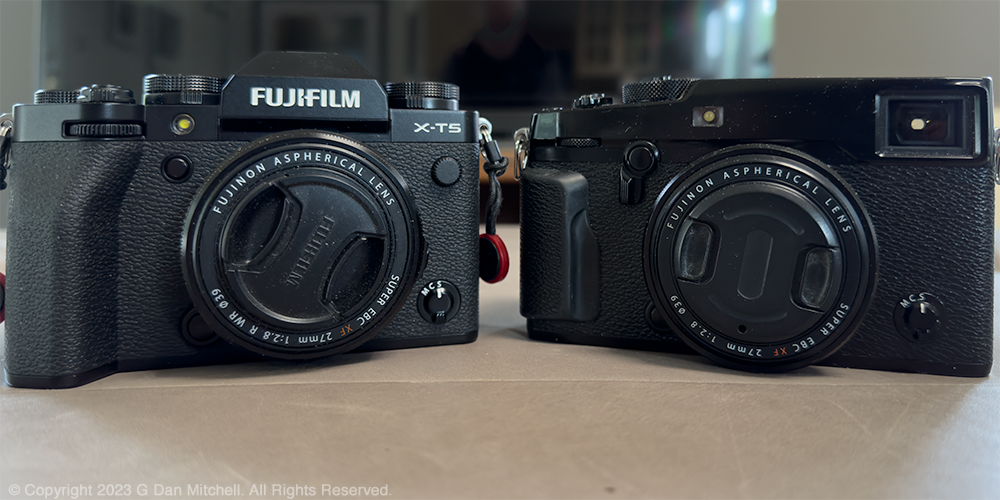
Fujifilm XT5 (l) and XPro2 (r) with Fujifilm 27mm f/2.8 lenses.

Because virtually all models in a generation of Fujifilm cameras use the same sensor, Fujfilm owners are more attentive to other functional differences between them. That is why I’ll focus on those things and say little about the sensor.

Continue reading Moving On: Fujifilm XPro2 to XT5

Fujifilm GFX and Canon 5DsR part II

Earlier I shared the beginning of an article that compares the Fujifilm GFX 50S and the Canon 5DsR, two cameras with different formats but approximately the same sensor resolution. That article (“Fujifilm GFX and Canon 5DsR” wasn’t complete … and now I’m back with one more point of reference.

When it comes to resolution, making judgments based on screen images has its limits. For example, 100% magnification crops “show” you things that won’t be visible even in  a very large print, and in many cases you must interpret what you see in the screen image in order to speculate about what the print will look like. As we say, “The proof is in the print.”

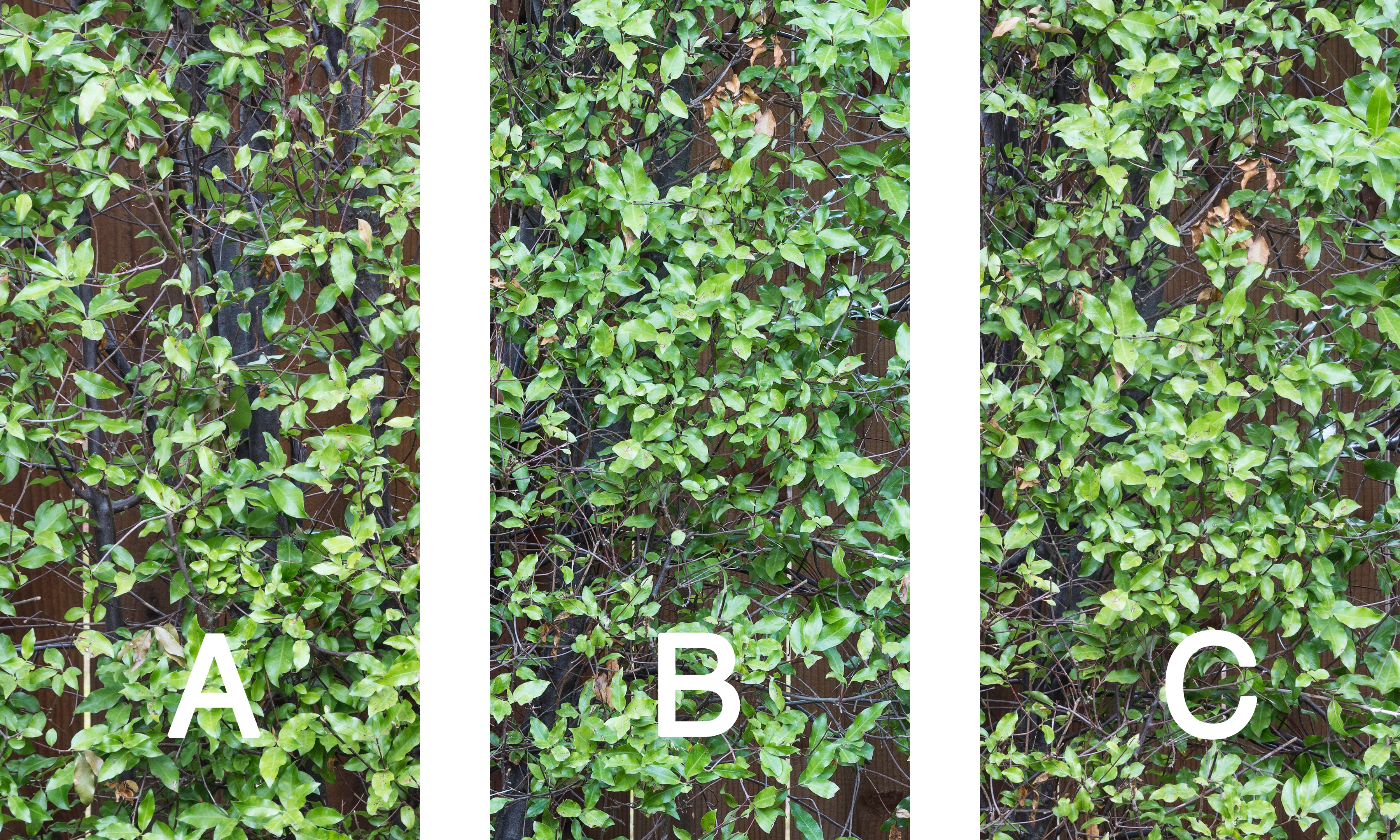
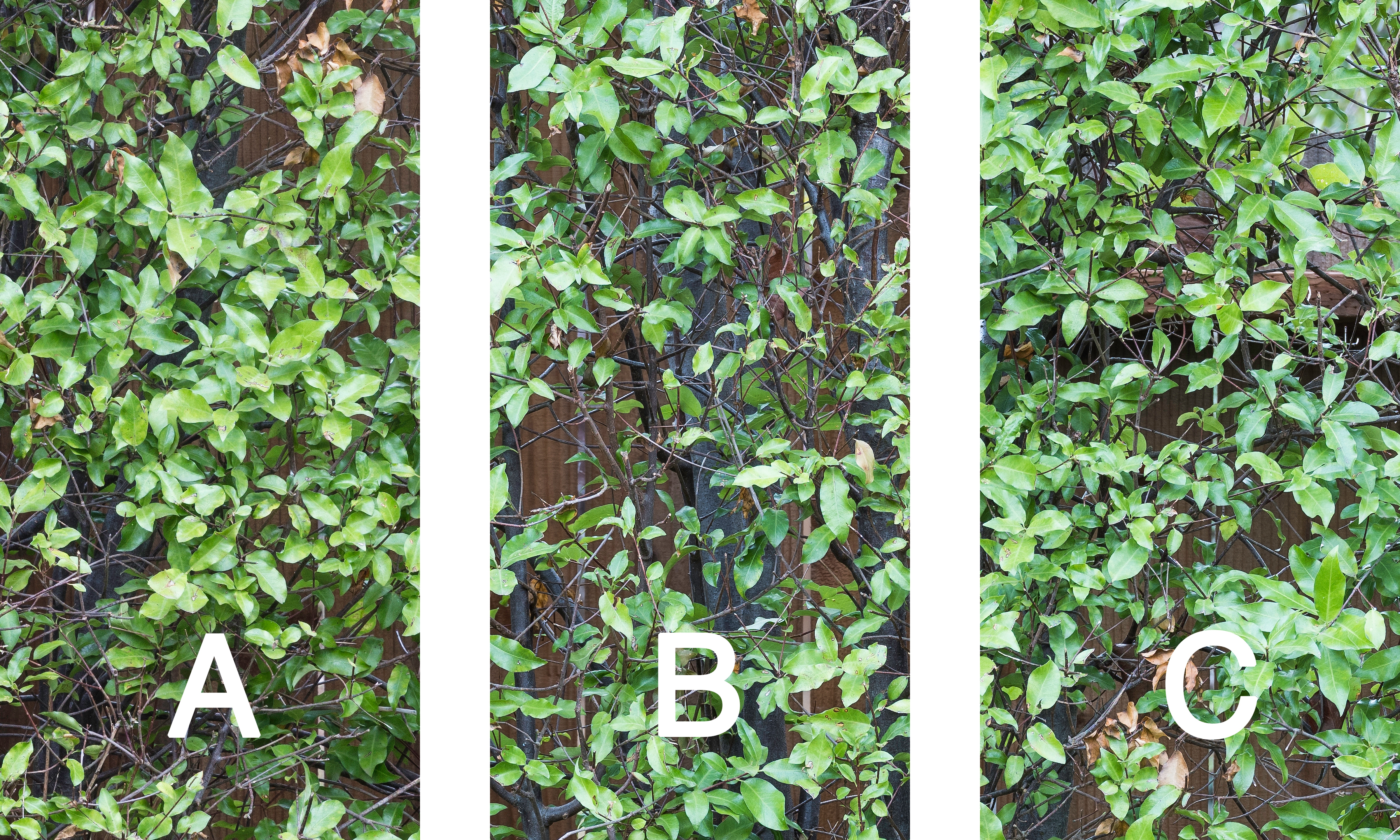
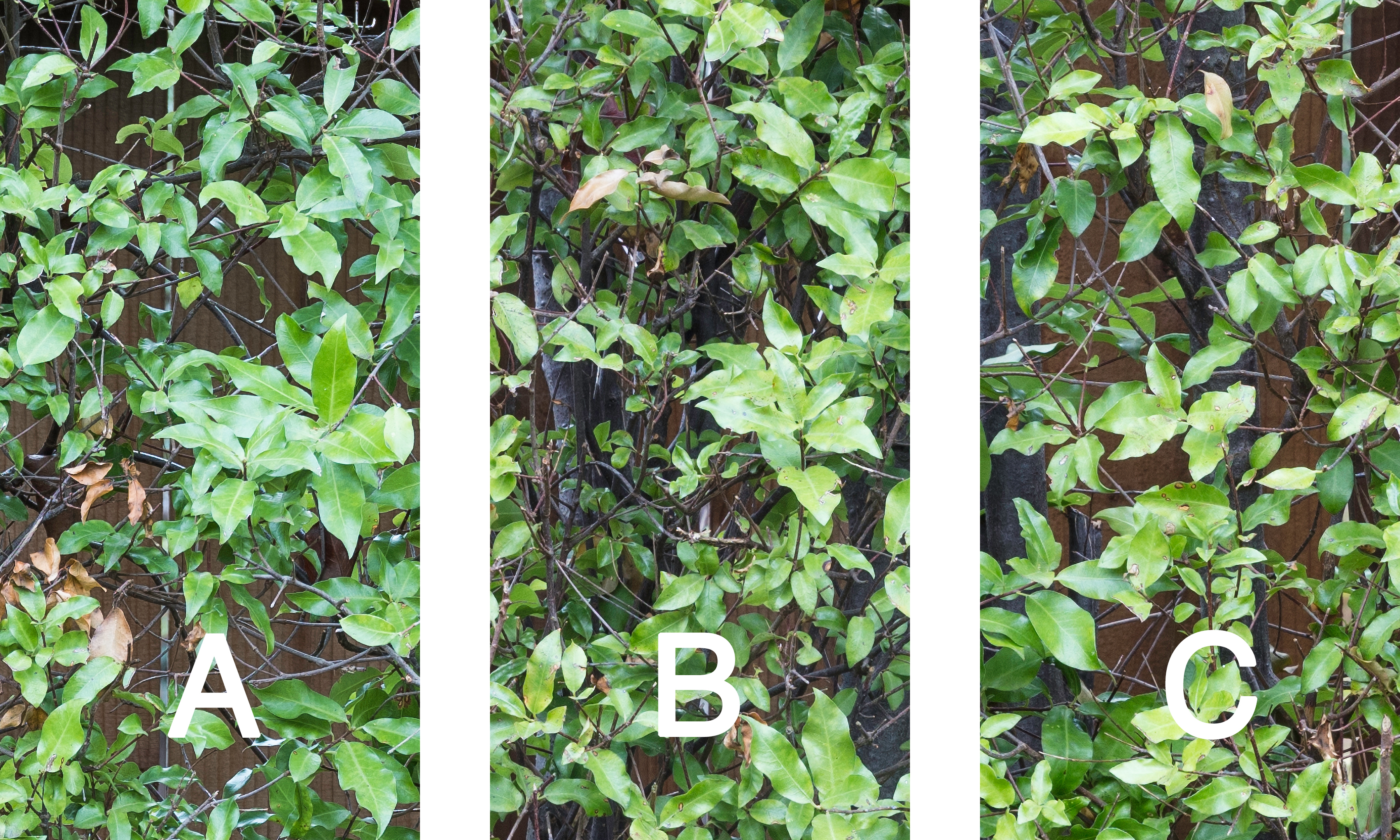
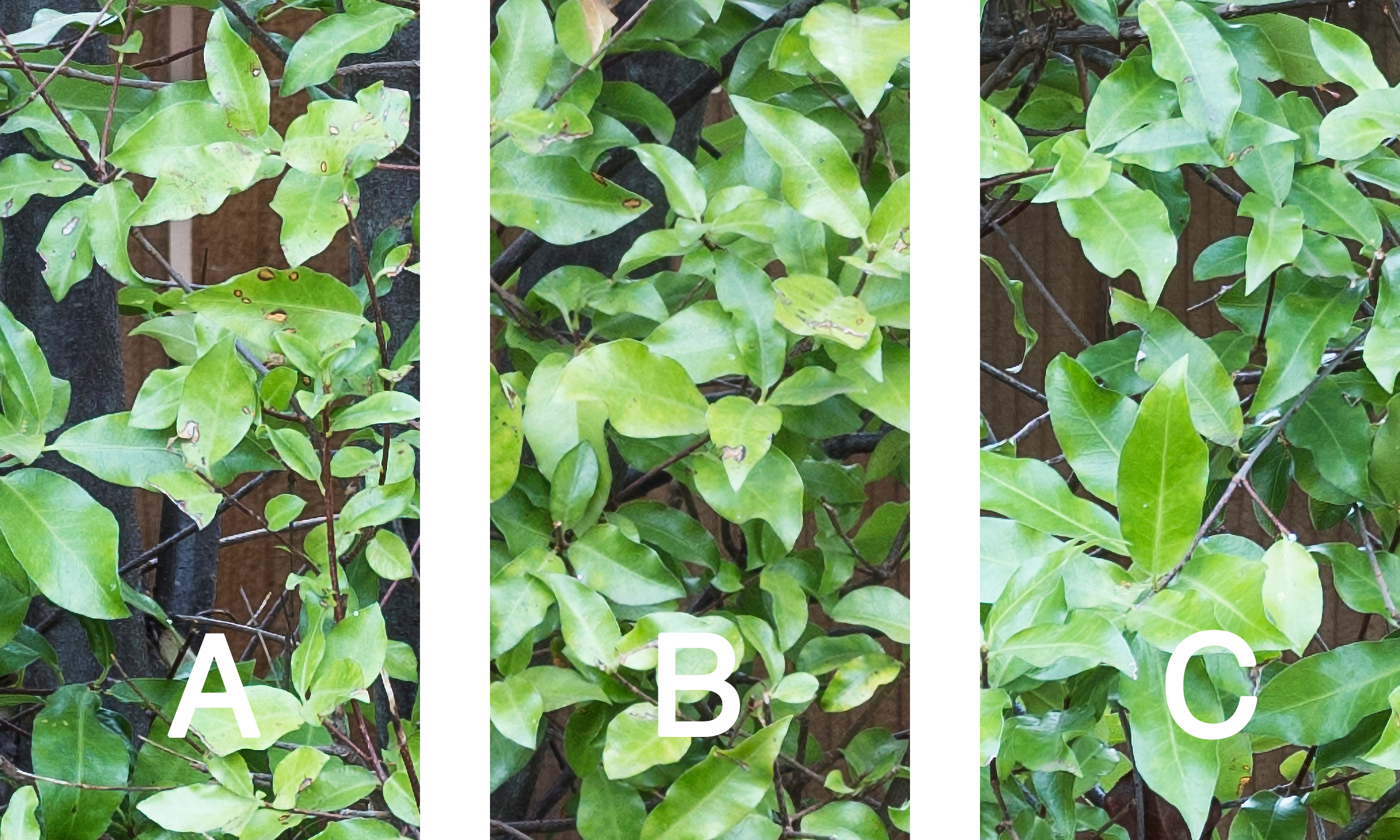
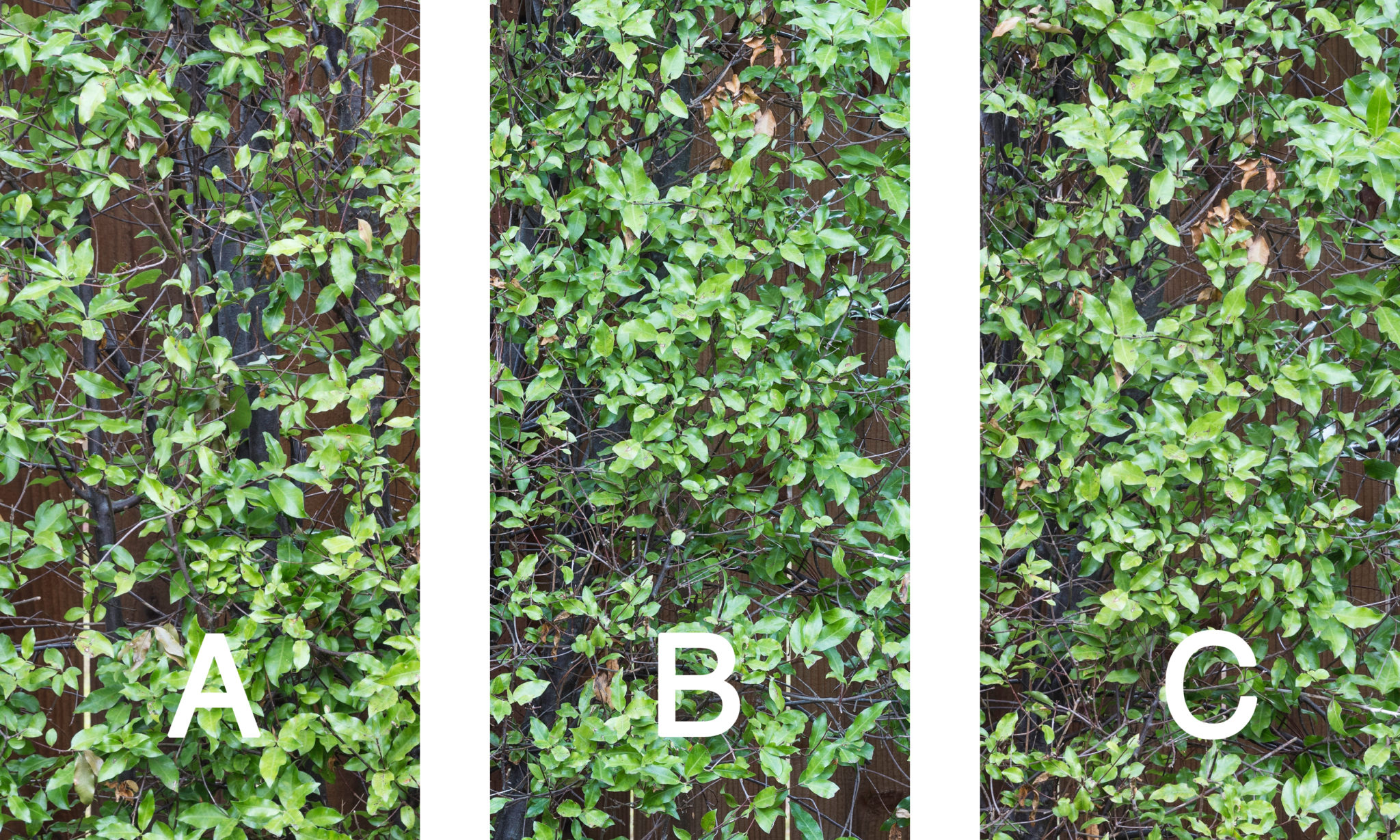
With that in mind, I have prepared some files that may be useful for comparing print resolution from Fujifilm GFX 50S and the Canon 5DsR. These files each hold three “test strips” labeled A, B, and C. The files have been formatted for producing prints with a print area of 10″ wide and 6″ tall (use letter-size paper) when printed at a resolution of 360. They are sRGB color files in the highest quality (Photoshop: 12) jpg format.

There are four files. Let’s call them:

(Click on the links to see and download the files.)

IMPORTANT NOTE: When first posted, these links went to downsized files rather than the full size print-ready files. This was corrected on 1/21/18. The print areas of these files should be 3600 pixels on the long side, for printing 10″ long at 360 ppi.

Viewing them on screen is not the object here — in fact, for reasons I won’t go into here, trying to evaluate that way is of very limited value and may mislead you. (For example, the files have been optimized for print in ways that may make them look poor on screen at 100% magnification.)

You will need to print.

Since there are four samples, you’ll need to make four letter-size prints. The correct settings will probably be entered automatically, but check that the print area is 10″ wide and 6″ tall and that the resolution is set to 360.  As you download and print the files you may wish to make a note on each (in pencil or ink) indicating which file it is — sample 1, sample 2, sample 3, and sample 4.

Observe each print carefully. Note anything you can see related to the resolution of each printed strip A, B, and C. (Note that this is only a resolution test — don’t worry about things like image size, brightness, color, and so forth.)

In order to avoid confirmation bias I’m not going to reveal anything else about the files at this time. Once a few people (or a lot of people?) have weighed in with their observations — please use the comments below — I’ll reveal more important information about what you are looking at.


G Dan Mitchell is a California photographer and visual opportunist. His book, “California’s Fall Color: A Photographer’s Guide to Autumn in the Sierra” is available from Heyday Books and Amazon.
Blog | About | Flickr | Twitter | FacebookGoogle+ | LinkedIn | Email


All media © Copyright G Dan Mitchell and others as indicated. Any use requires advance permission from G Dan Mitchell.