
Recently I have heard some photographers suggest that IBIS-equipped cameras have made tripods obsolete. IBIS is a fine thing, but that overstates the case.
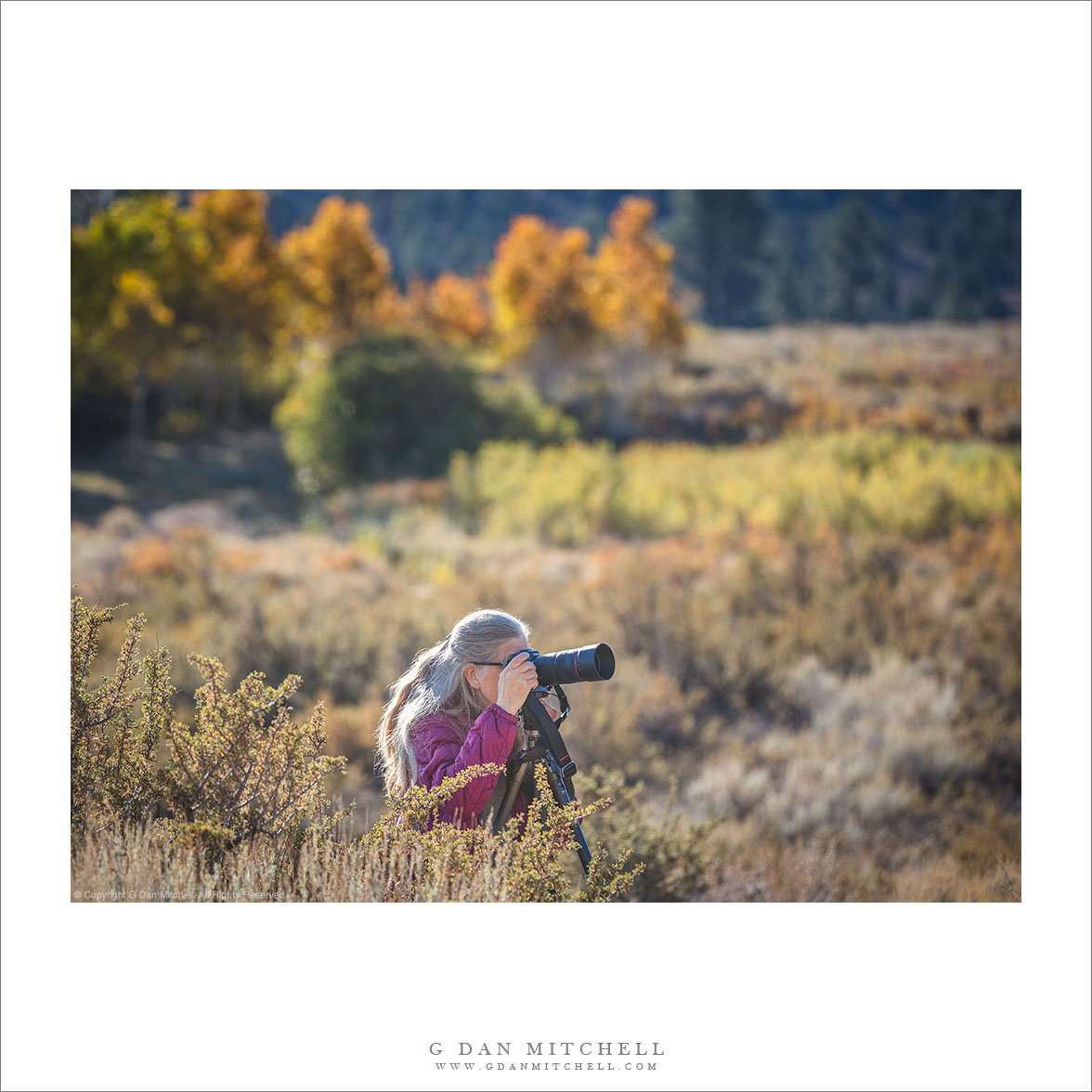
Contemporary cameras incorporate remarkable advances in camera and lens image stabilization. Some newer cameras with IBIS (In-camera Image stabilization) claim to extend the useful range of shutter speeds for handheld photography by as much as seven stops.
IBIS can be very useful for photographers who shoot handheld. I do urban night street photography using a handheld, IBIS-equipped camera that supports high ISOs — and I can capture subjects that would have been just about impossible to photograph a few decades ago.
In theory, if you can steadily hold a camera without image stabilization at a shutter speed of, say, 1/20 of a second (arbitrarily chosen for this illustration) you might get away with a handheld exposure of a second or more in some situations using IBIS! When we combine this with modern cameras that support very high ISOs, this should allow us to photograph in extremely low light using handheld cameras. (In reality, IBIS can be a bit more limited than the claims suggest, and don’t forget that subjects still tend to move… and blur.)
The capabilities of IBIS have led some photographers to propose that tripods are no longer necessary for photographic genres that have generally required them, such as landscape and architecture photography.
That sounds quite appealing! After all, using a tripod complicates photography. It isn’t fun carting around a big tripod. It takes time to set it up and break it down after a shot. It takes more time to attach the camera and level it. It is easier to aim the camera where you want when you hold it in your hands. You need to add plates to the camera to attach it to a tripod. Good tripods and tripod heads can cost hundreds or thousands of collars.
But you may want to temper your enthusiasm! IBIS is very useful, but there are still lots of reasons to use a tripod for the sorts of photography that have traditionally called for one.
Camera Stability: Tripods Versus IBIS
It is possible to produce a sharp photograph with a handheld camera, especially if you have steady hands, use a fast enough shutter speed, press the shutter release button very carefully, and hold your breath. And using IBIS (or lens stabilization) can increase the odds of success significantly.
When all of these factors come together you can produce a very sharp image without a tripod. But they don’t always come together. It is easy to forget to take the care necessary to fully control camera motion. Image quality will suffer when that happens. IBIS improves things, but it is not perfect.
With the camera locked down on a solid tripod, there is essentially no camera motion at all, and the camera can be steady 100% of the time. With the camera in your hands, things are less consistent. In a series of exposures, some may be very sharp but others may be affected by vibration and motion, even with IBIS engaged. This is more true as you push the boundaries of longer exposures when the light is low and/or you use smaller apertures and low ISOs. The bottom line is that the shots from the handheld camera are unlikely to be as consistently sharp as those from the tripod-mounted camera, even when IBIS is used.
Does this matter? It depends on your expectations. If you are making relatively casual photographs, perhaps of family and friends on vacation and/or you will only reproduce the photographs at small sizes or in emails, texts, and on web pages, then perfect sharpness is arguably not so critical. But if you spend many thousands of dollars on an excellent cameras and superior lenses, do you really want to limit the performance of the system by being casual about camera stability? And, of course, if you plan to make very large prints you’ll want the sharpest image possible — and that still comes from using a tripod to keep the camera completely still.
But That’s Not All…
Avoiding the degradation of camera stability from shooting handheld is not the only reason for using a tripod. In fact, other reasons may be just as important.
There is a lot to keep track of when carefully working out a composition: what is happening with the primary subject, what secondary subjects are doing, changes in lighting, waiting for a pause in the wind, precise positioning of elements near the edges of the frame, keeping the camera level, and more. If you don’t believe me, try making two successive exposures of the same scene a few seconds apart using a handheld camera and see if they are actually identical. The issue is more acute when you aren’t trying to prove that you can do it. ;-)
The photographer can lock down the composition when the camera is on a tripod. The composition can be worked out carefully and precisely, precise and small adjustments can be made, the relative positions of elements can be considered thoughtfully, frame edges can be checked, and the camera can be leveled and will stay that way.
We can focus with greater precision, either by carefully positioning auto-focus points exactly where we want them or by using a magnified view to focus manually with greater accuracy. We can check depth of field by manually closing down the aperture while looking at the rear screen and panning the viewing area around the scene to check focus at varying distances.
Once the composition is established we can pay attention to other camera adjustments without worrying about having to reestablish the composition. Since the camera doesn’t move we can change any setting, either using physical controls or by accessing camera menus. We can even walk around to the front of the camper to get better access to some controls.
In difficult lighting situations, such as when the sun is directly in front of the camera, we can use a free hand (or hands) to shade the front of the lens and control flare. Sometimes we might even hold a branch or leaf out of the way of the camera if it blocks the scene.
With the camera on a tripod we not only can immobilize the camera to reduce vibration, but we can use a remote release or a timer to eliminate potential motion caused by pressing the shutter release.
Working from a tripod eliminates registration problems between frames. In challenging exposure situations we can combine frames to expand the dynamic range via exposure bracketing, apply focus bracketing (combining frames with different focus to extend the depth of field), or combine the best parts of two or more exposures. Image stitching — combining multiple overlapping frames to create large panoramic images, for — is much more accurate when using a tripod.
Even in low light, sometimes it is better to stick with a low ISO and smaller aperture with a longer exposure rather than using a higher ISO to keep the exposure short enough for hand-holding the camera. In a dark scene I might get away with raising the ISO to 6400 and opening the lens to f/2, but I’ll get more depth of field and better image quality if I lengthen the exposure time, shoot at the camera’s base ISO, and use a more ideal aperture with the camera on the tripod.
So, Do You Need A Tripod?
Not necessarily. As mentioned above there are situations in which a tripod may not be necessary or even appropriate: fast-moving street photography, certain kinds of sports photography, birds in flight, and other similar subjects. And if your expectations are a bit less precise, you might b willing to accept a small increment of camera vibration blur or a higher percentage of shots that are a bit blurred by camera motion.
I do not always use a tripod, and I do rely on image stabilization, either IBIS or lens-based when shooting handheld. It simply is not practical to use a tripod in all cases.
But if your style of photography requires precision — of focus, of timing, of composition — or if you need to use techniques like focus- or exposure-blending, or if you prefer to maintain optimal image quality by using lower ISOs and optimal apertures, a tripod gives you levels of control that you won’t have if you hand hold the camera, even with an advanced IBIS system, and it can materially improve your photography.
Leave a comment or question using the form. (Click the title to see the full article and to comment if you are viewing it on the home page.)
G Dan Mitchell is a California photographer and visual opportunist. His book, “California’s Fall Color: A Photographer’s Guide to Autumn in the Sierra” (Heyday Books) is available directly from him. Blog | Bluesky | Mastodon | Substack Notes | Flickr | Email
All media © Copyright G Dan Mitchell and others.
Discover more from G Dan Mitchell Photography
Subscribe to get the latest posts sent to your email.
The merits of the tripod (not only) when composing images are there, without any doubt, but I have to state that I do love image stabilisation: in Bavaria we have quite long dusks/dawns everyday, plus bad weather days, so stabilisation extends the usable daylight time, which is really important when trying to incorporate photography into commuting and/or impromptu time slots in a busy family life. So I profited from i.b.i.s. a lot – and look forward to retirement, when there should be more opportunities to make use of my tripod ;)
Markus,
I agree with you that Image stabilization, and especially IBIS, is a very valuable addition to our cameras. I rely on it for my off-tripod work, including my street and travel photography, along with much of my wildlife photography.
Speaking of street/travel photography, one of the pluses of IBIS over stabilized lenses is that it works with any lens, even older lenses made before stabilization existed.
A good article on tripod usage. For many years, I used a 4×5 view camera (sometimes I still do), so a tripod was pretty much mandatory. I got so used to it that it was second nature. Using the view camera on a tripod allowed me to think out my composition more thoughtfully, and I was more sure of focus and exposure. This also inspired confidence that with only one shot, I had the photograph that I wanted. These past few years, I have been shooting mostly with digital cameras, and I have continued with the habit of bringing a tripod with me and using it. None of my digital camera bodies has anti-shake control, and only one lens I have has the feature.
Gary, I don’t have your background with the 4×5, but I would find it extremely difficult to do the landscape photography I do without relying on the tripod. It isn’t so much about camera stability for me — though that is Cleary critical — as it is about the compositional and related benefits. Working out a solid composition takes more that pointing the camera in the right general direction, as you know. The tripod makes the camera stable and accurately adjustable so that I can get and hold the exact composition hat I want.
I agree, I too would find it difficult to do my landscape photography without relying on using a tripod. I find that using a tripod has benefited my compositional eye.
Gary, I absolutely agree with that, especially in the context of landscape photography. I think the situation would be similar for other genres, too, such as architectural photography and some kinds of portrait photography.
I have gotten so used to having a tripod when out photographing landscapes, I would miss it a lot if I didn’t have it with me. I have even used my tripod when photographing some portraits.