Tag Archives: test

“My Photos Are Soft!”

So, you have a camera or lens that you think is not as sharp as it should be. If you are already expert at these things, what follows is not for you – you already know how to analyze the problem, you can anticipate possible causes, and you know some of the pitfalls of looking at the issue in unrealistic ways. But if you aren’t certain about how to deal with the issue, perhaps the following might help… so feel free to read on.

Perhaps you just got a new lens or a new camera and you don’t think it is performing as you expected. Or perhaps you have long suspected a problem with your equipment. On the other hand, maybe some gear that you have used with confidence for a while seems to not work as well as you recall it working in the past. It can be tempting to blame the equipment – and in some cases you may be correct – but it is a very good idea to first try to analyze and understand the problem and look for other possible causes… and solutions.

It is critical that you try to control the variables that might give rise to the issue, and then to try to a) determine if the problem is real, and b) figure out specifically what might be the cause. The range of possible causes is larger than you might imagine: problems with the camera’s autofocus (AF) system, an out of adjustment or “weak” lens, less than optimal choice of lens settings, issues with camera stability, insufficient care with the use of AF, using the wrong AF settings, aperture choices, shutter speed choices, subject motion, and more. While a real equipment problem is a possibility, it is probably at least as likely that the problem lies elsewhere. Fortunately there are ways to wade through this minefield and develop some rational understanding of what is going on.

What follows is a sort of ad hoc description of how I might approach this. It is not meant to be the only way to deal with such issues, it leaves out some possibilities, and the sequence could be changed around in some ways. Continue reading “My Photos Are Soft!”
Experiment #2: A Hint

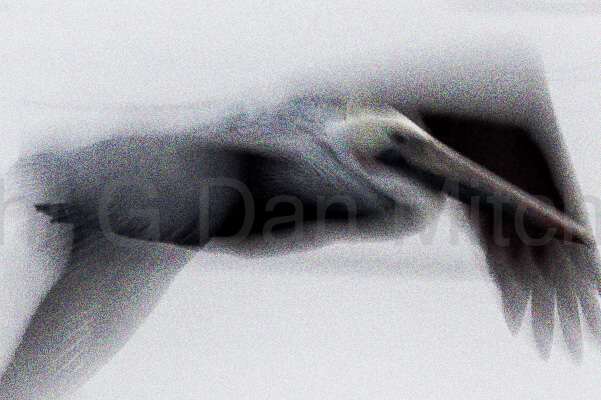
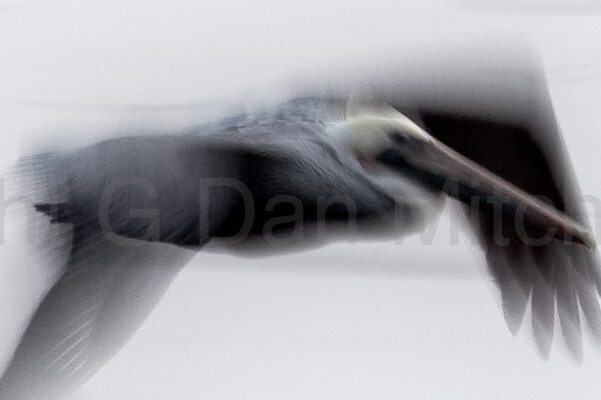
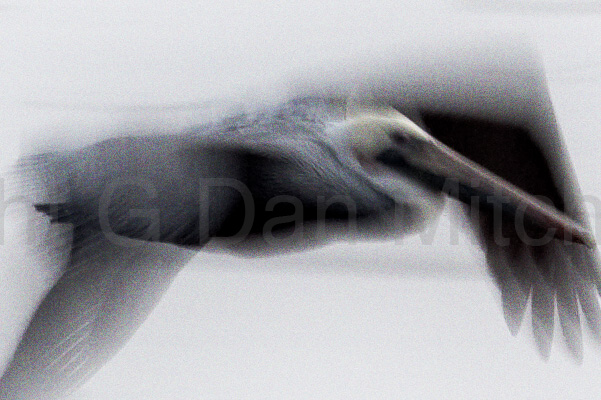
Here are the three source images:

The differences among them are obviously in the amount of noise that was added to the image. No noise was added to the first image – any noise there was in the original capture. 10% level “Uniform” noise was added to the second image in Photoshop. 20% “Uniform” noise was added to the third image in the same way.

The soft photograph was chosen to avoid masking the noise with a lot of other sharp detail – this image provides very smooth gradients from black to white, where noise is typically easier to detect. I also chose this image because it is nearly – but not quite – monochromatic. This meant that I could increase the effect of the noise by using color noise rather than limiting to monochromatic noise – and that the color noise would tend to be more visible against the nearly monochromatic background.

The original set of 6 jpgs includes two from each of the three versions shown here. For last-minute fun you could still visit the comment page and try to a) determine whether or not the differences are visible and b) which pairs of images are the least noisy, more noisy, and most noisy.

More information to come later this evening.


G Dan Mitchell is a California photographer and visual opportunist. His book, “California’s Fall Color: A Photographer’s Guide to Autumn in the Sierra” (Heyday Books) is available directly from him.

G Dan Mitchell: Blog | Bluesky | Mastodon | Substack Notes | Flickr | Email


All media © Copyright G Dan Mitchell and others as indicated. Any use requires advance permission from G Dan Mitchell.

I’m Considering a Change to the Discussion Software – Perhaps Moving to Disqus?

Recently I ran a little experiment and replaced the built-in discussion/comment feature at my dan’s outside blog with the Disqus equivalent. The experiment seems to have gone well: people continued to post a few messages on that low-traffic site, there were no complaints, and Disqus seems to provide some interesting features.

With that test under my belt I’m considering making the switch here as well. It appears that previous comments will all be ported over to the new service and will still be available here – on the same pages if I’m not mistaken. If anyone has any warnings, concerns, or advice… now would be a great time to drop me a line or leave a comment!


G Dan Mitchell is a California photographer and visual opportunist. His book, “California’s Fall Color: A Photographer’s Guide to Autumn in the Sierra” (Heyday Books) is available directly from him.

G Dan Mitchell: Blog | Bluesky | Mastodon | Substack Notes | Flickr | Email


All media © Copyright G Dan Mitchell and others as indicated. Any use requires advance permission from G Dan Mitchell.

Quick Report on Canon EOS 5D Mark II Battery Performance

After four days photographing – in sometimes stunning conditions – in the Tuolumne Meadows area of Yosemite, it seems odd to make my first post about a technical issue. But, here I go.

People wonder about the LP-E6 battery performance of the Canon EOS 5D Mark II camera. While I haven’t conducted and “scientific” tests of battery performance, what I have observed thus far is quite encouraging. Over the past three and a half days or so I made 533 exposures plus a few more that I deleted in the camera. I do a fair amount of “chimping” and I used the live view feature just a bit. After all of that the battery life indicator still showed two our of four bars.

All in all, I think this seems like great battery life. Many 5D II shooters will find that one battery is sufficient, and very few  should need more than one spare. (I currently have one spare. Because of some unusual use patterns – including backcountry pack trips of one to two weeks duration – I’m considering one more spare.)


G Dan Mitchell is a California photographer and visual opportunist. His book, “California’s Fall Color: A Photographer’s Guide to Autumn in the Sierra” (Heyday Books) is available directly from him.

G Dan Mitchell: Blog | Bluesky | Mastodon | Substack Notes | Flickr | Email


All media © Copyright G Dan Mitchell and others as indicated. Any use requires advance permission from G Dan Mitchell.