
Category Archives: Photographs: Southern California

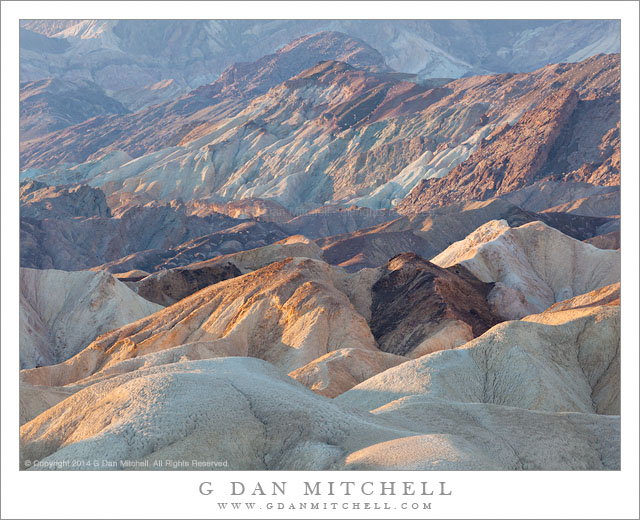
Badlands, Morning

Badlands, Morning
Badlands, Morning

Badlands, Morning. Death Valley National Park, California. April 3, 2014. © Copyright 2014 G Dan Mitchell – all rights reserved.

Morning light on rugged badlands, Death Valley National Park

This was a different sort of Death Valley visit than usual. My typical visit takes a pretty uncivilized approach. I always camp, sometimes in the back of my vehicle so that I can be in the right places quickly. I virtually always work completely alone, aside from occasionally running into another photographer or two. With the exception of a restaurant meal or two, I typically eat one backpacker-style hot meal in the evening, usually after returning from an evening shoot after dark, and the rest of the time I “browse” on whatever I can have with me. To a non-photographer that may sound somewhat rough, but photographers understand that this keeps me mobile, “out there” in the field, and gets me to places I might not see and experiences I might not have otherwise. I’m fine with it!

But this time, my wife came along. Aside from the expected changes this brings—she isn’t a camper, so we stayed at Stovepipe Wells—it also presents the opportunity to see the area through a different set of eyes and to revisit some of the more familiar places that I might otherwise not photograph. In the “different set of eyes department,” she is an avid photographer of very small things, mostly wildflowers. A few years ago she began to come along on a few of my shoots and then to carry a camera. While I would be off photographing some Big Thing, she would be crouched down in the brush somewhere finding an amazing flower that I hadn’t even realized was there. (A bit later I’ll post a few wildflower photographs from this trip, including many photographs of flowers I would likely have overlooked if she had not been along for the ride.) In addition, since she had never been to Death Valley before, it was important to hit some of the iconic locations in addition to heading out to some of the less visited places that I know about. With this in mind, I planned a morning at Zabriskie Point. Zabriskie is, to borrow a phrase, an icon for a reason. Since I’ve photographed extensively in the park for a decade now, I don’t usually photograph there unless I expect something truly exceptional or unusual. But, let’s be honest, a new visitor to DEVA must experience a sunrise at Zabriskie, which is just what we did on this morning. This did give me an opportunity to engage in a little informal project that I’ve been playing with for a few years, one that has me pointing my camera away from the familiar grand view over Gower Gulch and Manley Beacon toward the Valley and the Panamint Mountains and toward some of the other geological features found here.

G Dan Mitchell is a California photographer and visual opportunist whose subjects include the Pacific coast, redwood forests, central California oak/grasslands, the Sierra Nevada, California deserts, urban landscapes, night photography, and more.
Blog | About | Flickr | Twitter | FacebookGoogle+ | 500px.com | LinkedIn | Email

Text, photographs, and other media are © Copyright G Dan Mitchell (or others when indicated) and are not in the public domain and may not be used on websites, blogs, or in other media without advance permission from G Dan Mitchell.
Desert Mountains, Rain

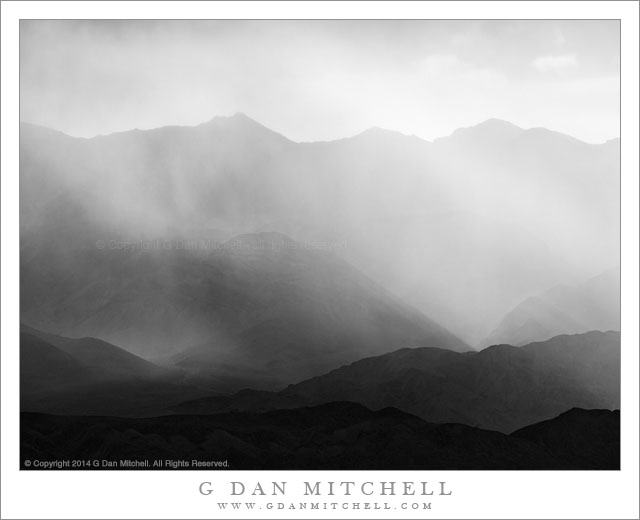
Desert Mountains, Rain

Desert Mountains, Rain. Death Valley National Park, California. April 2, 2014. © Copyright 2014 G Dan Mitchell – all rights reserved.

Rain falling from a dissipating afternoon storm is backlit above desert mountains, Death Valley National Park

This was anything but an ordinary Death Valley day—though I’m not sure that any Death Valley day is likely to be ordinary. We began very early, awakening a couple of hours before dawn. The plan was to be far up in the Panamint Mountains before sunrise, in the hope of photographing the first light over the Valley from a high and wild place. I try to assess the weather conditions in the dark in any way that I can—checking wind, looking to see if stars are visible, and so forth. In the darkness I could tell that only a few stars were visible and that their light was muted, all of which suggested cloudiness. This was, of course, in line with a weather forecast that mentioned things like showers and snow flurries and clouds. However, you can’t tell what will happen until you go out there and watch it happen, so we headed up into the mountains.

Most of the story of this day will wait for photographs of that early morning and the rest of the day in the Panamint range that followed. However, for now I will mention that it was cloudy, it was cold, and it snowed. Later in the day the weather began to clear and we saw some sun before we came back down from the mountains, with plans for an evening shoot in a different location on our minds. As we descended we noticed precipitation in the mountains to our north and west—more or less in the Cottonwood Mountains. We stopped and photographed this weather before heading down into the Valley. Our plans were changing with the weather, and we ended up heading to a high place with a good open view of much of the Valley, figuring that the changing light from the clouds might present quickly changing opportunities. Sure enough, as soon as we arrived at our location we could see that the clouds over the Cottonwood range were quickly thinning, and that backlight was illuminating the last rain falling over the receding ridges of this range, creating a very bright and constantly changing effect.

G Dan Mitchell is a California photographer and visual opportunist whose subjects include the Pacific coast, redwood forests, central California oak/grasslands, the Sierra Nevada, California deserts, urban landscapes, night photography, and more.
Blog | About | Flickr | Twitter | FacebookGoogle+ | 500px.com | LinkedIn | Email

Text, photographs, and other media are © Copyright G Dan Mitchell (or others when indicated) and are not in the public domain and may not be used on websites, blogs, or in other media without advance permission from G Dan Mitchell.
An Informal (and Surprising!) Death Valley Wildflower Report

Gilia Buds
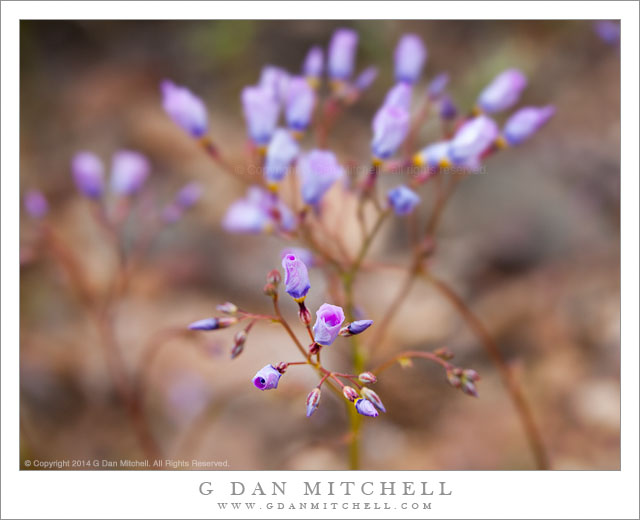
Gilia Buds

Gilia Buds. Death Valley National Park, California. April 2, 2014. © Copyright 2014 G Dan Mitchell – all rights reserved.

Gilia buds opening on a rainy day, Death Valley National Park

This is going to be a sort of hybrid post, covering two subjects and out of phase with my normal daily photograph posts. Think of it as a bonus post—a photograph and an informal report on Death Valley National Park wildflowers. The description of this photograph follows the report on Death Valley wildflower conditions.

Wildflower Conditions

By now it is no longer news that California and other parts of the west are in the throes of a very serious drought. The situation is especially serious in California, which is now experiencing the worst in a series of three below-normal precipitation years. Many parts of the state are experiencing what have been described as historic drought conditions. The situation remains critical—and many of us are worried about the upcoming wildfire season—though recent March and early April rains brought a bit of relief.

All spring I have been hearing that the drought would make this a poor year for desert wildflowers in Death Valley. However, I knew that Death Valley had experienced some rain events in the past few months and that desert plants are quite opportunistic, often quickly blooming in response to moisture. I know Death Valley fairly well, though I’m no expert on wildflowers. However, I had a hunch that we might be surprised by how the wildflower season would play out.

We visited the park for several days right around the beginning of April. Even before we arrived, we saw a decent number of wildflowers as we drove across other desert areas on the way to the park. It seemed like plants were acting in the opportunistic manner I describe above and quickly sprouting up and blooming in response to recent rains. As we entered the park and crossed Towne Pass we (especially my wife, who is passionate about photographing the “small things”) began to notice a lot of wildflowers in many places, including whole beds of colorful flowers in many places along this drive. While we did not see the tremendous blooms on the Valley floor that can occasionally occur, once we got up into higher country we saw flowers everywhere, at least when we slowed down and looked. There was more rain and snow during our visit, and the additional moisture is bound to encourage other plants and flowers to grow.

I just saw a report at the Desert USA website (which names the flowers in ways that I cannot hope to do) confirming what we saw—that there is actually a substantial bloom of desert wildflowers in many places. If you have the opportunity to head out that way soon, do so!

About the Photograph

Believe it or not, it was snowing lightly when I made this photograph! We began our day by driving on gravel roads before sunrise to reach a high location in the Panamint Range from which we planned to photograph at sunrise. The sunrise photography turned out to be a challenge, as it was cloudy at first light and the clouds only increased as the sunrise progressed. Soon we began to notice snow falling on nearby peaks, though it did not fall where we were until after we moved on. Later, in a less exposed location but with temperatures in the low thirties, we encountered our first very light snowfall, and we could see that it was snowing more heavily on the peaks and ridges around us.

We moved on, heading up into Wildrose Canyon. My original plan had been to drive to the end of the road, but by the time we reached the Charcoal Kilns it was snowing hard enough that this no longer seemed like a great idea. In fact, other drivers with two-wheel drive vehicles were having problems ascending the last section of the road to the kilns. We photographed the snowy conditions here and back in Wildrose Canyon, and then as the snow abated a bit we drove on, heading back in the direction of Emigrant Pass. Not far from the pass we found a hillside covered with a spectacular display of flowers. At first it was some cacti that caught our attention, but as we got out and looked around we saw many, many flowers all around. These gilia buds had not yet opened into their more showy display.

G Dan Mitchell is a California photographer and visual opportunist whose subjects include the Pacific coast, redwood forests, central California oak/grasslands, the Sierra Nevada, California deserts, urban landscapes, night photography, and more.
Blog | About | Flickr | Twitter | FacebookGoogle+ | 500px.com | LinkedIn | Email

Text, photographs, and other media are © Copyright G Dan Mitchell (or others when indicated) and are not in the public domain and may not be used on websites, blogs, or in other media without advance permission from G Dan Mitchell.

Rocks, Sand, Wood

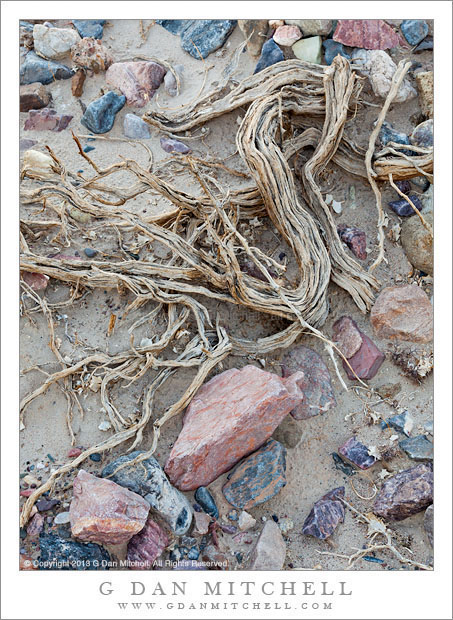
Rocks, Sand, Wood
Rocks, Sand, Wood

Rocks, Sand, Wood. Death Valley National Park, California. December 12, 2013. © Copyright 2014 G Dan Mitchell – all rights reserved.

Colorful detritus of rocks, sand, and wood along the desert floor of Death Valley National Park

Death Valley National Park is landscape on the gigantic scale and a landscape of extremes. Elevations range from below sea level to over 11,000′ At the right time of year you can stand in 90 degree or hotter temperatures in the lowest place and look up to see snow on the highest peaks. It is well-known that the heat and aridity are extreme. The scale of the place is stupendous. When I first traveled in the park it reminded me, perhaps in a surprising way, of monumental landscapes that I had seen in The Yukon and Alaska, where the land seems to go on farther than one can see. Because there is so little vegetation, the geology of this desert landscape is laid bare, and rugged strata are easy to see.

But there are also surprises right underfoot. At the right time during the right years (and this photo was not made at such a time) small plants and wildflowers emerge and insects and other small critters can be seen. Some of these intimate landscape scenes seem more mundane, but they also tell stories worth hearing. This small patch of earth is at the base of some small, eroded hills along the east side of Death Valley where I have stopped from time to time. It is not an obviously special place – there is no parking lot or sign. The first time I went there to photograph in the evening I looked down and noticed the dense collection of multi-colored rocks, dead plants, and sand, and now when I go back there I seem to always end up looking for the same thing. The curving bit of dried wood was once a plant eking to a life at the edge of the main valley. These rocks are likely evidence of the surprising role that water plays in the formation of this landscape, having been washed down from those various strata and formation high in the Amargosa Range, leaving traces of blue, pink, purple, tan, and green minerals. And below and mixed in with all of this is the omnipresent sand, deposited and moved to and fro by Valley winds.

G Dan Mitchell is a California photographer and visual opportunist whose subjects include the Pacific coast, redwood forests, central California oak/grasslands, the Sierra Nevada, California deserts, urban landscapes, night photography, and more.
Blog | About | Flickr | Twitter | FacebookGoogle+ | 500px.com | LinkedIn | Email

Text, photographs, and other media are © Copyright G Dan Mitchell (or others when indicated) and are not in the public domain and may not be used on websites, blogs, or in other media without advance permission from G Dan Mitchell.