
Tag Archives: historic

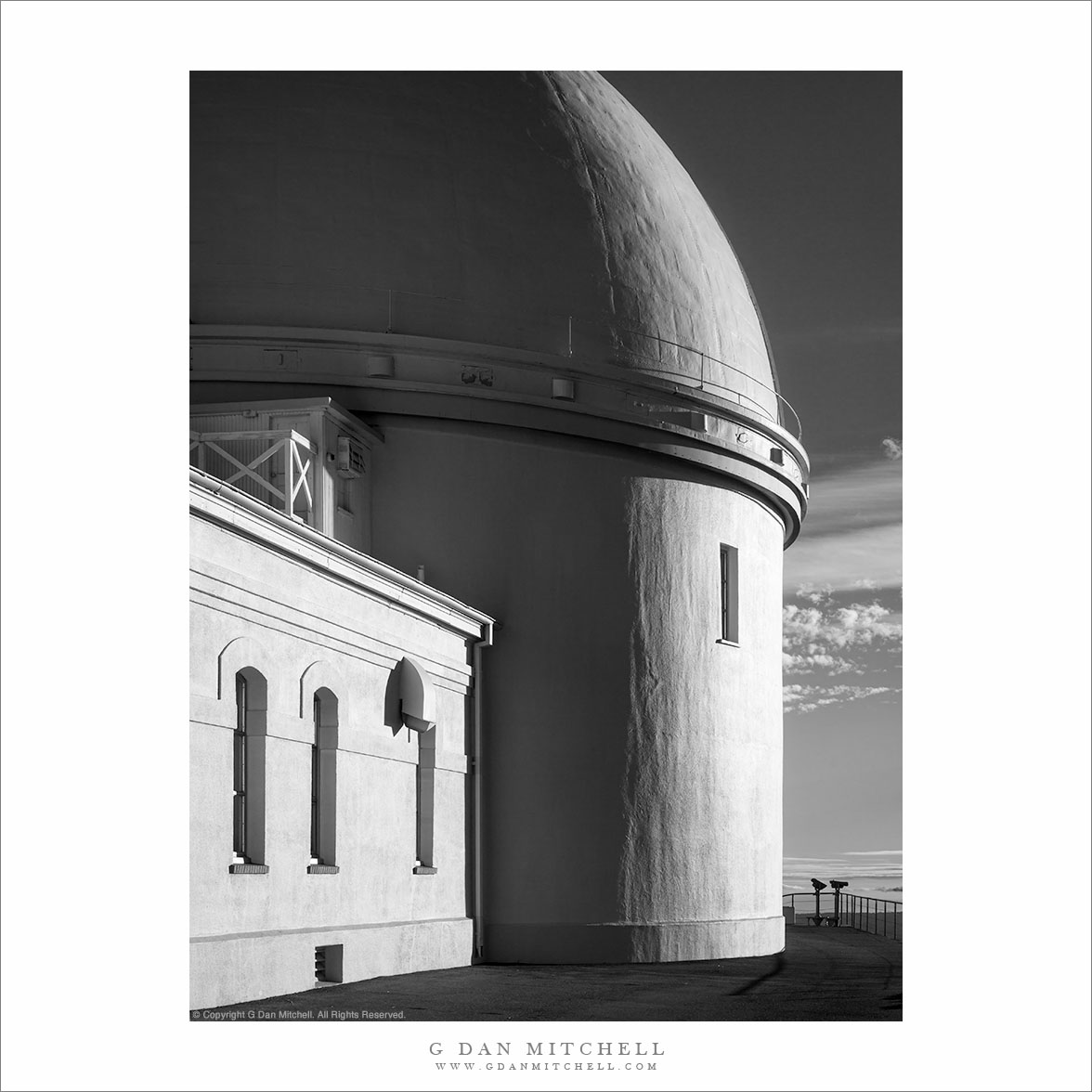
Building 237, Evening

Building 237, Evening

Building 237, Evening. Mare Island Naval Ship Yard, Vallejo, California. April 5, 2014. © Copyright 2014 G Dan Mitchell – all rights reserved.

Evening light on Building 237 at the Mare Island Naval Ship Yard, Vallejo, California

This is one of a pair of buildings that has featured in several of my night photographs at the Mare Island Naval Ship Yard, where I’ve been photographing after dark for about a decade now. The location is the site of the former and now historic naval ship yard that was the first on the west coast of the United States, being established way back in the 1800s. It was decommissioned in the 1990s, and since that time the facility changed in many ways. Parts of the island are now open space, others have been turned into urban developments, businesses and others are using some of the old buildings and spaces—yet parts of the facility have been retained as a sort of informal historic site.

The buildings in the cluster of which this one is a part are very close to the “historic core” of the ship yard. Although many of the buildings give the appearance of being abandoned, some are in use and all are kept in a sort of state of suspended animation. Almost all of my photography here has been at night, when a diversity of light sources transform it in magical ways. During the day, much of it can seem quite mundane. Buildings that are wildly colorful when lit by brilliantly colorful sodium vapor lights and other colorful light sources often turn out to be quite drab in the day time. On this visit I managed to arrive before sunset, and I headed out to see if the golden hour light might offer some opportunities for a different sort of visual transformation of these buildings, and this one was photographed during the final few minute of daylight.

G Dan Mitchell is a California photographer and visual opportunist whose subjects include the Pacific coast, redwood forests, central California oak/grasslands, the Sierra Nevada, California deserts, urban landscapes, night photography, and more.
Blog | About | Flickr | Twitter | FacebookGoogle+ | 500px.com | LinkedIn | Email

Text, photographs, and other media are © Copyright G Dan Mitchell (or others when indicated) and are not in the public domain and may not be used on websites, blogs, or in other media without advance permission from G Dan Mitchell.
Rusting Building, Leadfield

Rusting Building, Leadfield

Rusting Building, Leadfield. Death Valley National Park, California. April 1, 2014. © Copyright 2014 G Dan Mitchell – all rights reserved.

A rusting corrugated building, one of the few remaining structures at the ghost town of Leadfield, California

This is one of the few standing structures remaining from the boom town of Leadfield, in the backcountry of Death Valley National Park, in the Grapevine Mountains more or less midway between the Beatty, Nevada area and the main Death Valley. The standard story is that this town was the result of one of the biggest swindles and scams in the mining history of the area, and the story is often told of the main promoter salting the mine with ore brought in from other locations and producing brochures featuring boats on the Amargosa River… which is typically completely dry. In the process of preparing this photograph to share I did a bit of reading, and it seems like the story might not be quite so simple nor so dramatic. Apparently there was a history of prospecting and mining in this area before the town was created in the mid-1920s, and lead and perhaps silver were actually mined from the place. A range of problems led to its downfall—the distance the ore needed to be transported, problems with the sale of shares in the mines—but it may not be true that the mine itself was essentially just a scam.

This building is well-known to those who have visited the place, as it is one of two buildings that still stand. Both are located near the entrance to one of the mine shafts, and it seems likely that this was not a residence but rather some building related to mine operations. Today it is a mere shell, but I find it amazing that it still stands nearly 90 years after the “town” (which apparently consisted largely of tents) was abandoned. Even more amazing is to stand at this spot and look out at the surrounding landscape—a rugged and uncompromising mountainous desert terrain—and imagine what it must have been like to live and work in such a place.

G Dan Mitchell is a California photographer and visual opportunist whose subjects include the Pacific coast, redwood forests, central California oak/grasslands, the Sierra Nevada, California deserts, urban landscapes, night photography, and more.
Blog | About | Flickr | Twitter | FacebookGoogle+ | 500px.com | LinkedIn | Email

Text, photographs, and other media are © Copyright G Dan Mitchell (or others when indicated) and are not in the public domain and may not be used on websites, blogs, or in other media without advance permission from G Dan Mitchell.
Mining Relic, Death Valley

Mining Relic, Death Valley
“Mining Relic, Death Valley” — A piece of rusted and weathered metal from an abandoned mining site, Death Valley National Park

Between having our sunrise light interrupted by an incoming storm (though it was not a compete washout) and retreating from the road past the charcoal kilns in heavily falling snow, we stopped for a while at the old Harrisburg site, where Harris and Aguereberry ran a mine for a number of years. (They reportedly didn’t get rich, but they also avoided going bust—the story is that they extracted enough ore to make it work.)

Calling the place “Harrisburg” is over-selling it! There is a small cluster of cabins—three, to be precises—tucked up into a slight indentation at the base of a low hill in a high, broad Panamint Range valley.The mine is found at the far end of the hill and around its far side, and a variety of mining detritus litters the landscape: remnants of old rails leading into the mine, some impressive scaffolding, lots of rusted stuff, an old abandoned vehicle. As we poked around near the mine I found this old hunk of weathered sheet metal hanging from some wooden structures.


Leave a comment or question using the form. (Click the title to see the full article and to comment if you are viewing it on the home page.)

G Dan Mitchell is a California photographer and visual opportunist. His book, “California’s Fall Color: A Photographer’s Guide to Autumn in the Sierra” (Heyday Books) is available directly from him. Blog | Bluesky | Mastodon | Substack Notes | Flickr | Email

All media © Copyright G Dan Mitchell and others.

Skidoo Mill

Skidoo Mill
Skidoo Mill

Skidoo Mill. Death Valley National Park, California. April 2, 2014. © Copyright 2014 G Dan Mitchell – all rights reserved.

The abandoned Skidoo Mill, high in the Panamint Mountains of Death Valley National Park

I have been out to the site of the old ghost town of Skidoo a few times. Oddly perhaps, snow has played a part in more than half of my visits—not what you might expect for a desert region like Death Valley. The first time I went there I really did not know much about the place at all, and I drove the nine mile gravel road more or less on a whim, arriving at the broad valley where the main town was, finding little there, poking around a bit, and leaving, a bit disappointed. (I did have a chance to investigate some other historical sites in the area on the same trip, so in the end I didn’t feel cheated.) More recently I visited last winter, during a very cold trip to the park when I encountered sub-freezing temperature down in Death Valley itself and colder temperature well down into the teens up here. Parts of the road were covered by shallow snow, and it was a quiet and lonely experience to be out there alone in the snow. This time I poked around a bit more, exploring some side trails and nearby ridges, until I decided that it was best not to push too far with the snow on the ground.

This past April we were there again, on a day full of interesting experiences and adventures. I often spend at least a day up in the Panamint Range when I visit the park, and I always find new and interesting things, but I don’t think I’ve ever encountered such a range of conditions and subjects in a single day before. We started before dawn and had a brief moment of sunrise light before the clouds of an incoming storm turned out the lights. Very soon we began to see snow flurries along the Panamint ridge and other summits, and soon after visiting one historic site it began to snow in earnest. We headed toward a higher location and finally had to back down as the snow continued to fall. Surprisingly, in these cold conditions and snow we found… abundant wildflowers! We stopped several times to photograph the unexpected display, and then decided to make the side trip to Skidoo as the storm passed and the sun came out. Once there we pushed out past the town site to the location of the old mill, where ore from the mines was processed. The mill, long abandoned and deteriorating now, is an astonishing thing. Its location is unexpected and stunning. It sits right below the crest of a steep ridge and the structure stretches down toward a deep valley below—and the entire site overlooks a vast and arid desert landscape, a bit of which is visible in this photograph. Even more amazing, this mill was powered by water, not at all what you would expect in such a dry and desolate place. But the miners ran a pipeline over 20 miles from a spring elsewhere in the high Panamints to get water to supply power and for the domestic use of the town’s residents.

G Dan Mitchell is a California photographer and visual opportunist whose subjects include the Pacific coast, redwood forests, central California oak/grasslands, the Sierra Nevada, California deserts, urban landscapes, night photography, and more.
Blog | About | Flickr | Twitter | FacebookGoogle+ | 500px.com | LinkedIn | Email

Text, photographs, and other media are © Copyright G Dan Mitchell (or others when indicated) and are not in the public domain and may not be used on websites, blogs, or in other media without advance permission from G Dan Mitchell.