This is a scene no doubt very familiar to visitors to the Yosemite National Park high country, though perhaps fewer would see it at this time of day — I know that when I am out photographing during the early morning like this I am often surprised by how few people manage to get up and see this beautiful time of day! The scene includes domes, mountains, and a bit of forest at the upper end of Tenaya Lake.
The difference here is that I used a very long lens to photograph the scene, thus eliminating the lake and the higher peaks that stand in the distance. The long lens also intensifies the effect of atmospheric haze by condensing it, here muting the details of the distant peak the stands in front of Mount Conness.
Intensely colorful red and orange autumn aspen leaves in the eastern Sierra Nevada.
It is the first day of September. What happened to summer? Actually, I know what happened to my summer — we were traveling internationally for the past five weeks, and thus I missed my usual August time in the Sierra. And, yes, I do know that it still is summer for a few more weeks, and that in my (San Francisco Bay Area) neck of the woods it will remain mostly warm and sunny for at least another six weeks of so.
However, the arrival of September does signal the coming end of summer and the inevitable arrival of autumn and then winter. And I’m fine with that! Truth be told, summer is my least favorite season in many ways. Yes, it is warm and sunny, we have an abundance of fresh produce, and I often have more opportunities to travel. But from a photographic perspective, especially when it comes to my wildlife and landscape photography, the other three seasons offer more compelling opportunities. I especially love fall!
Next up is autumn. Although I haven’t been in the Sierra since late July, I have seen the first signs that fall is coming. A week ago in the Chianti region of Italy I photographed (badly, with an iPhone!) the first autumn leaves on an apple tree where we were staying. Yesterday as I walked in my neighborhood the temperatures were cooler, a strong wind came up, and some brown leaves were blown about with their characteristic dry and crackly autumn sound.
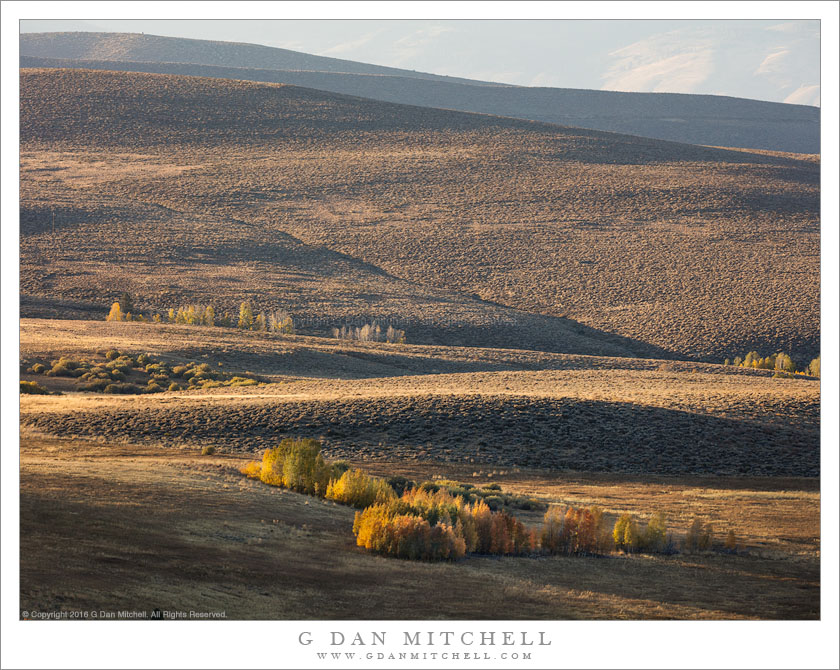
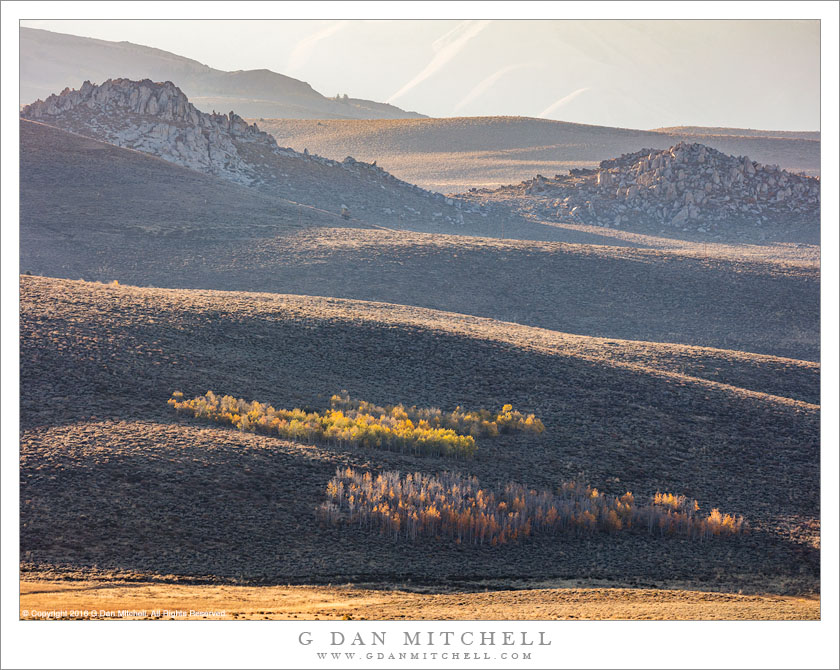
And even though I won’t get up there for a few more days, I know that the earliest signs of autumn are already appearing in the Sierra. Creeks are diminishing and drying up. Meadows are turning golden-brown. Corn Lily plants are shifting to brown and yellow, and here and there a few golden leaves may appear. And next up will be the annual spectacular display of aspen color.
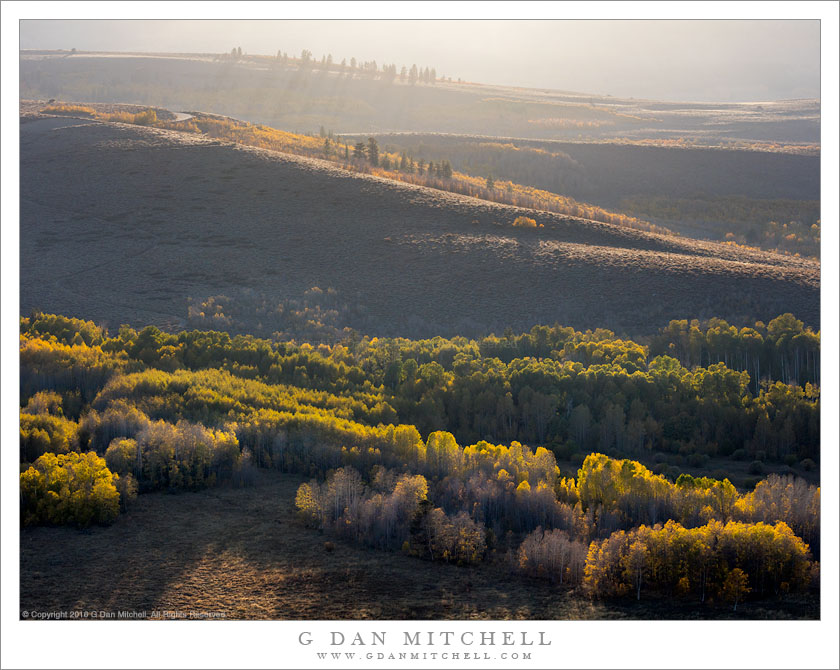
If you are also an aspen color chaser like me, you may be interested in some of the California fall color resources on this website. To get started see my Sierra Fall Color page for basic information and links to other articles I’ve written on the subject. As I get up to the Sierra and as I hear updates from various sources I will share them on this page, too.
There is also information there about my book, California’s Fall Color: A Photographer’s Guide to Autumn in the Sierra. This book offers some ideas about where and when to look for aspen and other color in the Sierra, and it includes some photographic basics that can help you once you get there.
California’s Fall Color: A Photographer’s Guide to Autumn in the Sierra, my book on photographing fall foliage in California’s Sierra Nevada, is available from Heyday Books and from Amazon.)
The book shares a lot of what I have learned about finding and photographing Sierra Nevada fall color, along with a large collection of my autumn photography. Watch this page for updates and news on the book and for continuing information about photographing Sierra Nevada fall color.
Evening at subalpine meadows near Tioga Pass, Yosemite National Park
I began photographing in this meadow area much earlier — in the late afternoon, actually, when direct sunlight still streamed over the tall ridge to the west. I initially passed right through this section on my way to points further to the east in the meadow, where I found more open terrain, expansive views, and a few small lakes and tarns.
The light leaves early here. That western ridge begins to cast a shadow across the meadows well before actual sunset. Even though I was as far from this ridge as possible, eventually the shadows caught up with me and the light was gone, with the exception of the highest peaks where it would linger much longer. So I began my slow walk back across the meadow to my vehicle, enjoying the softer light of this quiet time of the day.
Alpine tarns at the base of talus slopes, Kings Canyon National Park
The meaning of the term “tarn” is somewhat varied. Two technical definitions I’ve heard include (rather precisely) a small lake in a depression scooped out by glacial action, or (more informally perhaps) simply any very small body of mountain water too small to qualify as a real lake. Yes, that’s pretty subjective! Aside from their tendency to produce mosquitos, I love tarns, and I especially love areas where they are embedded in a rocky landscape broken by small meadows and occasionally trees.
I photographed this spot with its tarns (or small lakes, if you prefer) in shaded, soft light. There was sun, but it was low enough in the sky that its direct light was blocked by a tremendous rocky ridge to our west. Down here at the base of the small valley where we camped, everything was quiet and soft, including the light.
Photographer and visual opportunist. Daily photos since 2005, plus articles, reviews, news, and ideas.
Manage Consent
To provide the best experiences, we use technologies like cookies to store and/or access device information. Consenting to these technologies will allow us to process data such as browsing behavior or unique IDs on this site. Not consenting or withdrawing consent, may adversely affect certain features and functions.
Functional
Always active
The technical storage or access is strictly necessary for the legitimate purpose of enabling the use of a specific service explicitly requested by the subscriber or user, or for the sole purpose of carrying out the transmission of a communication over an electronic communications network.
Preferences
The technical storage or access is necessary for the legitimate purpose of storing preferences that are not requested by the subscriber or user.
Statistics
The technical storage or access that is used exclusively for statistical purposes.The technical storage or access that is used exclusively for anonymous statistical purposes. Without a subpoena, voluntary compliance on the part of your Internet Service Provider, or additional records from a third party, information stored or retrieved for this purpose alone cannot usually be used to identify you.
Marketing
The technical storage or access is required to create user profiles to send advertising, or to track the user on a website or across several websites for similar marketing purposes.