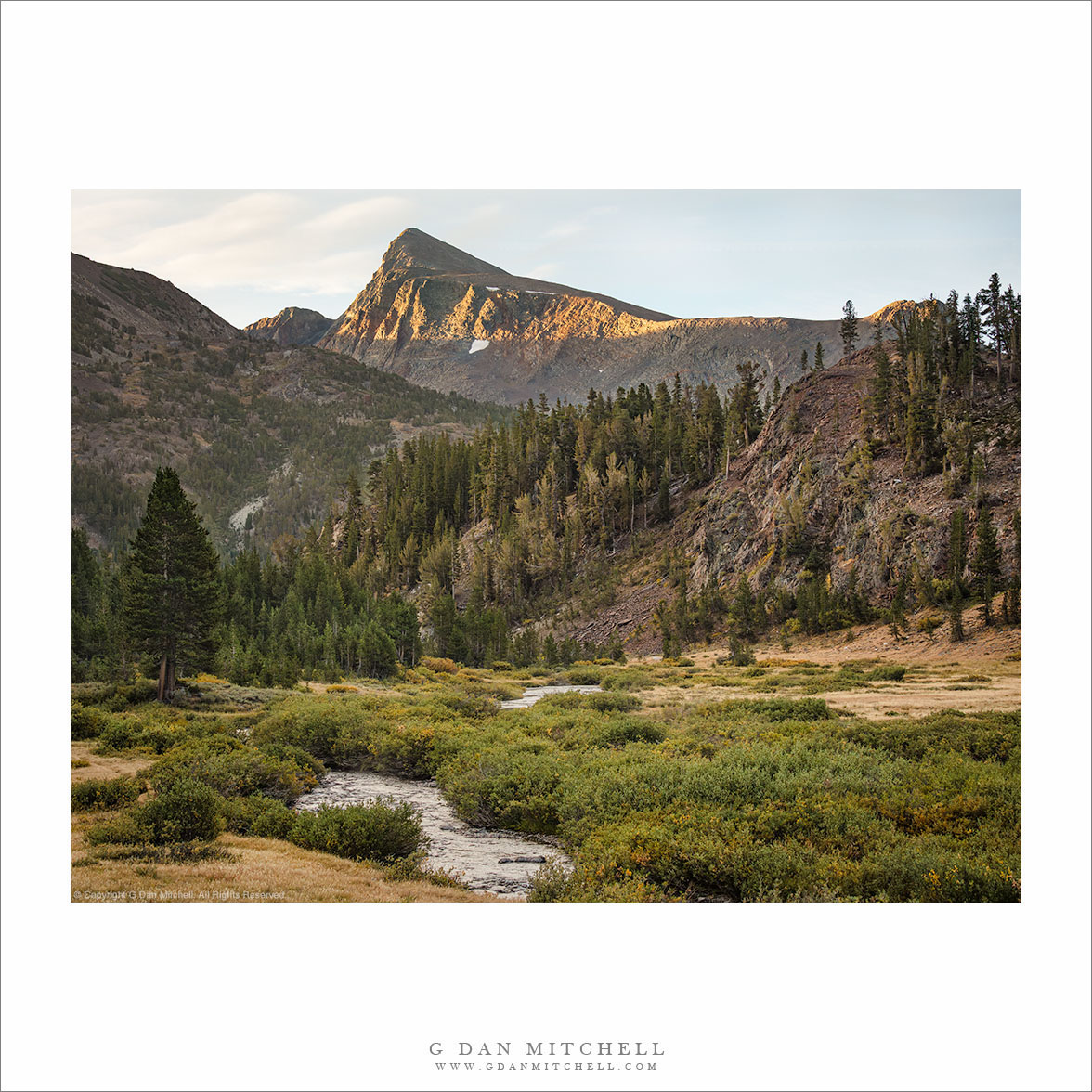
“Sierra Meadow and Peak” — Early light strikes a Sierra Nevada crest peak above a shadowed subalpine valley.
I was up and out of camp in the dark on this late-August morning. My plan was to work my way up Tioga Pass Road toward the pass, where I had a few subjects in mind along the way. After that I would head over the pass and out of the park to explore some areas just east of the Sierra crest. After going to the end of this valley to make a few photographs of alpine terrain, I headed back down this way, to pausing at a few places I had noted on the way up.
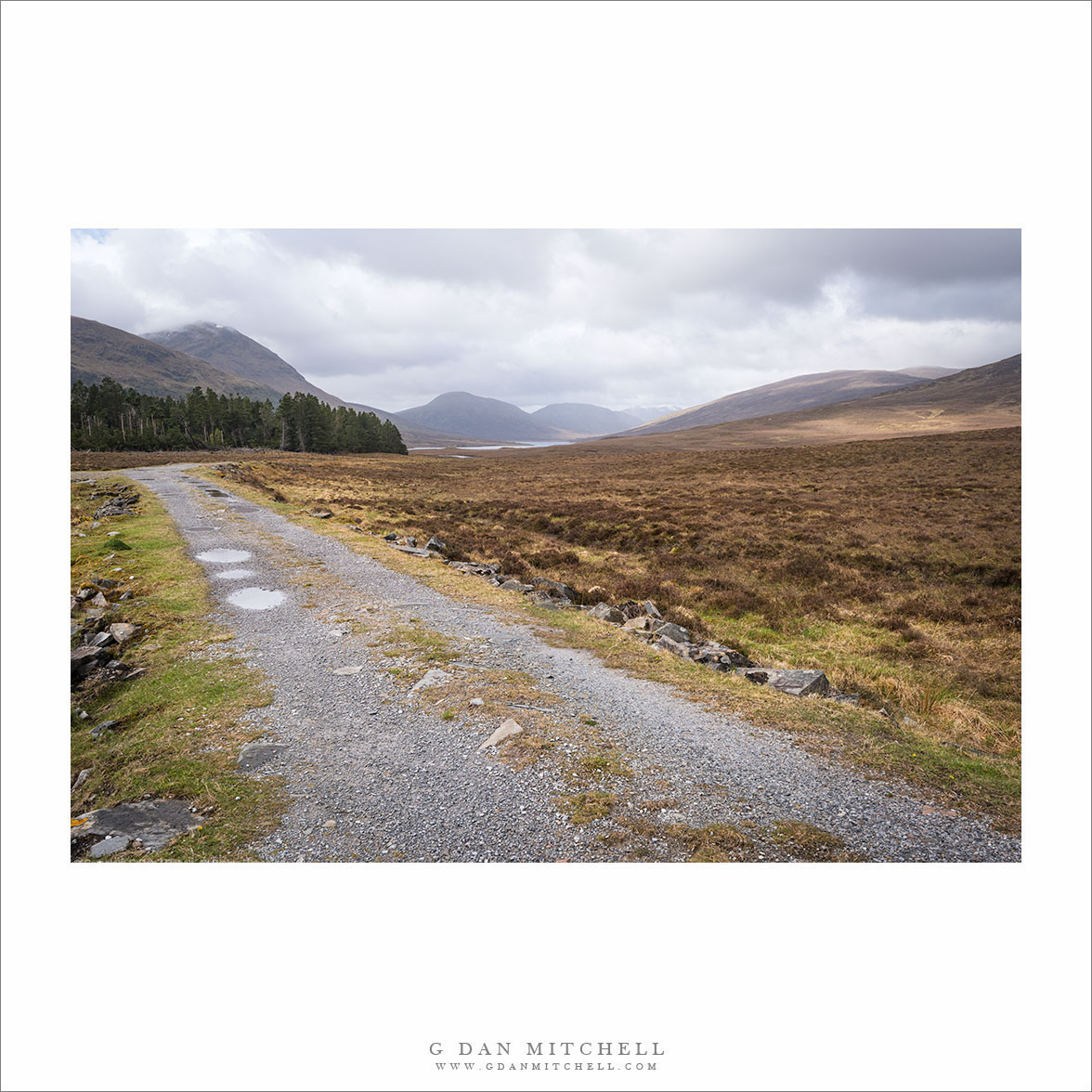
“Trail, Highlands Valley” — A path leads into a highlands valley as rain falls on distant hills.
Somewhere in northwest Scotland, between Shieldag and Applecross, we paused on our drive through this broad valley. It was surprisingly cold — there was new snow on peaks on either side — and rain showers passed across the landscape. Nearby was what appeared to be an old road, now marked as a foot trail, heading off into the valley — the sort of trail that makes you aware that there are places more remote than where you stand.
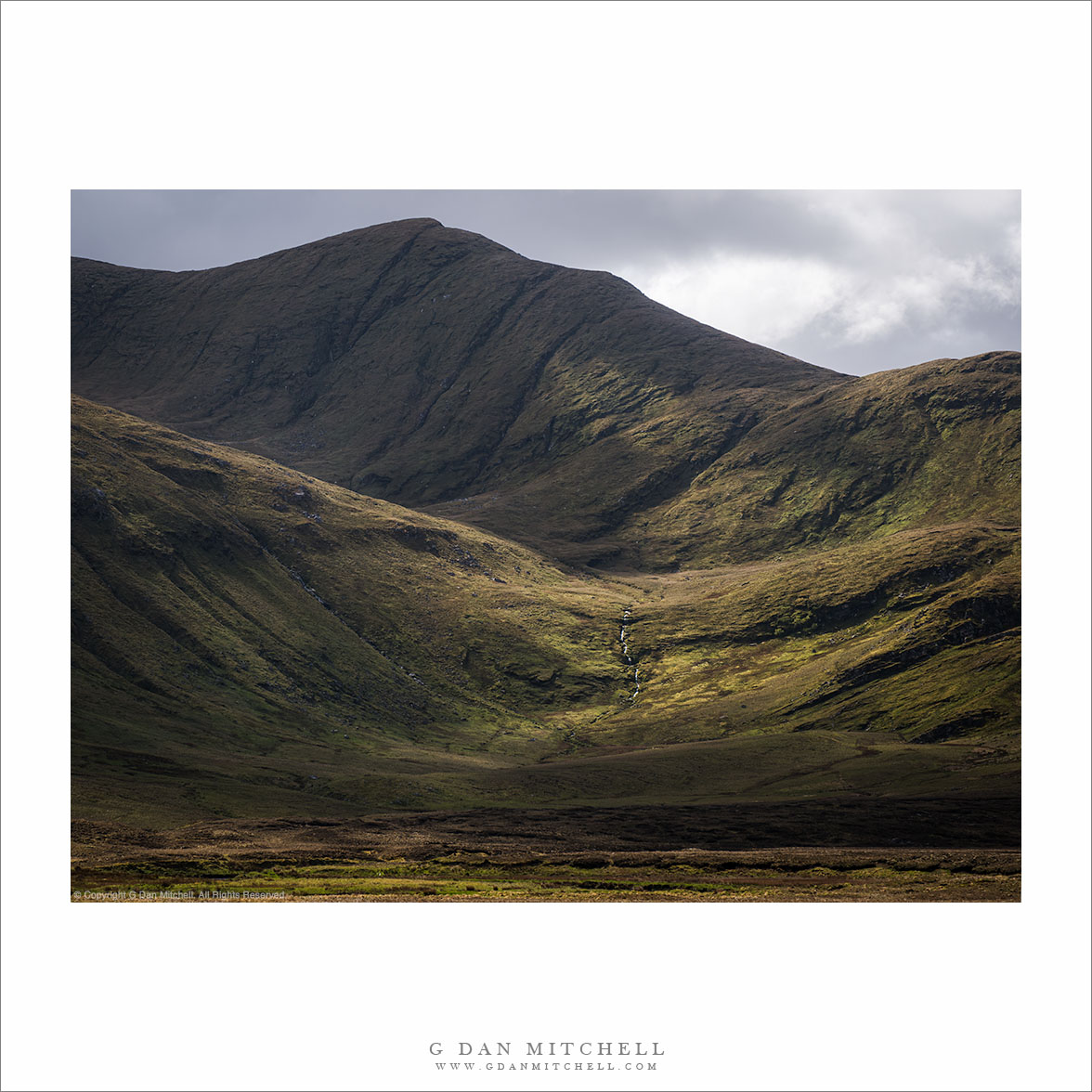
“Mountains and Cascade” — A stream cascades down from a mountain valley in far northern Scotland.
Most of our May visit to Scotland consisted of a big loop from Inverness out to the Isle of Skye, north (often on the NC500 route), eastward along the North Sea coast, and then down the eastern coast to return to Inverness. This took us through lots of highlands country, but on this day, as we drove across the north towards John O’Groats, the mountains were receding more and more into the distance. Driving east and looking south (the North Sea was to our left) we saw this spectacular ridge.
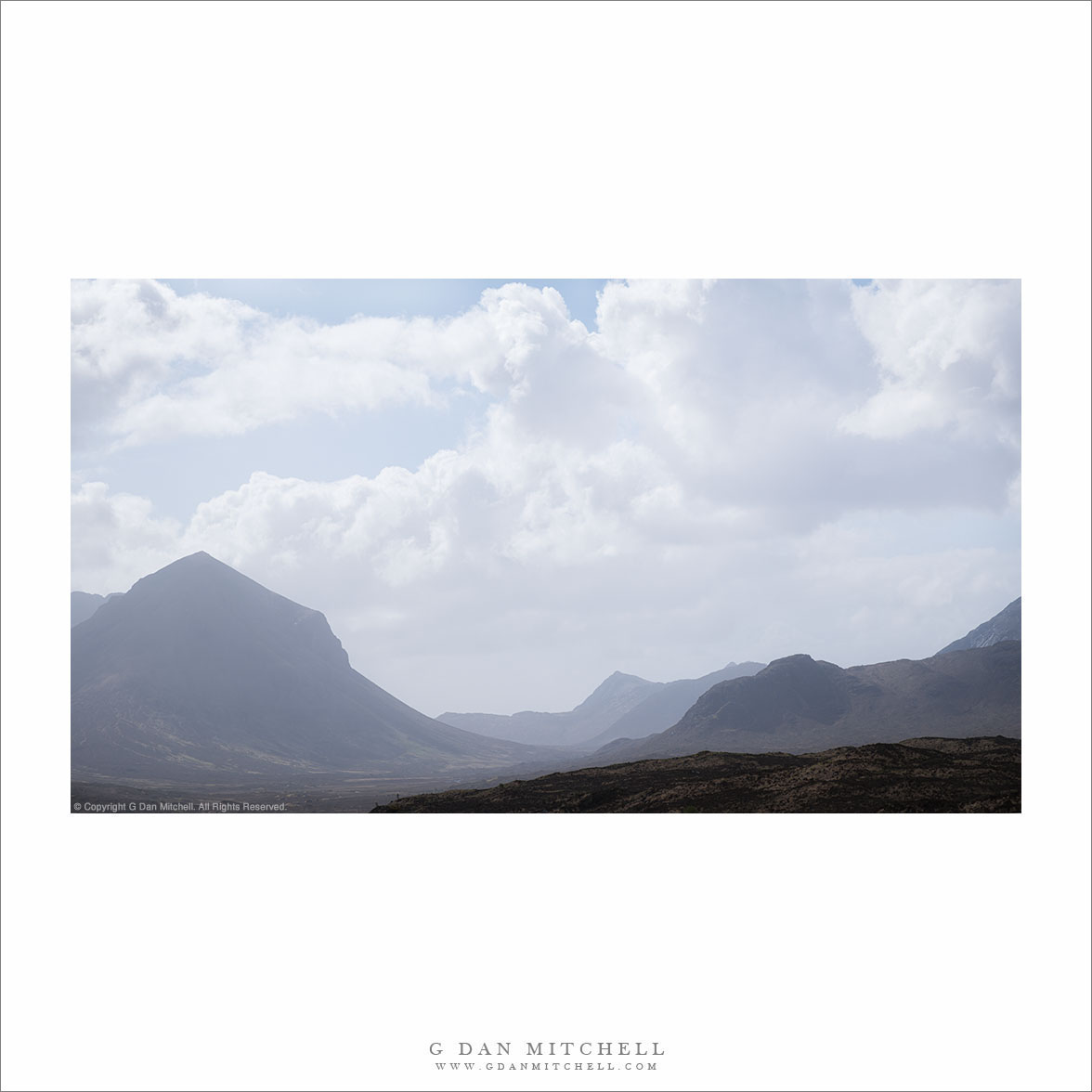
“Morning Mountains, Skye” — Soft atmosphere and clouds above the Cuillin Mountains, Isle of Skye.
On our final morning on the Isle of Skye back in May, as we drove to leave the island and head north, we came to an overlook of the Cuillin Mountains — or “Cuillin Hills” or “The Cuillins,” as they are sometimes known. These are high (for Scotland) and rugged peaks famed for their climbing opportunities. The range is composed of the higher Black Cuillins, rising to the right side of this image, and the Red Cuillins, which include the large peak at the left.
Photographer and visual opportunist. Daily photos since 2005, plus articles, reviews, news, and ideas.
Manage Consent
To provide the best experiences, we use technologies like cookies to store and/or access device information. Consenting to these technologies will allow us to process data such as browsing behavior or unique IDs on this site. Not consenting or withdrawing consent, may adversely affect certain features and functions.
Functional
Always active
The technical storage or access is strictly necessary for the legitimate purpose of enabling the use of a specific service explicitly requested by the subscriber or user, or for the sole purpose of carrying out the transmission of a communication over an electronic communications network.
Preferences
The technical storage or access is necessary for the legitimate purpose of storing preferences that are not requested by the subscriber or user.
Statistics
The technical storage or access that is used exclusively for statistical purposes.The technical storage or access that is used exclusively for anonymous statistical purposes. Without a subpoena, voluntary compliance on the part of your Internet Service Provider, or additional records from a third party, information stored or retrieved for this purpose alone cannot usually be used to identify you.
Marketing
The technical storage or access is required to create user profiles to send advertising, or to track the user on a website or across several websites for similar marketing purposes.