
I’ve posted a few times during recent months about the Canon Instant Savings promotion that provides discount pricing on a number of popular and very useful Canon lenses. If you are thinking of buying one of these lenses, today is the final day of the promotion. After today the pricing returns to the usual list prices.
Category Archives: Commentary
Michael Frye’s Weekly Photo Critique
Michael Frye has announced at his new blog that he will be doing a weekly online photo critique. As I understand, it works like this: Readers can submit their photographs. Once a week Michael will select one and offer a detailed critique of the image, and discussion and reader participation will follow. You can read more at the link to the critique announcement above.
This sounds like a great opportunity for all, and Michael is to be commended for his generosity. (He is also to be commended for his recent embrace of online media!) Every participant to submits an image will gain from his or her own careful consideration of their own images, the selected photographer will get feedback by a fine and highly regarded photographer, and we’ll all benefit from reading and participating in the critiques. I’m very much looking forward to this!
Experiment #1: The answer
Here is the answer to the questions I asked in the little experiment that I posted earlier today. (see “Experiment #1: What do you see?” And, my apology for the formatting issue that may cause the image on this page to extend into the sidebar. This is the result of a modification to the web site made over a year after the original posting of this message. I have decided to leave the example images intact, with the side-effect of the odd formatting.)
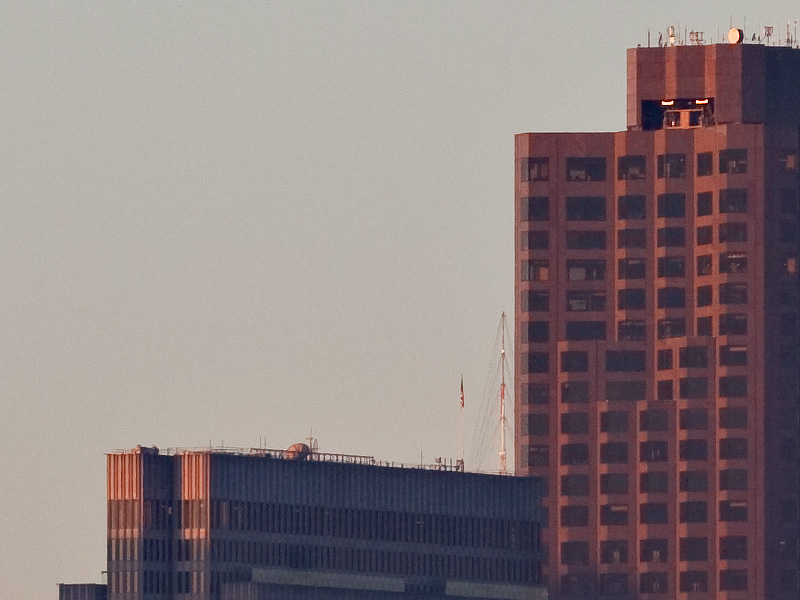
Examples A and C are completely identical – two copies of the very same file. To be clear, there is literally no difference between them. One is a simple copy of the other file with a different name. Here is a 100% magnification crop from the source file used for A & C:
Example B came from a different source file. The blur was added to the original file in post, so it is uniform across the entire image both in the source file and in example B posted here. This source file was then converted to jpg in exactly the same way that the other file (e.g. – the other two examples) was converted. Here is a 100% magnification crop of the source image used for example B:
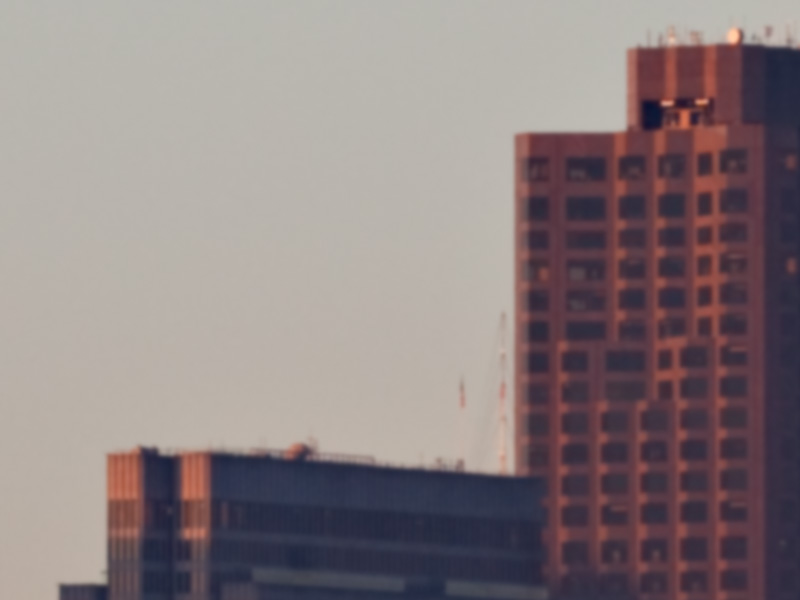
So, A and C are literally identical. B came from a source file that was so blurry that it looks like it was shot with a defective lens.
Thank you to all of you who took the challenge and looked long and hard at the sample images. I have three more little tests planned for sometime in the near future.
Dan
Ansel’s Moon
Edie Howe has posted a delightful little slide show made at this week’s Yosemite Valley event, sponsored by the Ansel Adams Gallery, that commemorated the making of the famous Ansel Adams photograph of Half Dome and the rising moon. The idea was that position of the moon and timing relative to daylight would duplicate those at the time of Adams’ original exposure. I enjoyed Edie’s sequence (nice final photograph, Edie!) and looking at some of the (pardon the awful pun) luminaries of Yosemite photography as they held forth in Ahwahnee Meadow. I’m sorry I couldn’t be there!
Perhaps ironically, the moon was hidden behind what appears to be a bit of a snow squall above Half Dome, though it appeared to be clear both before and perhaps after the historic moment! In a way I think that this might have been the most appropriate thing that could have happened. While I don’t think that trying to re-make Ansel Adam’s photograph has any more validity than trying to re-write a Mozart symphony, the event seemed like a great opportunity to: gather together on a beautiful evening in this wonderful meadow, contemplate the evening with the additional context of thoughts about Adams and his photography, meet a number of people influenced by Adams’ legacy, and focus on Adams’ photograph rather than trying to create one’s own version – since the imitative exercise turned out to be impossible!
I wish I had been there.