
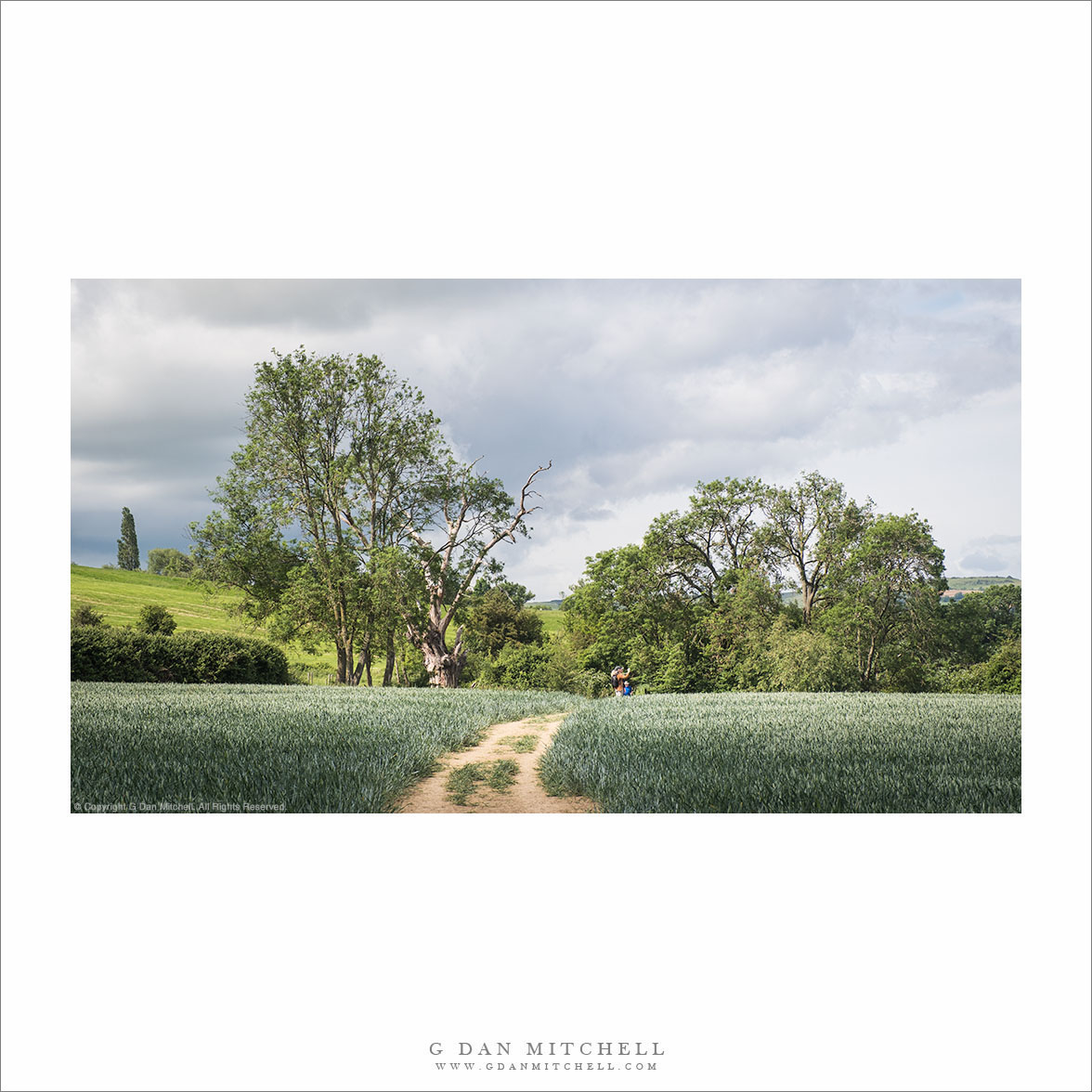
I have to confess some (OK, a lot of) ignorance about England outside of its cities. We’ve been to the country a number of times, but that usually means going to London and then visiting a few other relatively urbanized places. So “my England” has been basically London and a few (mostly popular) towns. We’ve passed through the country on trains and looked down on it from the air, but this trip was the first time that we actually went out and walked through it. I learned a lot!
In spring there is so much green, which is always a bit of a shock to those of us from the often-dry American West. I’m fascinated by the different approach to wild lands, one that I wish America could learn from. Back home, you can’t just go walk across someone’s farm or along their back fence, but in England that is often simply assumed to be your right — and many of the trails we used went through such places. And, of course, also quite different from hiking back home is the proximately to small towns and villages. There really isn’t much “wilderness” here, but there is food and places to stay!
COMMENT OR QUESTION? Scroll down to the comment form.
G Dan Mitchell is a California photographer and visual opportunist. His book, “California’s Fall Color: A Photographer’s Guide to Autumn in the Sierra” (Heyday Books) is available directly from him. Blog | Bluesky | Mastodon | Substack Notes | Flickr | Email
All media © Copyright G Dan Mitchell and others.
The right of way thing is conditional in the UK. In England and Wales there are many thousands of footpaths of historic origin, usually well signed and with styles or gates. These often (usually?) cross fields and even go through private gardens. It is very difficult for an individual to extinguish a footpath on their land, and even difficult to relocate one. (My sister tried; everyone agree that the new path was better, but it turned out it went nearer to some houses, and those owners would apparently have a right to sue for damages on the basis of nuisance… indefinitely!) On the other hand, we don’t in England and Wales have a right to roam on private land (and the right to wild camp is heavily circumscribed).
Meanwhile, Scotland doesn’t really have the same system of footpaths. There are paths and trails but I’m not sure what their legal status is. On the other hand, walkers do have a Right to Roam in Scotland. Again, I’m not sure what the limitations are. There is a movement to get a Right to Roam in England, but it’s still a long way away. Very Rich People insist the skies would fall in if it is agreed!
I don’t know what the situation is in Northern Ireland.
That’s very interesting. There are clearly a lot of nuances about this that escaped my understanding! The English paths we walked on in the Cotswolds were largely very clear and easy to follow — well-signed and with those gates and turnstiles you mentioned. Many seemed to follow the edges of pastures and fields, though a few cut straight across fields — in many cases letting us get up close and personal with the sheep!
Regardless of those fascinating details and interesting history, the situation is utterly different from what we know here in the United States. There are some laws that allow public right of way on privately owned land — for example, in California a path/road that has historically been open must remain so even if ownership changes. But private control of land access is much stronger here, and it is extremely rare to find open access across the kinds of landscape where we could walk in England.
I love my California landscape, and many really wonderful places have been protected and preserved for public access… but I am jealous of the rights that walkers seem to have in some many places in the UK.