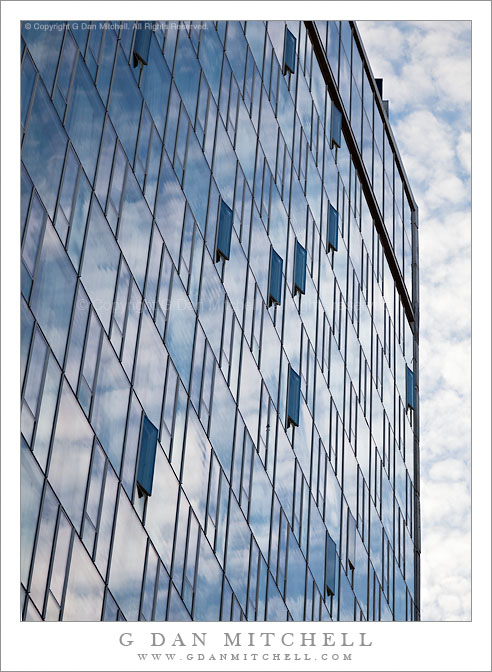
I spent last week in New York City doing a variety of things: photographing a couple nights of “Così fan tutte: Some Assembly Required,” exploring museums, eating a lot of wonderful food, visiting family, getting lost on the subway, and more. It has been a decade since I’ve been there, and this was my first chance to try to do photography in NYC. As many of you know, that is an almost overwhelming endeavor – there so much to see and do there that it is barely possible to skim the surface of the possibilities. But I tried. And some of the photographs will begin to appear here very soon.
I returned last night from a week-long visit to New York City. While this wasn’t just a photography visit, enough photography was part of the plan that I had to carry a reasonable amount of equipment. Typically I would bring along my Macbook, but this time I decided to leave the laptop at home and see if I could get by with just an iPad instead.
I knew that this would necessitate some compromises in the way I usually operate on the road. For example, serious photography applications like Photoshop and Lightroom simply don’t run on the iPad, so there would be no possibility of doing real post-processing work on the road. The iPad doesn’t have a “real” keyboard, instead providing an on-screen “virtual keyboard” – more on that below. On the positive side, the iPad is positively tiny compared to any real laptop. It makes my 13″ Macbook seem terribly bulky by comparison. The iPad slips easily into the external pocket of my Crumpler Eight Million Dollar Home camera bag, and doesn’t add enough weight to the package to be worthy of note. The battery life is tremendous and the charger is very small.
Earlier today I posted (elsewhere) a photograph of an interesting, unusual, and perhaps somewhat fragile natural bridge located in a part of California that I frequently visit. Although I did not give directions to the feature or even narrow down its location within less than perhaps a 25 mile radius, shortly after posting the image a person replied… and included a photograph of someone standing on top of the bridge.
Sheesh.
I’m astonished at the self-centered behavior of some visitors to the wild world. They apparently don’t realize that their momentary thrill risks the very ability of later visitors to experience the thing that drew them there. Why in the world a person would go to all the trouble to find and visit these sometimes remote sites and then show little respect for them is beyond me.
I was brought immediately back to a conversation I had with my friend Mike earlier this summer. Mike is a retired national park ranger who has a deep love for wild places. He had expressed concern and reservations about the clarity with which I sometimes described the locations of my photographs. Mike’s concerns were several, but among them was the worry that too much information shared with too many people who have too little invested in the protection of these places might endanger them. At first I wondered how my little web site could have any significant impact, but after checking into some internet statistics I began to see that a fair number of people might be reading my descriptions.
The particular feature that I’m thinking of today is a delicate and rare natural arch in a place where such features are not common. Although it seems like a sturdy thing, being made of rock, it is actually quite fragile in the geological sense. There are cracks in the arch at both ends, and any time a person adds his/her weight to the structure stresses are created that can only hasten its eventual collapse.
But people do such things. I’m more inclined than ever to refrain from offering specifics about many of these locations, especially those that are potentially subject to visits by too many people and/or that are by their nature fragile.
Blood-red dawn light illuminates eastern Sierra Nevada peaks of Yosemite National Park and morning clouds above abandoned high desert cabins in the sage brush along highway 395.
Many who travel the eastern Sierra on highway 395 have no doubt seen these two abandoned buildings along the highway not far from Lee Vining, set against the background of the Sierra’s eastern escarpment along the border of Yosemite National Park. I’ve noticed them for years and have tried to photograph them a few times in the past.
On this late-July morning I had gotten up very early at my Tuolumne Meadows camp site and decided that there might be enough interesting clouds to warrant a trip down to the South Tufa area of Mono Lake for a sunrise shoot. However, I apparently didn’t get up quite early enough (actually, I miscalculated the time of dawn) since the sun began to rise above the horizon just before I turned east from 395 onto 120 to get to the lake. For a moment I vacillated – should I hurry on to get to Mono as soon after sunrise as possible (since the light gets there a few minutes later) or shoot whatever I could see right then and there? The intense red light made the decision for me and I quickly pulled over near these buildings and made a few exposures as the saturated and very red morning light hit the mountains and the clouds.
This photograph is not in the public domain and may not be used on websites, blogs, or in other media without advance permission from G Dan Mitchell.
Photographer and visual opportunist. Daily photos since 2005, plus articles, reviews, news, and ideas.
Manage Consent
To provide the best experiences, we use technologies like cookies to store and/or access device information. Consenting to these technologies will allow us to process data such as browsing behavior or unique IDs on this site. Not consenting or withdrawing consent, may adversely affect certain features and functions.
Functional
Always active
The technical storage or access is strictly necessary for the legitimate purpose of enabling the use of a specific service explicitly requested by the subscriber or user, or for the sole purpose of carrying out the transmission of a communication over an electronic communications network.
Preferences
The technical storage or access is necessary for the legitimate purpose of storing preferences that are not requested by the subscriber or user.
Statistics
The technical storage or access that is used exclusively for statistical purposes.The technical storage or access that is used exclusively for anonymous statistical purposes. Without a subpoena, voluntary compliance on the part of your Internet Service Provider, or additional records from a third party, information stored or retrieved for this purpose alone cannot usually be used to identify you.
Marketing
The technical storage or access is required to create user profiles to send advertising, or to track the user on a website or across several websites for similar marketing purposes.