Considering the Fujifilm X-E5

Fujifilm recently announced the X-E5, the latest camera in their X-E series. I think this model series is intriguing.. It is small and lightweight, well designed. has a lot of useful features, incorporates a high resolution sensor and IBIS (in body image stabilization) , and is compatible with Fujifilm’s excellent lenses. It has a few other features that may or may not appeal, along with one “elephant in the room” issue.

Fujifilm XE5 Silver Body
Fujifilm XE5 Silver body. (Used with permission from Fujifilm.)

(Notes: I omit the hyphens between X and E in this article. I have rounded prices to the nearest dollar. Photographs of Fujifilm products used by permission from Fujifilm. Affiliate links in this article lead to B&H Photo — they return a small fee to this website if you use them to make a purchase — thanks in advance!.)

Right up front, let me be clear about one thing: I have not had my hands on the XE5 yet. I owned the XE1, my first Fujifilm camera, about a dozen years ago. Our photographic household has had the XE2, XE3, and XE4, and I have recommended all of them to various potential buyers over the years. While I cannot give a “hands on” review of the new camera at this point — hey Fujifilm, I’m here if you have one to loan! — I am qualified to comment on its features and who may find them appealing.

The XE Series

Let’s start with a bit of XE history. The original XE1 camera came out in 2012. At that time it was one of only two interchangeable lens x-trans* cameras from Fujifilm — the other was the more expensive “flagship model,” the XPro1. The XE1 was a smaller, less-expensive alternative for those who wanted a Fujifilm rangefinder-style camera with interchangeable lenses. Importantly, the XE1 (like later XE models) used the same sensor found in high-end Fujiflm APS-C cameras, which at that time was the 16MP sensor used in the “flagship” XPro1.)

(*”x-trans” refers to Fujifilm’s unique arrangement of the red, blue, and green photo sites on the sensor, a design that was said to help control aliasing/moire on cameras that do not use anti-aliasing filters, among other things.)

Continue reading Considering the Fujifilm X-E5
Monastery of São Vicente de Fora

Monastery of São Vicente de Fora
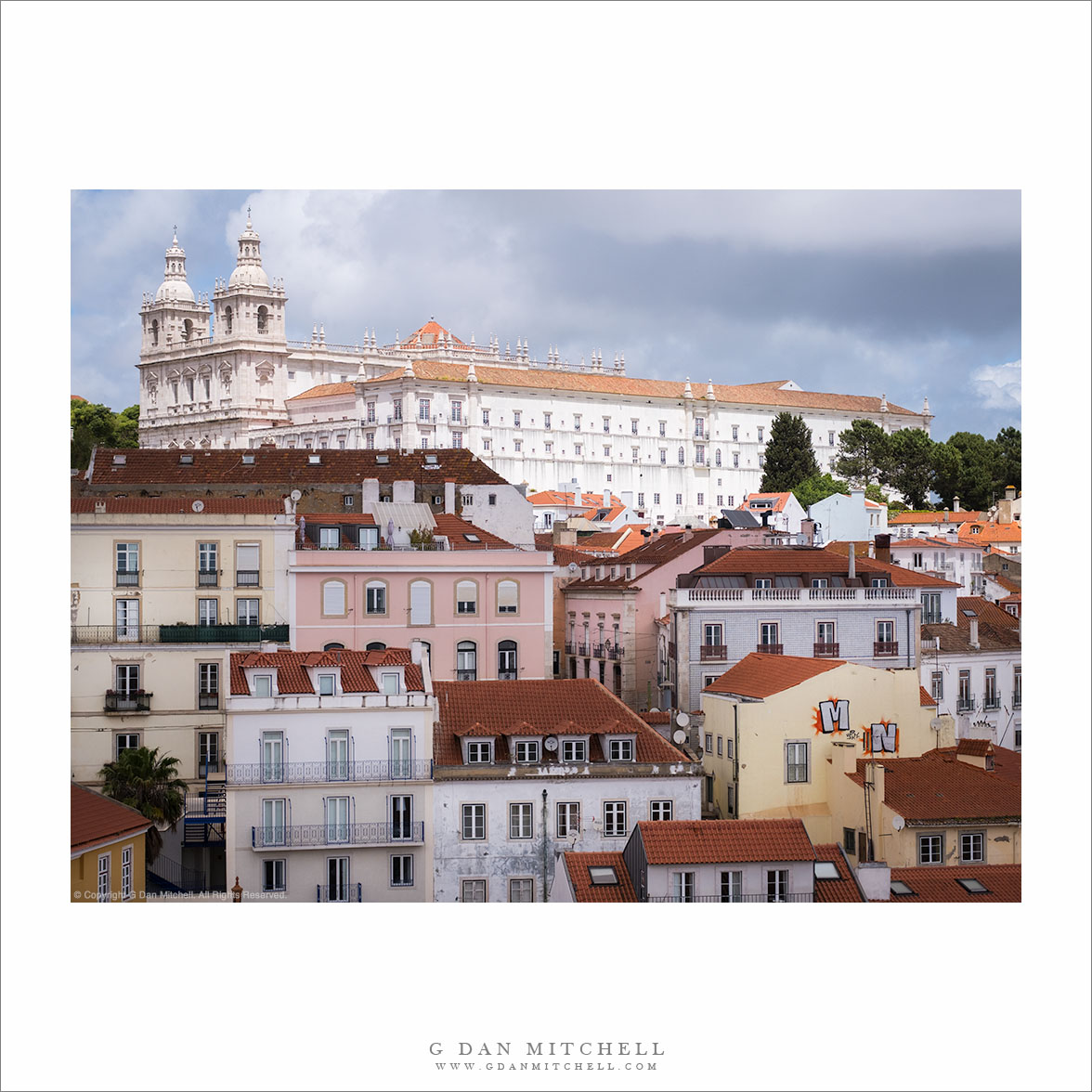
“Monastery of São Vicente de Fora” — The Monastery of São Vicente de Fora rises above Alfama, Lisbon.

Unfortunately we did not actually get to the Monastery of São Vicente de Fora during our Lisbon visit — we were merely tempted by the sight of the impressive architecture on this ridge above Alfama in Lisbon. As is our practice, we headed out for a walk on this day, a walk that followed only the most general plan. We knew we wanted to get to visit Alfama, but beyond that we would just wander. Eventually — and, I suppose, inevitably — we arrived at Portas do Solwhich presented this view.

The buildings of Alfama are tightly packed and separated by very narrow streets, many of which would not accommodate vehicle traffic. A small section of such buildings is in the foreground in this photograph, temporarily shaded by the passing clouds. The Monastery dominates the view, as it sits on the hilltop above the district — and at this moment it was in the sunshine.

G Dan Mitchell is a California photographer and visual opportunist. His book, “California’s Fall Color: A Photographer’s Guide to Autumn in the Sierra” (Heyday Books) is available directly from him. Blog | Bluesky | Mastodon | Substack Notes | Flickr | Email

Join the discussion — you are welcome to leave a comment or question. (Comments are moderated and may not appear immediately.)

This site uses Akismet to reduce spam. Learn how your comment data is processed.

(All media © Copyright G Dan Mitchell and others.)

Arch, Stairs, and Plants

Arch, Stairs, and Plants — Trogir, Croatia
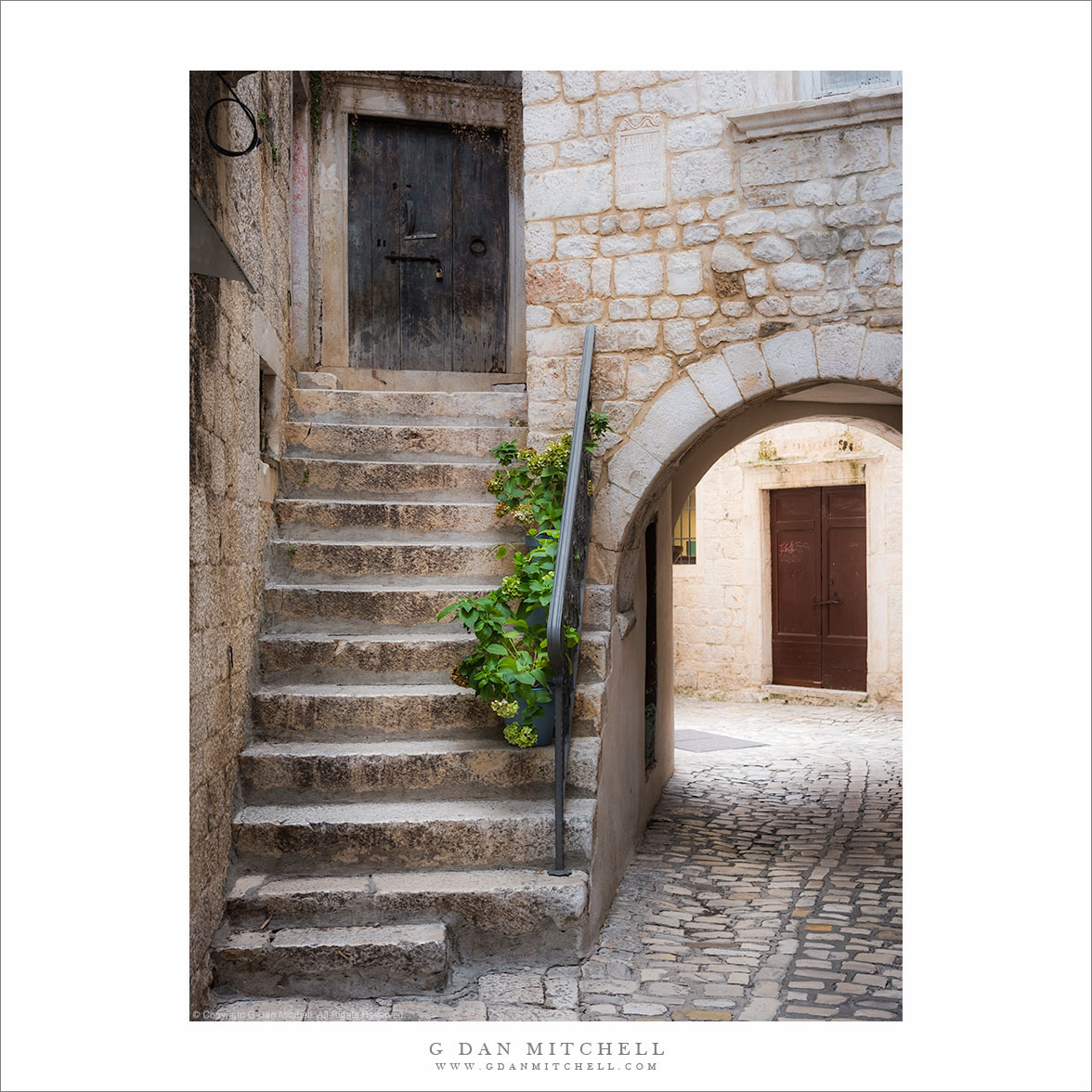
“Arch, Stairs, and Plants” — Plants line stairs leading to a doorway above an arch, Trogir, Croatia.

Trogir is an intense and fascinating place. The historic old town is on an island that sits in a narrow passage between the Croatian mainland and a much larger island. It was quite crowded during the days and evenings when we visited, not only with those of us who drove (or walked) in but also those who anchored their boats right next the town.

It seems like the whole place is built of stone. The sidewalks/streets are cobblestone, walls are made of stone, and it is by far the most common construction material for buildings. I made this photograph on one of the occasions where we were able to escape the crowds (hint: go in the very early morning) and photograph with fewer distractions.

G Dan Mitchell is a California photographer and visual opportunist. His book, “California’s Fall Color: A Photographer’s Guide to Autumn in the Sierra” (Heyday Books) is available directly from him. Blog | Bluesky | Mastodon | Substack Notes | Flickr | Email

2 responses to “Arch, Stairs, and Plants”

  1. Jan Avatar
    Jan

    Nice memories!!

    1. G Dan Mitchell Avatar
      G Dan Mitchell

      For sure!

      Dan

Join the discussion — you are welcome to leave a comment or question. (Comments are moderated and may not appear immediately.)

This site uses Akismet to reduce spam. Learn how your comment data is processed.

(All media © Copyright G Dan Mitchell and others.)

Ginginha Vendor

Gingihha Vendor
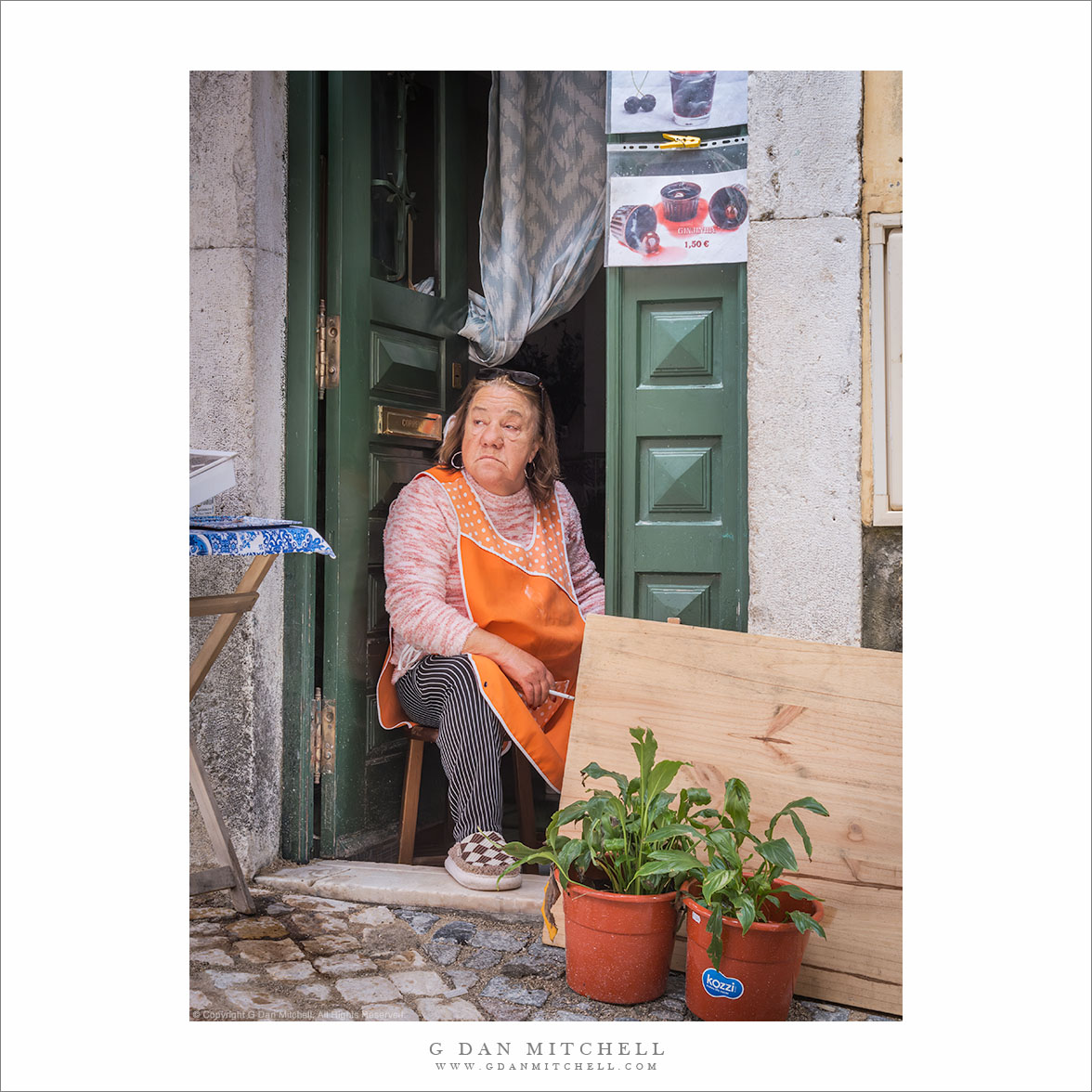
“Gingihha Vendor” — A woman selling ginginha from her doorway in the Alfama, Lisbon.

One can never be sure things like ginginha are tourism constructs or actual traditions — or perhaps a bit of both. (Parallels include Portugal’s pastel de nata, San Francisco’s Sourdough bread, Belgium waffles, and more.) But I understand, both from reading about it and from seeing it, that gingihna is a traditional drink in many places in Portugal. It is a sweet, cherry liqueur that is often sold on the street, either in small shot glasses or in little chocolate cups that you simply eat when you are done. (Nice way to solve the litter problem!)

You can step up to small ginginha shops and buy one all over the place. But there also appears to be a less formal sales force operating from their front doorways. On our recent visit we saw several women set up this way to sell ginginha, including this woman sitting in her doorway in the Alfama district.

G Dan Mitchell is a California photographer and visual opportunist. His book, “California’s Fall Color: A Photographer’s Guide to Autumn in the Sierra” (Heyday Books) is available directly from him. Blog | Bluesky | Mastodon | Substack Notes | Flickr | Email

Join the discussion — you are welcome to leave a comment or question. (Comments are moderated and may not appear immediately.)

This site uses Akismet to reduce spam. Learn how your comment data is processed.

(All media © Copyright G Dan Mitchell and others.)

Photographer and visual opportunist. Daily photos since 2005, plus articles, reviews, news, and ideas.