
Tag Archives: close up

White-Faced Ibis

White-Faced Ibis
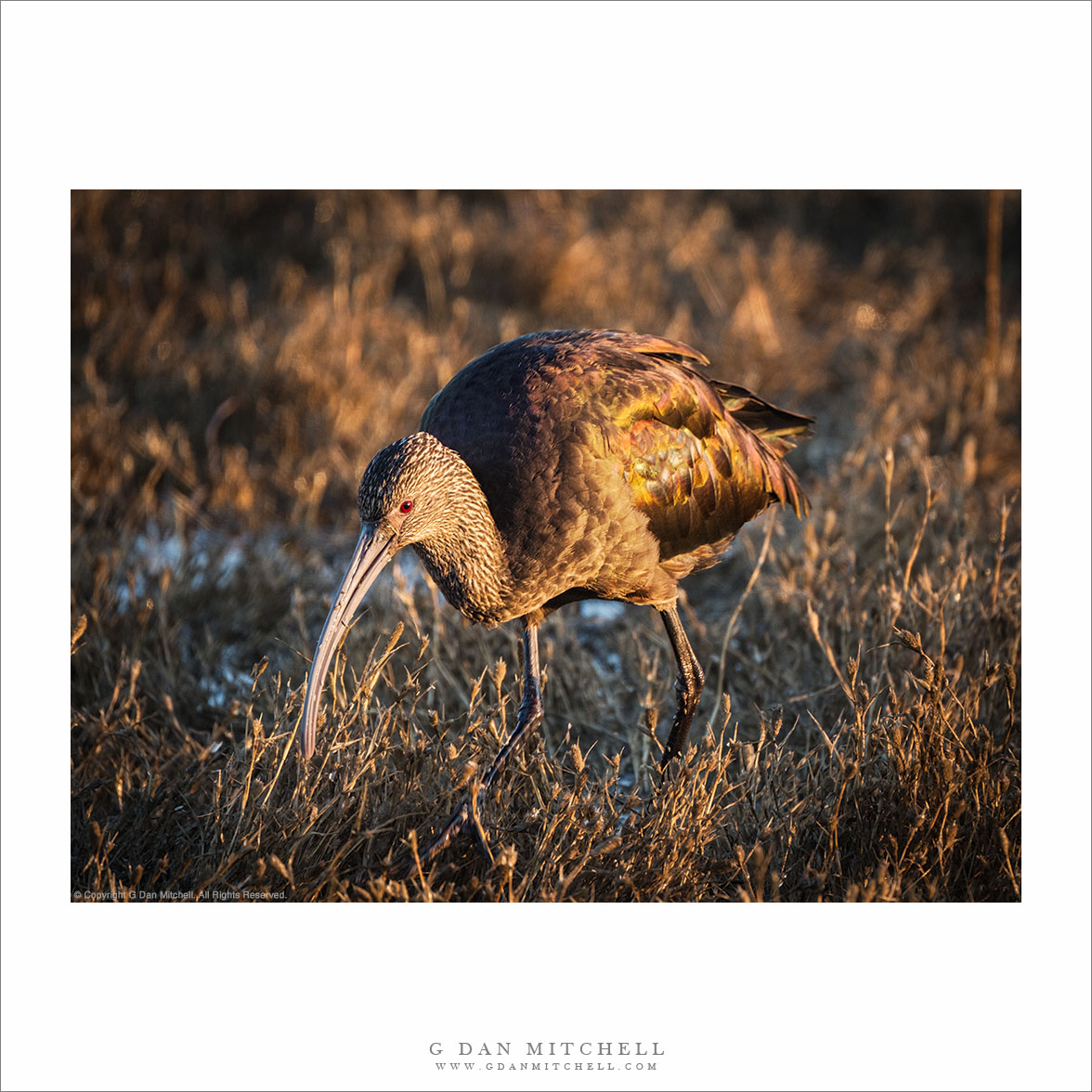
“White-Faced Ibis” — A white-faced ibis feeding in California Central Valley wetlands.

Photographing this and some other birds was a serendipitous event at the end of October. I was on my way from the San Francisco Bay Area to Yosemite to photograph autumn color. Rather than show up during the midday flat light period in the Valley, I decided to detour to a wildlife refuge, just to take a look around. I wasn’t really expecting to see much this early in the season, but I was surprised to find plentiful sandhill cranes, egrets, and white-faced ibises.

At one point I came upon a big flock (or, technically perhaps, two flocks intermingled) of ibises and egrets. Although I had intended my visit to be brief, I ended up spending some serious time photographing this group. The birds were feeding among short wetlands plants near the edge of a large pond in the early morning light.


Leave a comment or question using the form. (Click the title to see the full article and to comment if you are viewing it on the home page.)

G Dan Mitchell is a California photographer and visual opportunist. His book, “California’s Fall Color: A Photographer’s Guide to Autumn in the Sierra” (Heyday Books) is available directly from him. Blog | Bluesky | Mastodon | Substack Notes | Flickr | Email

All media © Copyright G Dan Mitchell and others.
Trunks and Needles (Vertical)

Trunks and Needles (Vertical)
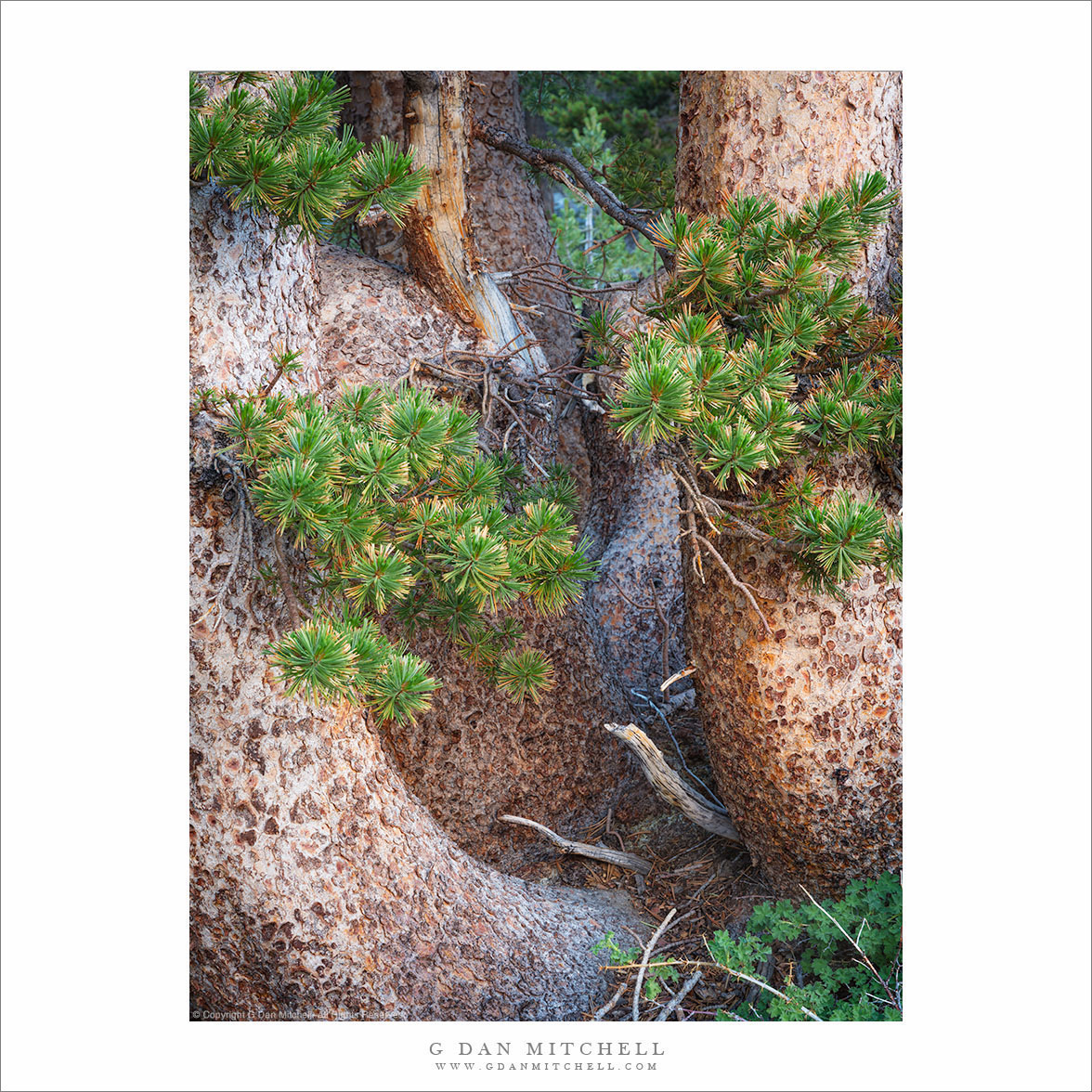
“Trunks and Needles (Vertical)” — Trunks and needles at the base of a small copse of Sierra Nevada backcountry trees.

This photograph is the companion to one of the same subject that I shared a while ago — that one was in landscape (or wide) orientation, while this one is in portrait mode. I photographed the bases of these closely-spaced trees during a short backpacking trip into the Sierra Nevada east of Yosemite National Park back in July.

These pines (lodgepole) are ubiquitous in the higher elevations of the Sierra Nevada, and their form varies greatly depending on things like the elevation, the nature of the ground they grow on, and available moisture. While they can form forests of tall and straight trees, they can also adopt the twisted and bent forms typical of high elevations trees.


Leave a comment or question using the form. (If you are reading this on the home page, click the article title to see the full article and the comment form.

G Dan Mitchell is a California photographer and visual opportunist. His book, “California’s Fall Color: A Photographer’s Guide to Autumn in the Sierra” (Heyday Books) is available directly from him. Blog | Bluesky | Mastodon | Substack Notes | Flickr | Email

All media © Copyright G Dan Mitchell and others.
Trunks and Needles

Trunks and Needles
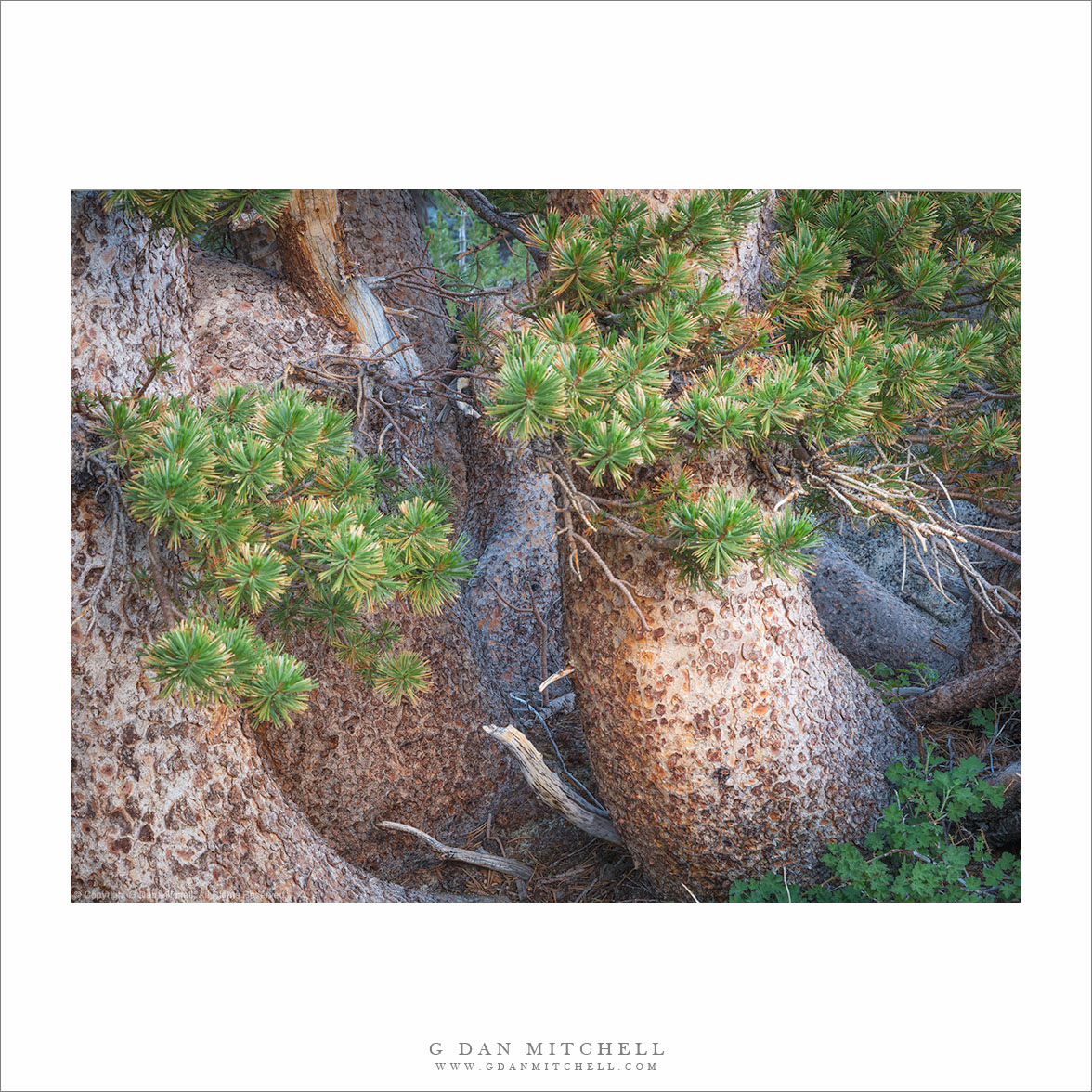
“Trunks and Needles” — Trunks and needles at the base of a small copse of Sierra Nevada backcountry trees.

It was early evening, and I had been working subjects along the shoreline of a subalpine Sierra Nevada lake. There’s lots to see in such places — the shoreline itself, meadows ringing the lake, boulders scattered here and there. As the light over the lake became less interesting my attention turned to the nearby lodgepole pine forest.

While the lake was fairly well-lit, with nothing to block the remaining light, the forest was dark and mysterious. As I poked around the forest’s edge I found several examples of twisting trees growing very closely together and catching the colorful reflected light.


Leave a comment or question using the form. (If you are reading this on the home page, click the article title to see the full article and the comment form.

G Dan Mitchell is a California photographer and visual opportunist. His book, “California’s Fall Color: A Photographer’s Guide to Autumn in the Sierra” (Heyday Books) is available directly from him. Blog | Bluesky | Mastodon | Substack Notes | Flickr | Email

All media © Copyright G Dan Mitchell and others.
Blue Stone Vortex

Blue Stone Vortex
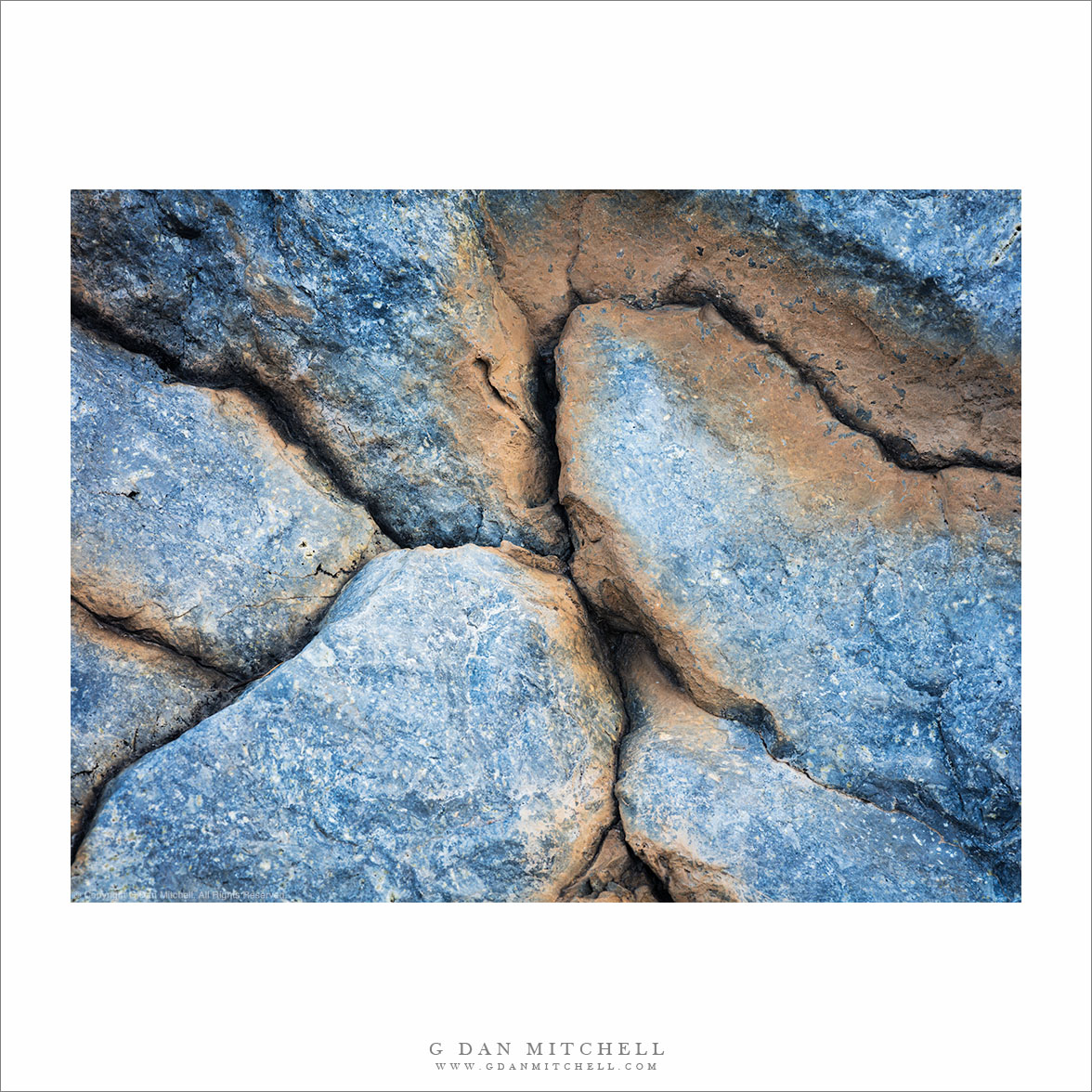
“Blue Stone Vortex” — Curving and intersecting fractures in Sierra Nevada rock under stormy skies.

While I’m often drawn to the large scale landscapes, intimate landscapes appeal to me, too. The big photos do give the grand perspective of the landscape, but I think that images of smaller elements and components of the larger scene can tell us just as much about a place. And their sometimes-abstract nature lets us see the landscape in new ways that we perhaps had not thought of.

The grand landscape was not cooperating when I I photographed these rocks. It had been raining and it was still very cloudy. Are the rocks really this color? That’s a good question! The landscape looks different under various sorts of light, and often our vision system “corrects” for this and we do not notice it. I knew that the overcast was having an effect, but until I opened this photograph (and others made at the same time) in post, I had not realized just how blue the light was. Sometimes I “correct” these strong colors, but this time I decided to go with it.


G Dan Mitchell is a California photographer and visual opportunist. His book, “California’s Fall Color: A Photographer’s Guide to Autumn in the Sierra” is available from Heyday Books, Amazon, and directly from G Dan Mitchell.

Blog | About | Instagram | Flickr | Facebook | Threads | PostEmail

Links: Articles, Sales and Licensing, my Sierra Nevada Fall Color book, Contact Info.

Scroll down to share comments or questions. (Click post title first if viewing on the home page.)


All media © Copyright G Dan Mitchell and others as indicated. Any use requires advance permission from G Dan Mitchell.