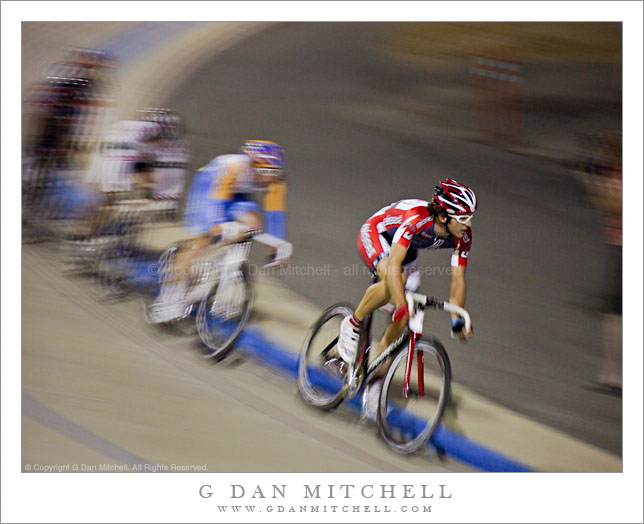
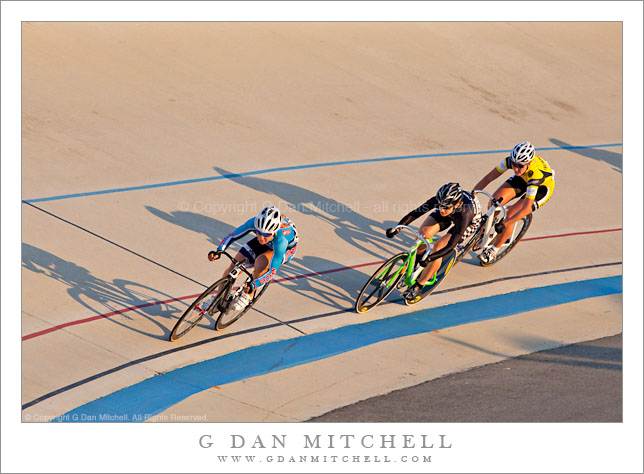
Some might be surprised to find that I take every opportunity to photograph bicycle racing. Although I’m primarily an urban and natural landscape shooter (to generalize just a bit) I also have a passion for shooting a few other surprising subjects. One of these is professional bicycle racing. Although I never raced, I was at one time a very serious cyclist. I trained with folks who did race and for several years I rode as if I were preparing to race, doing over 10,000 miles per year. With that in mind, it might seem less surprising that I interrupted my photographs of Death Valley, the coast redwoods, and the Pacific coastline to post a week of bicycle racing photos.
During the last few years I’ve been fortunate to be able to shoot stages of the Amgen Tour of California professional stage race in northern California. As I’ve done so, I’ve gradually figured out more strategies that let me get some effective photographs. Here’s a quick summary of a few of them.
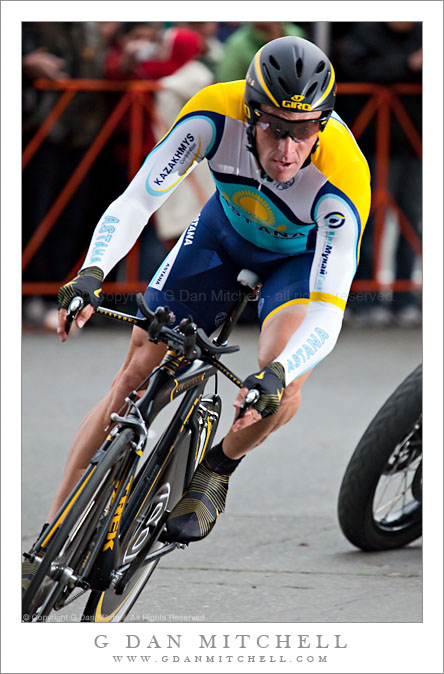
- Time trials, especially those on short courses, can be the best opportunity to shoot riders on their bikes. Each competitor rides the course individually, so you can get a clear view of the rider approaching. Because lower ranked riders go first, you can experiment with locations, lighting, and so forth on them… and have your shooting strategy worked out by the time the big names arrive.
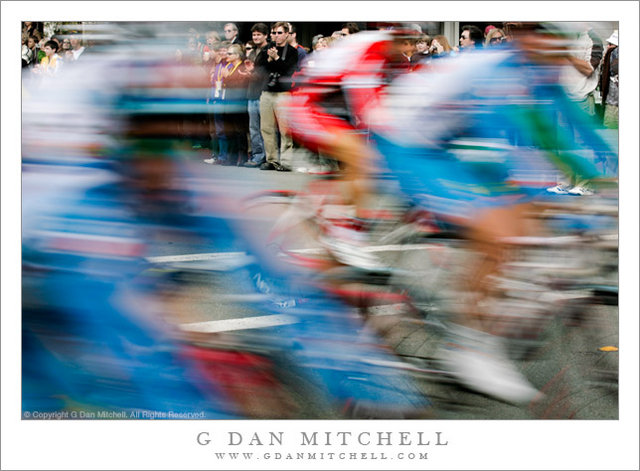
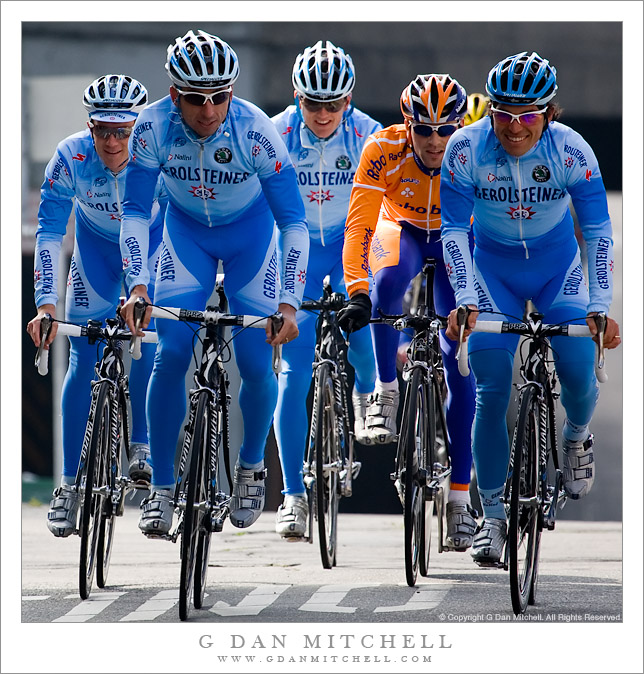
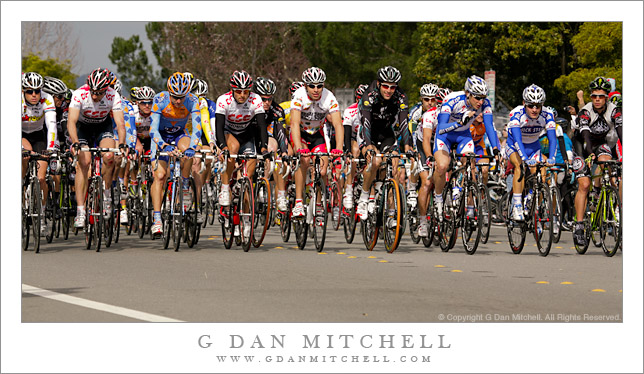
- If you want to shoot the peloton (the pack of riders) try to do so at a start in a downtown area that includes “parade laps” – where the pack does a few loops at less competitive speeds before heading out on the open road. You’ll have similar opportunities at the end of a stage that finishes with several downtown loops, though things tend to happen a lot faster at the end than during the parade laps.
- If you try to shoot a sprint finish and cannot be right at the finish line – and you probably cannot – try to be in the area 100-200 meters from the line. At this point there is tremendous action as the final sprint starts to take place and, in my experience, some very dramatic shots are possible – even more so than at the finish line when the race has usually already been decided.
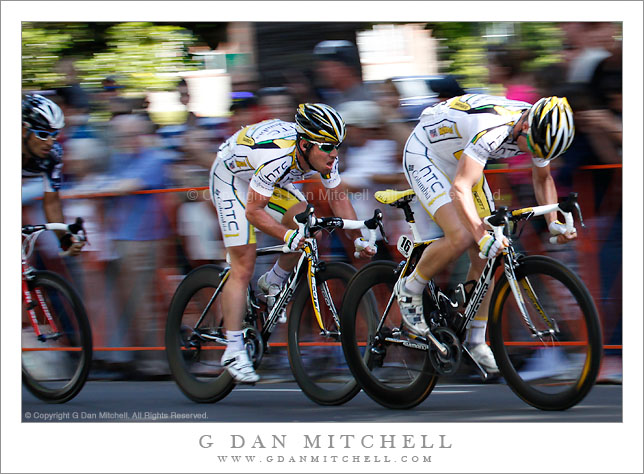
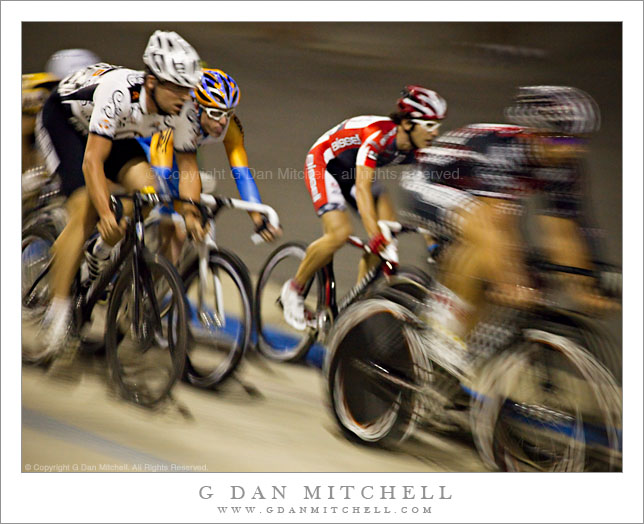
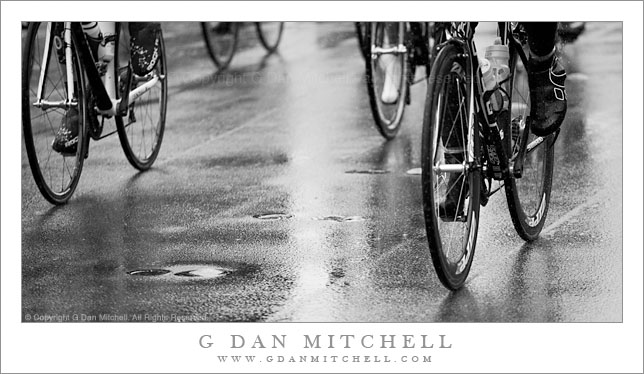
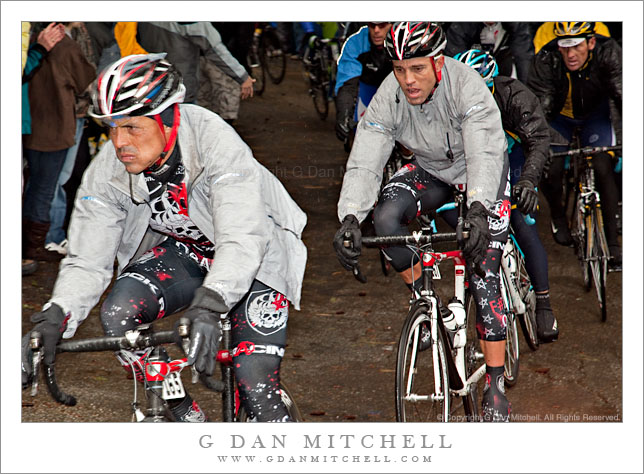
- In all of these situations, unless you are very experienced at tracking riders close up with a long lens as they fly by at high speed… practice on every rider that comes by. I’ll even practice tracking support motorcycles, police escorts – anything that moves. Eventually you want to pan smoothly while you remain continuously aware of the position of the riders in the frame – and the non-rider elements in the background. To put it mildly, this isn’t easy – and it takes a lot of practice.
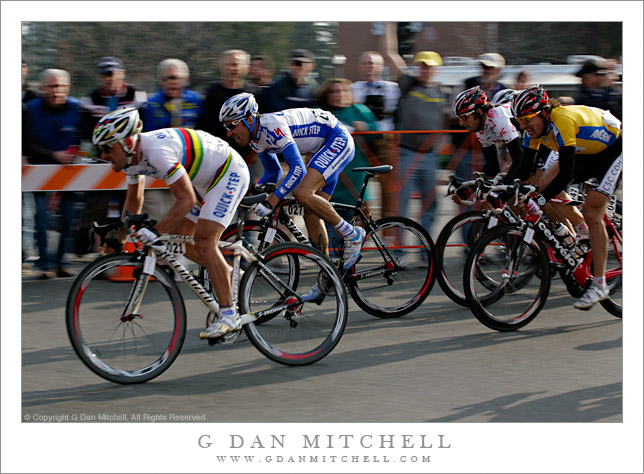
- When you track riders moving at high speed, think about putting their torsos/hips in the center of the frame vertically. Unless you are shooting very tight, if you center their heads you’ll get lots of empty space above them and cut off their legs and bikes.
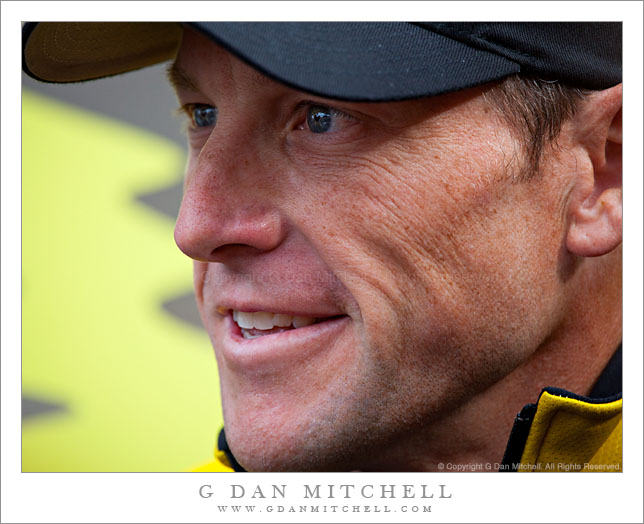
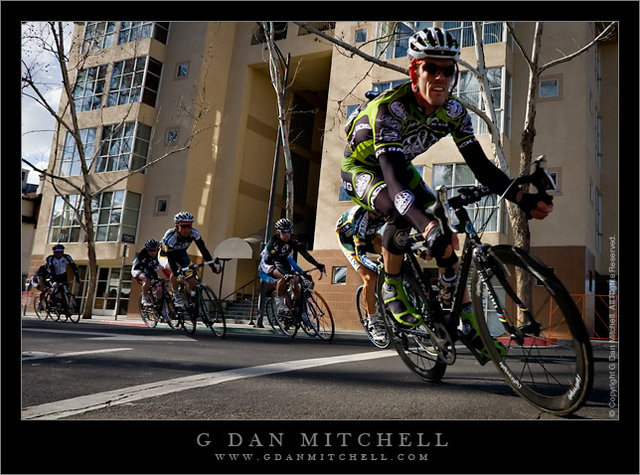
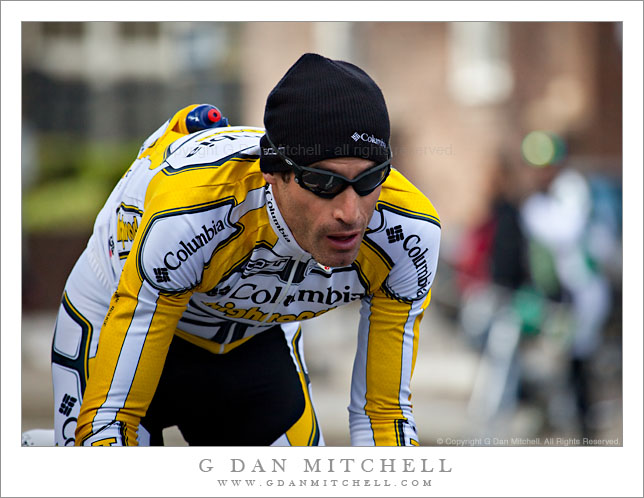
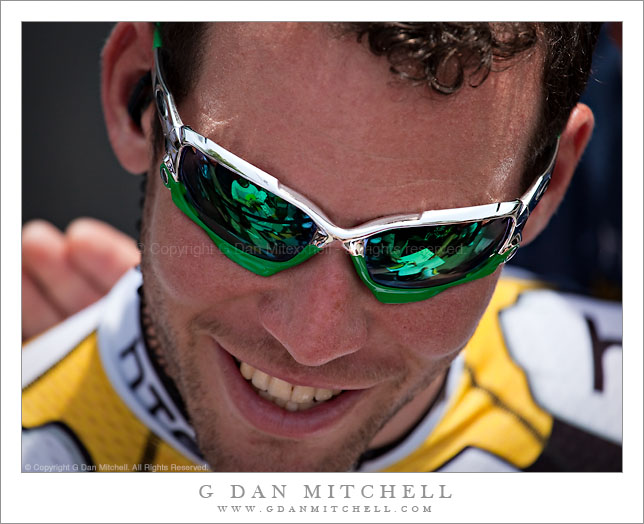
© Copyright 2010 G Dan Mitchell – all rights reserved.

G Dan Mitchell is a California photographer whose subjects include the Pacific coast, redwood forests, central California oak/grasslands, the Sierra Nevada, California deserts, urban landscapes, night photography, and more.
Blog | About | Flickr | Twitter | Facebook | Google+ | 500px.com | LinkedIn | Email
Text, photographs, and other media are © Copyright G Dan Mitchell (or others when indicated) and are not in the public domain and may not be used on websites, blogs, or in other media without advance permission from G Dan Mitchell.