“Brock Street, Bath” — Georgian buildings on Brock Street, Bath England.
There is a lot going on in Bath, which probably explains its popularity. Only steps apart you have “baths” dating back to the Roman era, a large central church, shopping districts, and more. Walk a little further and there’s a river, plenty of places to eat, and increasingly less tourist-oriented facilities. Cross that river and perhaps walk up some hills, and the place seems quite different from the central tourist-centric zone.
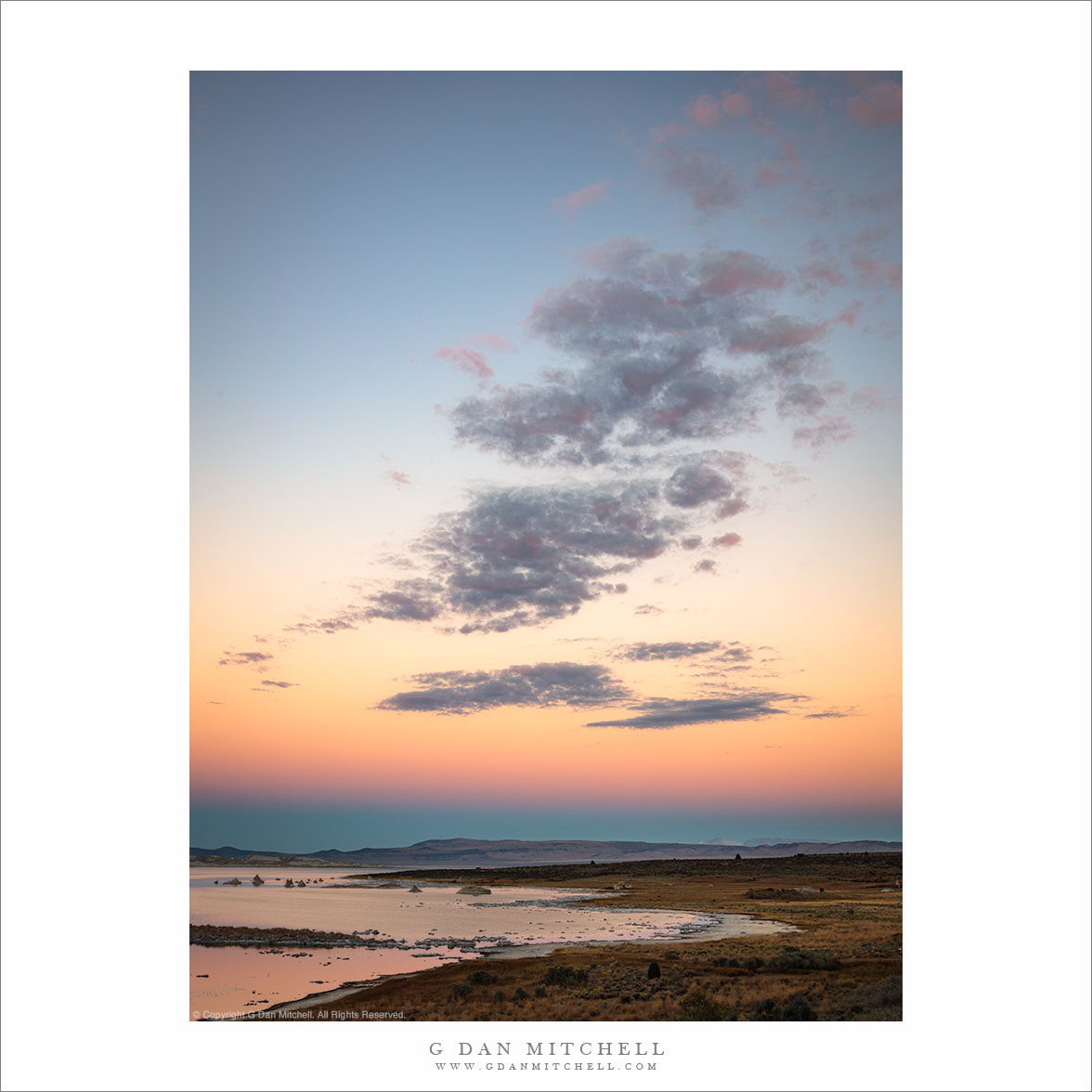
“Mono Lake, Earth Shadow, Clouds” — Mono Lake, evening clouds, earth’s shadow above the horizon
A few clouds drifted east from the Sierra crest and held together long enough to occupy the sky above Mono Lake at sunset. The long shadow of the Sierra stretched across the foreground shoreline and tufa formations, and in the distance the earth’s shadow is visible above basin and range mountains.
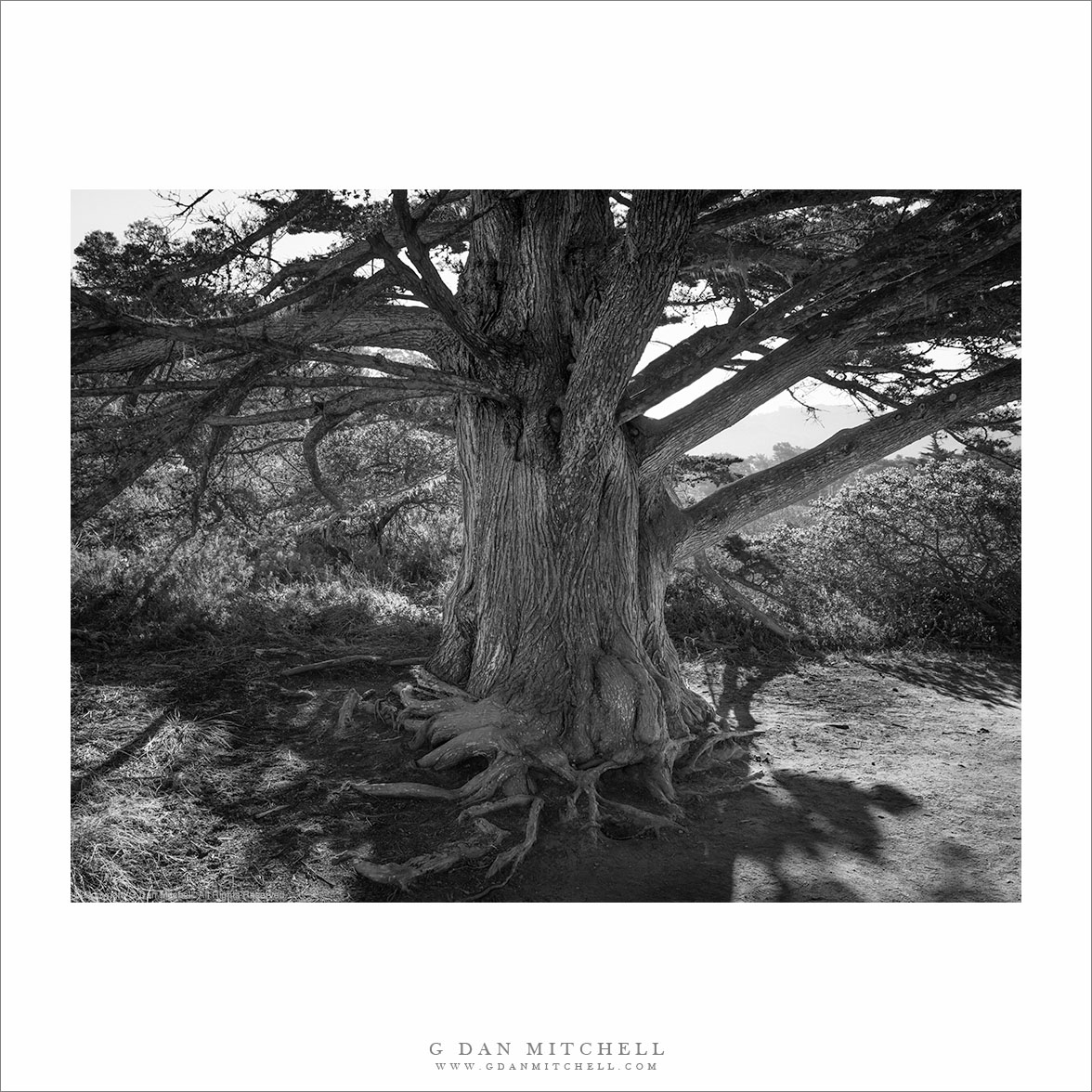
“Old Cypress” — An old Monterey cypress tree at Point Lobos, California.
The Monterey cypress trees at Point Lobos are rugged and diverse specimens. This is no forest of uniform Sierra Nevada trees. Each tree seems to have its own personality, formed by its exposure to light, proximity to cliffs, age, and the wind. Aside from the fact that they often grow in groves, many of them remind me of the stunted and twisted trees found at timberline in the highest mountains.
“Green Chain” — A chain casts a shadow on a corrugated metal wall.
I have admitted to a fascination with graphical elements — shapes, textures, colors, curves, and more. Finding them in the urban or natural landscape can make fairly mundane subjects interesting, at least to me. Here we see a small section of the corrugated metal wall of a very green industrial building. A couple of loops of chain hang from a gap between panels, for reasons that seem inscrutable.
Photographer and visual opportunist. Daily photos since 2005, plus articles, reviews, news, and ideas.
Manage Consent
To provide the best experiences, we use technologies like cookies to store and/or access device information. Consenting to these technologies will allow us to process data such as browsing behavior or unique IDs on this site. Not consenting or withdrawing consent, may adversely affect certain features and functions.
Functional
Always active
The technical storage or access is strictly necessary for the legitimate purpose of enabling the use of a specific service explicitly requested by the subscriber or user, or for the sole purpose of carrying out the transmission of a communication over an electronic communications network.
Preferences
The technical storage or access is necessary for the legitimate purpose of storing preferences that are not requested by the subscriber or user.
Statistics
The technical storage or access that is used exclusively for statistical purposes.The technical storage or access that is used exclusively for anonymous statistical purposes. Without a subpoena, voluntary compliance on the part of your Internet Service Provider, or additional records from a third party, information stored or retrieved for this purpose alone cannot usually be used to identify you.
Marketing
The technical storage or access is required to create user profiles to send advertising, or to track the user on a website or across several websites for similar marketing purposes.