
Category Archives: Photographs: Desert

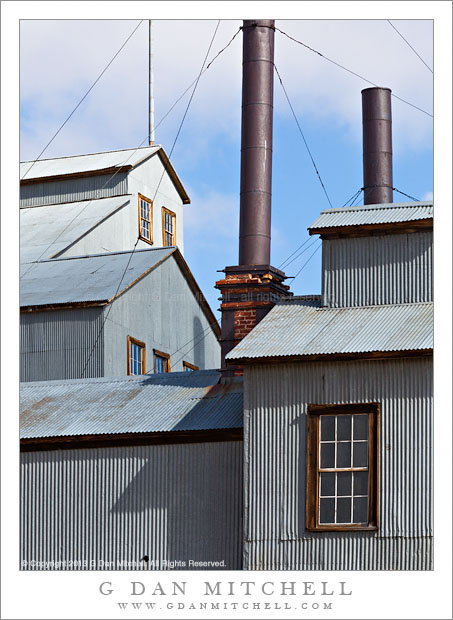
Metal Shingles and Electrical Wire

Metal Shingles and Electrical Wire

Metal Shingles and Electrical Wire. Bodie, California. October 13, 2013. © Copyright 2013 G Dan Mitchell – all rights reserved.

Weathered metal shingles and electrical wire on the wall of an abandoned building in the historic Bodie, California ghost town

I’ve visited Bodie a number of times, and I find the history of the place fascinating – from its mining roots up to its gradual death in the 20th Century. That said, and despite the obvious wealth of potential subjects, I’ve had a hard time warming up to it as a photographic subject. It is difficult to get there at the times of day when the light is most interesting, due to the limited hours the state park is open. And the midday light can be very harsh. In addition, it is an increasingly popular tourist attraction, which adds an additional challenge to the photography – unless you are there to photograph the people.

The times when I’ve enjoyed photographing there have almost all been those with “interesting” weather – perhaps some building afternoon thunderstorms, light snow, or possibly rain. Bodie was on our “maybe” list for shooting subjects on this trip – but when we saw clouds and snow along the eastern Sierra on this day we decided to head out there and see if this would add some interest. Once you are in Bodie, certain subjects seem to come to mind – photographing the many old derelict buildings, the overall landscape of the town, the surrounding landscape, the mining equipment and structures. I first focused on the old buildings, but then began to look a bit more at some of the smaller elements, such as this section of a rusted metal shingled wall with a bit of old electrical wire dangling from its side.

G Dan Mitchell is a California photographer and visual opportunist whose subjects include the Pacific coast, redwood forests, central California oak/grasslands, the Sierra Nevada, California deserts, urban landscapes, night photography, and more.
Blog | About | Flickr | Twitter | FacebookGoogle+ | 500px.com | LinkedIn | Email

Text, photographs, and other media are © Copyright G Dan Mitchell (or others when indicated) and are not in the public domain and may not be used on websites, blogs, or in other media without advance permission from G Dan Mitchell.
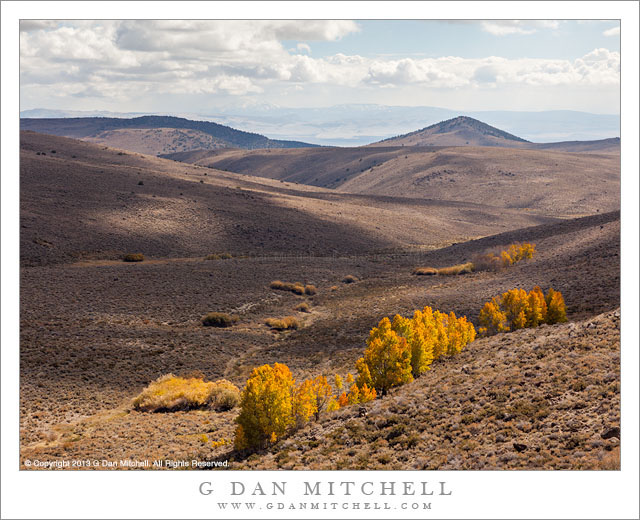
Desert Mountain Valley

Desert Mountain Valley

Desert Mountain Valley. Death Valley National Park, California. April 4, 2013. © Copyright 2013 G Dan Mitchell – all rights reserved.

A dry and rocky little valley high in the Amargosa Mountains, Death Valley National Park

I have photographed in Death Valley for some time now, and I enjoy the place immensely. I try to spend a week or so photographing there each year, and sometimes get there more than once. With my familiarity with the place in mind, on my early 2013 visit I started to think about a different way to try to photograph this landscape. I’m not sure quite where this will lead just yet, but this is among a few photographs that mark my foray down this slightly different path.

Photographs never provide the viewer with a complete view of the objective reality of the subject. I like to say that “All photographs lie.” In the nicest way, of course. ;-) What I mean is that a photograph will diverge from the real in two basic ways. First, there are non-visual aspects of the real experience of being in such a place that the photograph, while possibly suggesting them, cannot “capture” – the heat, the feeling of an early morning breeze in a desert canyon, dust, and more. Second, the photographer necessarily imposes his or her way of seeing the place on the photograph – realistically, this cannot be avoided. We choose when to be there and make the photograph, we wait for “just the right light,” we decide how to juxtapose and frame the elements of the scene, we determine what you don’t see, and so forth. If you only saw photographs of Death Valley, even the most beautiful and compelling work, you would see only a small subset of what the place consists of, with emphasis on certain “spectacular” landscapes and types of light. I started thinking that the appeal of the place is not limited to just those experiences in the familiar photographs and that, as hard as it is to make a photograph of such things, a simple desert canyon winding toward a rocky ridge is an appealing thing when you are there – so it should be possible to make a photograph that somehow conveys that. This is one such place; basically an anonymous bit of canyon and hillside in morning light high in the Amargosa Range.

(By the way, on the day I’m posting this to the queue at my blog – June 30, 2013 – we are in the middle of a record-breaking heat wave here in California. I’m sure that this would be a particularly unpleasant place to be today!)

G Dan Mitchell is a California photographer and visual opportunist whose subjects include the Pacific coast, redwood forests, central California oak/grasslands, the Sierra Nevada, California deserts, urban landscapes, night photography, and more.
Blog | About | Flickr | Twitter | FacebookGoogle+ | 500px.com | LinkedIn | Email

Text, photographs, and other media are © Copyright G Dan Mitchell (or others when indicated) and are not in the public domain and may not be used on websites, blogs, or in other media without advance permission from G Dan Mitchell.
Devils Cornfield, Morning

Devils Cornfield, Morning

Devils Cornfield, Morning. Death Valley National Park, California. March 31, 2011. © Copyright 2013 G Dan Mitchell – all rights reserved.

Early morning light on Devils Cornfield and receding ridges, Death Valley National Park

I’m a fan of shooting in the very early morning – what photographer isn’t? – and of shooting directly into the brilliant light of the rising sun, especially when that light shines through an atmosphere containing haze or dust. These conditions appeal to me in a variety of ways. The inclusion of this haze emphasizes the effect of atmospheric recession, and sometimes the most distant elements of the scene can fade to near invisibility as the atmosphere lowers the color saturation and contrast of the scene. Shadows, especially if bit of detail can be retained, can produce dramatic contrasts, and light glancing across the edges of features such as plants can be intensely colorful.

This photograph includes features of a scene that is easily accessible but perhaps one that people don’t often spend much time considering, especially at this time of day. Most photographs of the area that I see are made in fairly normal daytime light or perhaps in the warm and clear light of the evening golden hour. Here I found a slightly elevated camera position and aimed across the tops of clumps of grasses, a small nearby hill, and a succession of higher and more distant ridges leading away toward the mountains along the east side of the valley.

G Dan Mitchell is a California photographer and visual opportunist whose subjects include the Pacific coast, redwood forests, central California oak/grasslands, the Sierra Nevada, California deserts, urban landscapes, night photography, and more.
Blog | About | Flickr | Twitter | FacebookGoogle+ | 500px.com | LinkedIn | Email

Text, photographs, and other media are © Copyright G Dan Mitchell (or others when indicated) and are not in the public domain and may not be used on websites, blogs, or in other media without advance permission from G Dan Mitchell.

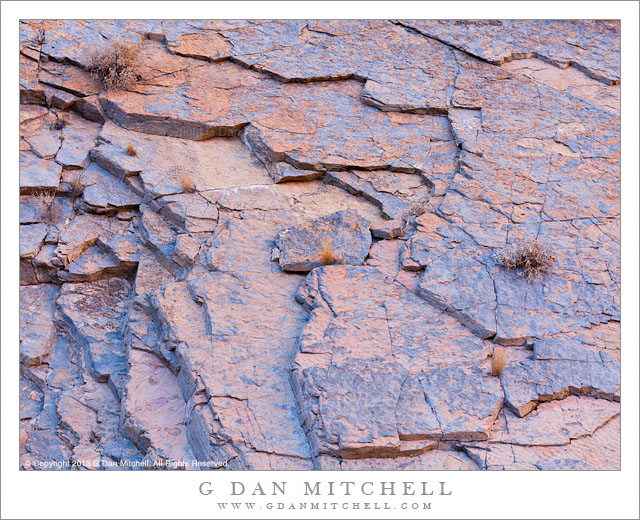
Eroded Desert Canyon Walls

Eroded Desert Canyon Walls

Eroded Desert Canyon Walls. Death Valley National Park, California. April 5, 2013. © Copyright 2013 G Dan Mitchell – all rights reserved.

The eroded rock strata of the walls of a narrow desert canyon, Death Valley National Park

I made this photograph in a place that I most certainly would not want to visit on the day that I am posting this! Back in early April this popular hike up a narrow canyon was relatively comfortable on a day when the temperature might have made it to about 90 degrees Fahrenheit. By now, that would be considered to be a “cool” day, since temperatures in these “warm” months frequently go well over 100 degrees. Some people choose to visit Death Valley in those awful conditions, but I’ll take the late fall through early spring season any time!

In Death Valley, more so than in just about any other area below timberline, the geology of the place is laid open for us to see clearly. Things do grow there, but sparsely and rarely beyond a height that might be measured in inches. The primary impression is of rock – monumental mountains of rock, vast washes over which floods have spread broken up rock and gravel, and the valley floors which may range from gravel to sand – but are still, ultimately, rock. Very little grows in this canyon aside from a few tiny plants peeking out of the odd crack or cowering in bits of shade, so here the erosion features and the underlying rock strata are easy to see. As I came to this point in the canyon, the wall was mostly still in shadows filled by reflected light, with just a bit of direct sunlight rimming the edges of some of the rocks.

G Dan Mitchell is a California photographer and visual opportunist whose subjects include the Pacific coast, redwood forests, central California oak/grasslands, the Sierra Nevada, California deserts, urban landscapes, night photography, and more.
Blog | About | Flickr | Twitter | FacebookGoogle+ | 500px.com | LinkedIn | Email

Text, photographs, and other media are © Copyright G Dan Mitchell (or others when indicated) and are not in the public domain and may not be used on websites, blogs, or in other media without advance permission from G Dan Mitchell.