(This article has been slightly updated since it was originally posted i 2014.)
Canon has released a new ultra-wide zoom lens, the Canon EF 16-35mm f/4 L IS lens.* There has been a lot of excitement about this lens among Canon photographers since it addresses some weaknesses in previous Canon lenses of this type, including the EF 16-35mm f/2.8 L II and the venerable EF 17-40mm f/4 L. Each of those can produce fine photographs, but each also has its issues, mostly related to corner resolution. Early tests of the new 16-35mm f/4 L IS suggest that it performs much better in the corners. (In the first months following introduction, there were some issues with corner performance on some copies, but those have been addressed.) The lens also adds “IS” (image-stabiliztion), which is useful if you use it for handheld photography.
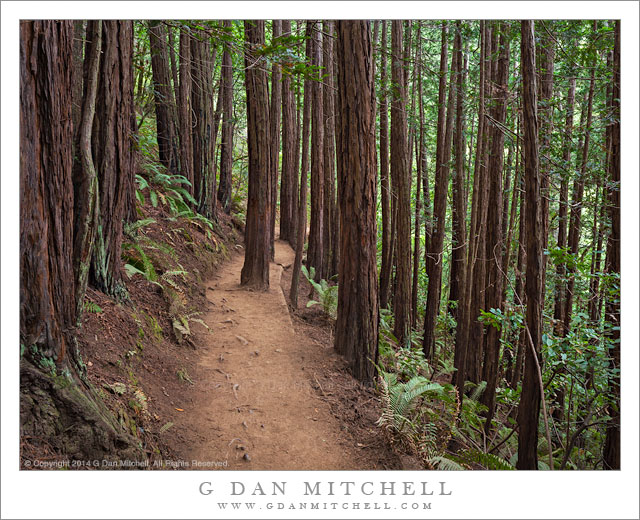
With this in mind, I did something I rarely do, and I purchased a newly-released lens right when it came out. Mine arrived last week, but I did not have a good opportunity to put it to real photography use until several days later when I took it out for a morning of redwood forest photography at the Muir Woods National Monument. (I did snap a few promising handheld shots right after I unpacked it, but such things rarely tell the whole story.) I did something else that is a bit unusual for me — I stuck the ultra-wide zoom on the camera at Muir Woods and shot with only that lens instead of the longer focal lengths that I more typically use.
Corner performance has been one of the main issues with the older Canon ultra-wide zoom lenses. The 17-40mm f/4 is known for soft corners at the largest apertures. It is always sharp in the center, but I most often shot mine stopped down, often at f/16 for landscape photography when maximizing depth of field. At smaller apertures the corners improve a lot, but they are never as good as what we see on more recent lenses with short focal lengths. Canon’s f/2.8 16-35 L II starts out fairly well at f/2.8 — in fact, its performance at f/2.8 is arguably its chief virtue compared the previous f/2.8 version — but performance stopped down isn’t any better than that of the less expensive 17-40. The promise of the new 16-35 f/4 lens, and the assessment in many early articles about it, is that it offers significantly better corner performance. Many who used early copies reported that it provides good resolution all the way into the corners, even wide open at f/4 and at all focal lengths. So I wanted to try it out in real-world shooting of the sort I’m most likely to do with such a lens, and see how it stacks up against my 17-40 lens on my full frame camera.
Continue reading Canon EF 16-35mm f/4 L IS: First Thoughts