Post-Sunset Geese

Post-Sunset Geese
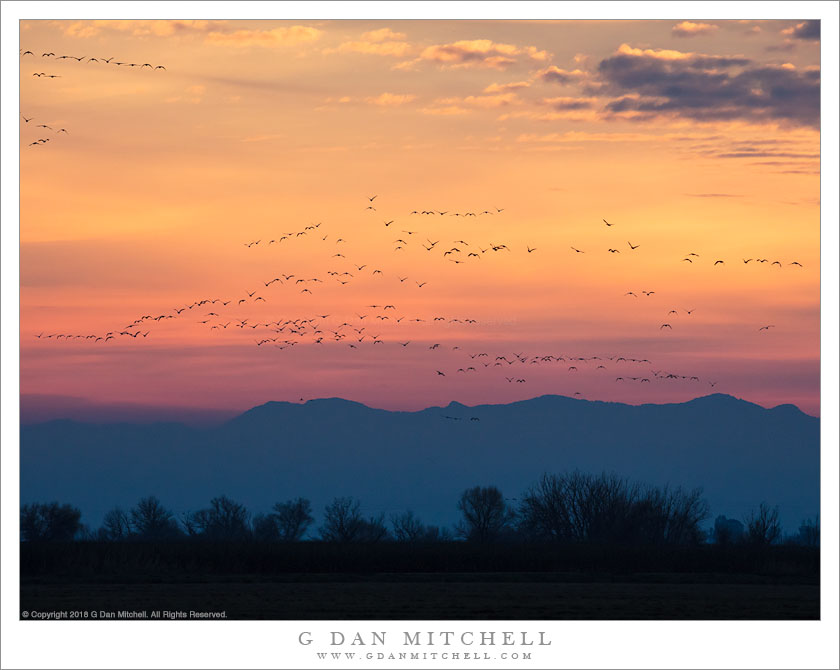
Winter geese fly toward San Joaquin Valley wetlands after sunset

Post-Sunset Geese. © Copyright 2018 G Dan Mitchell – all rights reserved.

Winter geese fly toward wetlands after sunset

These days photographing wild birds are frequently long. For me they begin about three hours before dawn, when I awake to a (very) early alarm, grab coffee and a bit of food, load my vehicle, and start out on a two-hour drive in the darkness. As I approach my destination the first color is coming to the sky above the Sierra — that is if tule fog doesn’t reduce visibility to 100 feet or so! I arrive a half hour before sunrise, set up camera equipment, and begin to work. At first I may make some landscape photographs, since it is often still too early to handhold the camera for bird photography, but soon the first birds fly up from the ponds. I usually spend the next three hours of so photographing birds and landscape — though the precise time varies depending on the conditions — and then I take a break in the middle of the day. By mid-afternoon I’m back, looking for evening photographic opportunities, and the pace of the work increases as sunset approaches. During the last few minutes of light a lot happens quickly, and then I photograph until the light is gone.

I made this photograph during that late period, following sunset, when lingering light colored the thin clouds above the western mountains. Around sunset there is a period of coming and going by the birds. Birds may rise up from ponds and fly away, or flocks may arrive from distant points and settle in for the night. Often cranes arrive just after sunset. The birds in this photograph are geese, most likely Ross’s geese, approaching the wetland ponds from that western sunset sky.


G Dan Mitchell is a California photographer and visual opportunist. His book, “California’s Fall Color: A Photographer’s Guide to Autumn in the Sierra” is available from Heyday Books and Amazon.
Blog | About | Flickr | Twitter | FacebookGoogle+ | LinkedIn | Email


All media © Copyright G Dan Mitchell and others as indicated. Any use requires advance permission from G Dan Mitchell.
Fujifilm GFX and Canon 5DsR part II

Earlier I shared the beginning of an article that compares the Fujifilm GFX 50S and the Canon 5DsR, two cameras with different formats but approximately the same sensor resolution. That article (“Fujifilm GFX and Canon 5DsR” wasn’t complete … and now I’m back with one more point of reference.

When it comes to resolution, making judgments based on screen images has its limits. For example, 100% magnification crops “show” you things that won’t be visible even in  a very large print, and in many cases you must interpret what you see in the screen image in order to speculate about what the print will look like. As we say, “The proof is in the print.”

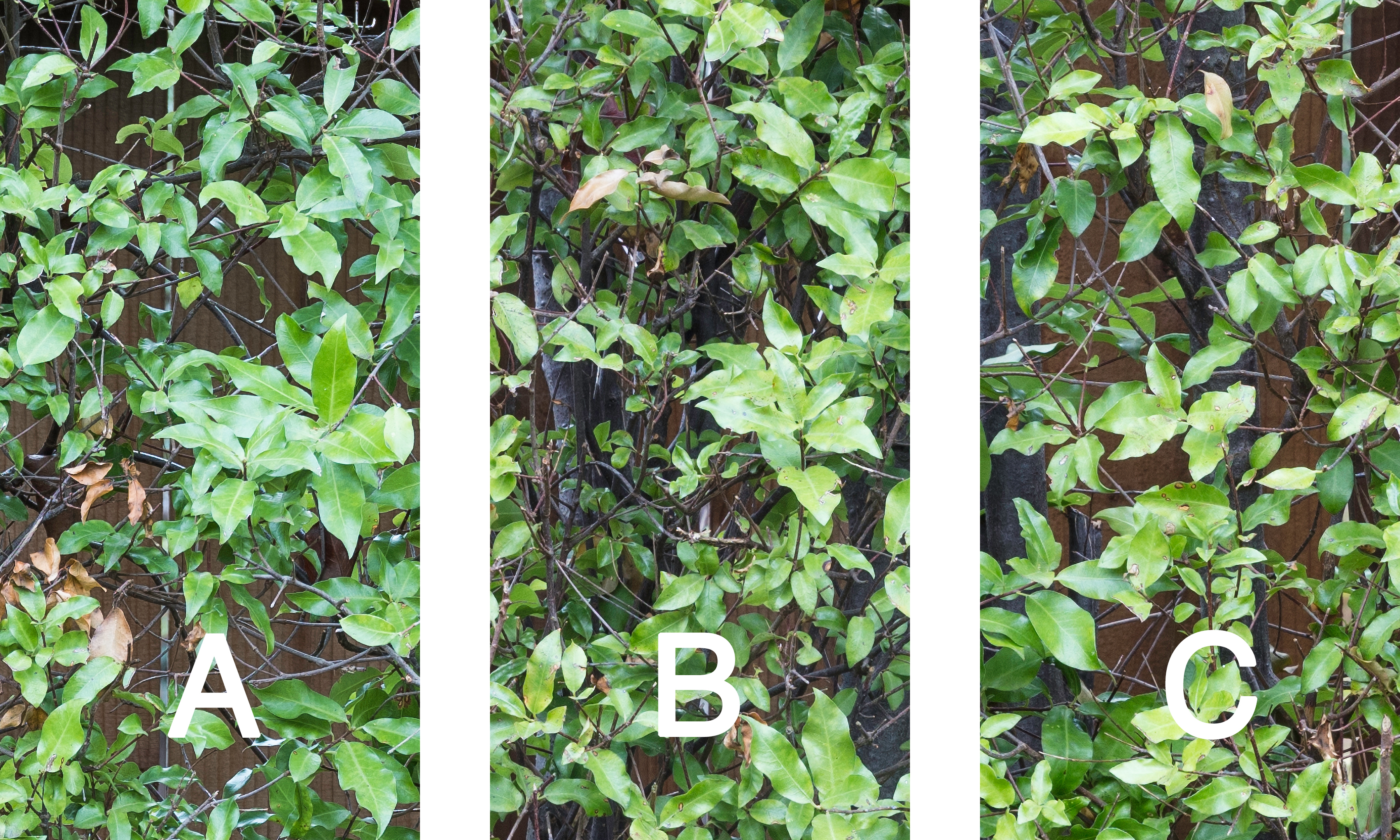
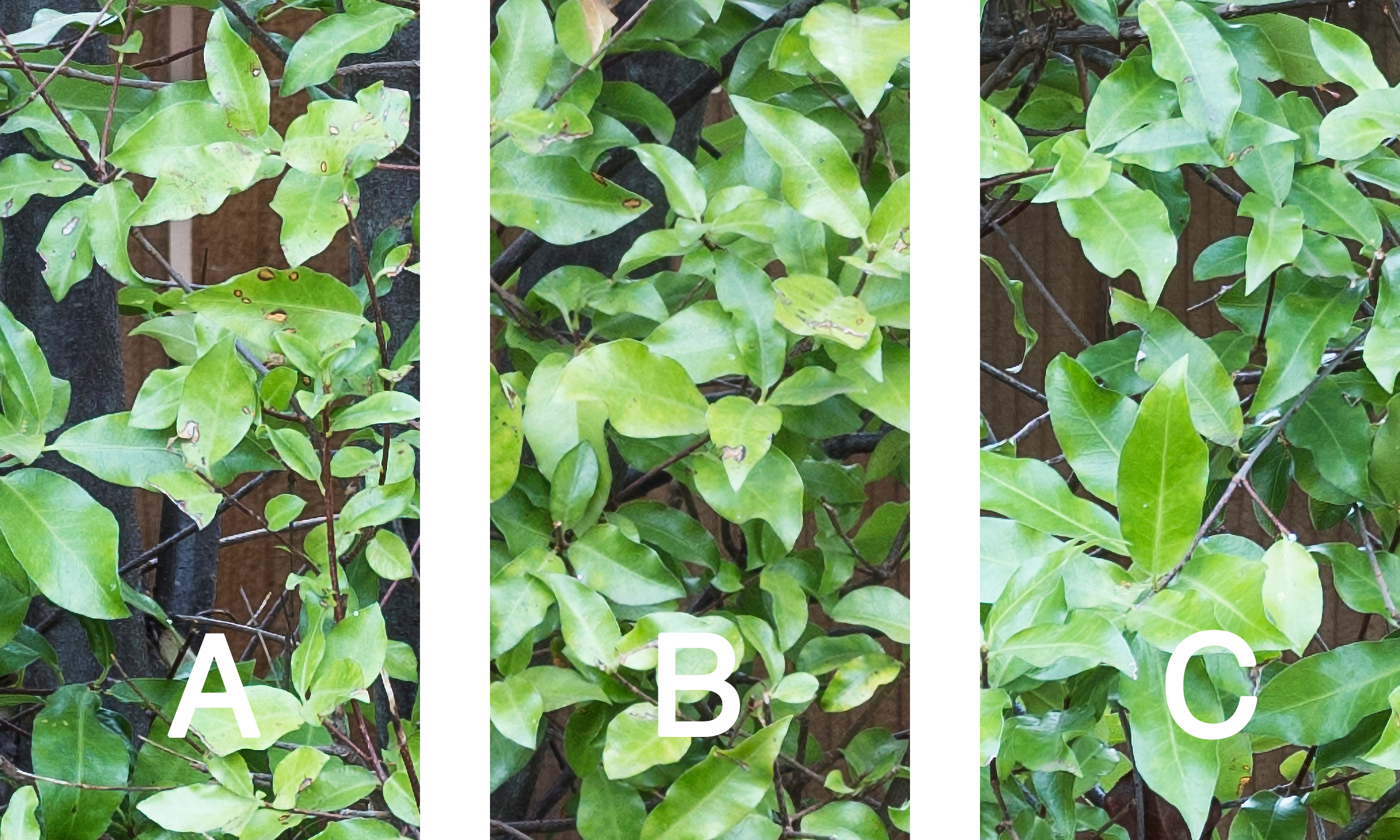
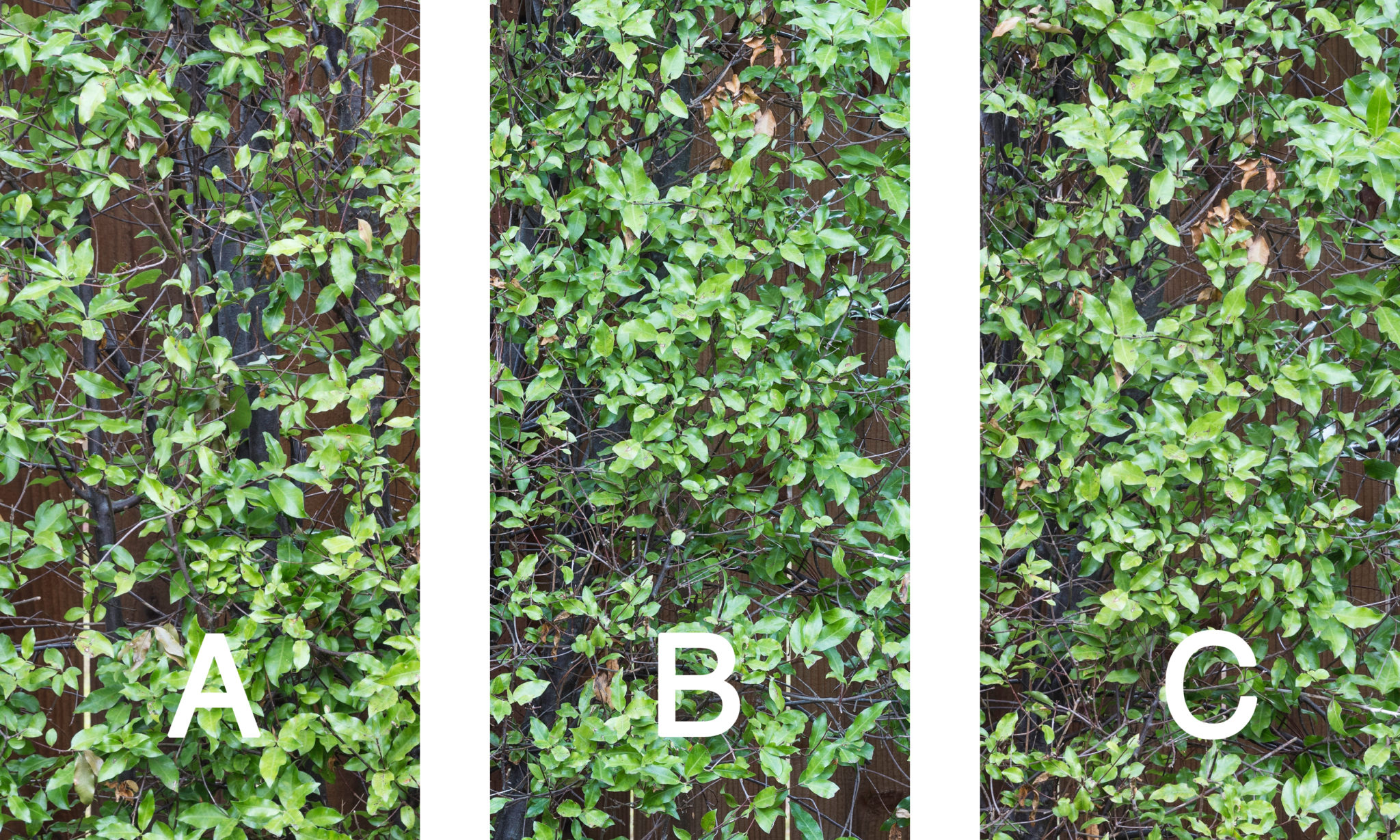
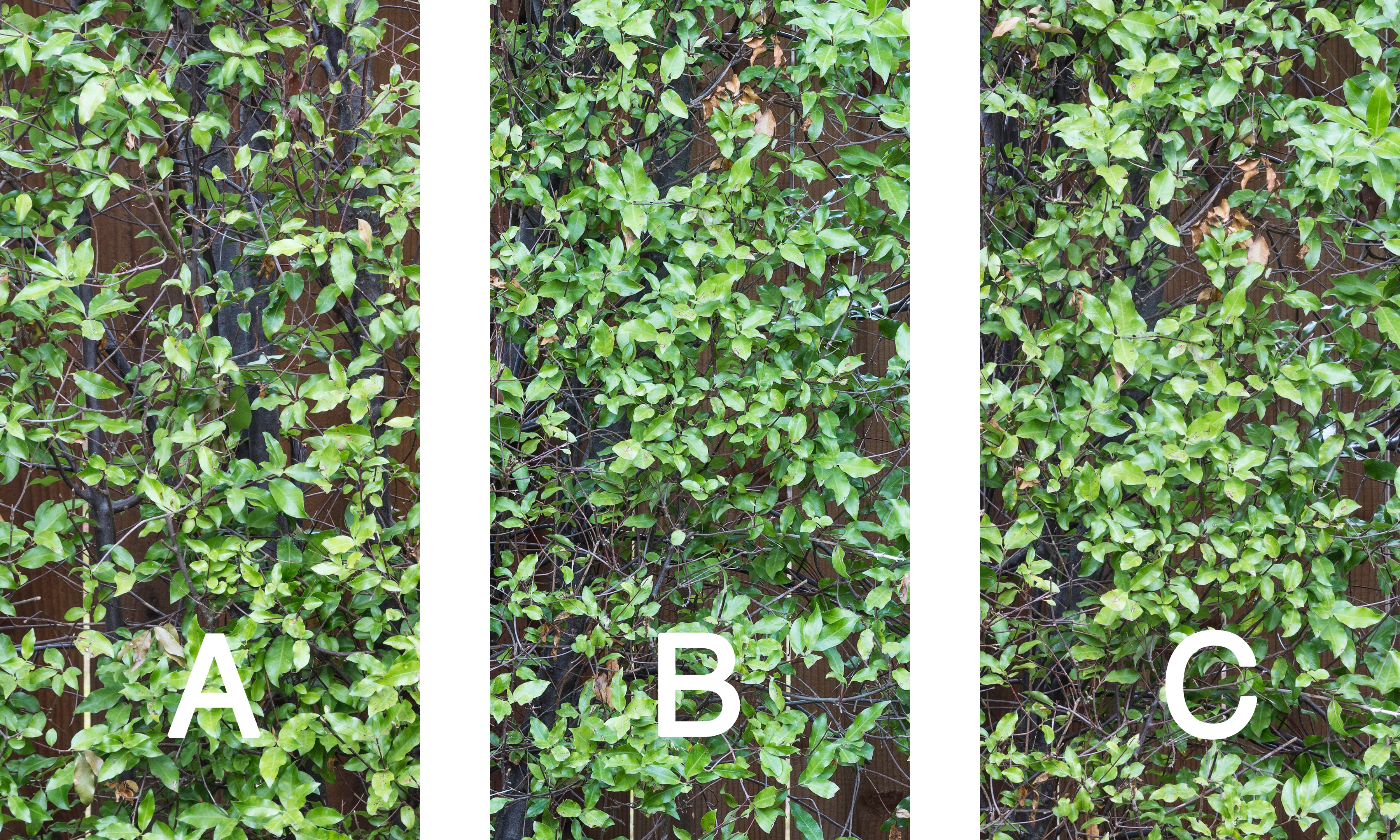
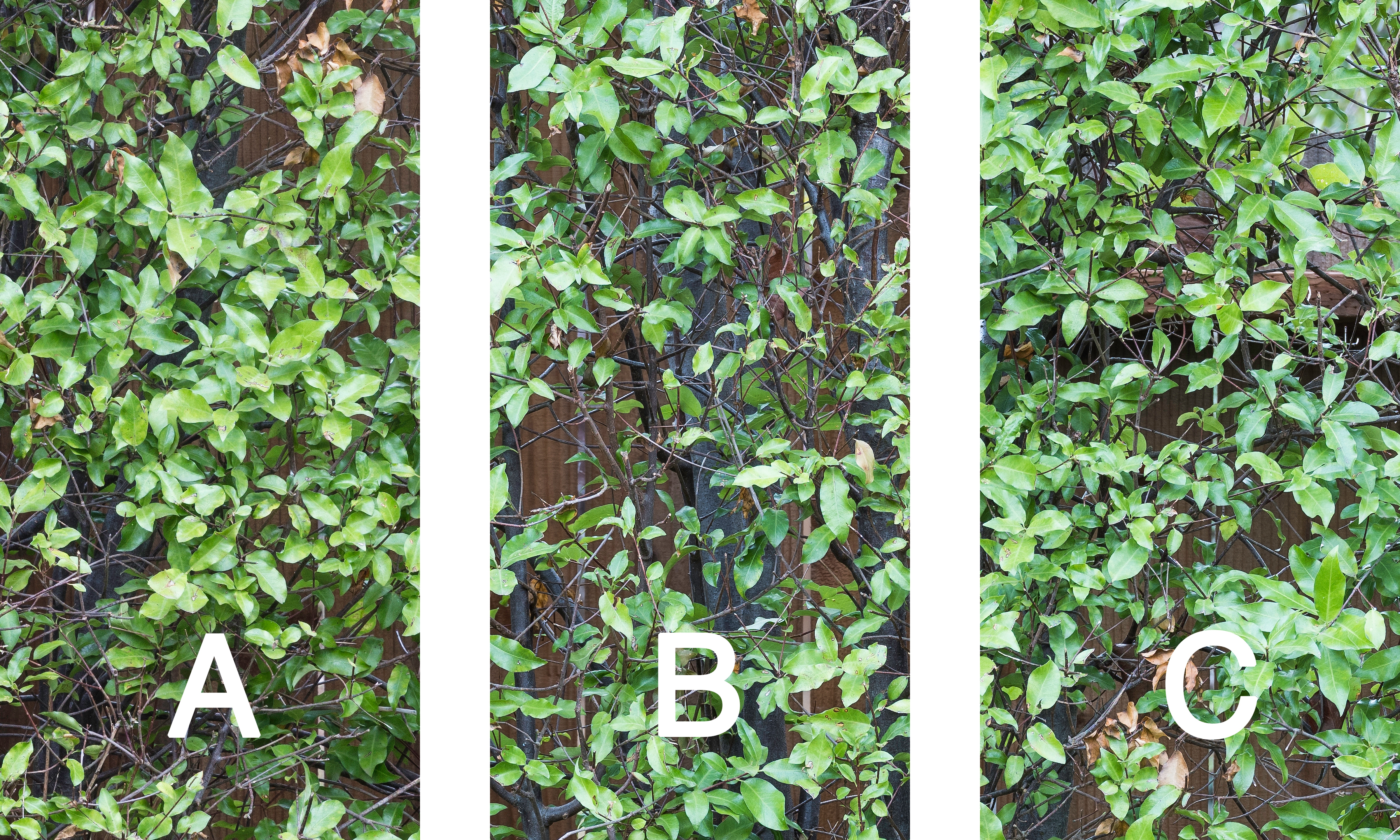
With that in mind, I have prepared some files that may be useful for comparing print resolution from Fujifilm GFX 50S and the Canon 5DsR. These files each hold three “test strips” labeled A, B, and C. The files have been formatted for producing prints with a print area of 10″ wide and 6″ tall (use letter-size paper) when printed at a resolution of 360. They are sRGB color files in the highest quality (Photoshop: 12) jpg format.

There are four files. Let’s call them:

(Click on the links to see and download the files.)

IMPORTANT NOTE: When first posted, these links went to downsized files rather than the full size print-ready files. This was corrected on 1/21/18. The print areas of these files should be 3600 pixels on the long side, for printing 10″ long at 360 ppi.

Viewing them on screen is not the object here — in fact, for reasons I won’t go into here, trying to evaluate that way is of very limited value and may mislead you. (For example, the files have been optimized for print in ways that may make them look poor on screen at 100% magnification.)

You will need to print.

Since there are four samples, you’ll need to make four letter-size prints. The correct settings will probably be entered automatically, but check that the print area is 10″ wide and 6″ tall and that the resolution is set to 360.  As you download and print the files you may wish to make a note on each (in pencil or ink) indicating which file it is — sample 1, sample 2, sample 3, and sample 4.

Observe each print carefully. Note anything you can see related to the resolution of each printed strip A, B, and C. (Note that this is only a resolution test — don’t worry about things like image size, brightness, color, and so forth.)

In order to avoid confirmation bias I’m not going to reveal anything else about the files at this time. Once a few people (or a lot of people?) have weighed in with their observations — please use the comments below — I’ll reveal more important information about what you are looking at.


G Dan Mitchell is a California photographer and visual opportunist. His book, “California’s Fall Color: A Photographer’s Guide to Autumn in the Sierra” is available from Heyday Books and Amazon.
Blog | About | Flickr | Twitter | FacebookGoogle+ | LinkedIn | Email


All media © Copyright G Dan Mitchell and others as indicated. Any use requires advance permission from G Dan Mitchell.
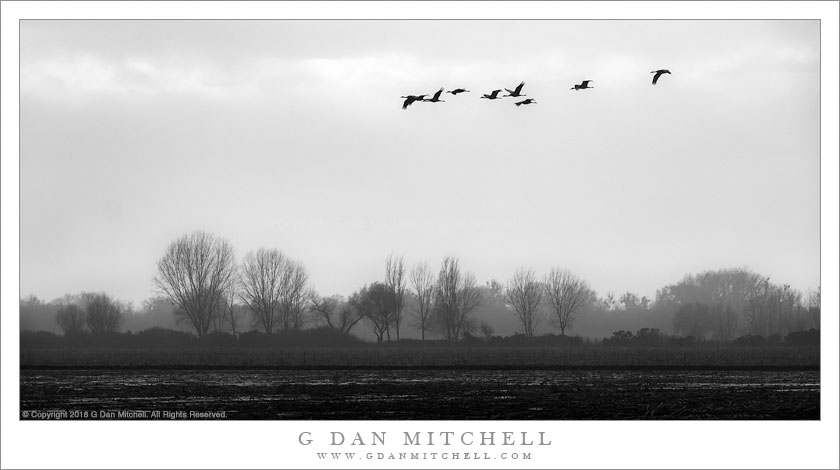
Cranes, Woodland Haze

Cranes, Woodland Haze
A flock of sandhill cranes flies above San Joaquin Valley fields and woodland.

Cranes, Woodland Haze. © Copyright 2018 G Dan Mitchell – all rights reserved.

A flock of sandhill cranes flies above fields and woodland.

Yesterday I managed to make it out the valley with the main goal of visiting the reception for “Valley Focus: On Photography,” a wonderful exhibit at the Carnegie Arts Center in Turlock. (Note: Those of us in the San Francisco Bay Area, spoiled by the proximity of a lot of really top-notch art, sometimes forget that there is “good stuff” elsewhere in the state. The Carnegie Center is a fine example.) It is about a two-hour drive out there from my home, and I was thinking that I could leave in the mid-afternoon and make it in time for the 5:00 PM reception… until I was reminded of something I should have been thinking of, the monumentally awful commute traffic along my intended route between the Bay Area and the Central Valley. So I left early, with a plan to visit some wild areas I have wanted to look at for some time.

It rained, sometimes hard, during the first part of the drive, but as I dropped down into the great valley it was clear that I had gotten ahead of the weather front — clouds behind me, broken clouds and blue sky ahead, and glowing light coming over the mountains to the west. I headed south and then east, finally locating a somewhat out-of-the-way spot where there was access to bird viewing. It wasn’t the ideal place to watch the birds, but there were some wonderful woodlands off to the west along a river. I made this photograph from a slightly elevated position, looking toward those trees as a flock of sandhill cranes arrived and then landed nearby.


G Dan Mitchell is a California photographer and visual opportunist. His book, “California’s Fall Color: A Photographer’s Guide to Autumn in the Sierra” is available from Heyday Books and Amazon.
Blog | About | Flickr | Twitter | FacebookGoogle+ | LinkedIn | Email


All media © Copyright G Dan Mitchell and others as indicated. Any use requires advance permission from G Dan Mitchell.
Revealed! — The VERY BEST Camera Brand!

The truth revealed! The secrets of the great photographers! You need to know this! Take it to the next level! Achieve true awesomeness! Answered: the critical questions! Finally!

  • Sony makes really good and interesting equipment, used by lots of fine photographers to produce excellent work.
  • Nikon makes really good and interesting equipment, used by lots of fine photographers to produce excellent work.
  • Fujifilm makes really good and interesting equipment, used by lots of fine photographers to produce excellent work.
  • Pentax makes really good and interesting equipment, used by lots of fine photographers to produce excellent work.
  • Canon makes really good and interesting equipment, used by lots of fine photographers to produce excellent work.
  • Olympus makes really good and interesting equipment, used by lots of fine photographers to produce excellent work.
  • Hasselblad makes really good and interesting equipment, used by lots of fine photographers to produce excellent work.
  • [fill in your favorite brand here) makes really good and interesting equipment, used by lots of fine photographers to produce excellent work.Reminder: Photography is not a team sport.

G Dan Mitchell is a California photographer and visual opportunist. His book, “California’s Fall Color: A Photographer’s Guide to Autumn in the Sierra” is available from Heyday Books and Amazon.
Blog | About | Flickr | Twitter | FacebookGoogle+ | LinkedIn | Email


All media © Copyright G Dan Mitchell and others as indicated. Any use requires advance permission from G Dan Mitchell.
Photographer and visual opportunist. Daily photos since 2005, plus articles, reviews, news, and ideas.