
Tag Archives: gully

High Desert Aspen Trees

High Desert Aspen Trees
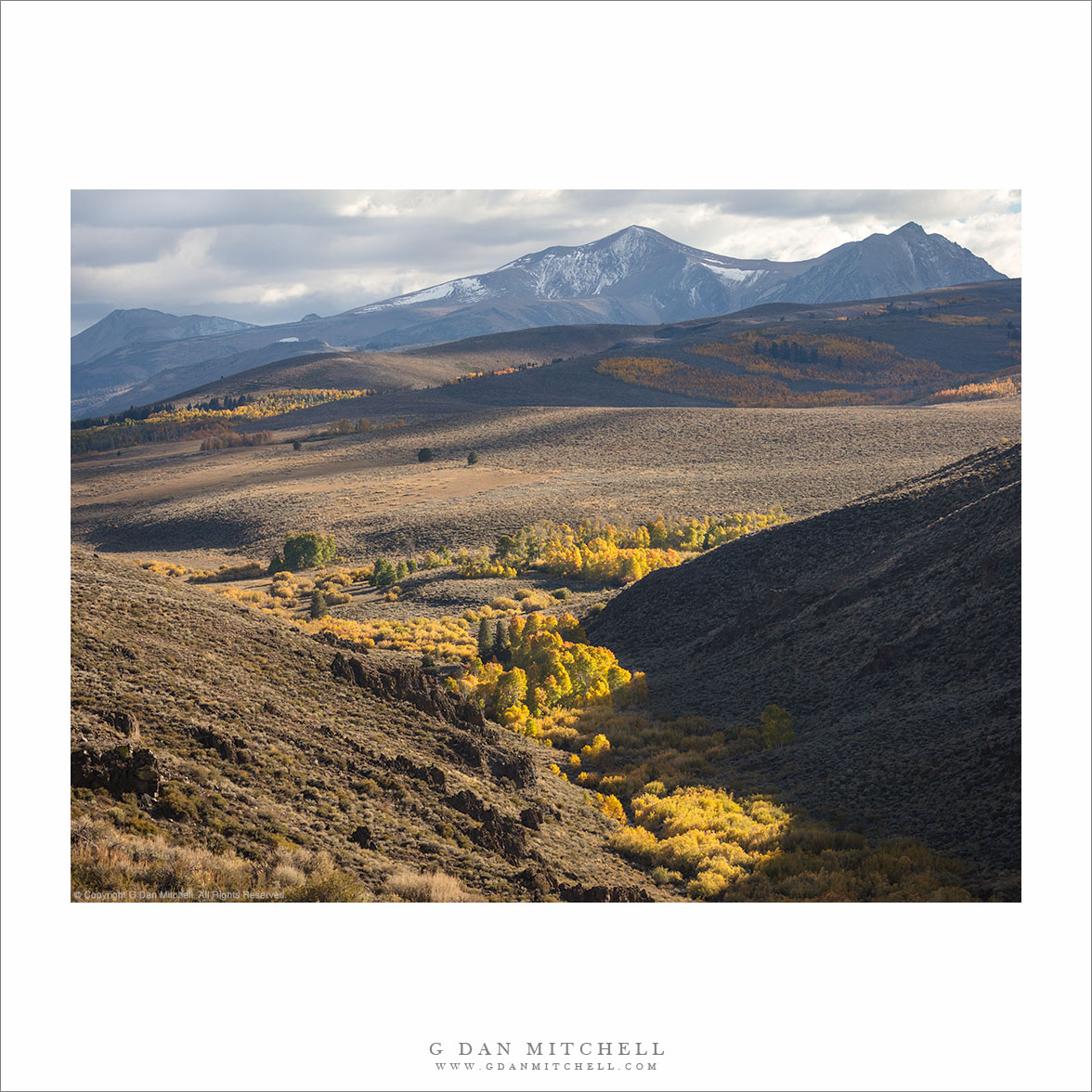
“High Desert Aspen Trees” — Aspen trees with autumn foliage ascend a high desert gully in the Eastern Sierra Nevada.

These sage-covered foothills are at an elevation of 8000′ and higher, but they are brown and dry, especially this late in the season. Technically this spot is part of the Sierra Nevada — it certainly seems so when you look at these peaks. However, it feels more like high desert than part of the mountain range.

The little grove of aspens grows in the bottom of the canyon that drains the nearby highlands. These trees were approaching their peak color, but with changing light I had to work quickly. Cloud shadows were moving across the landscape, and the shadow of the low hill at bottom right was starting to intrude on the colorful trees.


Leave a comment or question using the form. (Click the title to see the full article and to comment if you are viewing it on the home page.)

G Dan Mitchell is a California photographer and visual opportunist. His book, “California’s Fall Color: A Photographer’s Guide to Autumn in the Sierra” (Heyday Books) is available directly from him. Blog | Bluesky | Mastodon | Substack Notes | Flickr | Email

All media © Copyright G Dan Mitchell and others.
River of Aspen Color #2

River of Aspen Color  #2
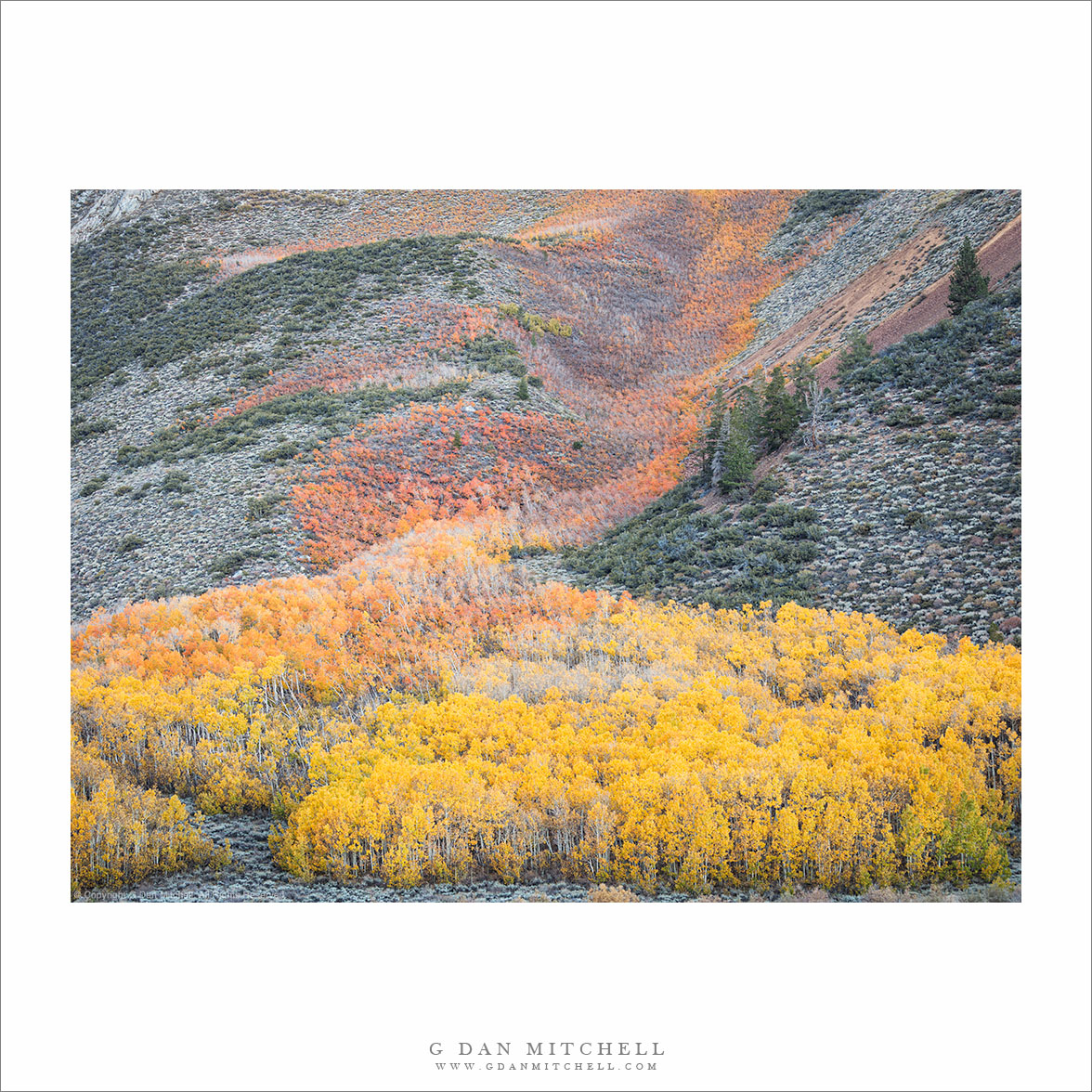
“River of Aspen Color #2” — A band of colorful autumn aspen trees follows a gully down a Sierra Nevada slope.

If you follow the fall color transition in the Eastern Sierra Nevada you have almost certainly seen photographs of this grove. (Hint: there other groves like it that are less well known, and I’ll do my part to help it stay that way!) The trees descend from a high ridge along a gully, then spread out in a larger grove at the bottom at the edge of a subalpine lake. The form of the grove is fascinating, as is its color transition between the upper orange and red trees and the yellow trees below.

We often photograph this and similar groves using the vertical “portrait” orientation for obvious reasons. In this case I thought that going with the wider “landscape” format might emphasize the “spreading” effect at the lower end of this grove. You might also notice that I intentionally photographed in soft light before the morning sun arrived — this light is less likely to oversaturate the colors to the point of blowing them out, and it also spreads a bit more light onto shadow details.


Leave a comment or question using the form. (If you are reading this on the home page, click the article title to see the full article and the comment form.

G Dan Mitchell is a California photographer and visual opportunist. His book, “California’s Fall Color: A Photographer’s Guide to Autumn in the Sierra” (Heyday Books) is available directly from him. Blog | Bluesky | Mastodon | Substack Notes | Flickr | Email

All media © Copyright G Dan Mitchell and others.
River of Aspen Color

River of Aspen Color
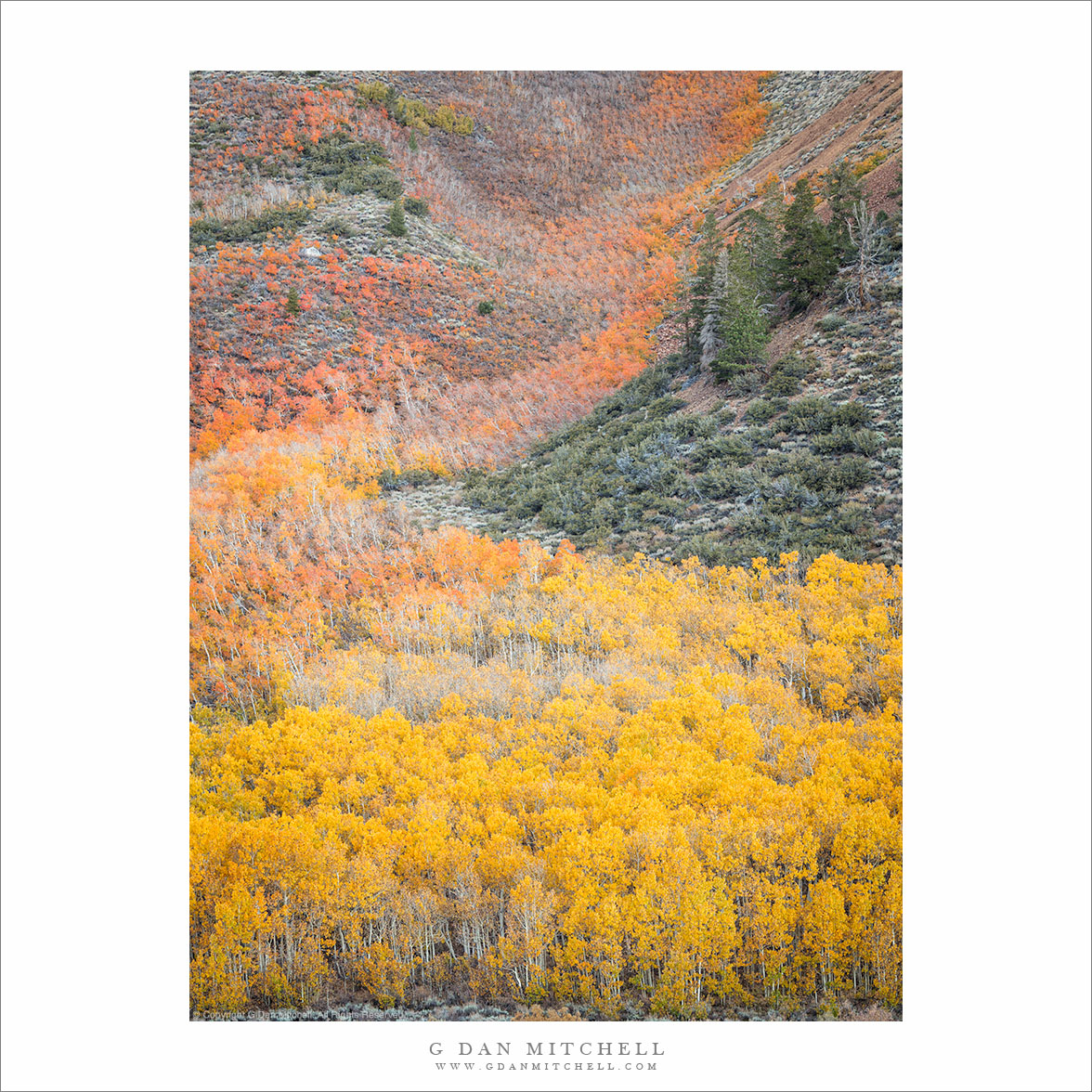
“River of Aspen Color” — A band of colorful autumn aspen trees follows a gully down a Sierra Nevada slope.

The grove in this photograph is semi-famous. The earliest photograph of it that I’m aware of is by Galen Rowell, and just about everyone who photographs Sierra aspens has given it a shot. Timing is everything — along with a bit of weather luck — and I arrived a bit after the peak of color. (At that point there might not be any bare trunks, but some of the foreground trees would still show a bit of green.) Rather than showing the whole thing, I decided to crop a bit and let the green area at upper right intrude into the space where yellow turns to orange.

While timing is a key to getting aspen photographs, the window is often a bit wider than you may expect. We want to arrive at the perfect moment of maximum color before leaves really start to drop. But the color transition is quite photogenic both before an d after that brief moment. Before the peak a few green trees might be part of the scene, and a bit later scattered colorful leaves might poignantly interrupt a forest of nearly bare white trunks.


Leave a comment or question using the form. (If you are reading this on the home page, click the article title to see the full article and the comment form.

G Dan Mitchell is a California photographer and visual opportunist. His book, “California’s Fall Color: A Photographer’s Guide to Autumn in the Sierra” (Heyday Books) is available directly from him. Blog | Bluesky | Mastodon | Substack Notes | Flickr | Email

All media © Copyright G Dan Mitchell and others.
Desert Gully

Desert Gully, Death Valley
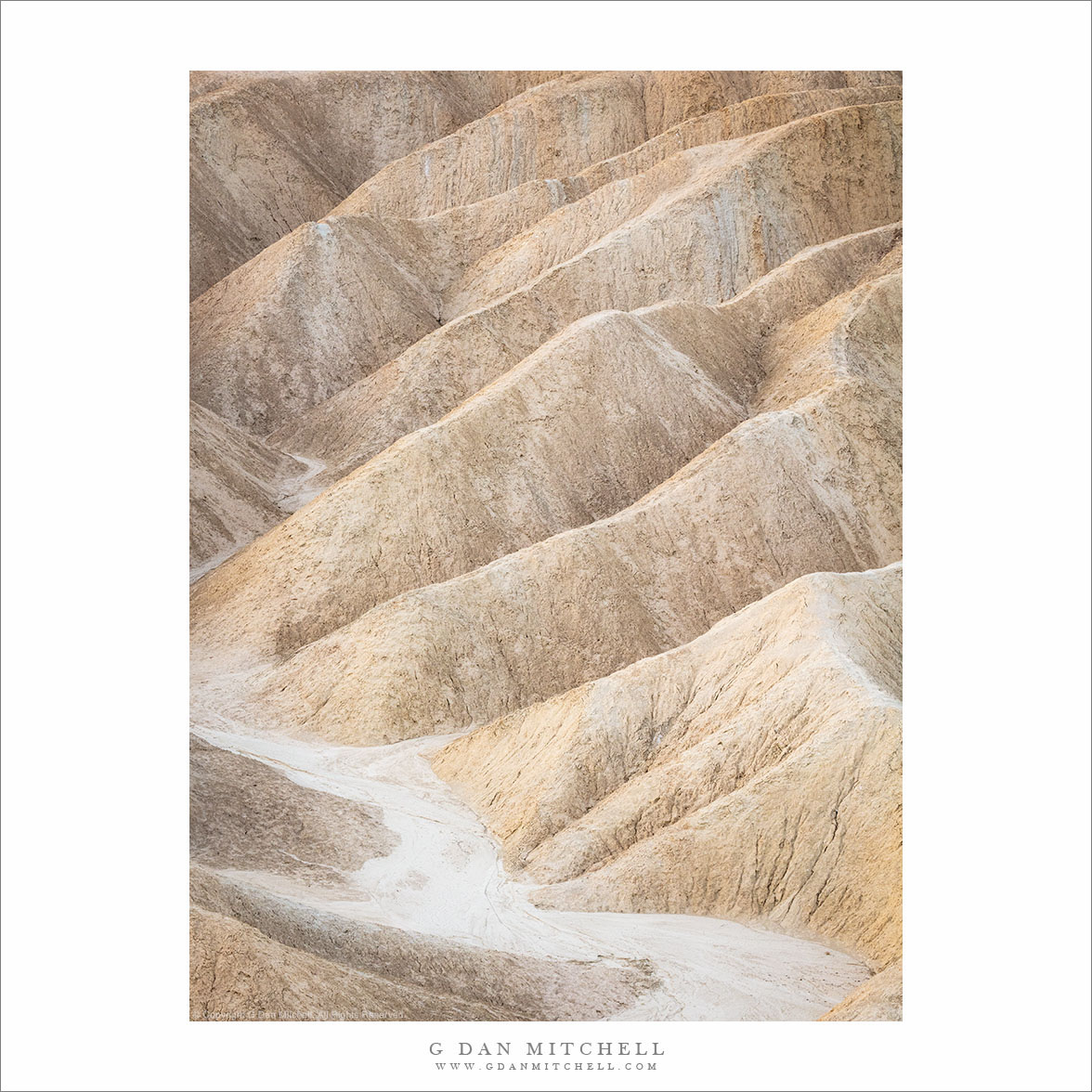
“Desert Gully” — Eroded formations and a desert gully, Death Valley.

The desert landscape of Death Valley National Park seems fairly static. Yes, we see dust storms blow things around a little, but even the shapes of the dunes remain fairly constant over time. The mountains and the playas look much as they did when I first saw them 25 years ago. But the reality is that this is a very dynamic landscape, and it is constantly being built up and torn down. This photograph is an obvious example of the latter process.

This light material was laid down millennia ago in the distant prehistoric past, long before people were here — and before there were even “people” at all. Over vast stretches of time the material was transformed — squashed, bent, tilted. Eventually a combination of uplift and erosion exposed it, and other processes kicked in. Here, those processes — including flowing water — have eroded and continue to erode the layers, producing this maze of small gullies and the fine silt seen at the bottom of the photo.

G Dan Mitchell is a California photographer and visual opportunist. His book, “California’s Fall Color: A Photographer’s Guide to Autumn in the Sierra” (Heyday Books) is available directly from him. Blog | Bluesky | Mastodon | Substack Notes | Flickr | Email

Join the discussion — you are welcome to leave a comment or question. (Comments are moderated and may not appear immediately.)

This site uses Akismet to reduce spam. Learn how your comment data is processed.

(All media © Copyright G Dan Mitchell and others.)