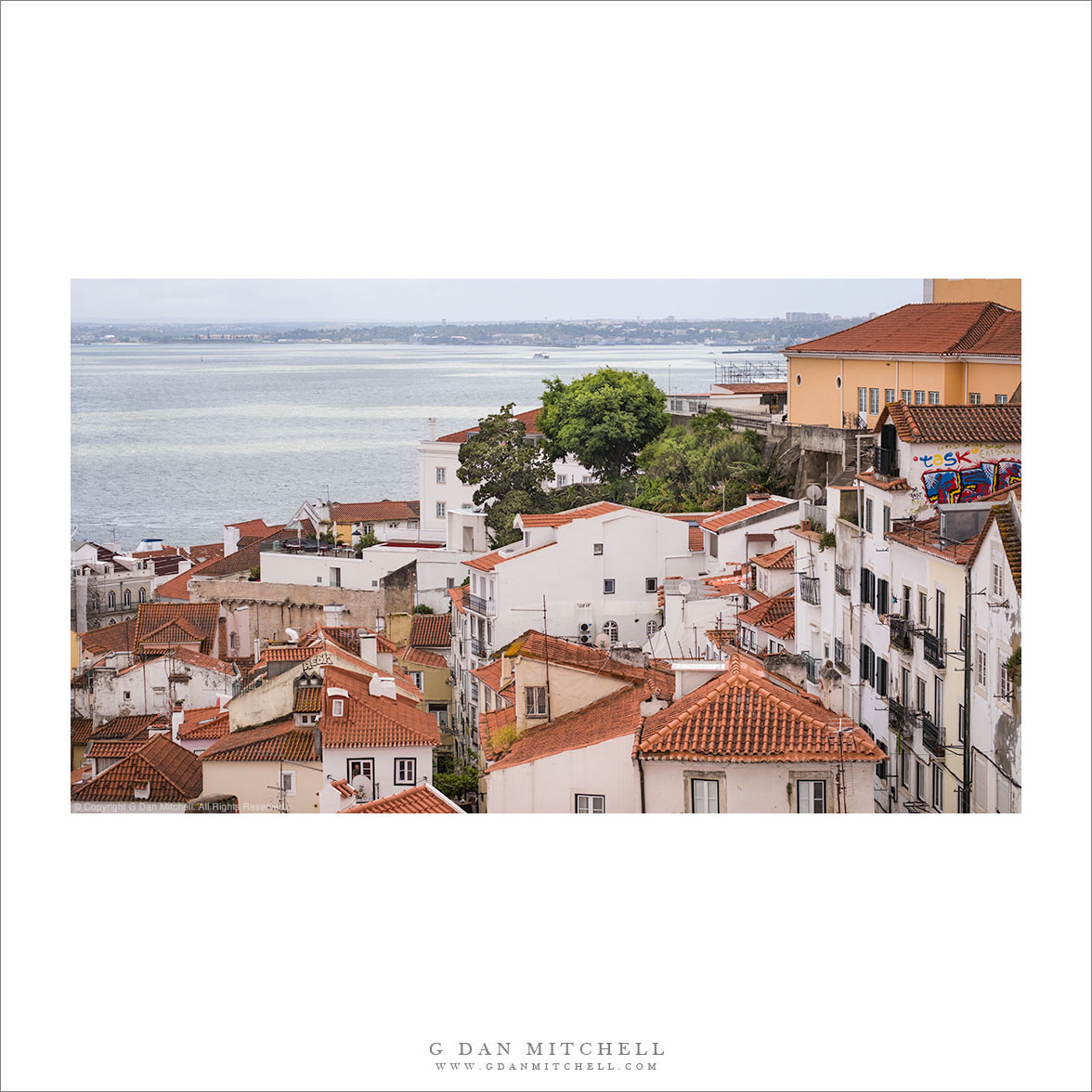
“Alfama, Tagus River View” — Buildings of Alfama overlook the broad Tagus River, Lisbon
Lisbon, Portugal is a city of hills. (It is sometimes called the “City of Seven Hills.”) Deepening upon which direction you go, even short walks can involve some significant climbs. There’s a reason for the Elevador de Santa Justa, the famous elevator structure, and for cable cars or funiculars. A positive result of all of this climbing is that there are some spectacular views.
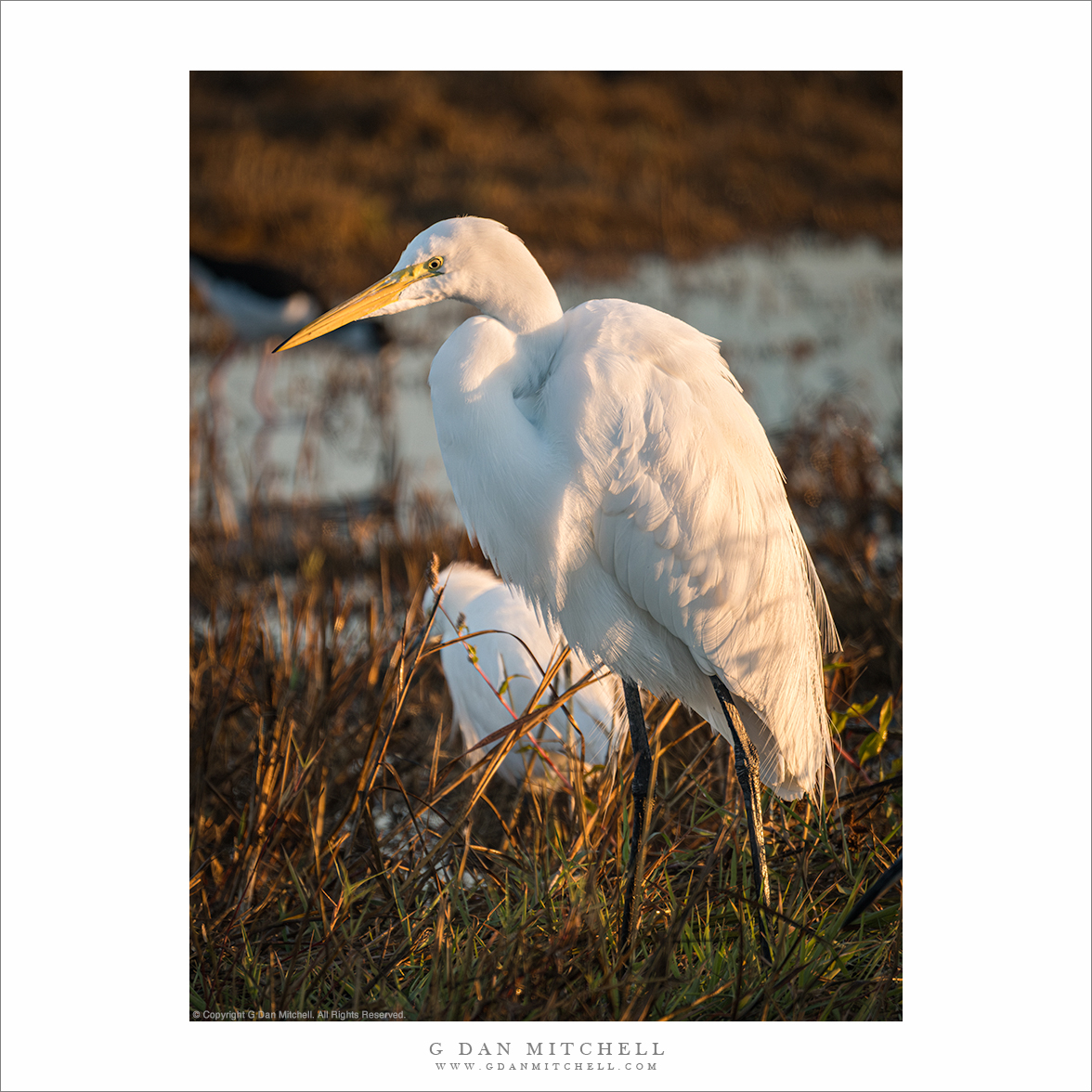
“Egret and Chick, Evening” — A great egret, accompanied by an egret chick, stands in evening light.
Near the end of October last year, while returning from a fall color visit to the Western Sierra Nevada, I decided to make a stop at a Central Valley location where I have photographed migratory birds in the past. I wasn’t expecting to find the winter birds that I usually see there, but I was surprised to find large numbers of other birds that usually diminish at this spot later in the season. Among them were large groups of great egrets.
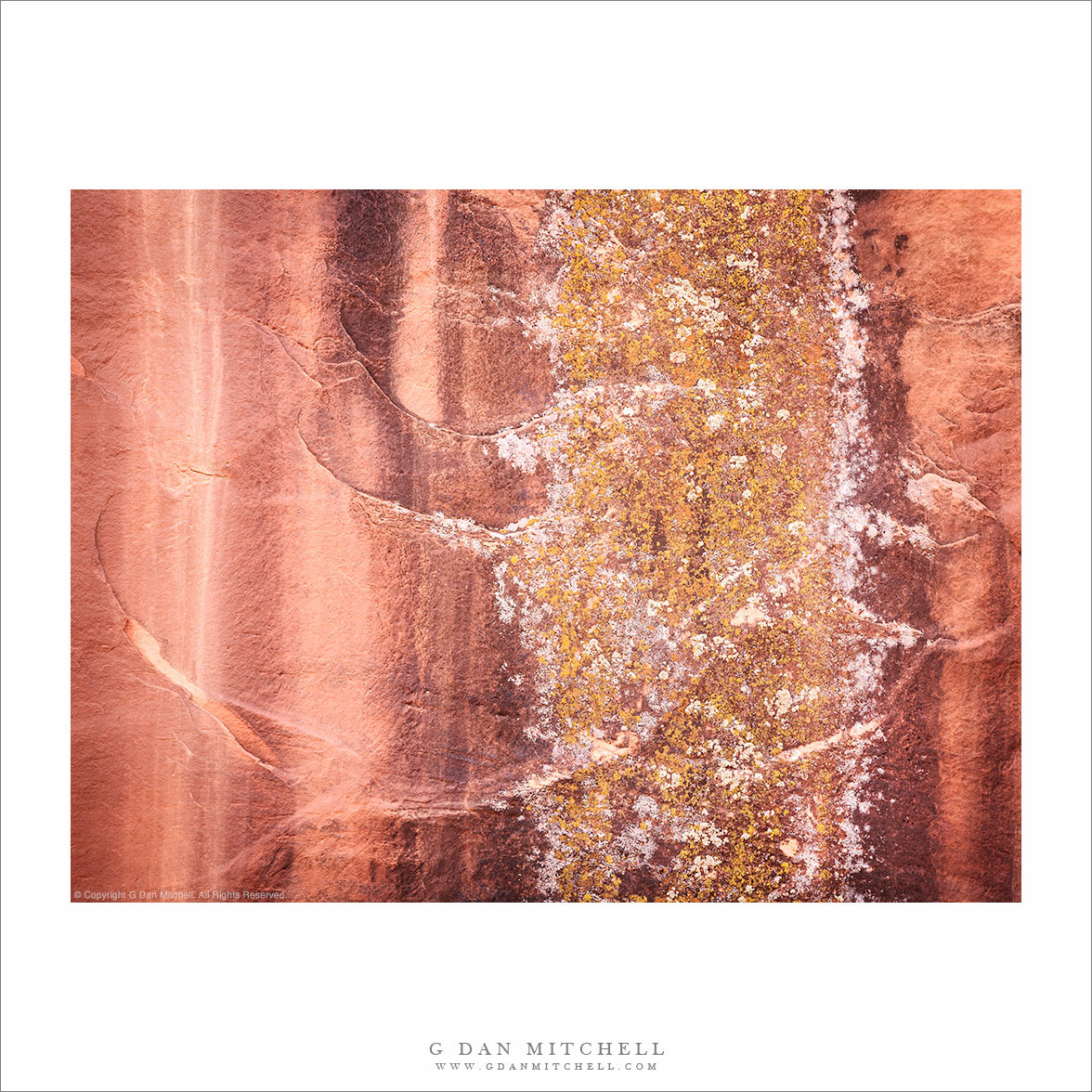
“Stained Sandstone, Lichen” — Lichen grows along a water stain on a Utah sandstone cliff face.
I recall the first time that I became truly aware of the variety of patterns and texture found in the Sandstone faces of The Southwest. I was photographing deep in a canyon in the Grand Staircase-Escalante National Monument with friends when I got the idea to keep my eyes open for petroglyphs, something I had not previously thought much about. Before long, I started imagining petroglyphs everywhere. Eventually, realizing that was impossible, I figured out that the rocks and erosion processes themselves produce remarkable patterns.
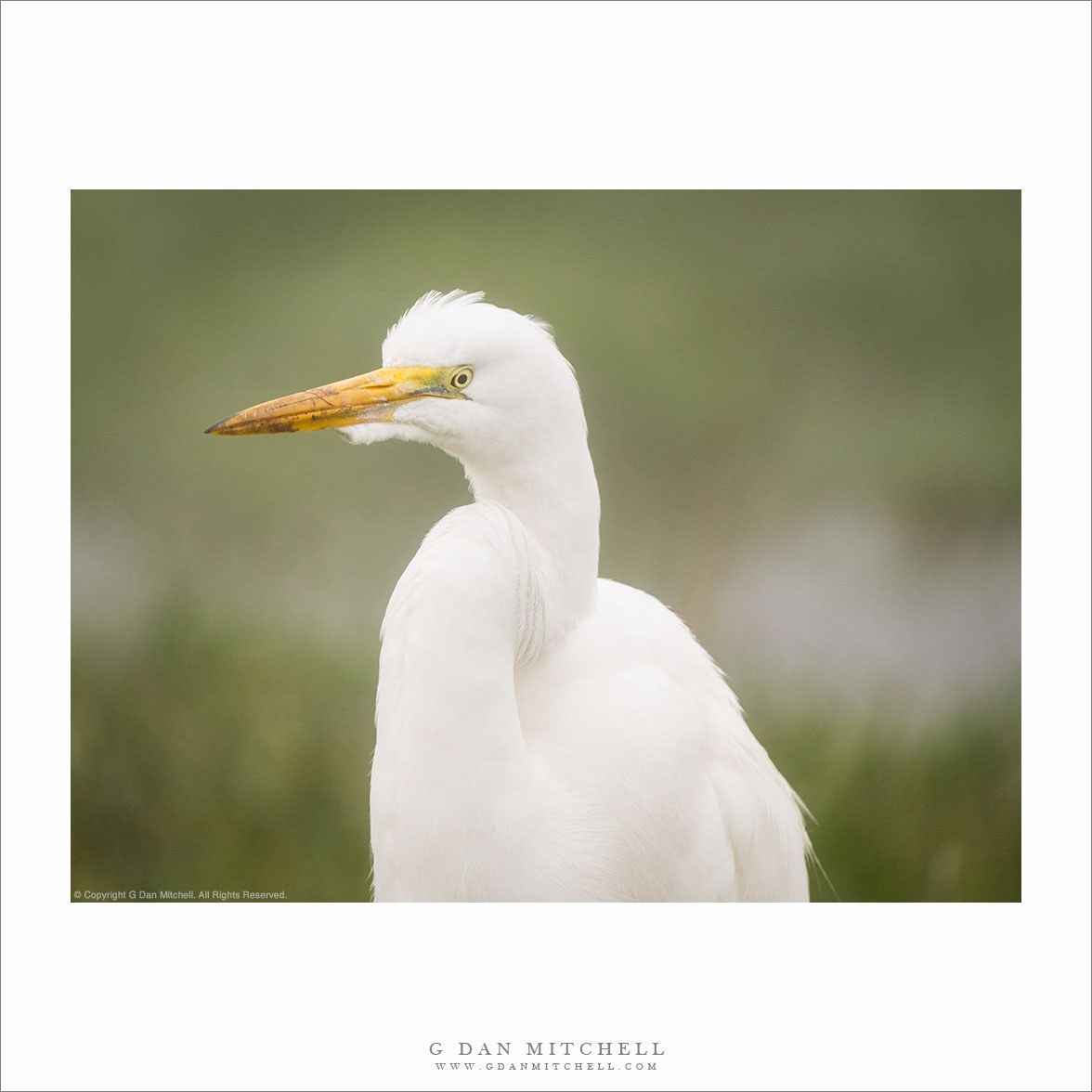
“Great Egret Portrait (horizontal)” — A “head shot” of a great egret.
I have been meaning to share this critter’s head shot for a while. It is a great egret, a bird whose presence in nature is announced by its large size, its long neck, and its striking white plumage. Quite a few of them were around when I visited one of my bird photography haunts in California’s Central Valley.
This one was less bothered by my presence than some. I wasn’t as close as it may appear — I was using a long telephoto lens. But still, egrets have boundaries, and if you cross them they will quickly fly away. But this one stuck around, and even paused in the soft, cloudy light.
Photographer and visual opportunist. Daily photos since 2005, plus articles, reviews, news, and ideas.
Manage Consent
To provide the best experiences, we use technologies like cookies to store and/or access device information. Consenting to these technologies will allow us to process data such as browsing behavior or unique IDs on this site. Not consenting or withdrawing consent, may adversely affect certain features and functions.
Functional
Always active
The technical storage or access is strictly necessary for the legitimate purpose of enabling the use of a specific service explicitly requested by the subscriber or user, or for the sole purpose of carrying out the transmission of a communication over an electronic communications network.
Preferences
The technical storage or access is necessary for the legitimate purpose of storing preferences that are not requested by the subscriber or user.
Statistics
The technical storage or access that is used exclusively for statistical purposes.The technical storage or access that is used exclusively for anonymous statistical purposes. Without a subpoena, voluntary compliance on the part of your Internet Service Provider, or additional records from a third party, information stored or retrieved for this purpose alone cannot usually be used to identify you.
Marketing
The technical storage or access is required to create user profiles to send advertising, or to track the user on a website or across several websites for similar marketing purposes.