
Fujifilm X-Pro2

Fujifilm just released their newest camera, the X-Pro2. Since I have been relying on an earlier Fujifilm camera (the original X-E1) for over three years — and liking the results a whole lot — it seemed like time to move up to the newer, more refined body. My new X-Pro2 arrived a few days ago, and so far I’m quite impressed. (My time with the camera has been limited thus far, and I’ll share a much more detailed report once I have had a chance to use it extensively.)
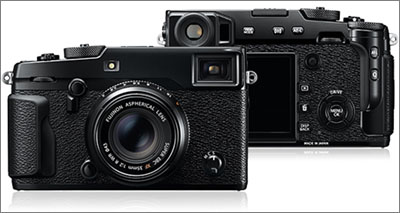
Fujifilm X-Pro2
Fujifilm X-Pro2 with the new XF 35mm f/2 WR lens

The Fujifilm “x-trans” sensor cameras are appealing for a number of reasons:

  • Small, light mirrorless designs offer an alternative to larger DSLR systems.
  • The x-trans sensor produces excellent image quality and uses a photo site layout that is designed to minimize aliasing without using anti-aliasing filters.
  • The Fujifilm lenses are truly top-notch, from primes to zooms, and there is a complete and diverse selection of available lenses.

Until now all of these cameras have use 16 megapixel (MP) 1.5x cropped sensor designs. 16MP is plenty for almost all photographers, and I make beautiful 18″ x 24″ prints from the files. One of the main updates on the X-Pro2 is the addition of an optimized 24MP sensor. If anything, this sensor improves the low light performance and dynamic range of the 16MP versions, and it provides a bit more resolution.

The X-Pro2 also improves on many of the ideas behind the original (and now a bit long in the tooth, though quite inexpensive) X-Pro1. Both cameras use a hybrid viewfinder that incorporates both an optical viewfinder (OVF) and an electronic viewfinder (EVF), both of which have advantages in various situations. The OVF works beautifully with many primes, eliminates shutter blackout, and allows the photographer to see what is going on just outside the borders of the image. The design overlays an electronic display on top of the optical image. These features are very useful to those doing street photography and similar things.

The EVF works well with all lenses, from ultra wide to telephoto and especially with zoom lenses. It can be advantageous in very low light, such as night street photography. It also shows the precise frame edge lines and can display even more image data than the OVF.

The camera feels light but also solid and well-constructed, and it recalls classic rangefinder cameras.

I got mine with the new XF 35mm f/2 WR lens, one of five newer lenses that are optimized to autofocus more quickly on the X-Pro2 (and, presumably, future X-series cameras). It is also weather resistant. I can report that it focuses quickly and accurately in a wide range of situations. Since I also have my older XF 35mm f/1.4 lens, I haven’t yet decided whether I will end up valuing the extra stop of the f/1.4 lens enough to give up the faster AF and smaller size of the new f/2 lens.

That’s all I’ll say for now, but expect more in the not-too-distant future as I gain more experience with the camera. For now, I don’t see any reason to not recommend it.

  • Fujifilm X-Pro2 digital camera body — $1699 at B&H or Adorama
  • Fujinon XF 35mm f/2 WR lens — $399 / $299* with X-Pro2 at B&H or Adorama (*limited time offer)

(If you find this website and posts like this useful and you are going to get one of these products, consider making your purchase through links on this site. Your price will be the same, but the purchases help support the operation of the site. Thanks!)

Also see:  Taking Stock of the Fujifilm X-E1, X-E2, S-T1 Mirrorless Cameras


G Dan Mitchell is a California photographer and visual opportunist. His book, “California’s Fall Color: A Photographer’s Guide to Autumn in the Sierra” is available from Heyday Books and Amazon.
Blog | About | Flickr | Twitter | FacebookGoogle+ | 500px.com | LinkedIn | Email


All media © Copyright G Dan Mitchell and others as indicated. Any use requires advance permission from G Dan Mitchell.
White-Fronted Geese in Flight

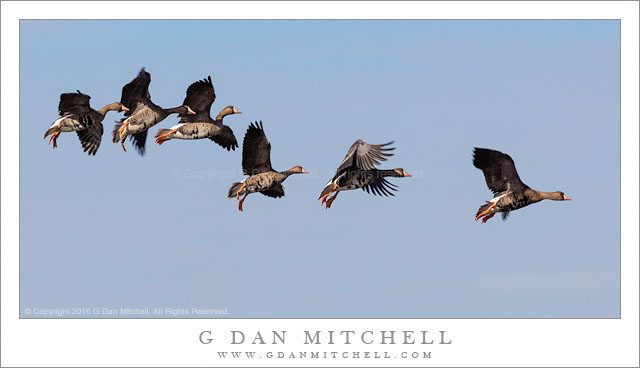
White-Fronted Geese in Flight
A small group of white-fronted geese in flight about the Sacramento Valley

White-Fronted Geese in Flight. Central Valley, California. January 8, 2016. © Copyright 2016 G Dan Mitchell – all rights reserved.

A small group of white-fronted geese in flight about the Sacramento Valley

I photographed this group of white-fronted geese on one of my excursion to new California bird photography locations this past winter. It wasn’t that many years ago that I first “discovered” the huge population of migratory birds in California’s Central Valley, on a weekend after a colleague made an off-hand comment about birds as we waited in line at a coffee stand that sent me off to investigate. I went to a place where there were sandhill cranes and, eventually, a sky magnificently full of birds, most of which I could not identify. I was hooked. Soon I went to a location near that spot, and eventually became quite a frequent visitor to several places including one that isn’t too far from where I live.

Last year I started thinking that I should expand my horizons a bit and start to seek out other locations along the Pacific Flyway. I pushed a bit further up the Central Valley and eventually managed to spend time up along the California-Oregon border. I photographed this photogenic group at one of those upper Central Valley areas. Visiting such a place for the first time can be a bit tricky. It takes a while to get to know the rhythms of a place — where and when which birds show up, where the interesting backgrounds are, how far to drive to get a cup of coffee… At this new refuge I had almost no idea what I was doing. I hoped to find one kind of geese, but they were scarce — yet I found other things that I saw less often in my usual haunts: bald eagles, lots of night herons, an occasion tundra swan, and many white-fronted geese. Eventually I found a spot by a pond where huge flocks of geese were coming and going, a mixture of mostly snow geese and white-fronted geese, and I began to feel that I might be able to figure the place out.


G Dan Mitchell is a California photographer and visual opportunist. His book, “California’s Fall Color: A Photographer’s Guide to Autumn in the Sierra” is available from Heyday Books and Amazon.
Blog | About | Flickr | Twitter | FacebookGoogle+ | 500px.com | LinkedIn | Email


All media © Copyright G Dan Mitchell and others as indicated. Any use requires advance permission from G Dan Mitchell.
High Sierra Trail

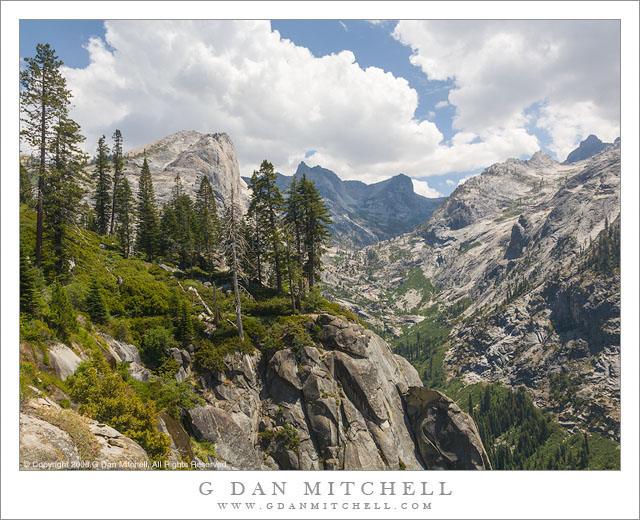
High Sierra Trail
High Sierra Trail to Hamilton Lakes

High Sierra Trail. Sequoia National Park, California. August 5, 2008. © Copyright 2008 G Dan Mitchell – all rights reserved.

High Sierra Trail to Hamilton Lakes

Sometimes I backpack alone and sometimes I travel with friends — and both are great. While I treasure the freedom and solitude of solo backcountry travel, I have been fortunate enough to find friends who share my interest, some of whom have backpacked with me for decades. This trip marked the third time I had been across this section of trail. The first time was quite a few years ago, when Patty and I went on our first long backpack trip, spending two weeks along the High Sierra trail as we traversed it from west to east. The second time I was traveling solo. In fact, it was my first solo pack trip, a two-week journey that took me a ways out on this trail, after which I turned north, wandered up Bubbs Creek, over Glen Pass, and around the Rae Lakes before emerging at Kings Canyon.

This third visit was on another trip across the High Sierra trail. Although I had done it years earlier, it was a completely new trip to the rest of my group, a band of backpackers who have traveled the trails together for a long time, plus a couple of new additions. The first few days of the trip traveled up the Kaweah River drainage towards a ridge crossing at Kaweah Gap. The trail mostly stays high on the north side of the canyon, and here above Bearpaw Meadow the trail occasionally travels along granite domes an ledges, always with the spectacular high ridge of the Kaweahs looming ahead.


G Dan Mitchell is a California photographer and visual opportunist. His book, “California’s Fall Color: A Photographer’s Guide to Autumn in the Sierra” is available from Heyday Books and Amazon.
Blog | About | Flickr | Twitter | FacebookGoogle+ | 500px.com | LinkedIn | Email


All media © Copyright G Dan Mitchell and others as indicated. Any use requires advance permission from G Dan Mitchell.
Alpine Pond, Evening

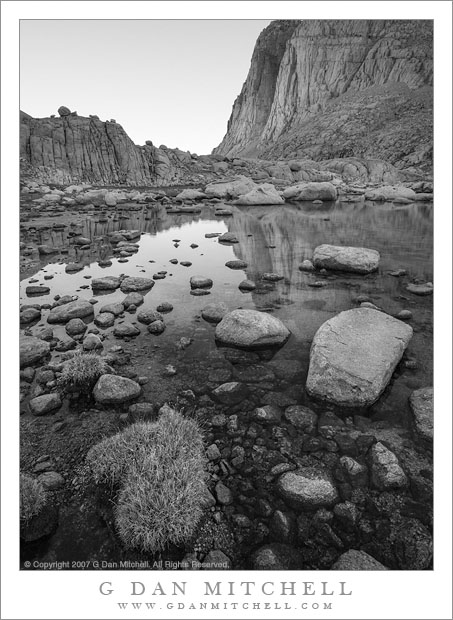
Alpine Pond, Evening
Evening reflections in a boulder-strewn alpine pond, Sequoia National Park

Alpine Pond, Evening. Sequoia National Park, California. August 6, 2007. © Copyright 2007 G Dan Mitchell – all rights reserved.

Evening reflections in a boulder-strewn alpine pond, Sequoia National Park

This pack trip, now almost a decade behind me, was a different sort of trip in several ways. We began on the east side of the range in a high valley south of Mount Whitney. This was in an area that we had visited in the past, and on one occasions I spent several days going up and down an unmaintained pass until we finally all got together and climbed a nearby 14,000′ peak. On the trip where I made the photograph we started out at the same trailhead but then skirted a bit south to cross the crest on a more popular trail. A bit further along to the west we left the main trail to visit a nearby lake, found a cross-country route out of its cirque, walked up a long valley to another lake, and camped there. I made the photograph on the evening of our arrival, looking back at tall ridges lining the valley we had ascended to get here.

There rest of the trip was unusual and special, too. On the next morning we skirted the lake and then headed up to find an unmarked route over a steep pass, dropping down abruptly from its summit into a long granite valley with several lakes. A day later we arrived at the usual west side route towards Mount Whitney. We stopped for lunch and moved on, heading north on the John Muir Trail. Eventually we crossed one of my favorite high spots along this trail and then descended to the junction with the trail over Shepherds Pass. We hung out in this area for a few days, investigating some more remote areas of the Upper Kern drainage before returning to this spot and then heading out over Shepherd Pass.


G Dan Mitchell is a California photographer and visual opportunist. His book, “California’s Fall Color: A Photographer’s Guide to Autumn in the Sierra” is available from Heyday Books and Amazon.
Blog | About | Flickr | Twitter | FacebookGoogle+ | 500px.com | LinkedIn | Email


All media © Copyright G Dan Mitchell and others as indicated. Any use requires advance permission from G Dan Mitchell.

Photographer and visual opportunist. Daily photos since 2005, plus articles, reviews, news, and ideas.