
Tag Archives: canyon

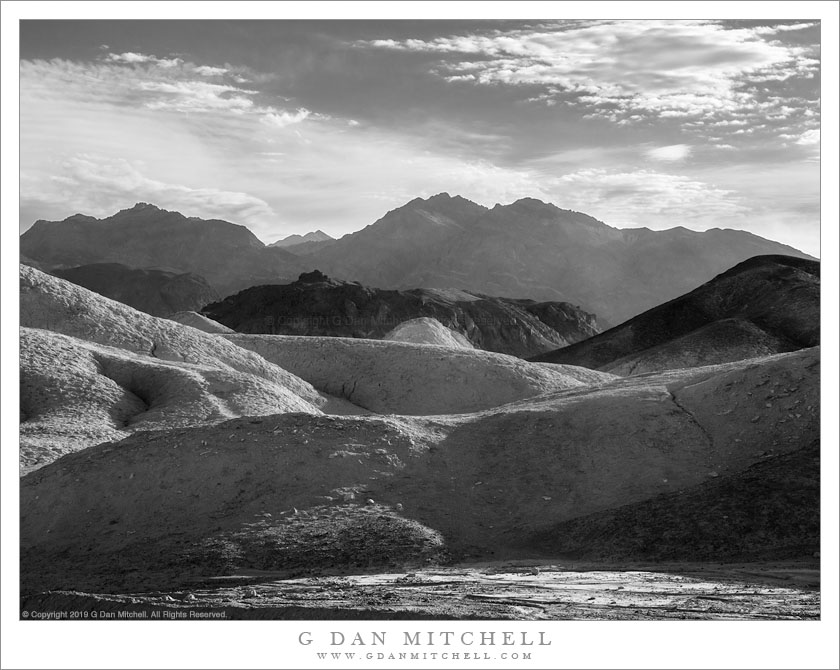
Hikers, Desert Canyon

Hikers, Desert Canyon
Two hikers entering the narrows of Titus Canyon

Hikers, Desert Canyon. © Copyright 2019 G Dan Mitchell – all rights reserved.

Two hikers entering the narrows of Titus Canyon.

The stream beds of desert washes often seem to me to be the “freeways” of the desert. They can (but not always!) provide relatively easy walking through rougher terrain. The periodic flow of water, along with the mud and rocks caught in its flow, both clears the washes of vegetation and leaves a relatively flat surface of small stones and dried sediment. Over millennia the water flowing through the washes does the hard word of trail building, wearing down obstructions and leveling out the rough places. (OK, there are exceptions — those chock stones that fall into canyons and block them, along with the periodic “dry falls” that may be unsurmountable.)

This canyon is often used by motor vehicle traffic, but following heavy rains that made the route impassable to vehicles it turned into a much more pleasant place to hike, and a group of us walked up through the spectacular narrows in its lower reaches. Lower in the canyon it is sometimes quite narrow, though in this location it begins to broaden a bit. To understand the scale of the terrain look closely and you’ll be able to spot a couple of hikers.


G Dan Mitchell is a California photographer and visual opportunist. His book, “California’s Fall Color: A Photographer’s Guide to Autumn in the Sierra” is available from Heyday Books and Amazon.

Blog | About | Flickr | FacebookEmail

Links to Articles, Sales and Licensing, my Sierra Nevada Fall Color book, Contact Information.


All media © Copyright G Dan Mitchell and others as indicated. Any use requires advance permission from G Dan Mitchell.
Two Hikers, Titus Canyon

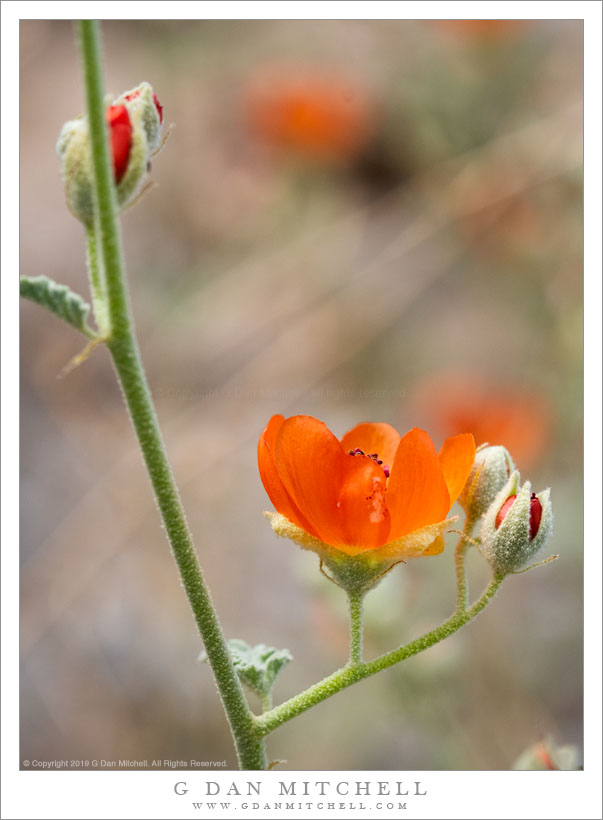
Two Hikers, Titus Canyon
Two hikers descending the narrows of Titus Canyon

Two Hikers, Titus Canyon. © Copyright 2019 G Dan Mitchell – all rights reserved.

Two hikers descending the narrows of Titus Canyon.

Earlier this month I visited Death Valley National Park for a few days. I go there and photograph at least once each year — I’ve been visiting for a couple of decades and photographing the place seriously for about fifteen years. I often point out that there are few places where the effects of water are more obvious than in this unlikely location. Almost all features of the park are formed or sculpted by water, and these effects are very visible in the early bare desert landscape. I arrived only a day after extremely heavy rains, and the evidence was everywhere — flooded sections of roadway, wet and muddy washes, dunes that were still damp, large shallow lakes on playas.

Many park roads were closes, including the long dirt road through Titus Canyon. The road starts high in Amargosa Canyon, crosses the mountains, descends toward the Valley, and near the end passes through a section of very narrow canyon. Normally there is enough traffic there to interrupt the reverie of hikers, but the road was closed to vehicle traffic and we (some members of my family) and I enjoyed a long and quiet hike up the canyon. Here two hikers (my sister and her husband) are descending though one of the deeper and narrower sections of the canyon.


G Dan Mitchell is a California photographer and visual opportunist. His book, “California’s Fall Color: A Photographer’s Guide to Autumn in the Sierra” is available from Heyday Books and Amazon.

Blog | About | Flickr | FacebookEmail

Links to Articles, Sales and Licensing, my Sierra Nevada Fall Color book, Contact Information.


All media © Copyright G Dan Mitchell and others as indicated. Any use requires advance permission from G Dan Mitchell.
,Autumn Aspens, Cliff

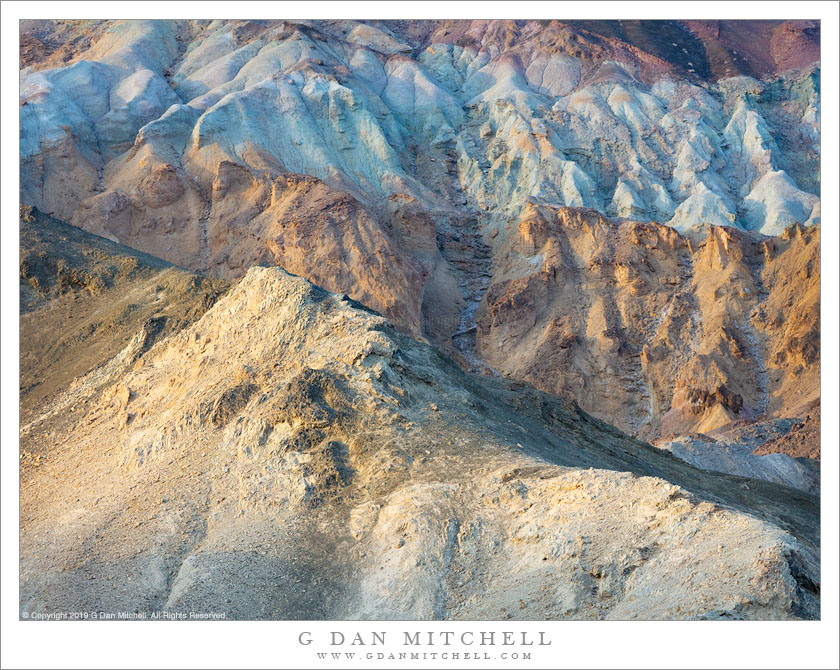
Autumn Aspens, Cliff
Autumn aspen trees cling to ledges along the face of a cliff in the Eastern Sierra Nevada

Autumn Aspens, Cliff. © Copyright 2016 G Dan Mitchell – all rights reserved.

Autumn aspen trees cling to ledges along the face of a cliff in the Eastern Sierra Nevada.

The aspens in this photograph have fascinated me for years. Nearby are some relatively large, tall, and straight trees, but for the most part the trees in this scene are small, slender, and sometimes even a bit misshapen. They manage to eke out a living on what appears to be solid rock as they send their roots into narrow cracks.

These trees seem to have, at least in my experience, a fairly short period of maximum color. Or at least that is what I tell myself when looking to explain why I have somehow almost always missed their best color. But it also appears that they change colors earlier than some of the other trees in the area — I made this photograph just past the middle of September, nearly two weeks before the typical start of the more widespread fall color season in the Sierra.


G Dan Mitchell is a California photographer and visual opportunist. His book, “California’s Fall Color: A Photographer’s Guide to Autumn in the Sierra” is available from Heyday Books and Amazon.

Blog | About | Flickr | FacebookEmail

Links to Articles, Sales and Licensing, my Sierra Nevada Fall Color book, Contact Information.


All media © Copyright G Dan Mitchell and others as indicated. Any use requires advance permission from G Dan Mitchell.
Sculpted Sandstone

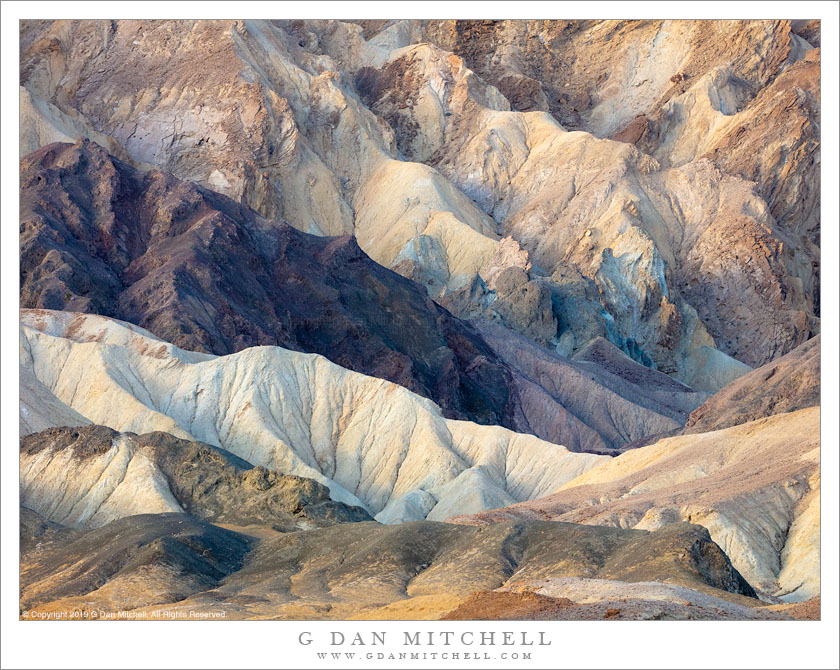
Sculpted Sandstone
Sky light reflected on sculpted and curving sandstone in a Utah slot canyon

Sculpted Sandstone. © Copyright 2018 G Dan Mitchell – all rights reserved.

Sky light reflected on sculpted and curving sandstone in a Utah slot canyon

We have to change the way we think about the daily progression of light when photographing in slot canyons. I first learned this when photographing in the red sandstone country of Utah, but it is just as true in the relatively less colorful canyons of Death Valley or even in some places in the plain gray granite landscape of the Sierra Nevada. In most cases we are drawn to the warm, early morning light, with its long shadows and lovely color. But in the canyons that light can be far less compelling, and it may even just end up seeming drab. Once you reset your expectations you find that the best canyon light often comes in the middle of the day, when the sun rises high enough to directly illuminate the red canyon rims, and then this light bounces and reflects downward into the canyon depths.

I made this photograph in a spot in a Utah canyon that was perhaps an even better than usual location for reflected canyon light. The rock was red standstone. Late-morning sunlight lit the upper rim, and that light suffused the lower reaches of the canyon. But here the narrow section of slot canyon wasn’t very long, and some bluish light from the sky reflected on angled rock surfaces, introducing a striking color contrast to the scene.


G Dan Mitchell is a California photographer and visual opportunist. His book, “California’s Fall Color: A Photographer’s Guide to Autumn in the Sierra” is available from Heyday Books and Amazon.

Blog | About | Flickr | FacebookEmail

Links to Articles, Sales and Licensing, my Sierra Nevada Fall Color book, Contact Information.


All media © Copyright G Dan Mitchell and others as indicated. Any use requires advance permission from G Dan Mitchell.