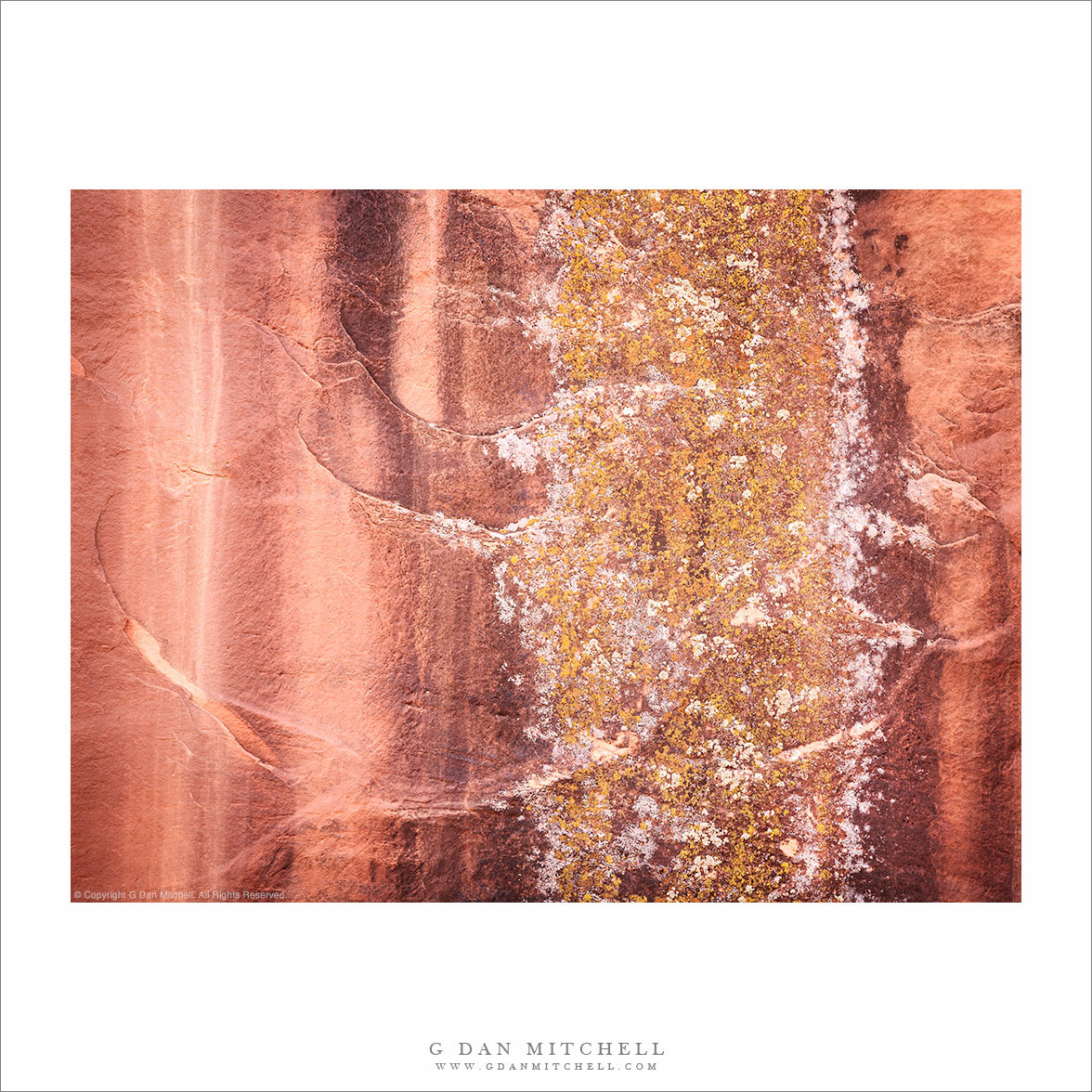
“Stained Sandstone, Lichen” — Lichen grows along a water stain on a Utah sandstone cliff face.
I recall the first time that I became truly aware of the variety of patterns and texture found in the Sandstone faces of The Southwest. I was photographing deep in a canyon in the Grand Staircase-Escalante National Monument with friends when I got the idea to keep my eyes open for petroglyphs, something I had not previously thought much about. Before long, I started imagining petroglyphs everywhere. Eventually, realizing that was impossible, I figured out that the rocks and erosion processes themselves produce remarkable patterns.
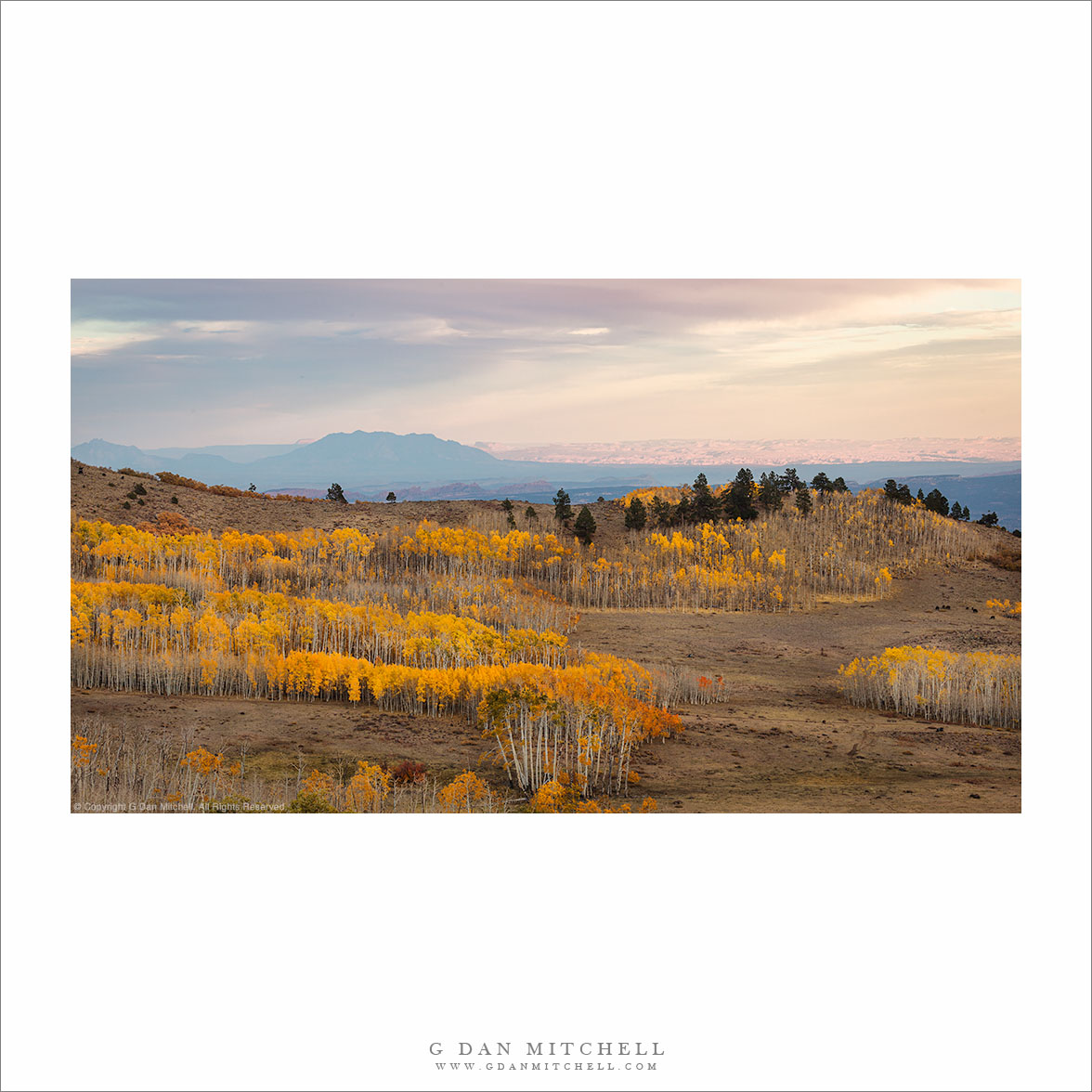
“Boulder Mountain Aspens, Evening” — Autumn aspen trees near Boulder Mountain, Utah.
I took me a while to figure out this location in Utah, along the edge of Boulder Mountain. Years ago we drove through here in the spring, and I was astonished by the huge aspen groves. I resolved to return in the autumn, and a few years later we did —timing our visit to synchronize with peak of California’s Eastern Sierra aspen color. It turns out that the color change earlier in Utah, and by the time we arrived the groves were past their peak.
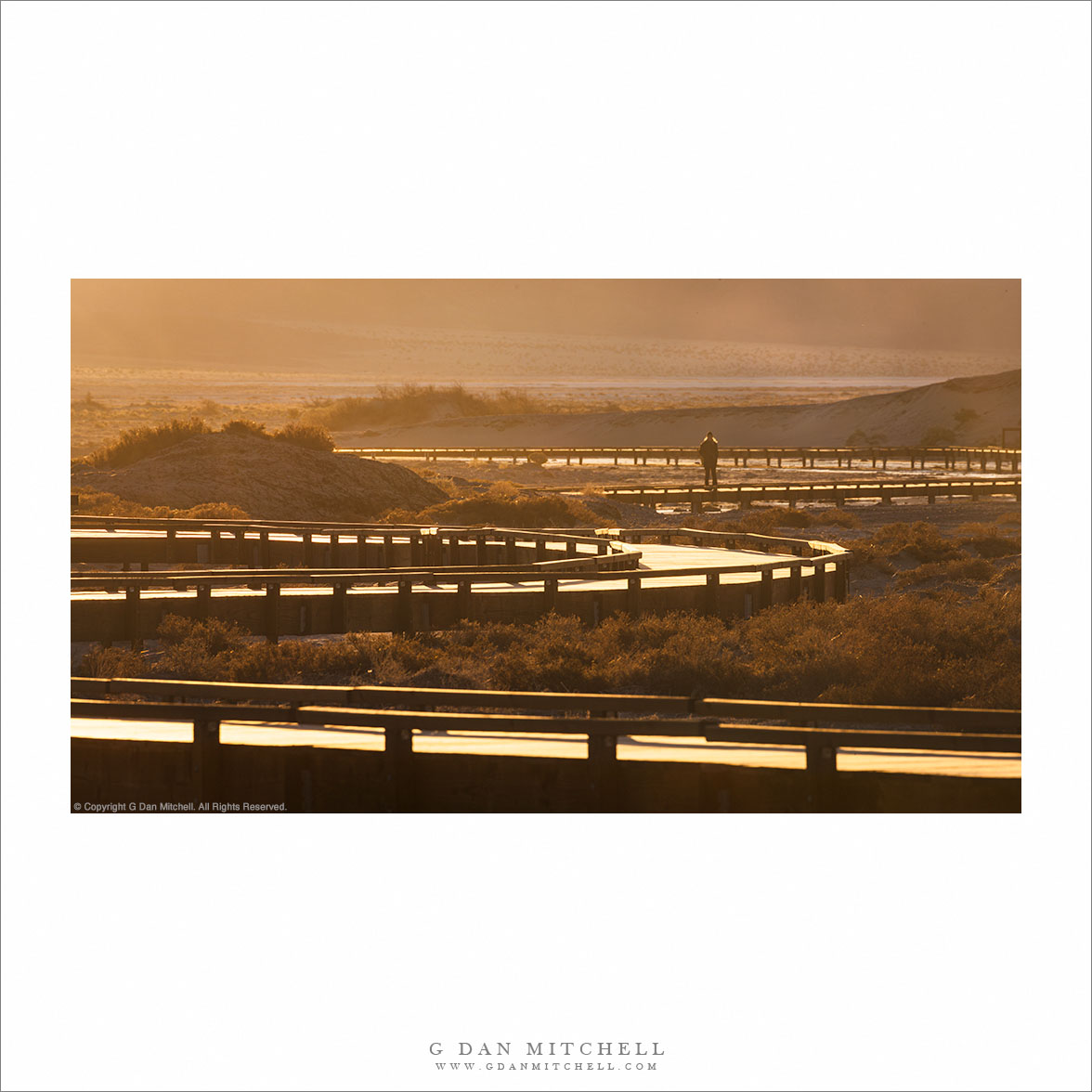
“Boardwalk, Morning” — The winding boardwalk at Salt Creek in morning light, Death Valley.
We arrived at Salt Creek before sunrise, planning to walk down to the end of the boardwalk and photograph some further areas at dawn. It used to be that you could continue on from there and investigate other interesting terrain, but there is now no obvious way off the boardwalk, likely because the park service is trying to protect those areas. So we photographed from the boardwalk as the sun came up.
“Stream and Sandstone Cliff” — Sandstone cliffs at the bend in the canyon of a remote Utah river.
This is a photograph from over a decade ago. (More on how it ended up here today below.) A small group of us spent time photographing in Utah, often in remote places. One day we dropped into a canyon and followed this stream. As so often happens in these narrow, winding canyons, “one good turn led to another,” and we kept going as each bend revealed another interesting section. We finally stopped very close to this scene, made some final photographs, and headed back upstream.
Photographer and visual opportunist. Daily photos since 2005, plus articles, reviews, news, and ideas.
Manage Consent
To provide the best experiences, we use technologies like cookies to store and/or access device information. Consenting to these technologies will allow us to process data such as browsing behavior or unique IDs on this site. Not consenting or withdrawing consent, may adversely affect certain features and functions.
Functional
Always active
The technical storage or access is strictly necessary for the legitimate purpose of enabling the use of a specific service explicitly requested by the subscriber or user, or for the sole purpose of carrying out the transmission of a communication over an electronic communications network.
Preferences
The technical storage or access is necessary for the legitimate purpose of storing preferences that are not requested by the subscriber or user.
Statistics
The technical storage or access that is used exclusively for statistical purposes.The technical storage or access that is used exclusively for anonymous statistical purposes. Without a subpoena, voluntary compliance on the part of your Internet Service Provider, or additional records from a third party, information stored or retrieved for this purpose alone cannot usually be used to identify you.
Marketing
The technical storage or access is required to create user profiles to send advertising, or to track the user on a website or across several websites for similar marketing purposes.