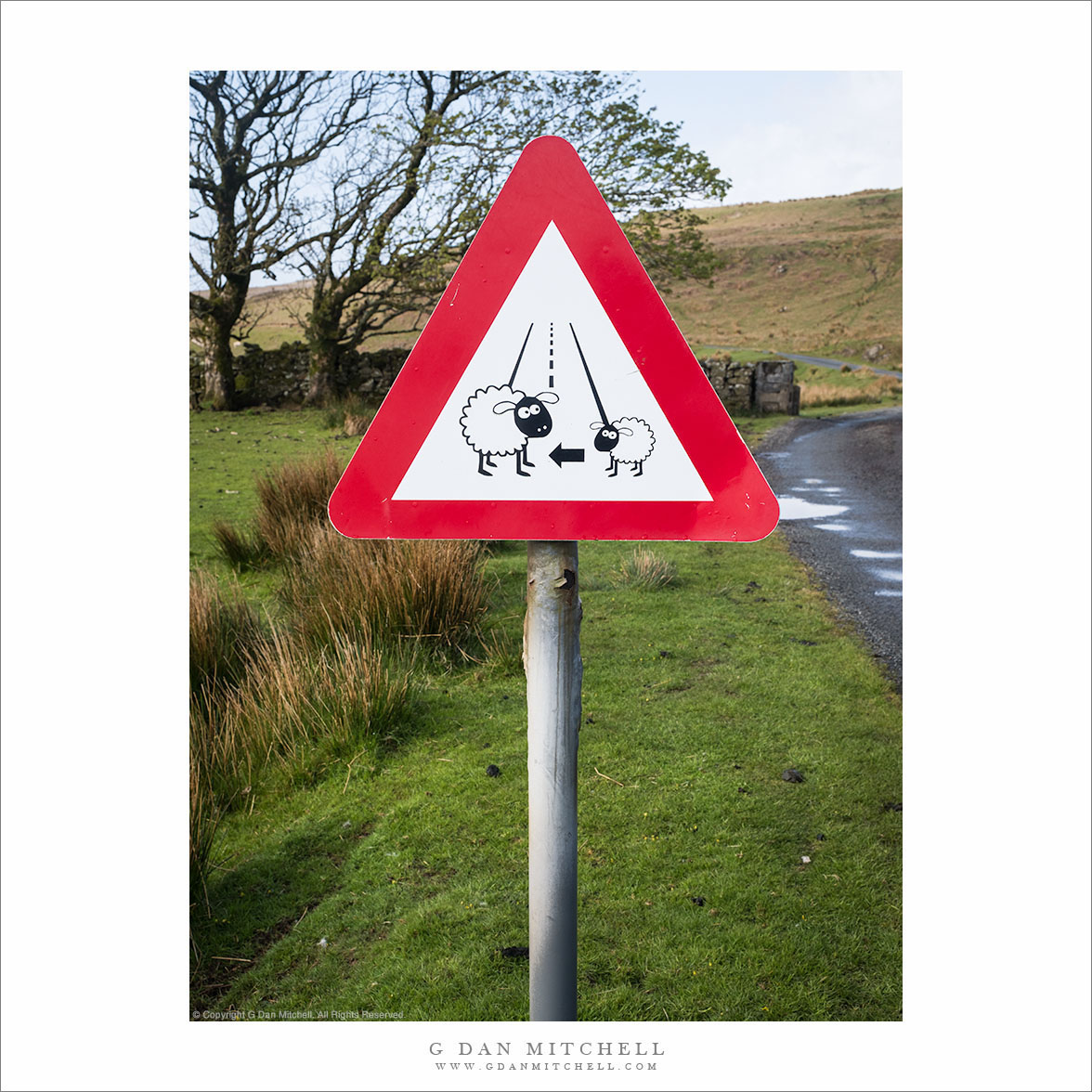
“So That Sheep May Safely Graze” — A road sign on a single-track road in Scottish sheep country.
On the Isle of Skye, and for that matter all over Scotland, there are sheep. A LOT of sheep. What cattle are to the American west, sheep are to Scotland, or so it seems. The sheep and their abundant pastures are a significant component of the Scottish landscape — you encounter them everywhere when you walk or drive. I’ll let you speculate on the purpose of this road sign for a moment before explaining… (If you read this post where the next paragraph is already visible, pause and see if you can figure it out.)
“NOW” — An impromptu poster and other things on a wall in Brussels.
One thing that appeals to me about street art (and not everything about it always does!) is how it “lives” where it was made. It is created by people using a variety of media: paint, ink, paper, glue, you name it. They leave it behind on its own where it deteriorates, may be defaced, gets added to, and eventually is covered by someone else’s creation. Someone creates it, but the eventual effect is often out of their hands.
This sign, or what remained of it, was taped to a steel roll-up door along a Brussels street. The “NOW’ remains emphatic in all-upper-case and red, but what it was that was so timely is a mystery since the upper portion has been ripped. A closer look reveals a few more details that may (or may not) provide some clues.
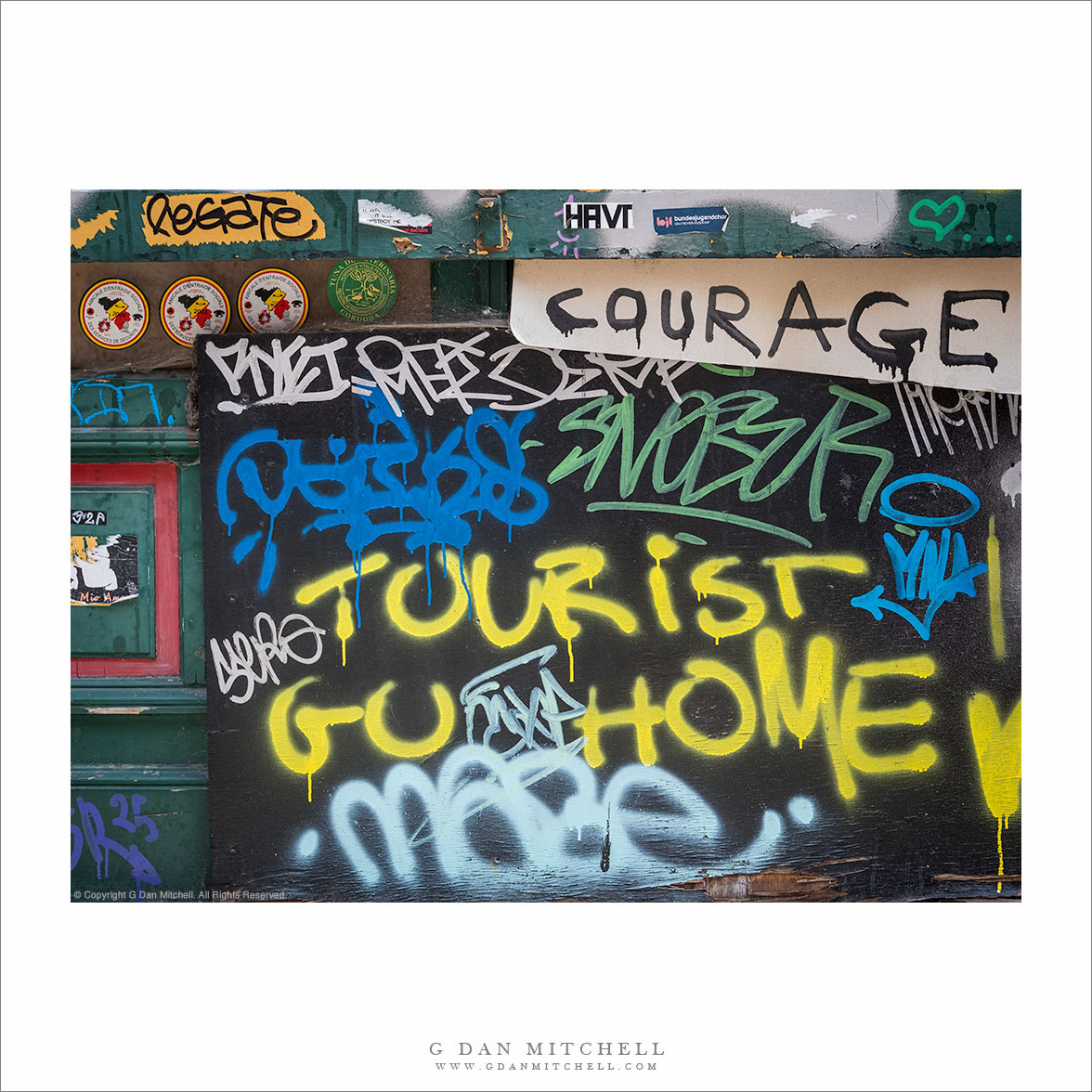
“Tourist Go Home” — Graffiti and tags on a Brussels wall, including the slogan, “Tourists Go HOme.”
The “Tourist Go Home” tag is seen frequently in European cities these days. I have mixed feelings about it. I understand the frustration when housing has been taken from local residents to provide lodging for visitors, which has the secondary effect of raising the costs of the remaining units. In some of the extremely crowded places (especially in the summer high season) the streets are so full of visitors that the locals must feel overrun.
On the other hand, “go home” is what tourists do! So while I understand the sentiment being expressed and the reasons for it, it doesn’t carry quite the sting that they may intend. And, to answer the obvious question, do visitors in general feel hostility from local residents? We have not — though it may help that we now visit outside the main tourist season and make every effort to not be one of “those ” tourists.
Leave a comment or question using the form. (If you are reading this on the home page, click the article title to see the full article and the comment form.
“Oh See O.C.” — The O.C. McDonald sign in San Jose, California
This is not the first time I have photographed this sign. I walk a lot, and one of my routes takes me past this place, the site of a venerable light industrial business in San Jose. The accidental abstraction of the shadows from the neon light always gets my attention, and I can barely see the actual sign now that this comes to the foreground of my attention.
This place is located in an area that is rapidly changing. Years ago it was filled with small businesses and light industrial sites, the latter likely because of its proximity to a rail hub. Over time, like so many similar areas, it began to decay — there are now many abandoned buildings and closed businesses. However, this area that was formerly considered to be far enough from the city center to house less attractive businesses now feels like it is in the center of town. It is rapidly become a development site with new apartments and businesses. It won’t be long before places like “O.C. McDonald” are lost to memory.
Join the discussion — you are welcome to leave a comment or question. (Comments are moderated and may not appear immediately.)