I made this photograph the English town of Shrewsbury. (More about that place below.) If a photograph is “about” something, this one is about more than one thing. To be sure, it is a record of a specific spot in a particular town, a doorway to a building with a sign for “Alfred Mansell & Co. Auctioneers.”It is perhaps a record of some history, too, given the old brick walls, the weathered doorway, and the cobblestones at the bottom of the frame. But most of all, I think it is about color, the “temperature” contrast between the warm tones of partially-sunlit bricks and the very cool blues of the doorway in shadow.
“Red Boxes” — Two red boxes on the sidewalk below a street art panel, Aberdeen.
This is another street photograph from central Aberdeen, Scotland, a bit west the Victoria Dock. There are many old and narrow streets here that twist and turn in interesting ways. Some of the streets feature a lot of street art and, unlike in some places I’ve visited and photographed, much of it stands apart for better viewing and is rarely defaced by graffiti.
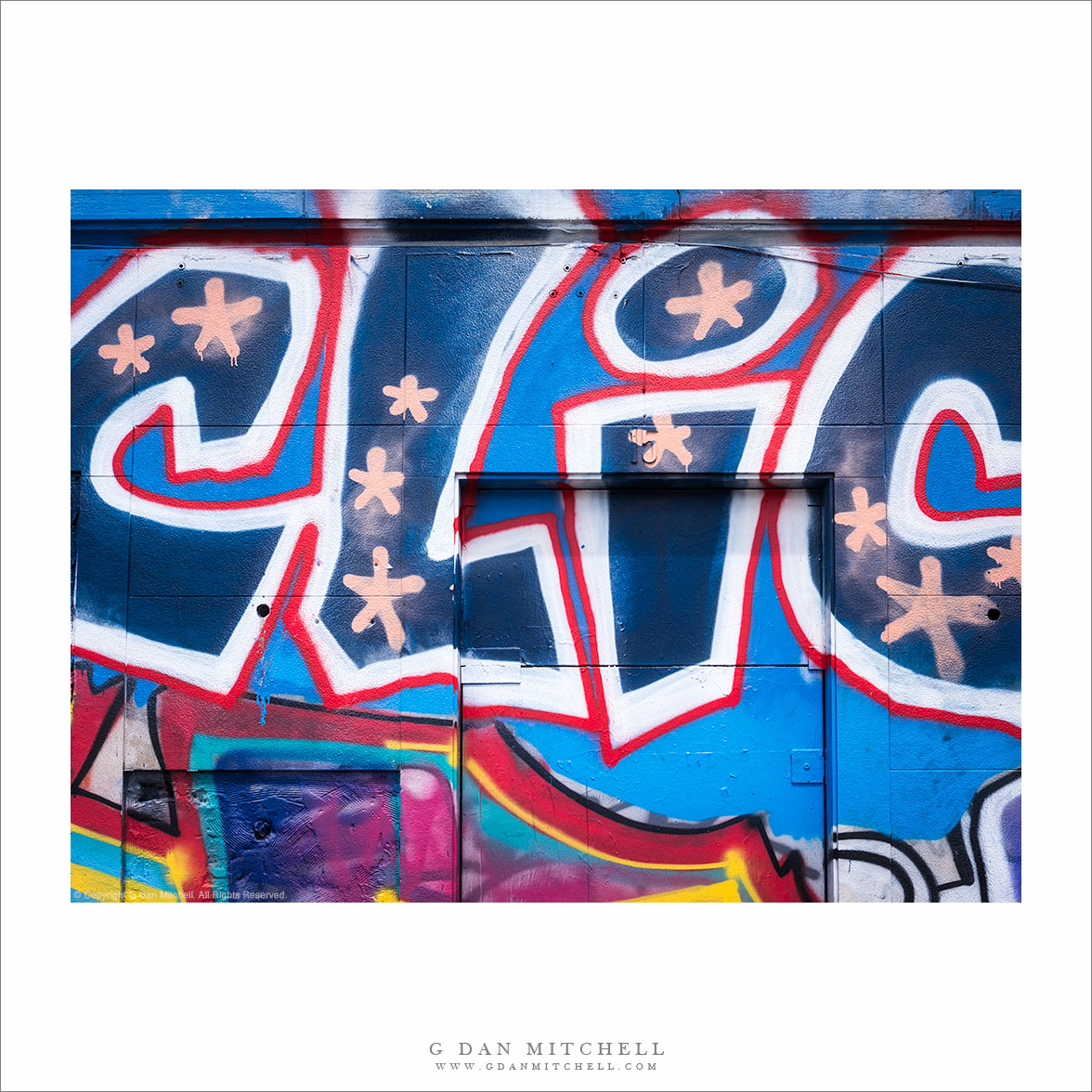
“Lisbon Graffiti #2” — Brilliantly colorful graffiti on a door in the Alfama district of Lisbon, Portugal.
I am often a bit uneasy about photographing street art, tags, and graffiti. In some cases it feels more like attention-getting vandalism than creative work. But there are exceptions in places where it seems to be mostly tolerated, and when the work seems like an interesting expression.
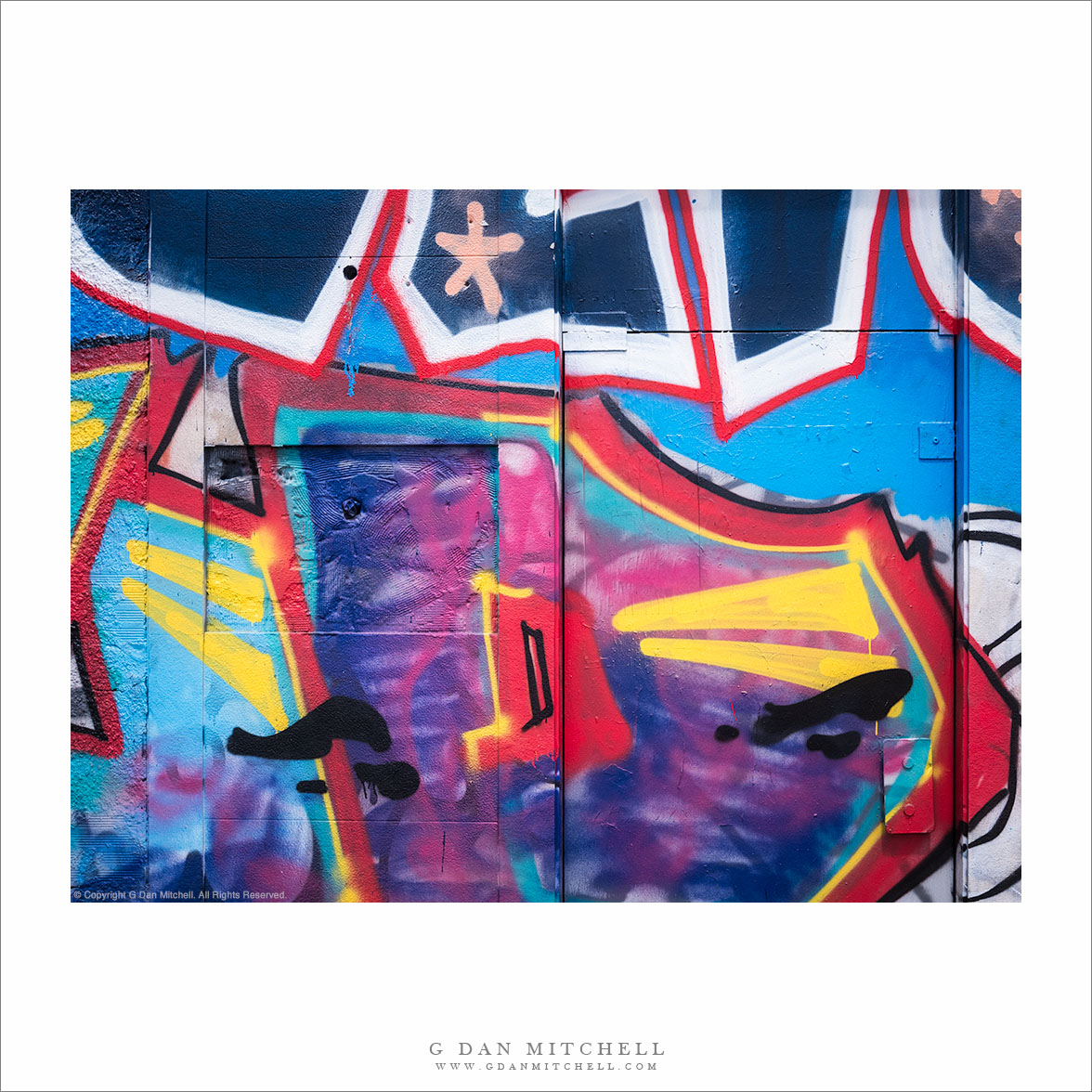
“Lisbon Graffiti #1” — Colorful graffiti on a door in the Alfama district of Lisbon, Portugal.
Here is one more photograph of Lisbon graffiti, this one from a wall next to a sidewalk in the lower Alfama neighborhood. The colors and patterns are so vivid that you might not even notice the doorway in the wall behind the paint. The colors of this street anrt are were perhaps the most intense that I recall seeing.
Photographer and visual opportunist. Daily photos since 2005, plus articles, reviews, news, and ideas.
Manage Consent
To provide the best experiences, we use technologies like cookies to store and/or access device information. Consenting to these technologies will allow us to process data such as browsing behavior or unique IDs on this site. Not consenting or withdrawing consent, may adversely affect certain features and functions.
Functional
Always active
The technical storage or access is strictly necessary for the legitimate purpose of enabling the use of a specific service explicitly requested by the subscriber or user, or for the sole purpose of carrying out the transmission of a communication over an electronic communications network.
Preferences
The technical storage or access is necessary for the legitimate purpose of storing preferences that are not requested by the subscriber or user.
Statistics
The technical storage or access that is used exclusively for statistical purposes.The technical storage or access that is used exclusively for anonymous statistical purposes. Without a subpoena, voluntary compliance on the part of your Internet Service Provider, or additional records from a third party, information stored or retrieved for this purpose alone cannot usually be used to identify you.
Marketing
The technical storage or access is required to create user profiles to send advertising, or to track the user on a website or across several websites for similar marketing purposes.