Tag Archives: badlands

Utah Autumn Sky

Utah Autumn Sky
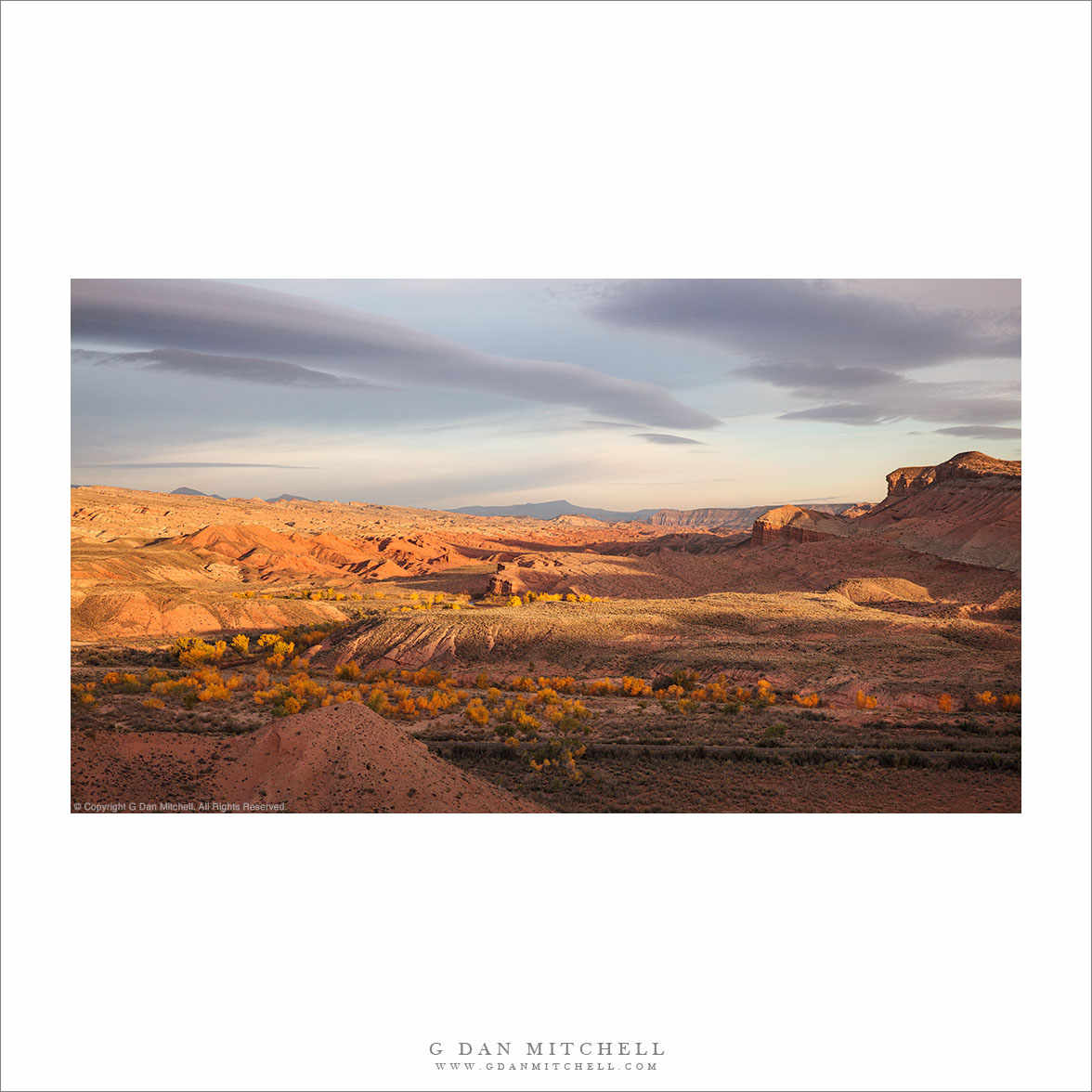
“Utah Autumn Sky” — Early morning autumn sky at Capitol Reef National Park, Utah

This is an example of what you can find when you focus on “the other stuff” — things other than the main subject that you came for. The spectacular and other-worldly summits of Capitol Reef lie out of sight behind my camera position, I turned my camera 180 degrees the other way to encompass this scene. We see a vast (mostly) sandstone Utah landscape, with lenticular clouds above and autumn cottonwood trees lining a stream in the bottom of the valley.

This sky is also an example of that “other stuff” concept. We initially stopped at this point just before sunrise when those clouds were spectacularly colored by red and orange dawn light. That scene was remarkable, but here the sky color has faded almost completely, and the darker tones contrast with the red rock color.


Leave a comment or question using the form. (Click the title to see the full article and to comment if you are viewing it on the home page.)

G Dan Mitchell is a California photographer and visual opportunist. His book, “California’s Fall Color: A Photographer’s Guide to Autumn in the Sierra” (Heyday Books) is available directly from him. Blog | Bluesky | Mastodon | Substack Notes | Flickr | Email

All media © Copyright G Dan Mitchell and others.
Badlands and Wash

Badlands and Wash
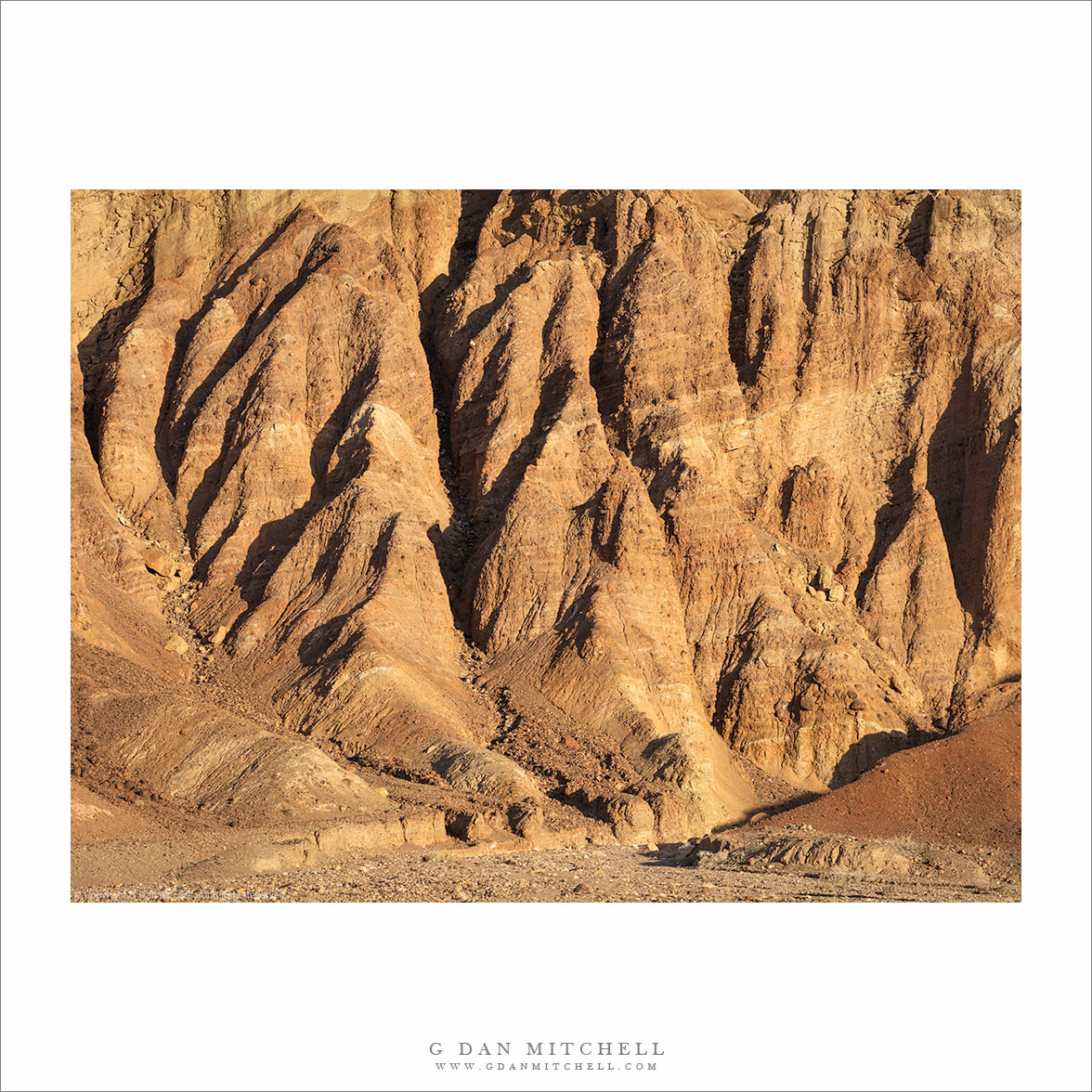
“Badlands and Wash” — A small wash spills from desert badlands into Death Valley at sunset.

Another recent post of a Death Valley photograph noted the interesting subjects found in remote and hard-to-access areas of this national park. This is not one of those photographs. In fact, I made it a short distance from a popular lodging and camping spot, and my tripod was set up at the back of my vehicle! The subject is eroded badlands terrain where a small wash empties into the main valley.

The terrain of this park is remarkably varied, ranging from harsh, sun-baked desert playas to high summits that can be topped with snow. Among them, desert washes emerging from canyons are a favorite of mine. I love to walk the quiet washes, and they often provide trails into deep canyons and mountain heights.


Leave a comment or question using the form. (Click the title to see the full article and to comment if you are viewing it on the home page.)

G Dan Mitchell is a California photographer and visual opportunist. His book, “California’s Fall Color: A Photographer’s Guide to Autumn in the Sierra” (Heyday Books) is available directly from him. Blog | Bluesky | Mastodon | Substack Notes | Flickr | Email

All media © Copyright G Dan Mitchell and others.
Gullies in Soft Light

Gullies in Soft Light, Death Valley
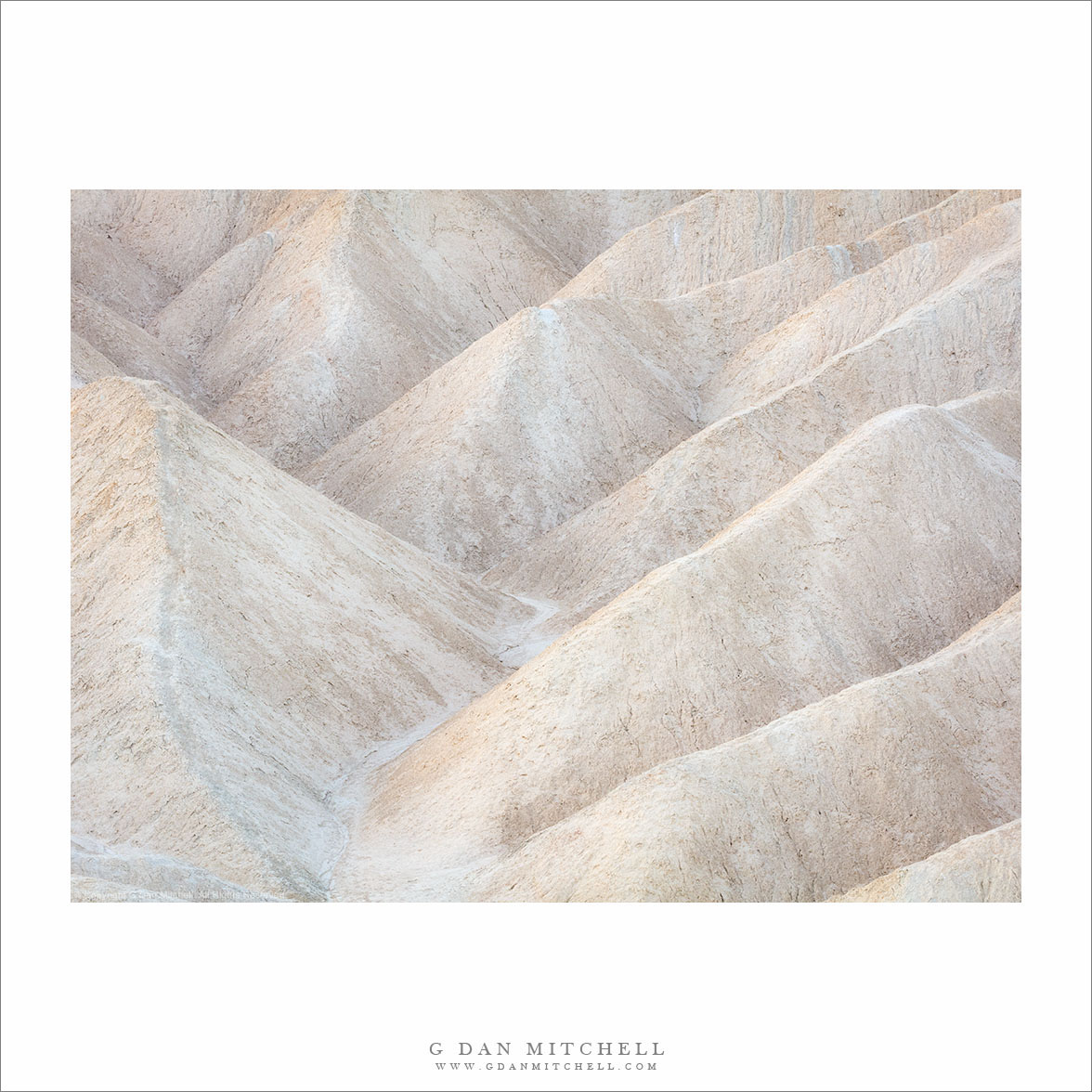
“Gullies in Soft Light” — Eroded gullies and ridges in soft light, Zabriskie Point.

These badlands formations, where soft layers have been eroded by water, can be difficult to photograph. Those difficulties can lead to ethical questions for photographers. The issue is that the range of colors and luminosity in these formations is very limited — the color is basically a light tan and the difference between the light and dark areas is small, at least in soft light. One choice is to enhance that contrast and coloration during the post-processing phase, and that can create some impressive images… though this can depart radically from the actual appearance of the landscape. Here I decided to go with the low contrast and soft colors instead.

To repeat a story I’ve previously related, almost by accident I ended up here to photograph a subject that ultimately did not develop as I had hoped. So I turned my attention to other things nearby, including these formations. I photographed them rather early, before the direct sunlight arrived. This meant that the contrast was even more subdued, as the soft light was from the early morning open sky — directional, but only subtly so.

G Dan Mitchell is a California photographer and visual opportunist. His book, “California’s Fall Color: A Photographer’s Guide to Autumn in the Sierra” (Heyday Books) is available directly from him. Blog | Bluesky | Mastodon | Substack Notes | Flickr | Email

Join the discussion — you are welcome to leave a comment or question. (Comments are moderated and may not appear immediately.)

This site uses Akismet to reduce spam. Learn how your comment data is processed.

(All media © Copyright G Dan Mitchell and others.)

Desert Gully

Desert Gully, Death Valley
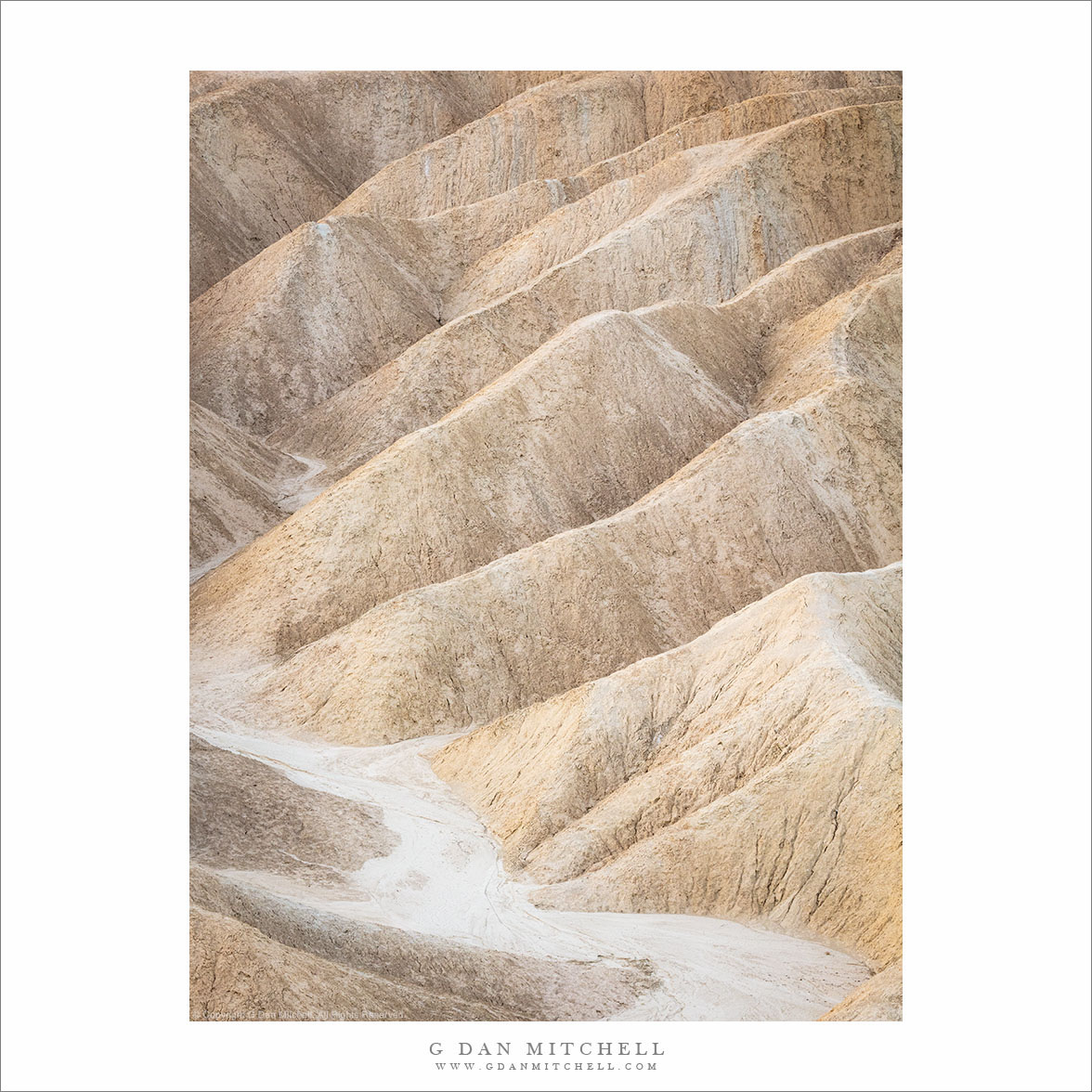
“Desert Gully” — Eroded formations and a desert gully, Death Valley.

The desert landscape of Death Valley National Park seems fairly static. Yes, we see dust storms blow things around a little, but even the shapes of the dunes remain fairly constant over time. The mountains and the playas look much as they did when I first saw them 25 years ago. But the reality is that this is a very dynamic landscape, and it is constantly being built up and torn down. This photograph is an obvious example of the latter process.

This light material was laid down millennia ago in the distant prehistoric past, long before people were here — and before there were even “people” at all. Over vast stretches of time the material was transformed — squashed, bent, tilted. Eventually a combination of uplift and erosion exposed it, and other processes kicked in. Here, those processes — including flowing water — have eroded and continue to erode the layers, producing this maze of small gullies and the fine silt seen at the bottom of the photo.

G Dan Mitchell is a California photographer and visual opportunist. His book, “California’s Fall Color: A Photographer’s Guide to Autumn in the Sierra” (Heyday Books) is available directly from him. Blog | Bluesky | Mastodon | Substack Notes | Flickr | Email

Join the discussion — you are welcome to leave a comment or question. (Comments are moderated and may not appear immediately.)

This site uses Akismet to reduce spam. Learn how your comment data is processed.

(All media © Copyright G Dan Mitchell and others.)