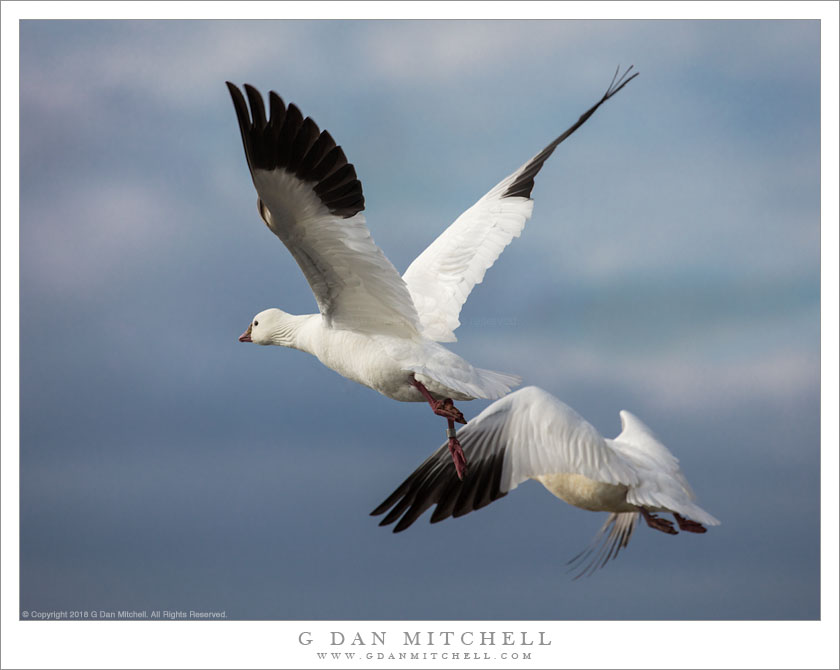
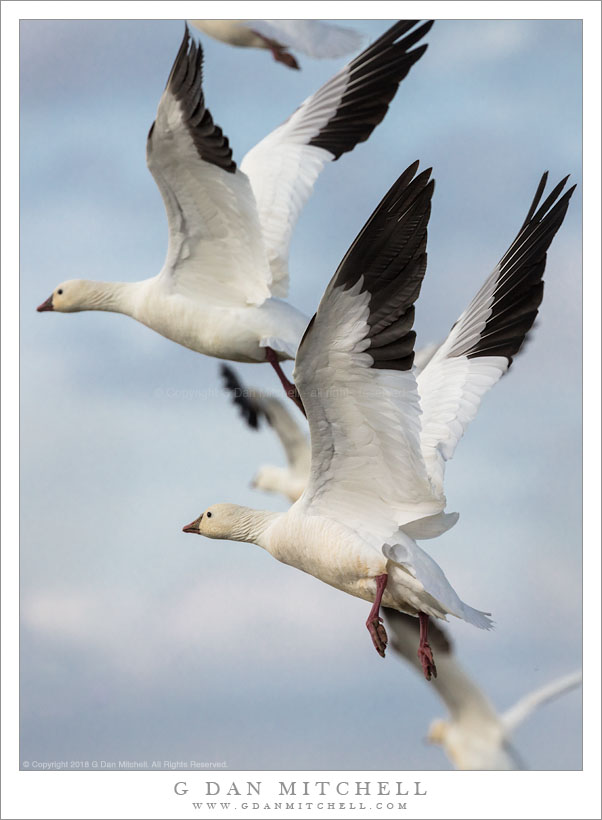
AVIAN: Birds in a Changing World opened this week at Gallery Five in Oakhurst, California and runs through January 14. The gala reception is this Saturday, December 9th at 4:00-8:00PM at Gallery Five — 40982 Hwy 41, Suite 5, Oakhurst.
The juried exhibition features work by more than 60 artists, and includes two of my photographs.
I’m going to make it a full “avian day” on Saturday, greeting the dawn and a few thousand of my avian friends in the Great Central Valley before heading on over to Oakhurst for the reception. Hope to see some of you there!
You can find out more at the exhibition’s Facebook page.
Leave a comment or question using the form. (If you are reading this on the home page, click the article title to see the full article and the comment form.
The ruins of an abandoned mill in the California desert backcountry
During the nearly twenty years since I first “discovered” California deserts, my experience with them has changed. To be honest, as a person largely focused on the coast and the Sierra, when I was younger I didn’t really know much about these wild places, and I wasn’t really attracted to them. It wasn’t until the late 1990s that I actually made a serious visit and began to “get it” about the things that make these areas so marvelous. At first, like almost anyone else, I focused on some of the most obvious and iconic places. But eventually as I returned to these places, especially to Death Valley National Park, I began to push out my boundaries bit by bit. As I did so I discovered many more interesting things about these places, both the natural wilderness and the human history. One of the first experiences that connected me to the human history was an accident. One evening I wandered away from a camp and just sat down on a boulder in an elevated location on an alluvial fan. I happened to look down to see an unusual rock. I picked it up and quickly realized that it was a cutting implement left their by the earliest people to make their lives here — and my notions of the depth and variety of human experience in the desert was profoundly altered.
That human influence has many facets. Certainly the experience of the people we now refer to as “native Americans” is central. (I like Canada’s term: “first people.”) Later settlers showed up for a range of reasons — pioneers passing through, prospectors chasing the dream of the big strike, folks looking for a job, people not well suited to living in the civilized world, and other. They all left traces. The prospectors and miners left lots of them all over the desert landscape, and you can’t travel around these places without running into it. The photograph is a detail from one amazing structure high on a desert ridge, abandoned only recently in the context of the larger scale of history, but still putting us in touch with an era that is mostly gone now from these places.
Migratory snow geese and Ross’s geese in a pond on a foggy San Joaquin Valley morning
Since it was December 1, it seemed like time to start my annual series of visits to California’s Great Central Valley to photograph migratory birds and the landscape of the place. (Actually, I had made one preliminary and very quick visit about a month earlier, but too early for the birds shown in this photograph.) There is a ritual about these visits which, for me, are typically one-day affairs that start very early and end rather late, with a fair amount of driving involved. Up well before dawn, I drive a couple of hours in darkness and often fog, arriving perhaps a half hour before dawn to the stirring sound of many thousands of birds, already awake at morning twilight. I photograph intensively for at least a few hours before taking, at last on most days, a midday break. By mid-afternoon I’m back at work again, photographing through the peak of the visual crescendo just before sunset and then continuing for perhaps another half hour or so until the light is gone. I pack, get into my vehicle, and retrace my two-hour drive back home. (At least the shorter daylight hours of this season allow me to get up a little bit “later” — if you consider 3:45 or 4:00 AM later — and return home in time for a late dinner.)
On this first day of December it was incredibly foggy when I arrived — so much so that it was really hard to make photographs. I usually enjoy photographing in the fog, but this was so thick that almost no sunrise light managed to color the gloom. But before long the light began to come through the fog and eventually I found a moderately large group of white geese settled in on a pond. Among them I saw Ross’s and snow geese, and beyond them there were trees with fall foliage.
I think this photograph is more fun if I avoid saying too much about it. I will say that it actually is a photograph, and one with no more post processing work than I might apply in, say, a landscape photograph. I made the photograph while out on the street in San Francisco earlier this week, doing night photography with my friends and fellow photographers of Studio Nocturne SF.
Photographer and visual opportunist. Daily photos since 2005, plus articles, reviews, news, and ideas.
Manage Consent
To provide the best experiences, we use technologies like cookies to store and/or access device information. Consenting to these technologies will allow us to process data such as browsing behavior or unique IDs on this site. Not consenting or withdrawing consent, may adversely affect certain features and functions.
Functional
Always active
The technical storage or access is strictly necessary for the legitimate purpose of enabling the use of a specific service explicitly requested by the subscriber or user, or for the sole purpose of carrying out the transmission of a communication over an electronic communications network.
Preferences
The technical storage or access is necessary for the legitimate purpose of storing preferences that are not requested by the subscriber or user.
Statistics
The technical storage or access that is used exclusively for statistical purposes.The technical storage or access that is used exclusively for anonymous statistical purposes. Without a subpoena, voluntary compliance on the part of your Internet Service Provider, or additional records from a third party, information stored or retrieved for this purpose alone cannot usually be used to identify you.
Marketing
The technical storage or access is required to create user profiles to send advertising, or to track the user on a website or across several websites for similar marketing purposes.