
Tag Archives: dark

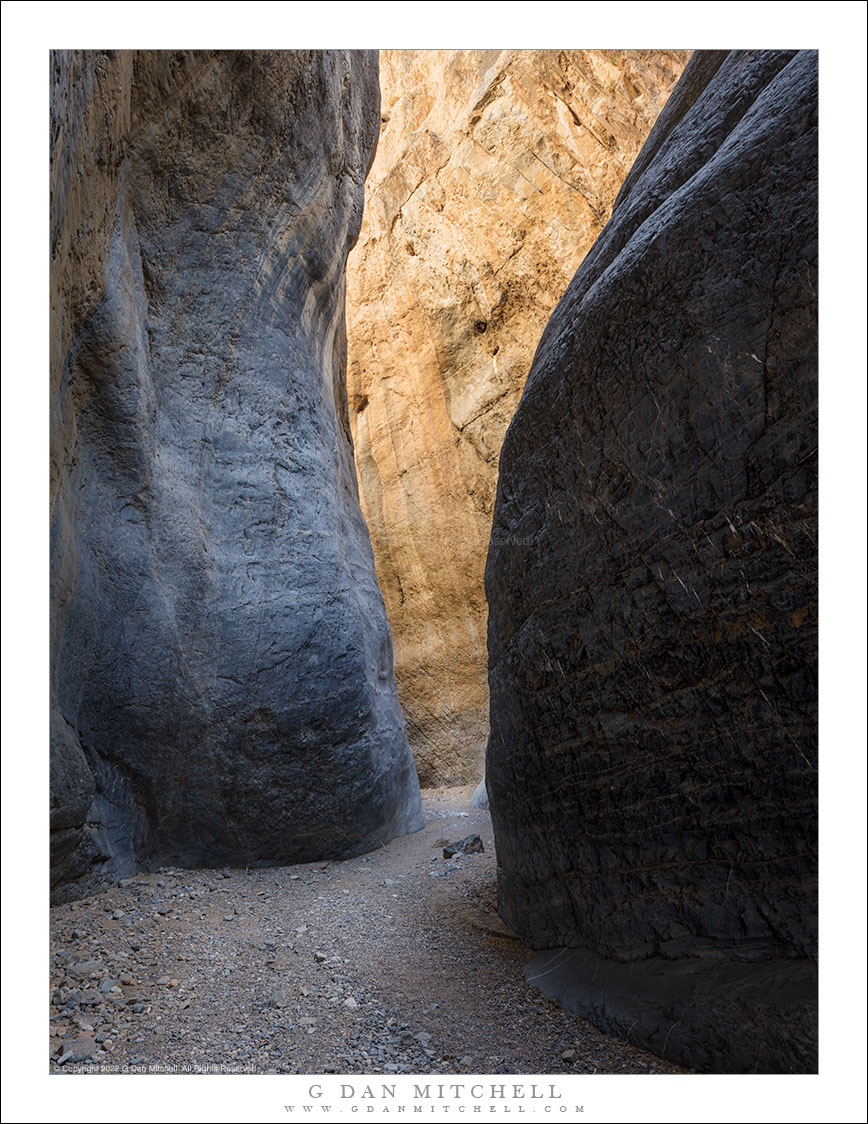
Light and Dark

Light and Dark
Highly contrasing geological formations in morning light, Death Valley National Park.

Light and Dark. © Copyright 2022.G Dan Mitchell.

Highly contrasing geological formations in morning light, Death Valley National Park.

To be honest, much of the Death Valley landscape, as remarkable as it is, tends to feature somewhat neutral tones and colors — many grays and tans and light browns. This is particularly true outside the early and late hours of the day, when warm light often intensifies the subtle colors of the terrain. This neutral quality is actually one of the virtues of the landscape in most cases, particularly in the way that lets light and shadow emerge as primary visual components.

But sometimes a bit more contrast in the landscape can be a good thing, so when I find it here I almost always look for ways to photograph it. This simple scene is a fine example. The early morning sun was just beginning to strike the white colored hill, lining its right flank with rim light. Meanwhile the background slope, composed of much darker material interrupted by lighter strata, was still in shadow.


G Dan Mitchell is a California photographer and visual opportunist. His book, “California’s Fall Color: A Photographer’s Guide to Autumn in the Sierra” is available from Heyday Books, Amazon, and directly from G Dan Mitchell.

Blog | About | Flickr | FacebookEmail

Links to Articles, Sales and Licensing, my Sierra Nevada Fall Color book, Contact Information.

Scroll down to leave a comment or question. (Click this post’s title first if you are viewing on the home page.)


All media © Copyright G Dan Mitchell and others as indicated. Any use requires advance permission from G Dan Mitchell.
Sand Dunes, Light and Shadow

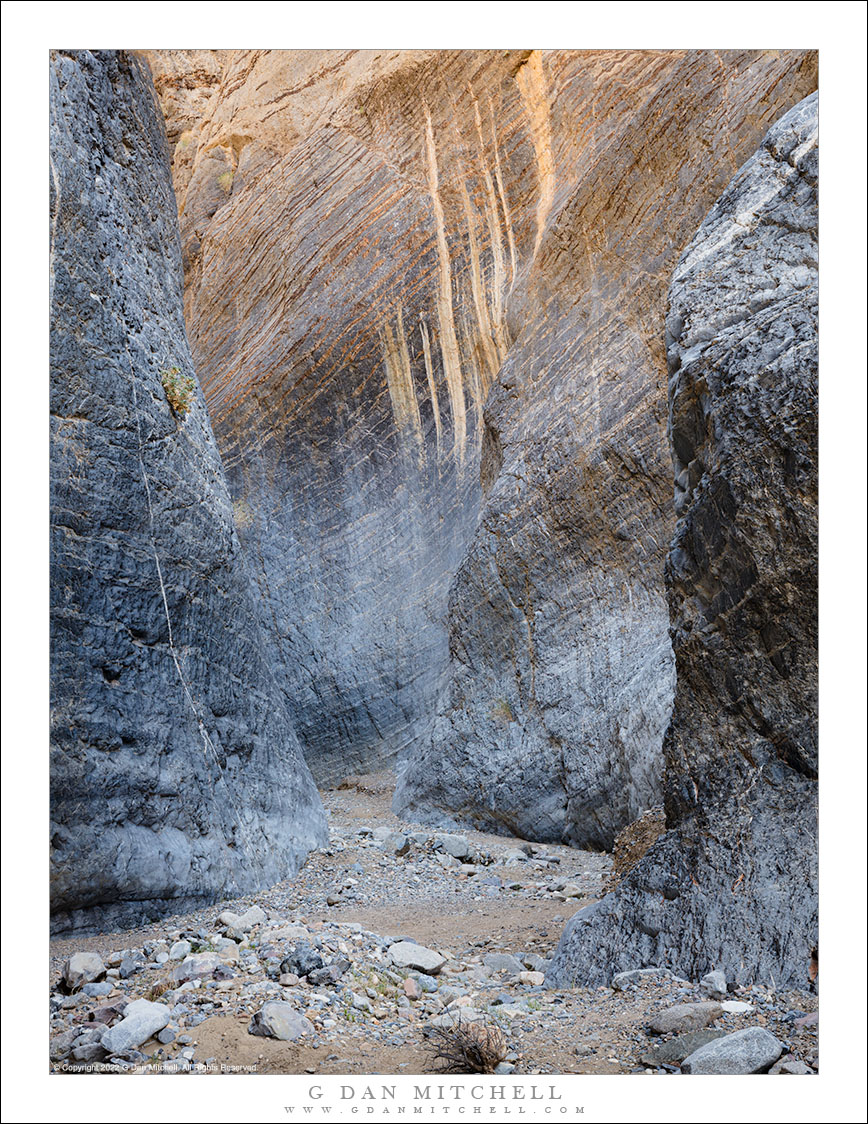
Sand Dunes, Light and Shadow
A curving sand dune boundary between light and shadow, Death Valley National Park.

Sand Dunes, Light and Shadow. © Copyright 2022 G Dan Mitchell – all rights reserved.

A curving sand dune boundary between light and shadow, Death Valley National Park.

This particular curving dune section became the subject for a series of photographs I made on this morning. It is a remarkable form, traveling higher and lower on the dune that what you can see in this photograph — a sort of “s-curve plus.” I have previously shared a couple of other photographs of it that were interpreted in color, photographs that show a larger portion of the dune. This one focuses on a small area near its base.

The light here was fascinating. The dunes are backed by a taller ridge, so the morning light does not arrive here until some time after dawn. At sunrise the light on these dunes is fully shadowed, and it has the blue tones of reflected sky. But as the sun rises it eventually sends its light across that ridge behind the dunes, and streamers of light being to slant across the dunes features, creating quickly evolving patterns of light and shadow.


G Dan Mitchell is a California photographer and visual opportunist. His book, “California’s Fall Color: A Photographer’s Guide to Autumn in the Sierra” is available from Heyday Books, Amazon, and directly from G Dan Mitchell.

Blog | About | Flickr | FacebookEmail

Links to Articles, Sales and Licensing, my Sierra Nevada Fall Color book, Contact Information.

Scroll down to leave a comment or question. (Click this post’s title first if you are viewing on the home page.)


All media © Copyright G Dan Mitchell and others as indicated. Any use requires advance permission from G Dan Mitchell.
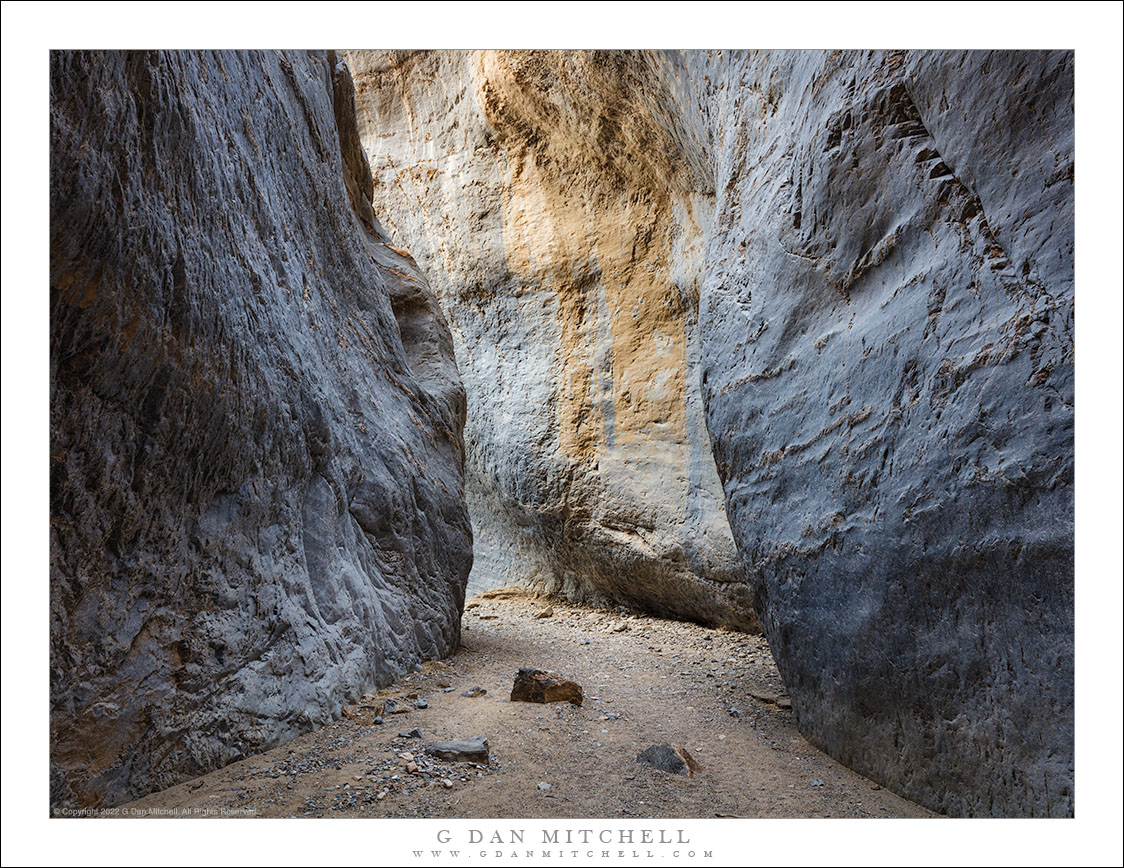
Interrupted Dune #2

Sand dune patterns, Death Valley National Park
“Interrupted Dune #2” — Interrupted curve of sand at a Death Valley dune.

If you follow my posts and think that this looks familiar… you are right! It is a vertical (or “portrait”) format version of a subject that I shared earlier in a companion “landscape” orientation version. When a subject can work either way (albeit with different effects) it is my practice to capture both vertical and horizontal versions. I suppose one reason is that it relieves me of the worry that I might have picked the “wrong” option. It also puts off a final choice until later. In addition, it provides me with two visual options for the image, something that is occasionally useful. (For example, book and magazine covers tend to use vertical formats.)

Superficially this version looks a lot like the other one, though the taller and narrower format may give greater weight to the curve running between the bottom and top of the image and less weight to the darker portions of the scene. However, if you were to look at them side-by-side you would notice that the textures in the sand are subtly different, and that that colors have also shifted a bit. This photograph, like quite a few that I make in situations like this, was made in rapidly changing light conditions, and in the brief interval between the two photographs the scene changed visibly.


G Dan Mitchell is a California photographer and visual opportunist. His book, “California’s Fall Color: A Photographer’s Guide to Autumn in the Sierra” from Heyday Books, is available directly from G Dan Mitchell.

Blog | Bluesky | Mastodon | Substack Notes | Flickr | Email
Articles | Sales | Sierra Nevada Fall Color | Contact Info

All media © Copyright G Dan Mitchell and others as indicated. Any use requires advance permission from G Dan Mitchell.

Criminal Courts Building

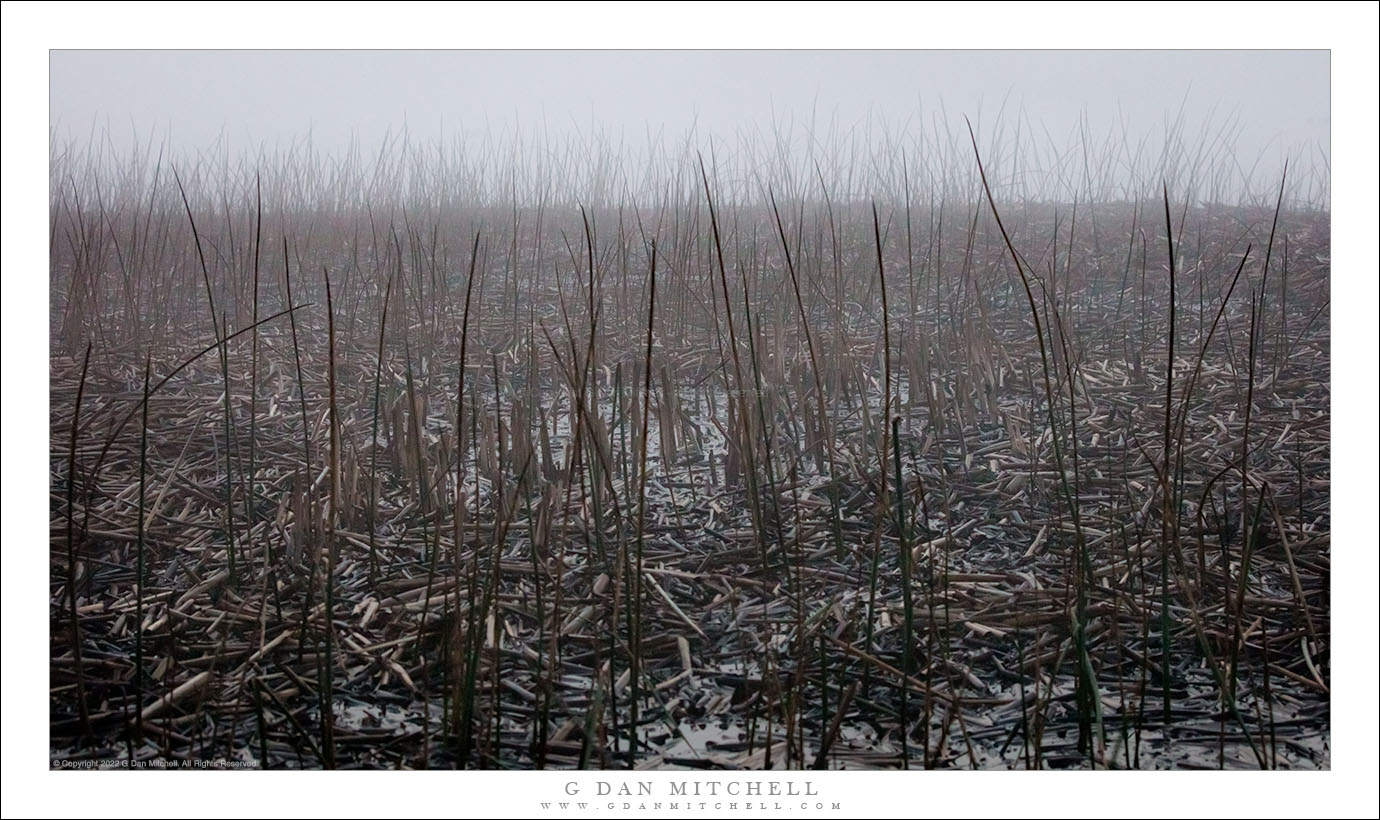
Criminal Courts Building
“Criminal Courts Building” — North Entrance, Criminal Courts Building, Manhattan.

This photograph comes from the same winter walk from Midtown to Lower Manhattan that I wrote about in another recent post. It was a somewhat unusual photographic walk, in that we had a specific appointment to make in Lower Manhattan just after sunset. With that in mind we were less able to follow our noses on this walk, and rather than pausing too much or taking little side journeys along the way, we progressed at a fairly regular rate to the south. This meant that I rarely had time to pause long to make photographs, aside from the occasional street light, so most of the photographs were made quickly, and I had only a short time to work any of the subjects. (In fact, we moved fast enough that I often did not have time to even take careful note of what I was photographing.)

As we passed this impressive Art Deco building in Lower Manhattan, the combination of angular stone faced, blue-toned evening light, and the contrasting warm yellow tones of interior light caught my attention. I was working quickly and using a fixed-focal length lens, so my compositional options were limited. I couldn’t photograph the entirety o the building, so I focused on this entrance area. It occurred to me later how profoundly the appearance of this scene is affected by light — a daytime photograph here would not be particularly dramatic, but there’s something a bit oppressive about the quality in this light.


Leave a comment or question using the form. (Click the title to see the full article and to comment if you are viewing it on the home page.)

G Dan Mitchell is a California photographer and visual opportunist. His book, “California’s Fall Color: A Photographer’s Guide to Autumn in the Sierra” (Heyday Books) is available directly from him. Blog | Bluesky | Mastodon | Substack Notes | Flickr | Email

All media © Copyright G Dan Mitchell and others.