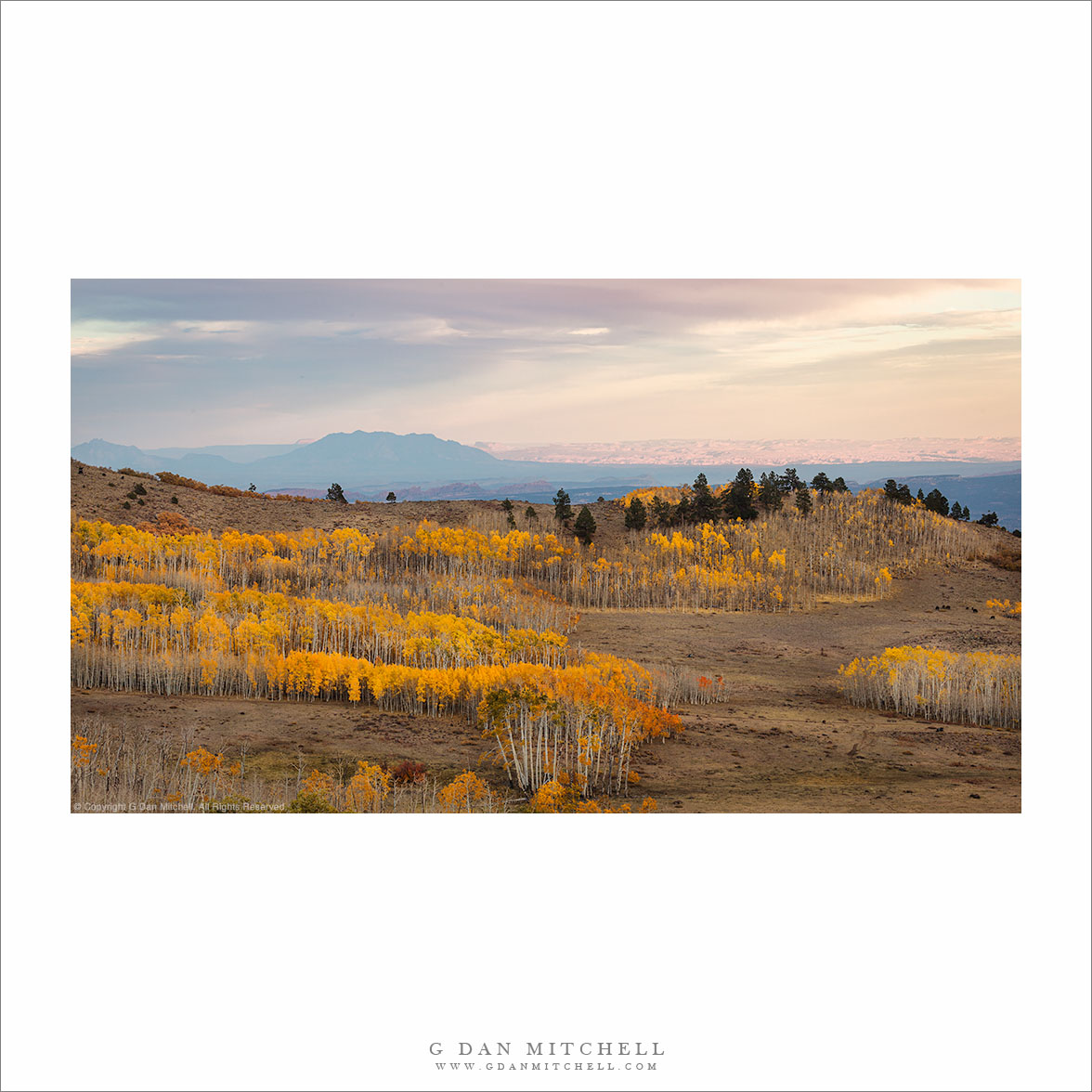
“Boulder Mountain Aspens, Evening” — Autumn aspen trees near Boulder Mountain, Utah.
I took me a while to figure out this location in Utah, along the edge of Boulder Mountain. Years ago we drove through here in the spring, and I was astonished by the huge aspen groves. I resolved to return in the autumn, and a few years later we did —timing our visit to synchronize with peak of California’s Eastern Sierra aspen color. It turns out that the color change earlier in Utah, and by the time we arrived the groves were past their peak.
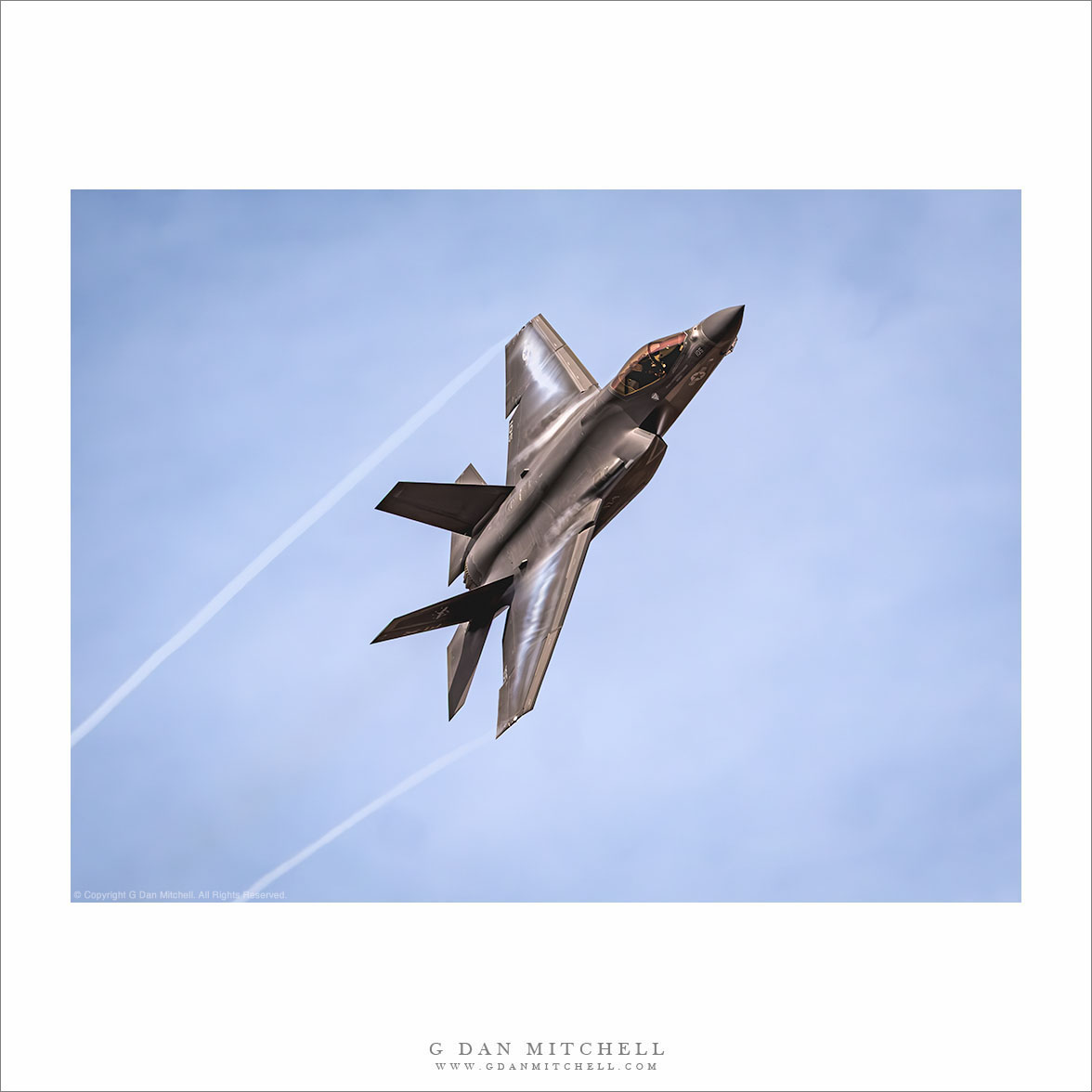
“F-35” — An F-35 does a low pass in Death Valley Naitonal Park.
This is not exactly my typical Death Valley National Park photograph, but for better or for worse, low fly-overs (and high altitude maneuvers) by military aircraft are part of the experience there. The park is virtually surrounded by military reserves and bases, and the atomic test site is not far to the east — in other words, there’s a heavy military presence in the area. My understanding is that part of the agreement that led to the establishment of the national park was a concession to allow overflights of the park.
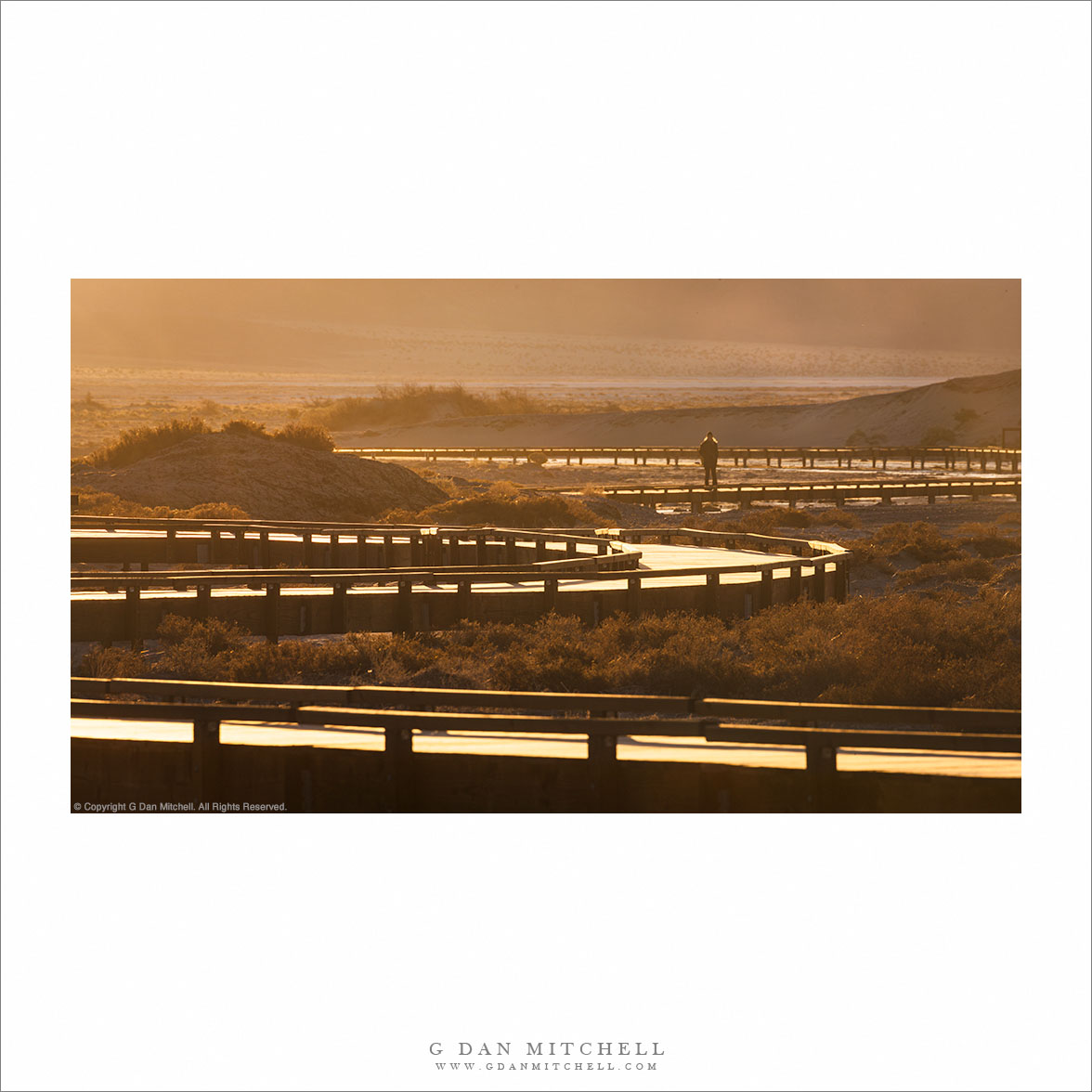
“Boardwalk, Morning” — The winding boardwalk at Salt Creek in morning light, Death Valley.
We arrived at Salt Creek before sunrise, planning to walk down to the end of the boardwalk and photograph some further areas at dawn. It used to be that you could continue on from there and investigate other interesting terrain, but there is now no obvious way off the boardwalk, likely because the park service is trying to protect those areas. So we photographed from the boardwalk as the sun came up.
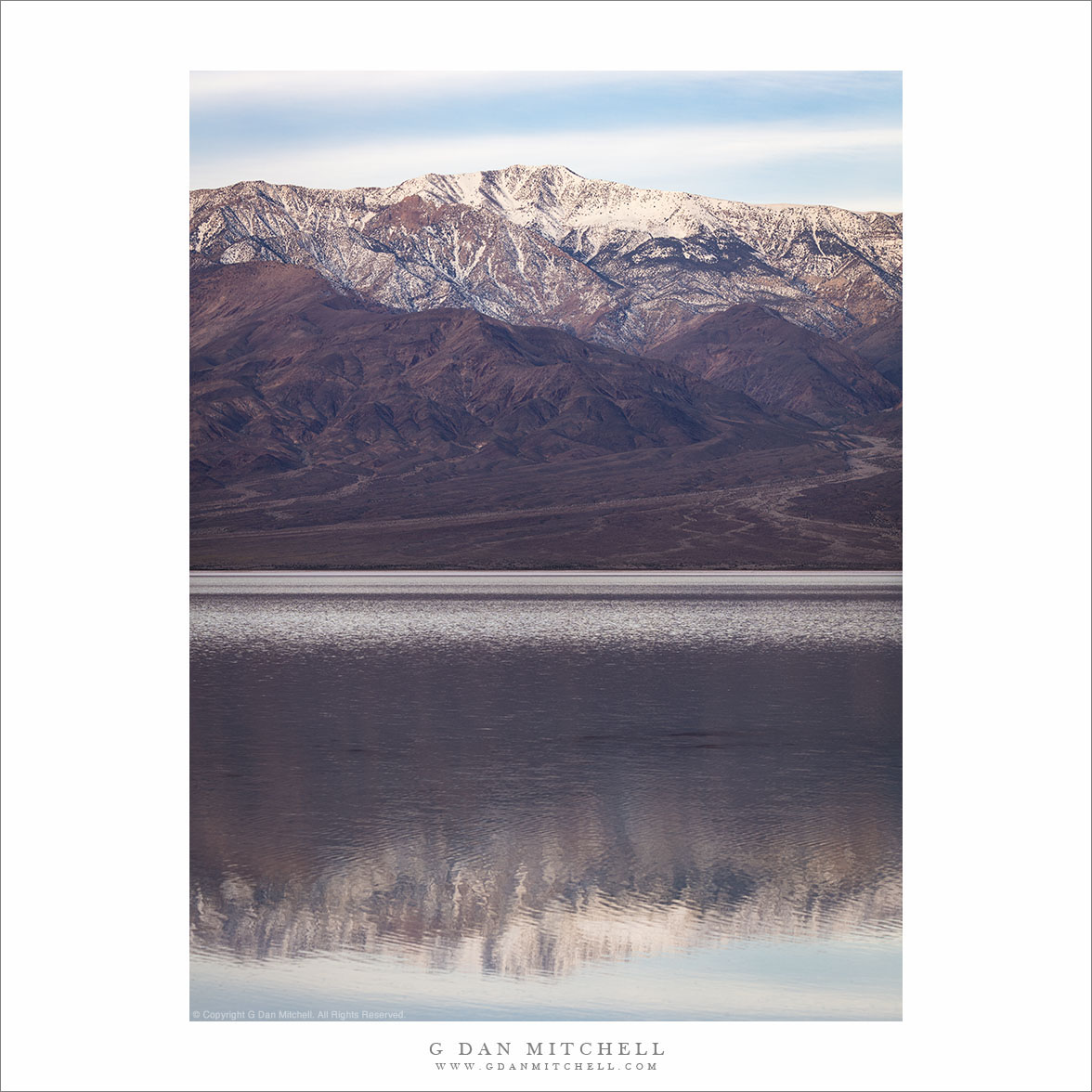
“Lake Manly and Telescope Peak, Dawn” — Dawn light on Telescope Peak above Hanaupah Canyon and the reflective waters of Lake Manly.
This photograph includes a short list of superlative features. Telescope Peak, at just over 11,000′, is the highest point in Death Valley National park. From the peak one can see the highest point in California, Mt. Whitney (in the Sierra Nevada) and the lowest point (Badwater Basin). In the photograph Badwater Basin is submerged beneath Lake Manly, which forms only in very wet years and generally evaporates quickly. Snow on Telescope Peak and the Panamint Range is not unusual in winter, but in this photograph it has reached a rather low elevation.