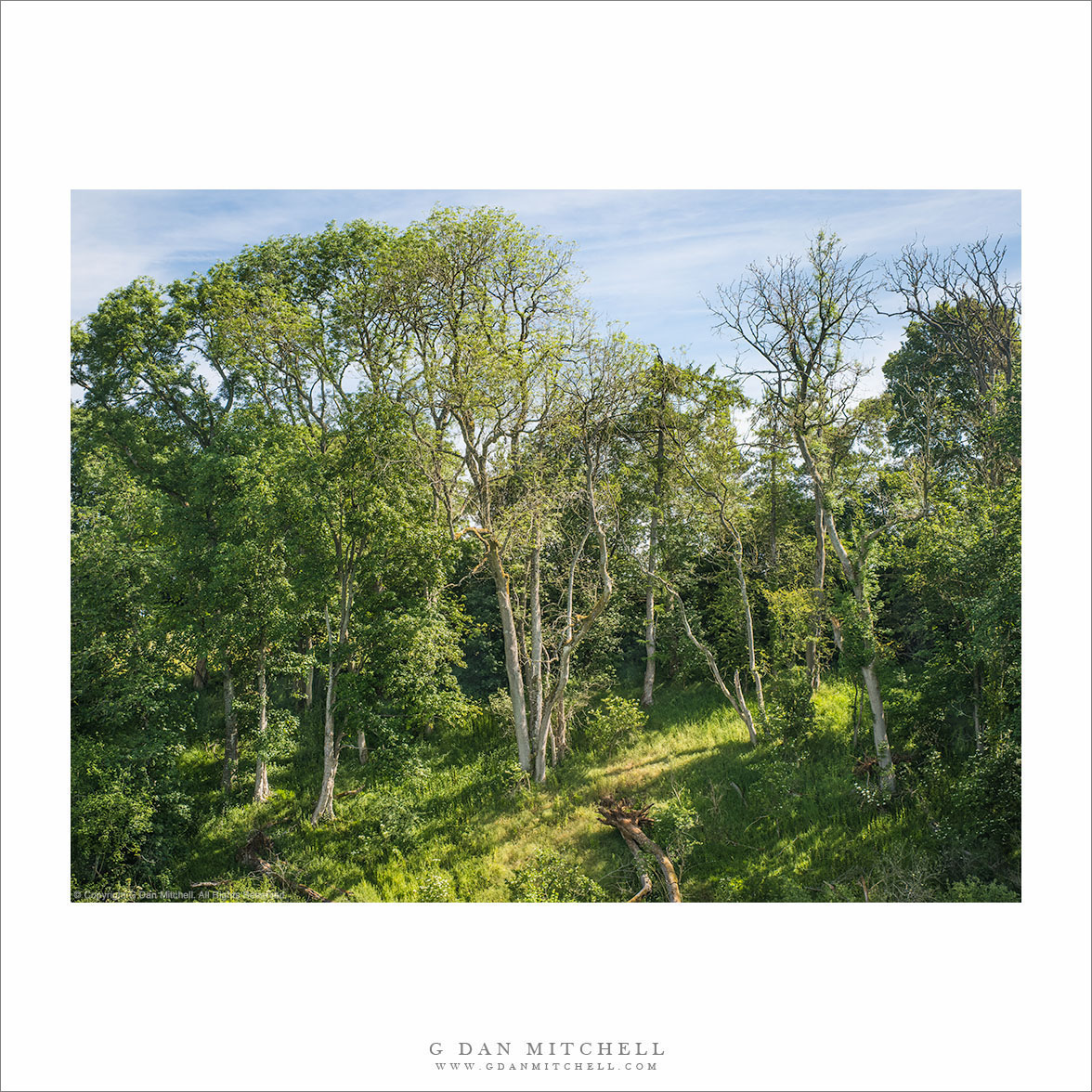
“Cotswolds Forest Clearing” — A break in the trees lets sunshine into a clearing in a Cotswolds forest.
During spring the woodlands and fields and pastures of the Cotswolds are very bright and green… if it isn’t raining. Of course, it is the rain produces all of that green. We had our share of sunny days, but we also experienced the rain — generally light and transitory, but a bit more substantial on the final day of our weeklong walk. This scene was midway through the walk, where the path crossed green hill, the trees opened up a bit, and the sun shone in.
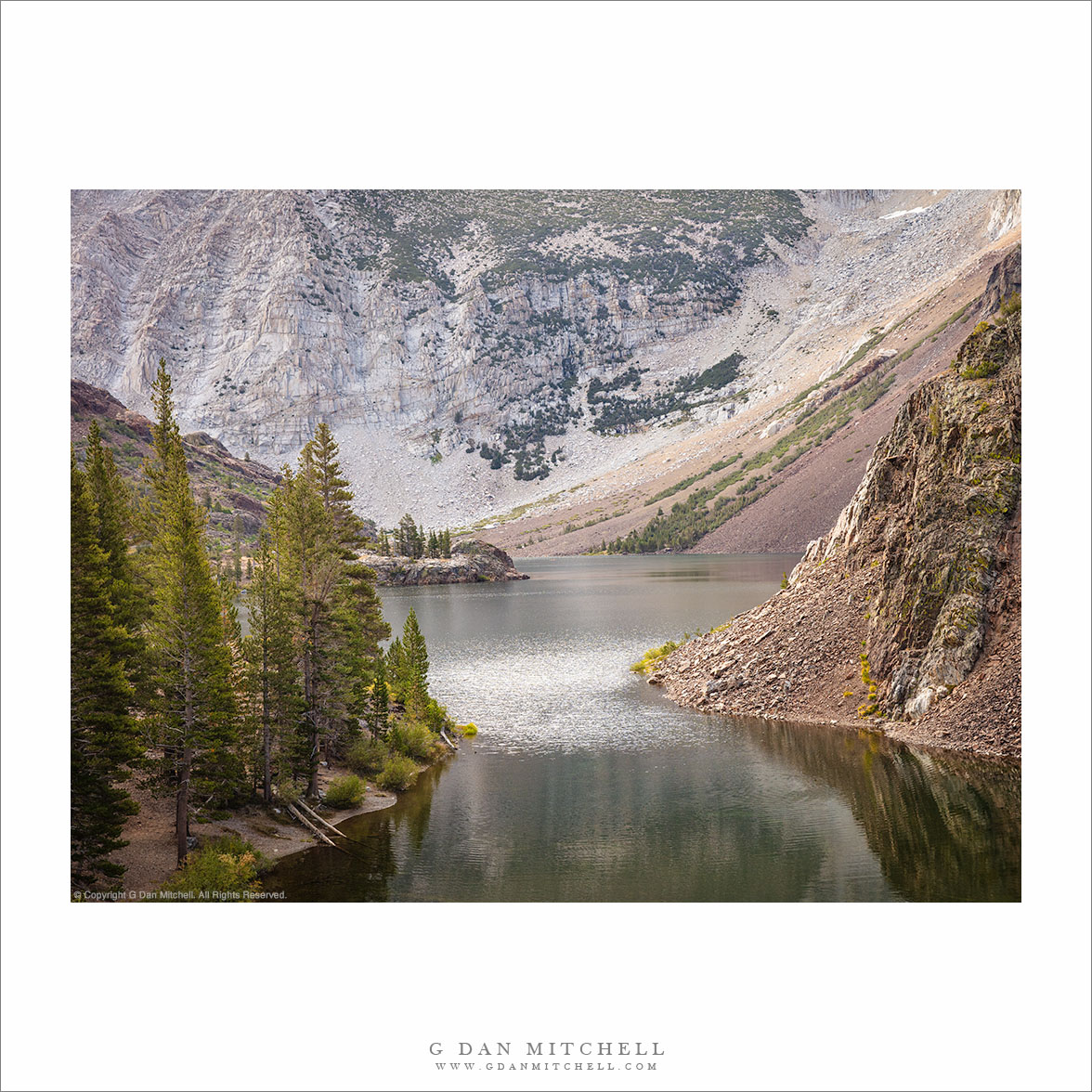
“Soft Light, Ellery Lake” — Ellery Lake in early morning soft light.
This spot and this view have long intrigued me. The lines and curves lead from the shoreline forest at left, past that talus-covered slope on the right, across the water to another peninsula, and finally to the massive face rising beyond. The personality of this view can change remarkably — I’ve photographed during storms, under the full moon, in direct sunlight.
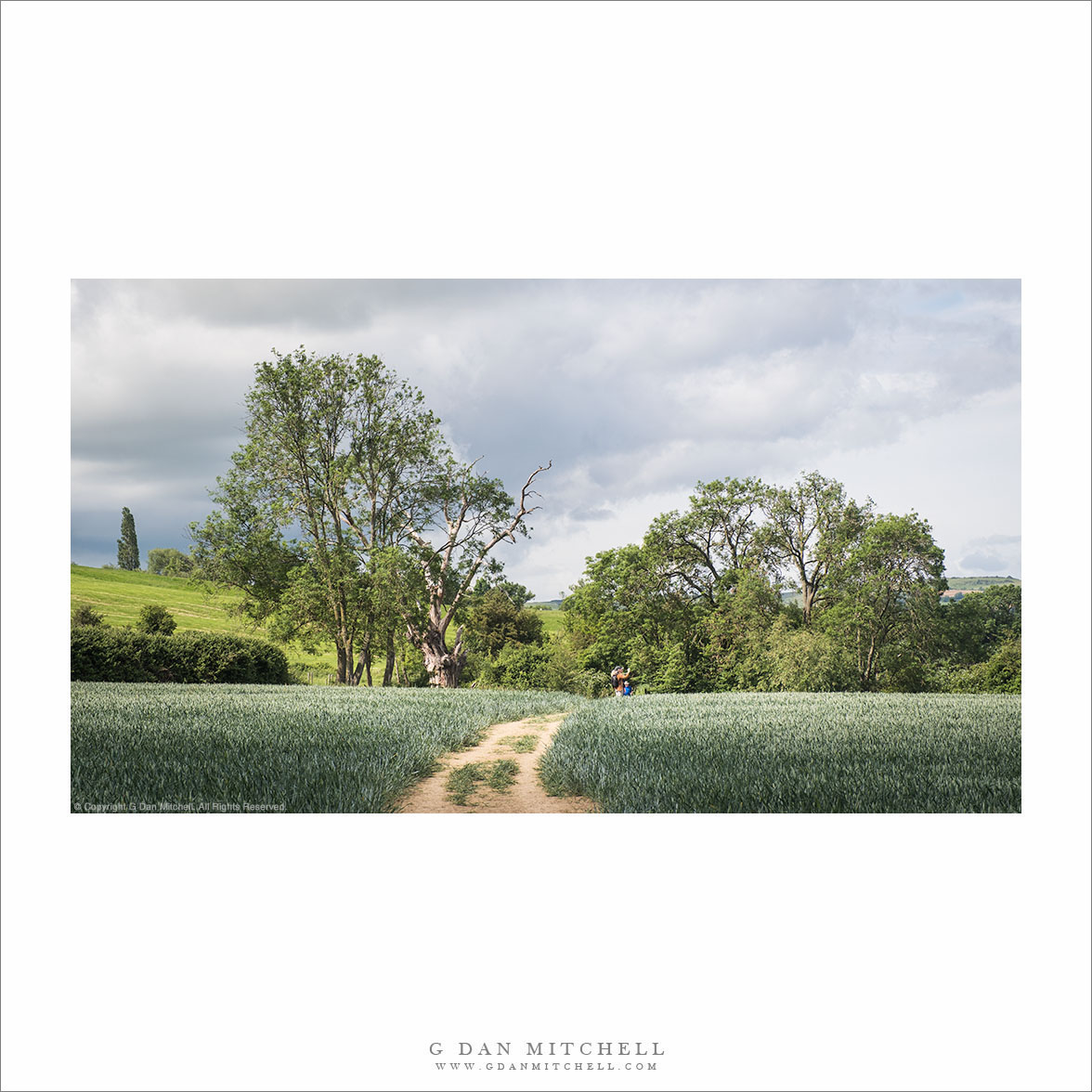
“A Cotswolds Trail” — Two Cotswolds hikers pause in the sunlight between old trees and a wheat field.
I have to confess some (OK, a lot of) ignorance about England outside of its cities. We’ve been to the country a number of times, but that usually means going to London and then visiting a few other relatively urbanized places. So “my England” has been basically London and a few (mostly popular) towns. We’ve passed through the country on trains and looked down on it from the air, but this trip was the first time that we actually went out and walked through it. I learned a lot!
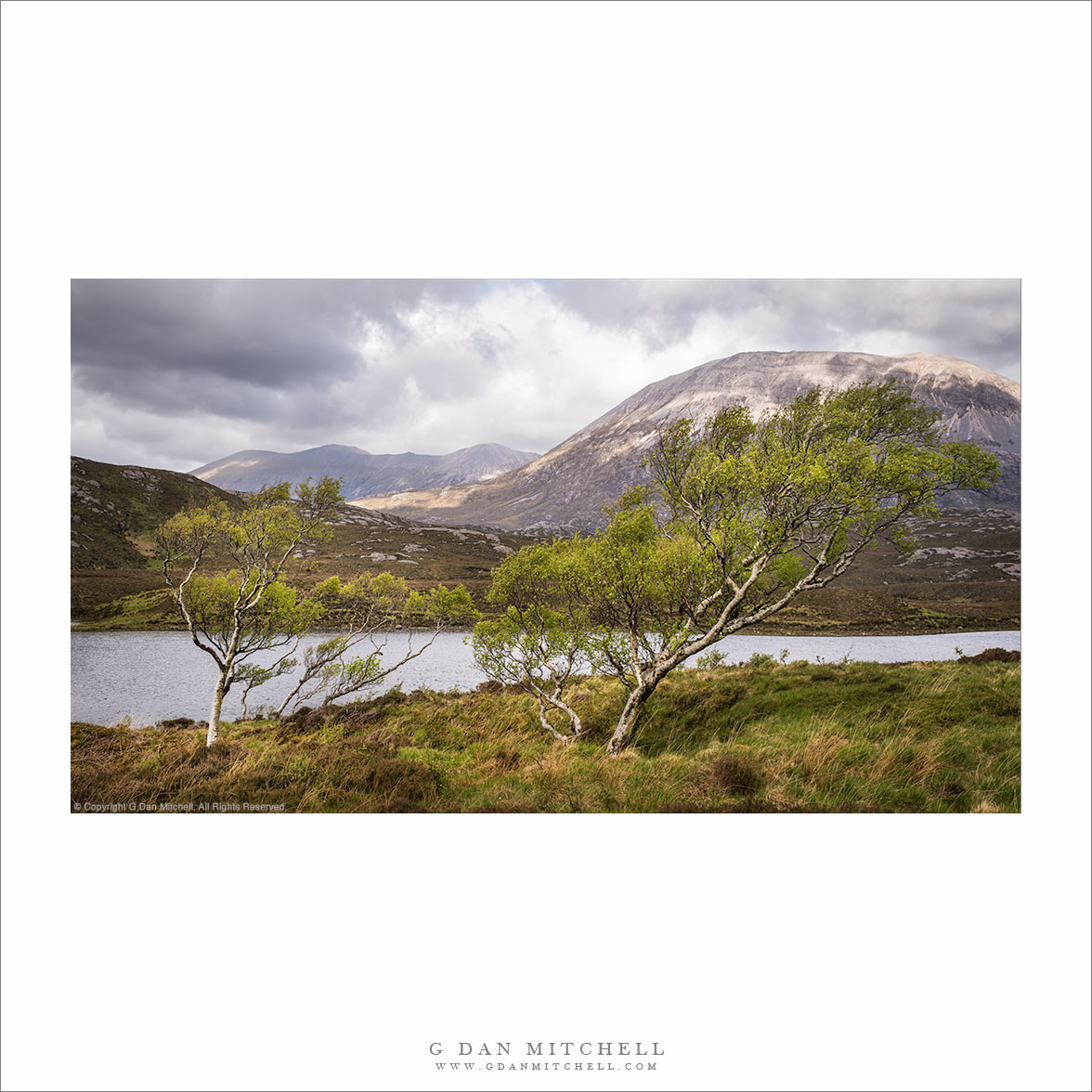
“Windblown Trees at Loch Stack” — Two windswept trees backed by Loch Stack and Scottish highlands mountains.
The last few days of our drive around northwest Scotland followed an indirect route. After more or less tracing the North Coast 500 route from Skye toward Durness, our plans had us making a longish detour to the historic lodge at Altnaharra. This meant leaving the NC500 and heading south into the highlands on less-traveled roads. I made this photograph along the detour late in the day.
Photographer and visual opportunist. Daily photos since 2005, plus articles, reviews, news, and ideas.
Manage Consent
To provide the best experiences, we use technologies like cookies to store and/or access device information. Consenting to these technologies will allow us to process data such as browsing behavior or unique IDs on this site. Not consenting or withdrawing consent, may adversely affect certain features and functions.
Functional
Always active
The technical storage or access is strictly necessary for the legitimate purpose of enabling the use of a specific service explicitly requested by the subscriber or user, or for the sole purpose of carrying out the transmission of a communication over an electronic communications network.
Preferences
The technical storage or access is necessary for the legitimate purpose of storing preferences that are not requested by the subscriber or user.
Statistics
The technical storage or access that is used exclusively for statistical purposes.The technical storage or access that is used exclusively for anonymous statistical purposes. Without a subpoena, voluntary compliance on the part of your Internet Service Provider, or additional records from a third party, information stored or retrieved for this purpose alone cannot usually be used to identify you.
Marketing
The technical storage or access is required to create user profiles to send advertising, or to track the user on a website or across several websites for similar marketing purposes.