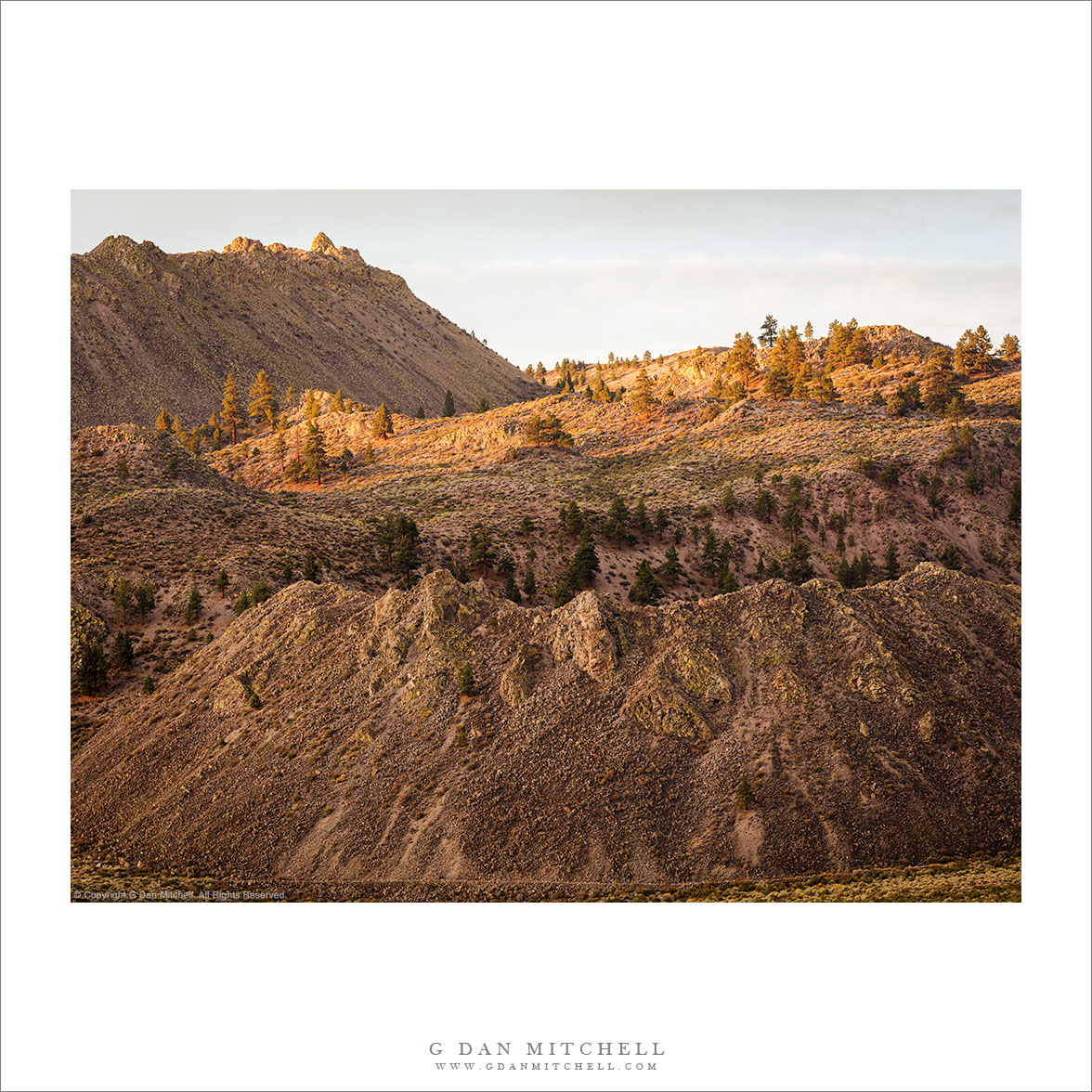
“Early Light, Mono Craters” — First morning sunlight on the slopes of Mono Craters.
Mono Basin is a fine place to contemplate geology and immense spans of time. Mono Lake itself is an ancient body of water, and one that has not always looked like it does today. The lake is probably 3/4 of a million years old, and its ancestor lake was, at times, much deeper and larger than it is today. At times its waters rose high enough to overcome its current landlocked state and drain either north or south. (To really bend your mind, its waters may have drained to ancient Lake Manly in Death Valley.) Today, as large as the lake is, it is greatly diminished in size and depth by comparison.
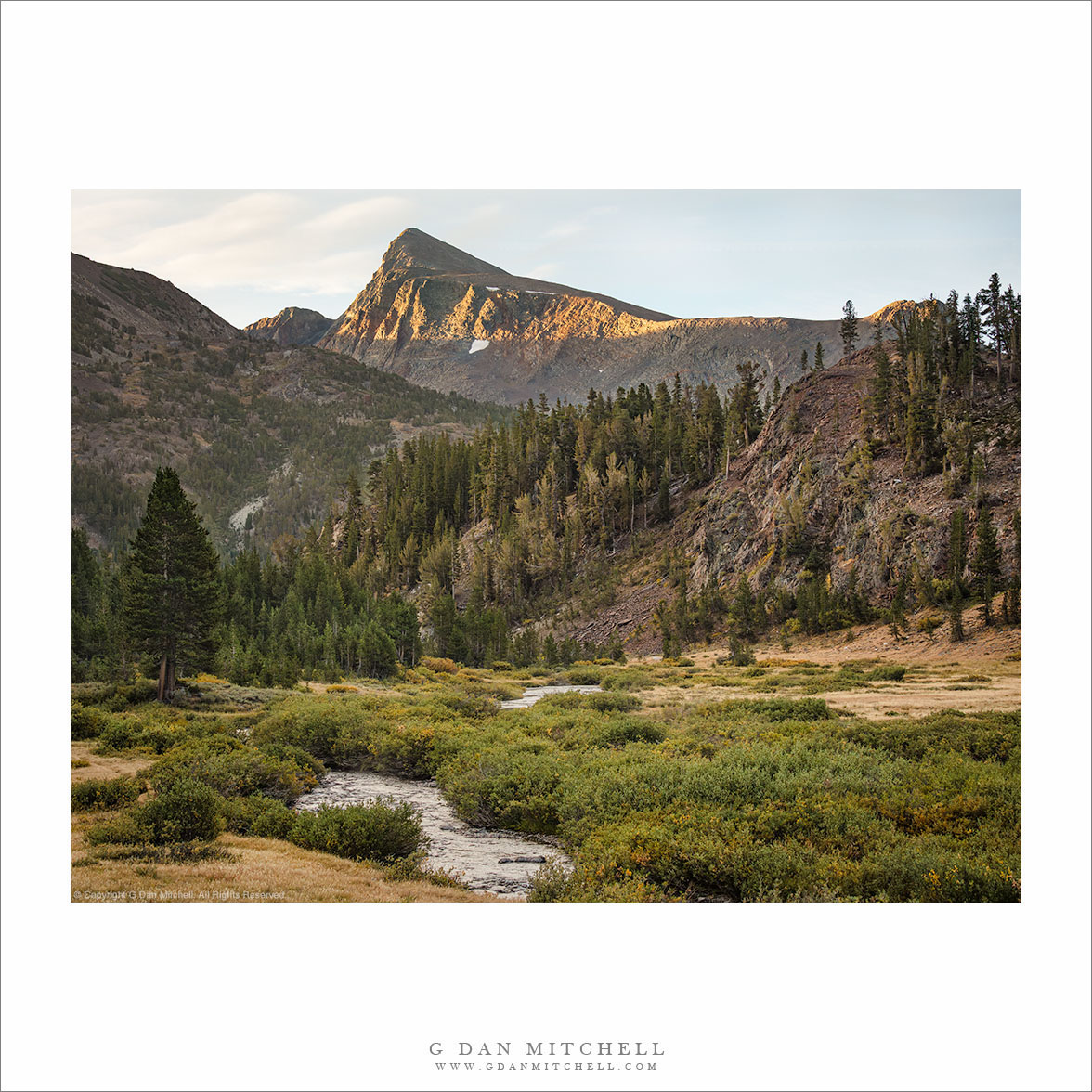
“Sierra Meadow and Peak” — Early light strikes a Sierra Nevada crest peak above a shadowed subalpine valley.
I was up and out of camp in the dark on this late-August morning. My plan was to work my way up Tioga Pass Road toward the pass, where I had a few subjects in mind along the way. After that I would head over the pass and out of the park to explore some areas just east of the Sierra crest. After going to the end of this valley to make a few photographs of alpine terrain, I headed back down this way, to pausing at a few places I had noted on the way up.
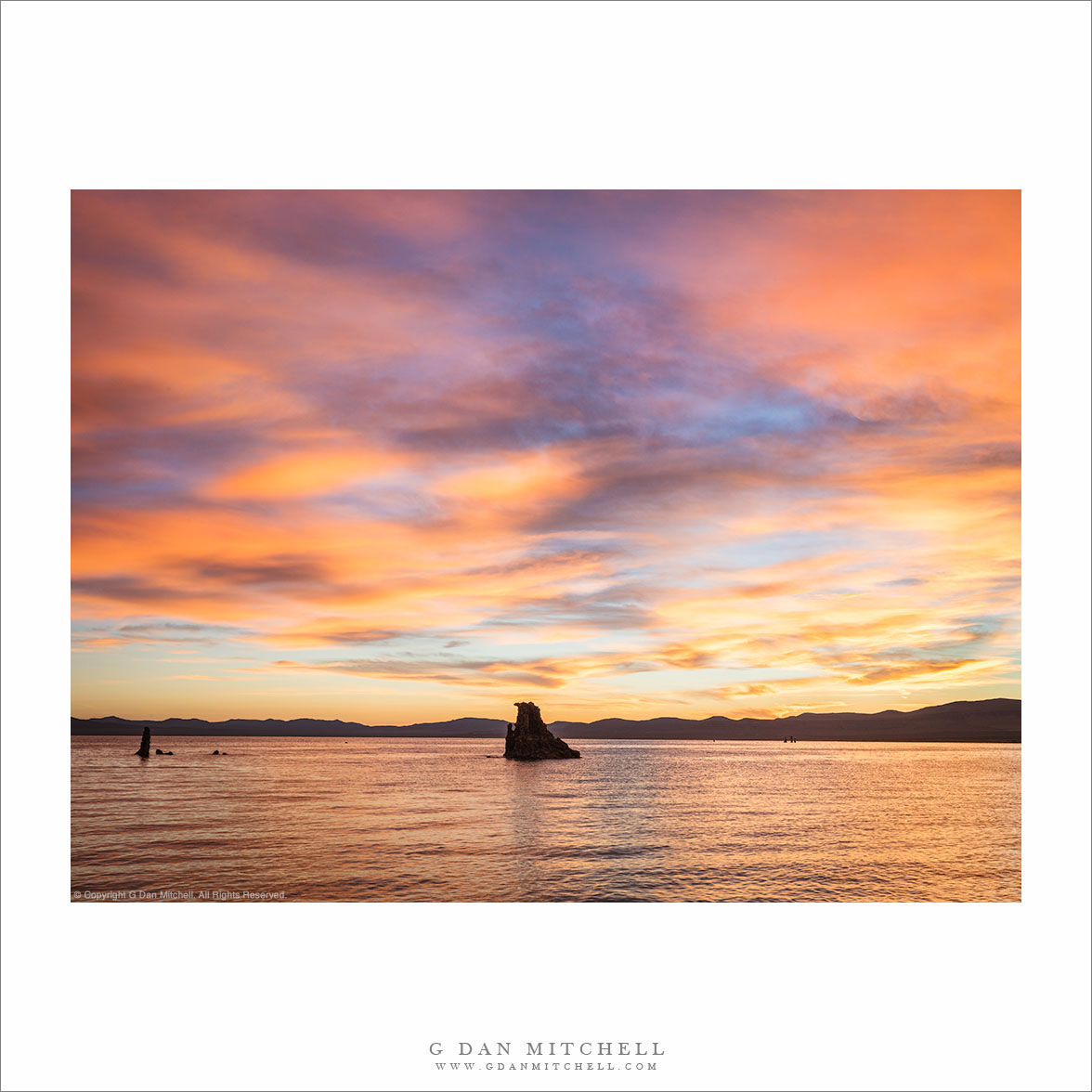
“Dawn, Mono Lake” — Mono Lake tufas under a colorful pre-sunrise sky.
In the right conditions, a Mono Lake sunrise can be spectacular. To some extent it is up to the clouds. Clouds produce the most colorful sunrises, of course, but if they are too thick or in the wrong place they can also “turn out the lights.” The ideal, I think, is for it to be clear on the eastern horizon, with scattered clouds closer to the lake. Almost anything goes in the west — some clouds there to catch the light can be good, but clear skies and the earth shadow or even dark and dramatic clouds can work.
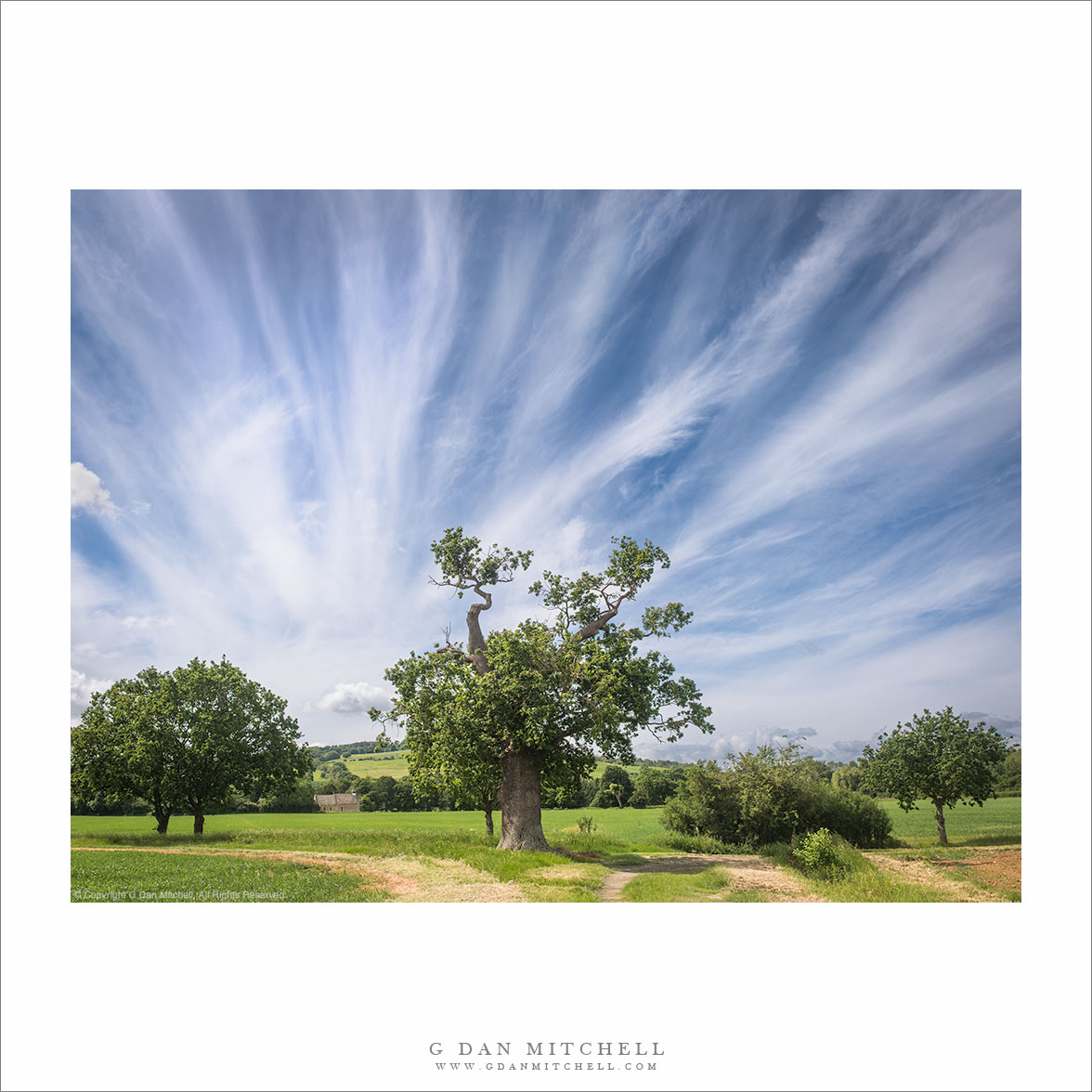
“Cotswolds Sky” — Cloud-laced sky above Cotswolds trees and fields.
We didn’t have blue skies every day on our spring walk in the Cotswolds, but when the weather was clear it was often beautiful. We did a weeklong walk there on the last few days of May and first few of June. Yes, there was rain — though nothing approaching a deluge, aside from a few minutes on our last day. But on this morning we had a spectacular sky, blue and streaked with clouds, as we walked through this area of fields and pastures.
Photographer and visual opportunist. Daily photos since 2005, plus articles, reviews, news, and ideas.
Manage Consent
To provide the best experiences, we use technologies like cookies to store and/or access device information. Consenting to these technologies will allow us to process data such as browsing behavior or unique IDs on this site. Not consenting or withdrawing consent, may adversely affect certain features and functions.
Functional
Always active
The technical storage or access is strictly necessary for the legitimate purpose of enabling the use of a specific service explicitly requested by the subscriber or user, or for the sole purpose of carrying out the transmission of a communication over an electronic communications network.
Preferences
The technical storage or access is necessary for the legitimate purpose of storing preferences that are not requested by the subscriber or user.
Statistics
The technical storage or access that is used exclusively for statistical purposes.The technical storage or access that is used exclusively for anonymous statistical purposes. Without a subpoena, voluntary compliance on the part of your Internet Service Provider, or additional records from a third party, information stored or retrieved for this purpose alone cannot usually be used to identify you.
Marketing
The technical storage or access is required to create user profiles to send advertising, or to track the user on a website or across several websites for similar marketing purposes.