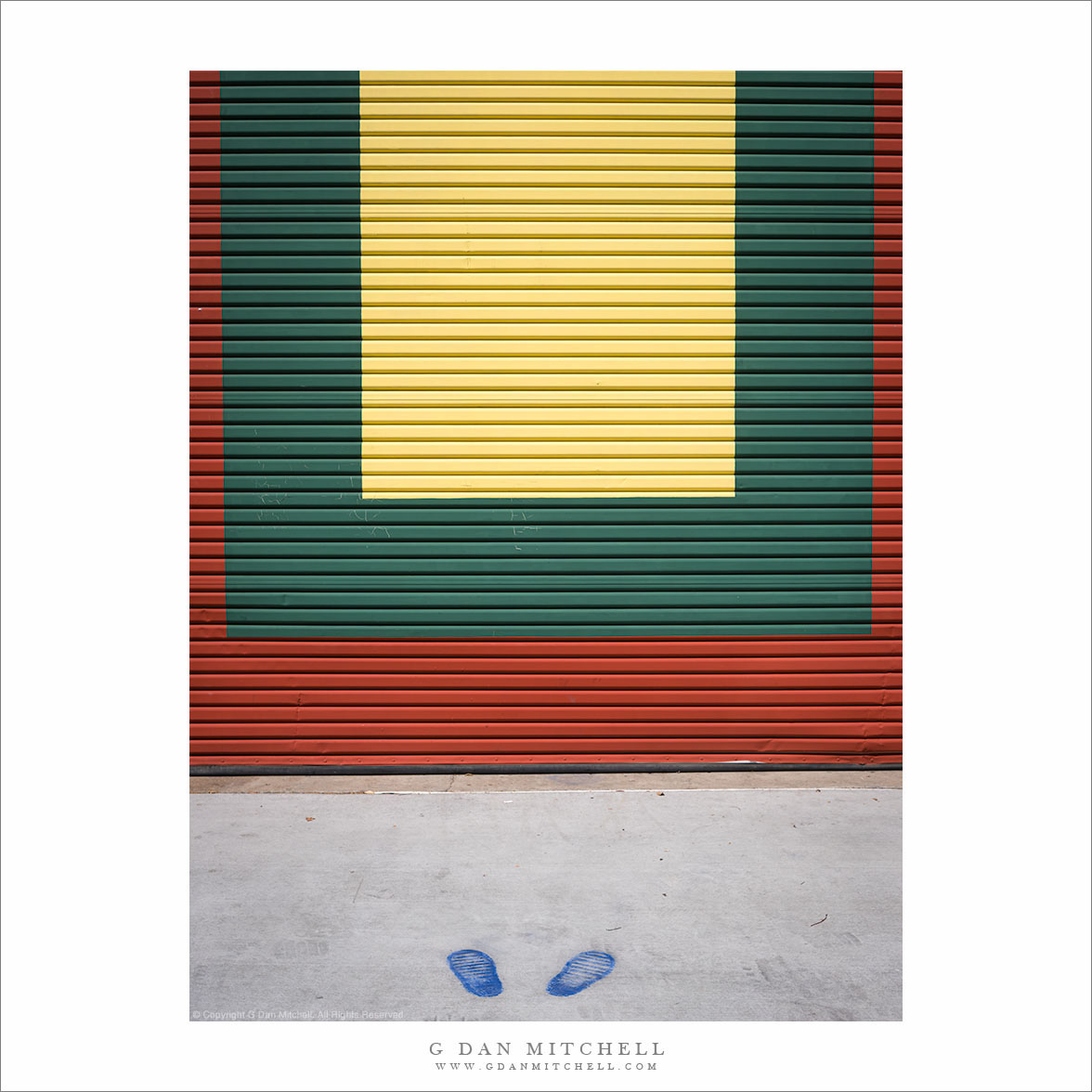
“Blue Feet” — Blue footprints in front of a colorful roll-up door.
I photographed this subject back in July on a long walk that took me to an area that is being redeveloped — or at least that is the story. The city (of San Jose) granted some extraordinary benefits to a very large corporation that promised to build a new campus in a somewhat blighted area. Hopes were high for renewal, but then the pandemic arrived, plans were delayed, and now no one knows when (or if) the plans will move forward. So, in the meantime, it seems that this corporation has decided to apply new paint to old buildings.
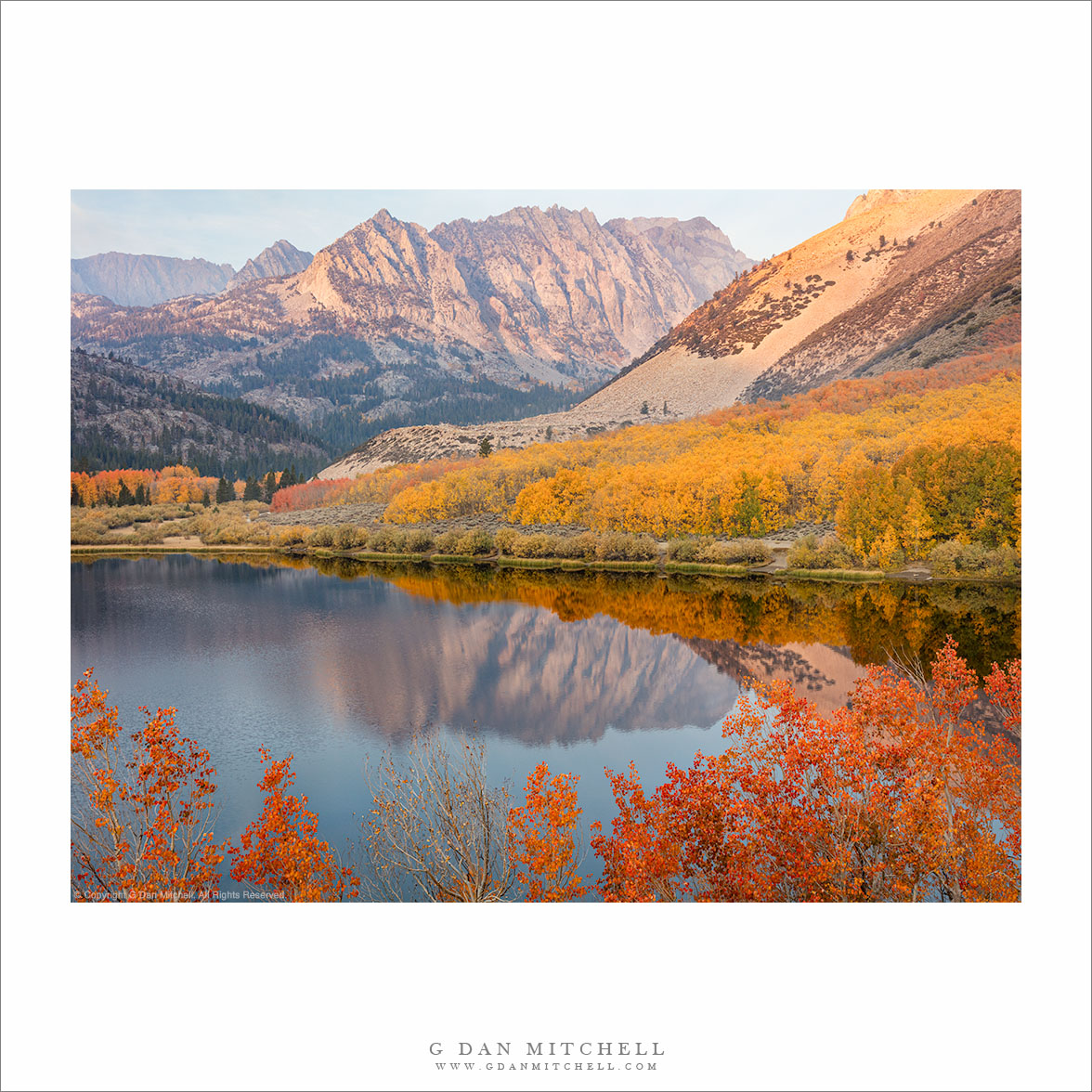
“Autumn Lake, Dawn, Eastern Sierra” — Dawn light comes to an Eastern Sierra Nevada lake surrounded by autumn aspen trees and reflecting distant peaks.
Every August there is a day when something changes in the light and the air, and I clearly sense that that summer is going to end soon and fall will arrive. I think that today may have been that day where I live.
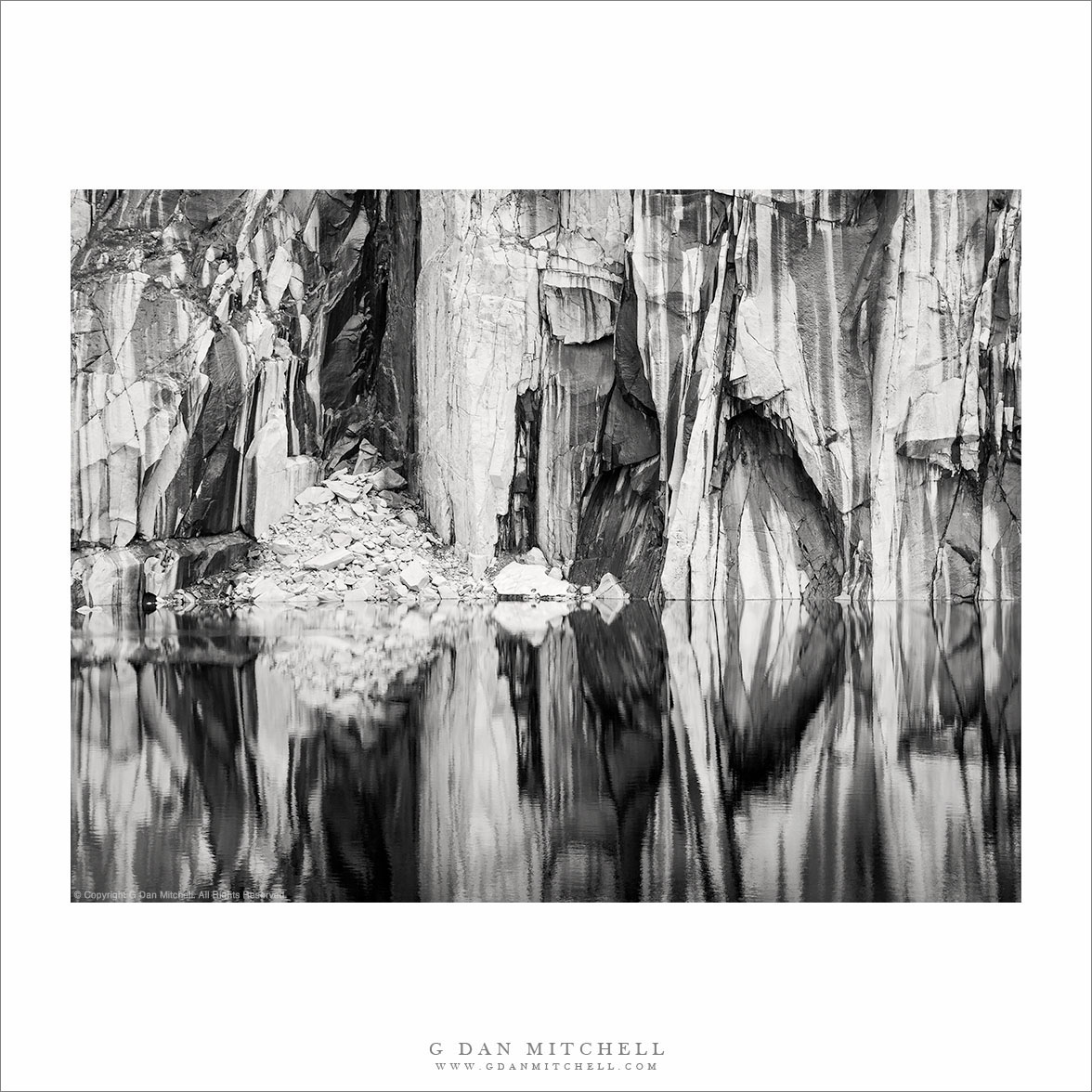
“Alpine Lake, Mirrored Reflection” — Cliff wall mirrored on the surface of a rockbound alpine lake in Sequoia National Park.
There’s a story and a lesson associated with this photograph. Explaining may take a bit more than the usual two paragraphs. (It takes five. I urge/invite you to click through and read the whole thing — and I’ll be interested in your comments.) I’ll start with the subject though. Years ago (I’ll reveal how many years below) I was on a trans-Sierra pack trip of over a week’s length with a group of backcountry friends. I had walked this route years before this trip, and there were a few places that I specifically wanted to photograph again, especially this lake. I stopped there long enough to make a few careful photographs, including one of my favorites. (That one also comes with a bit of a story and lesson.)
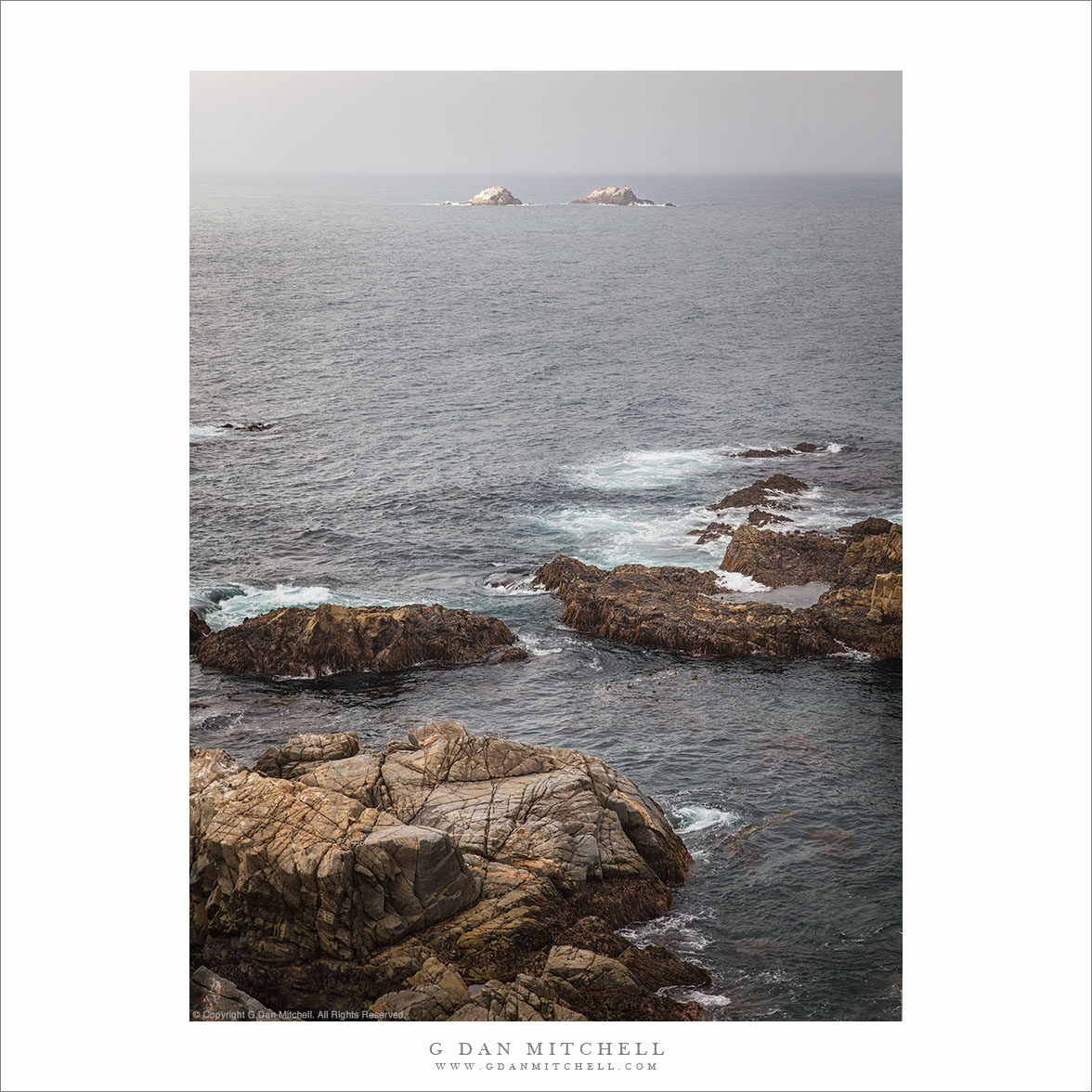
“Shoreline Rocks, Offshore Islands” — Two small islands in faint sunshine, shoreline rocks, Big Sur Coast.
It was a quiet moment at the Pacific Ocean shoreline on the upper Big Sur coast. It would not last, of course, as the area is overrun by visitors during the warmer months. I go very early in the morning to beat the crowds, and I had a couple of good hours before the Monterey and Carmel tourists finished breakfast and drove down the coast. (If you want to see the Big Sur coast in relative solitude, try a winter weekday morning.)
Photographer and visual opportunist. Daily photos since 2005, plus articles, reviews, news, and ideas.
Manage Consent
To provide the best experiences, we use technologies like cookies to store and/or access device information. Consenting to these technologies will allow us to process data such as browsing behavior or unique IDs on this site. Not consenting or withdrawing consent, may adversely affect certain features and functions.
Functional
Always active
The technical storage or access is strictly necessary for the legitimate purpose of enabling the use of a specific service explicitly requested by the subscriber or user, or for the sole purpose of carrying out the transmission of a communication over an electronic communications network.
Preferences
The technical storage or access is necessary for the legitimate purpose of storing preferences that are not requested by the subscriber or user.
Statistics
The technical storage or access that is used exclusively for statistical purposes.The technical storage or access that is used exclusively for anonymous statistical purposes. Without a subpoena, voluntary compliance on the part of your Internet Service Provider, or additional records from a third party, information stored or retrieved for this purpose alone cannot usually be used to identify you.
Marketing
The technical storage or access is required to create user profiles to send advertising, or to track the user on a website or across several websites for similar marketing purposes.