All posts by G Dan Mitchell

G Dan Mitchell, photographer and visual opportunist focusing on the Pacific coast, the Sierra Nevada, redwood forests, California oak/grasslands, California deserts, urban landscapes, night photography and more. Posting daily photographs since 2005, along with articles, reviews, news, and ideas.

The Last Leaves

The Last Leaves
A few sparse leaves in a high elevation grove of slender aspens in the Eastern Sierra Nevada.

The Last Leaves. © Copyright 2020 G Dan Mitchell – all rights reserved.

A few sparse leaves in a high elevation grove of slender aspens in the Eastern Sierra Nevada.

For some reason this little grove and I have a long-standing relationship. Quite a few years ago I noticed it while exploring a slightly less-visited spot in an Eastern Sierra canyon that can be quite popular. As I crossed a creek I happened to look up and notice a grove of small and very densely-spaced aspens, then as this year already mostly bare of leaves even as the surrounding trees were in full autumn color. The trees are a bit inaccessible, so I usually photograph them with a long lens, most often from almost the same angle, since obstructions interfere with almost any other. But I return every year.

I suspect that most of us who spend a lot of time in a particular place eventually end up developing a personal collection of odd little spots that we connect with, places that others might not even notice. In various locations around the Sierra there are a few flat rocks, a couple of boulders, a high flat spot along a popular trail, a turn-off from a trail, a bit of meadow, a creek crossing , a little clump of aspens and more that feel like old friends every time I come back to them.


G Dan Mitchell is a California photographer and visual opportunist. His book, “California’s Fall Color: A Photographer’s Guide to Autumn in the Sierra” is available from Heyday Books and Amazon.

Blog | About | Flickr | FacebookEmail

Links to Articles, Sales and Licensing, my Sierra Nevada Fall Color book, Contact Information.

Scroll down to leave a comment or question.


All media © Copyright G Dan Mitchell and others as indicated. Any use requires advance permission from G Dan Mitchell.
Fujifilm XPro Camera System

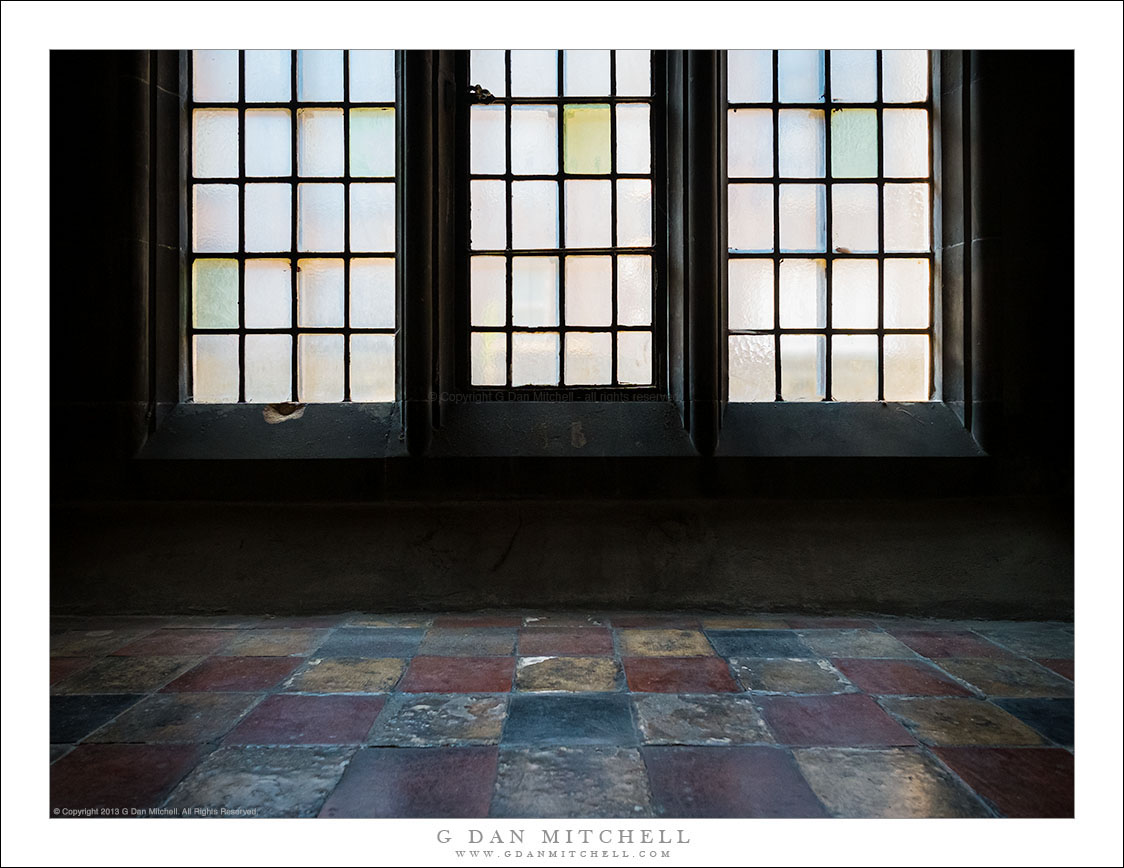
Fujifilm makes a variety of interesting APS-C (cropped sensor) cameras with different body designs, including from the DSLR-like XT series, the minimalist fixed-lens X100v and similar models, the tiny XE series, and the XPro designs. Unlike most companies making digital cameras, Fujifilm tends to put the same sensors in cameras of a particular vintage (which today means a 26MP APS-C “x-trans” sensor) and differentiate among the cameras in functional ways — size, types of viewfinders, physical controls, IBIS, price, etc.

After engaging in some discussions about some of these cameras recently, it occurred to me that despite doing about half of my photography with one of these Fujifilm cameras I haven’t written a lot about them here recently. So this post takes on some of the key features of the XPro line and some of my thoughts about the current state of this type of camera. (I mostly will not address general topics here, such as the cropped-sensor versus full-frame comparison, or the pluses/minuses of the Fujifilm x-trans filter array, etc.)

The XPro cameras

Fujifilm has now introduced three cameras in this series, the XPro-1, XPro-2, and XPro3. All of them share the rangefinder-style body design. They are not true rangefinder cameras since they use a non-rangefinder system for focusing, but the experience is fundamentally similar to using old-school interchangeable lens rangefinder cameras. This similarity isn’t just about looking or feeling like a rangefinder camera — it is also about including dedicated physical controls knobs (and buttons and switches) for a lot of camera settings such as shutter speed, aperture, ISO, exposure compensation, and more. While most modern cameras use a modal digital interface, where a single button or wheel may do many different things, on the XPro bodies you can, for example, go straight to a physical aperture ring to change the aperture. If you used those older cameras — or just happen to like them — these cameras are likely to appeal to you.

Continue reading Fujifilm XPro Camera System

Fern Vortex

Fern Vortex
A spiraling arrangement of fern fronds in Northern California redwood forest.

Fern Vortex. © Copyright 2019 G Dan Mitchell – all rights reserved.

A spiraling arrangement of fern fronds in Northern California redwood forest.

We did not get back to the Redwood National and State Parks this past year — the time we would have gone coincided with that period when we were all locking down in response to the pandemic. In retrospect, it was perhaps starting to look like camping might have worked, but things were still in too much of a state of flux at that point. So this photograph comes from the previous season, back in June of 2019.

Late in the day we decided to head to a spot where I knew from experience the tit might be possible to find rhododendron blossoms growing among the redwood trees, a place where the normally dark forest tends to pick up a bit more light from the west in the late afternoon. We wandered a trail and eventually descended into an area full of ferns. Here I turned my attention away from the huge trees and looked downwards to find compositions among the ferns.


G Dan Mitchell is a California photographer and visual opportunist. His book, “California’s Fall Color: A Photographer’s Guide to Autumn in the Sierra” is available from Heyday Books and Amazon.

Blog | About | Flickr | FacebookEmail

Links to Articles, Sales and Licensing, my Sierra Nevada Fall Color book, Contact Information.

Scroll down to leave a comment or question.


All media © Copyright G Dan Mitchell and others as indicated. Any use requires advance permission from G Dan Mitchell.

Aspen Slope

Aspen Slope
Autumn aspens descend from a ridge to the shore of an Eastern Sierra Nevada subalpine lake.

Aspen Slope. © Copyright 2020 G Dan Mitchell – all rights reserved.

Autumn aspens descend from a ridge to the shore of an Eastern Sierra Nevada subalpine lake.

This spot is probably familiar to you, especially if you use the version of the Mac OS that used a different photograph of the feature as its branding. This aspen forest or grove — which someone once aptly referred to as the “Cheetos Forest” — is an example of something you can find in many Sierra locations, namely aspen groves that follow a watercourse as it descends from the heights. The result can be the appearance that the grove itself seems to flow over the landscape.

This grove also provides a notable example of other transitions that may take place within a single aspen grove. The color variation from top to bottom here is striking, with red autumn leaves up high, a distinct orange band in the middle, and then yellow/gold trees as the trees fan out just above the lake. The size of the trees also evolves within the grove from very small “scrub aspens” higher up to larger (though still not gigantic) trees lower down.


G Dan Mitchell is a California photographer and visual opportunist. His book, “California’s Fall Color: A Photographer’s Guide to Autumn in the Sierra” is available from Heyday Books and Amazon.

Blog | About | Flickr | FacebookEmail

Links to Articles, Sales and Licensing, my Sierra Nevada Fall Color book, Contact Information.

Scroll down to leave a comment or question.


All media © Copyright G Dan Mitchell and others as indicated. Any use requires advance permission from G Dan Mitchell.