Tag Archives: range

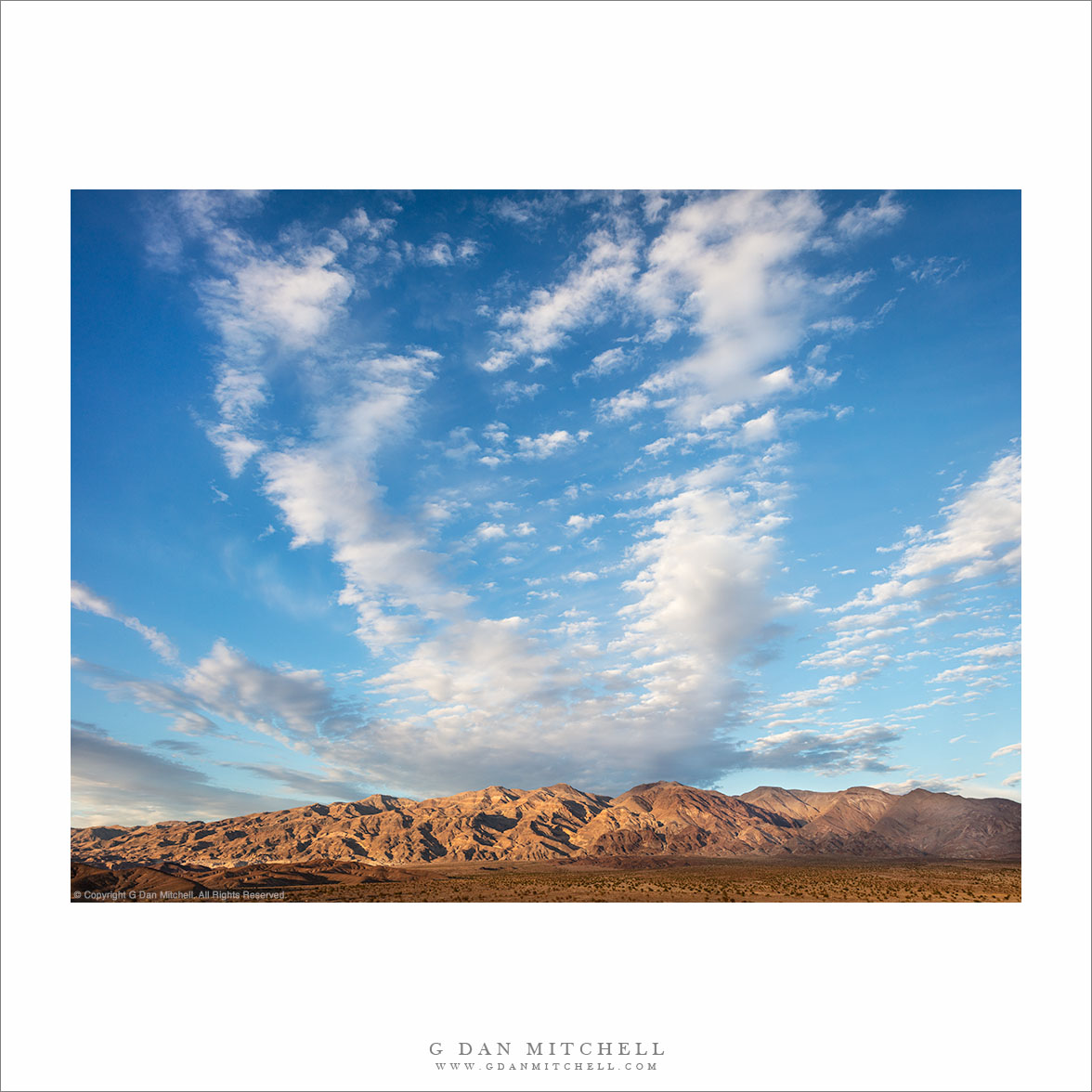
Desert Mountains and Sky

Desert Mountains and Sky, Death Valley
“Desert Mountains and Sky” — Evening clouds form above desert mountains, Death Valley National Park.

First day photographic subjects in Death Valley are often a bit tricky for me. It takes me about eight hours to drive from the San Francisco Bay Area, and when I arrive I have to find a campsite and set up my tent and other gear. By the time I finish it is typically getting close to the time when normal people would be eating dinner. Tempting, no? But I shift into “photographer mode,” and head out to find something to photograph — I’ll eat after dark when I return to camp.

While I do photograph on the first evening of these trips, I don’t generally travel that far to do it. This first evening was kind of lazy. I drove fifteen minutes to an area I know, and there I walked to the top of a nearby hill to check out the view, including these clouds. The sky is a fascinating subject in Death Valley. While big dramatic rain storms are rare (but not impossible) sometimes atmospheric conditions are affected by weather fronts that fall apart over the desert, leaving broken, dissipating clouds like these — and they can be quite dramatic.


G Dan Mitchell is a California photographer and visual opportunist. His book, “California’s Fall Color: A Photographer’s Guide to Autumn in the Sierra” (Heyday Books) is available directly from him.

G Dan Mitchell: Blog | Bluesky | Mastodon | Substack Notes | Flickr | Email


All media © Copyright G Dan Mitchell and others as indicated. Any use requires advance permission from G Dan Mitchell.
Canyon Narrows, Amargosa Range

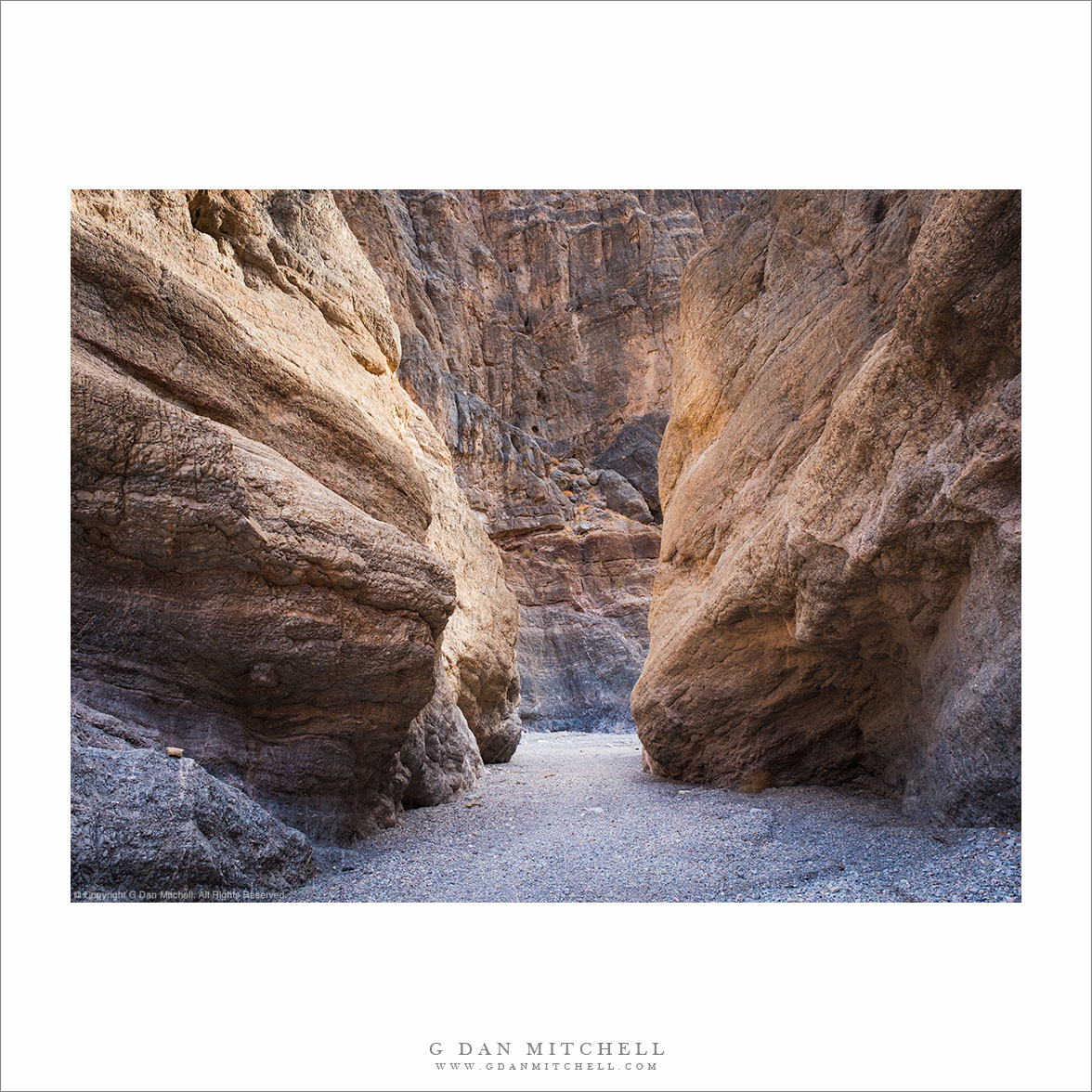
Canyon Narrows, Arargosa Range, Death Valley National Park.
“Canyon Narrows, Amargosa Range” — A section of narrows in a Death Valley canyon.

You are going to see a fair number of Death Valley canyon photographs here over the next few weeks as I share images from my late February visit to the park. With a few exceptions, the most interesting canyons in the park — and there are many of them! — are less accessible than some of the other famous features. You might have to drive on dirt roads, hike up huge fans and washes, or walk through long sections of less-remarkable valleys to get to the “good stuff.” But the best of them are well worth the effort.

The canyon experience contrasts with the vast distances, intense heat and dryness, and harsh sunlight which we think of as typical in Death Valley. Canyons can be cool and shady and their narrow confines often restrict your views to a few meters. The light is often soft and filtered as it bounces down from high above. As they cut though ridges and mountains he canyons reveal ancient strata. Perhaps best of all, they are often quiet and lonely places where time seems to stop.


G Dan Mitchell is a California photographer and visual opportunist. His book, “California’s Fall Color: A Photographer’s Guide to Autumn in the Sierra” (Heyday Books) is available directly from him.

G Dan Mitchell: Blog | Bluesky | Mastodon | Substack Notes | Flickr | Email


All media © Copyright G Dan Mitchell and others as indicated. Any use requires advance permission from G Dan Mitchell.narrows, slot, constrict, stone, rock, cliff, wall, gravel, wash, erosion, amargosa, range, fall, canyon, shade, dark, geology, landscape, hike, nature, travel, california, desert, usa, north, america

Afternoon Light, Lake Manly

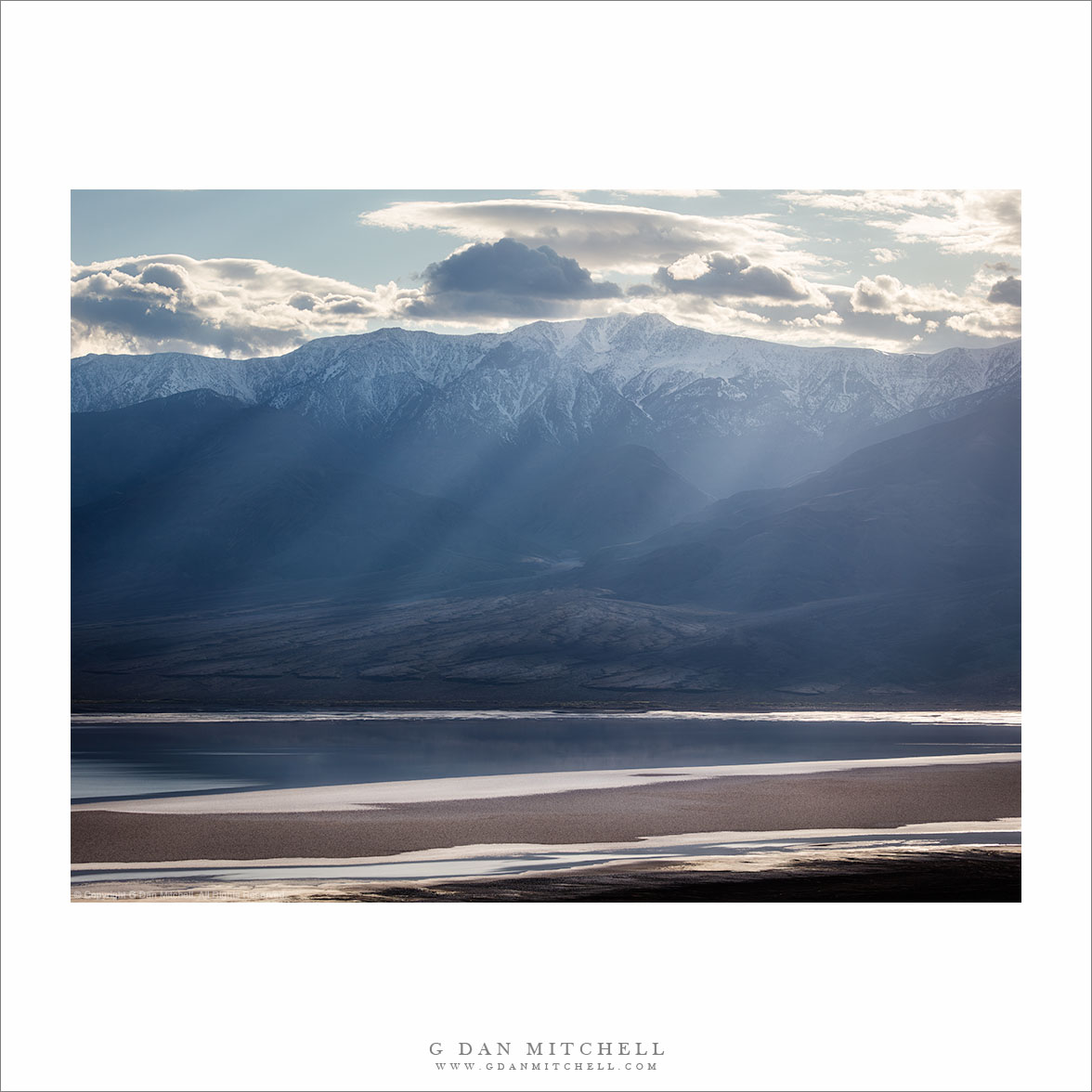
Afternoon Light, Lake Manly
“Afternoon Light, Lake Manly” — Light beams above the snow-capped Panamint Mountains and Lake Manly.

These beams of light — sometimes known among photographers as “God light” — are a common afternoon feature in Death Valley. The valley runs roughly north-south, and there are tall mountain ranges on either side, with summits rising up to 11,000’+ at Telescope Peak on the west side. Consequently, direct sunrise and sunset are blocked from much of the valley floor, However, some time after sunrise and before sunset the light passes though canyons and gaps in the mountains, and this is the effect when it illuminates atmospheric haze.

If you visit Death Valley, it s good to keep this geography lesson in mind, since it can affect your experience and photography potential. If you want to photograph sunrise/sunset, you can see sunlit peaks on west side mountains in the morning and the east side mountains late in the day. If you want light down in the valley, you’ll have to find it a bit after sunrise and well before chronological sunset. What to do in the middle of the day when the sun is harsh? I like to head for canyons, the deeper and narrower the better!


G Dan Mitchell is a California photographer and visual opportunist. His book, “California’s Fall Color: A Photographer’s Guide to Autumn in the Sierra” is available from Heyday Books, Amazon, and directly from G Dan Mitchell.

Blog | About | Instagram | Flickr | Facebook | Threads | PostEmail

Links: Articles, Sales and Licensing, my Sierra Nevada Fall Color book, Contact Info.

Scroll down to share comments or questions. (Click post title first if viewing on the home page.)


All media © Copyright G Dan Mitchell and others as indicated. Any use requires advance permission from G Dan Mitchell.
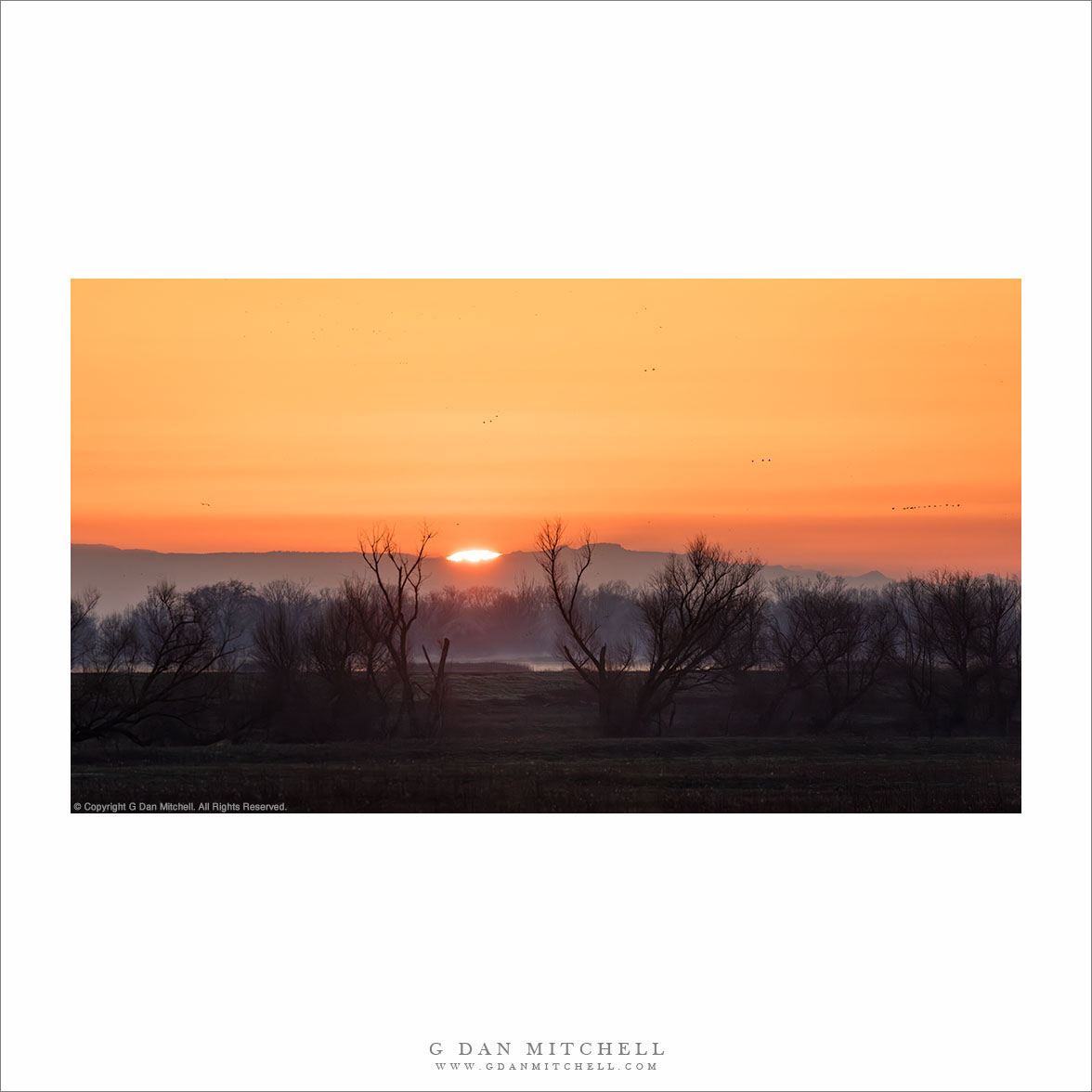
Winter Sunrise, Central Valley

Winter Sunrise, Central Valley
“Winter Sunrise, Central Valley” — Winter sun rises beyond the Sierra Nevada as thin fog drifts among trees.

This photograph is one of the final remaining photographs from this past winter in California’s Central Valley. (Who am I kidding? There are probably more that I’ll uncover when I eventually revisit the archive.) I made it on my final visit of the season to photograph migratory birds. This photograph is the result of an unfortunate situation that ultimately turned out OK. I arrived before dawn to find that the gate was locked. As I listened to thousands of birds begin their fly-out beyond that gate, I decided that it made more sense to head off to find other opportunities, and I found this sunrise view a few miles away.

These Central Valley locations fascinate me for a variety of reasons — the migratory birds, the fog, the long views of the Sierra Nevada (as in this photo), the open vistas. Years ago I would never have imagined that such agricultural areas could provide so many photographic opportunities, but then I “discovered” the winter birds. I was hooked, and I’ve gone back every year since then.


G Dan Mitchell is a California photographer and visual opportunist. His book, “California’s Fall Color: A Photographer’s Guide to Autumn in the Sierra” is available from Heyday Books, Amazon, and directly from G Dan Mitchell.

Blog | About | Instagram | Flickr | Facebook | Threads | PostEmail

Links: Articles, Sales and Licensing, my Sierra Nevada Fall Color book, Contact Info.

Scroll down to share comments or questions. (Click post title first if viewing on the home page.)


All media © Copyright G Dan Mitchell and others as indicated. Any use requires advance permission from G Dan Mitchell.