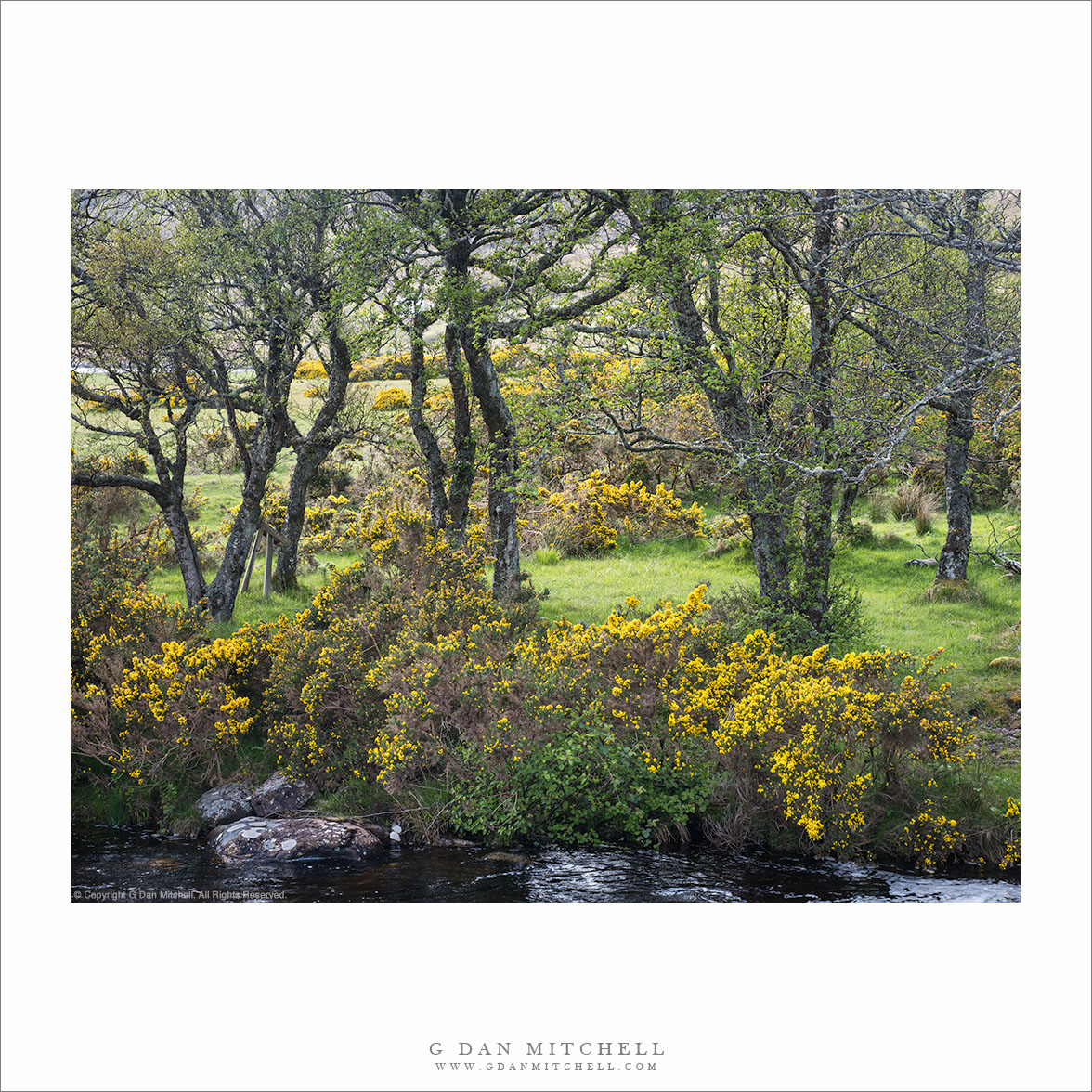
“Trees, Stream Bank” — Trees and spring grass along side a creek, Applecross Bay, Scotland.
Perhaps I have already mentioned that we experienced a lot of “gray” weather during our May visit to northwest Scotland? In fact, the locals told us that it was colder, wetter, and grayer than usual for this time of the year. We even saw new snow on some highlands peaks, and we had at least some precipitation just about every single day. That weather, along with early May time frame meant that we did not see a whole lot of lovely green landscape. But there were a few exceptions, including this spot at Applecross Bay.
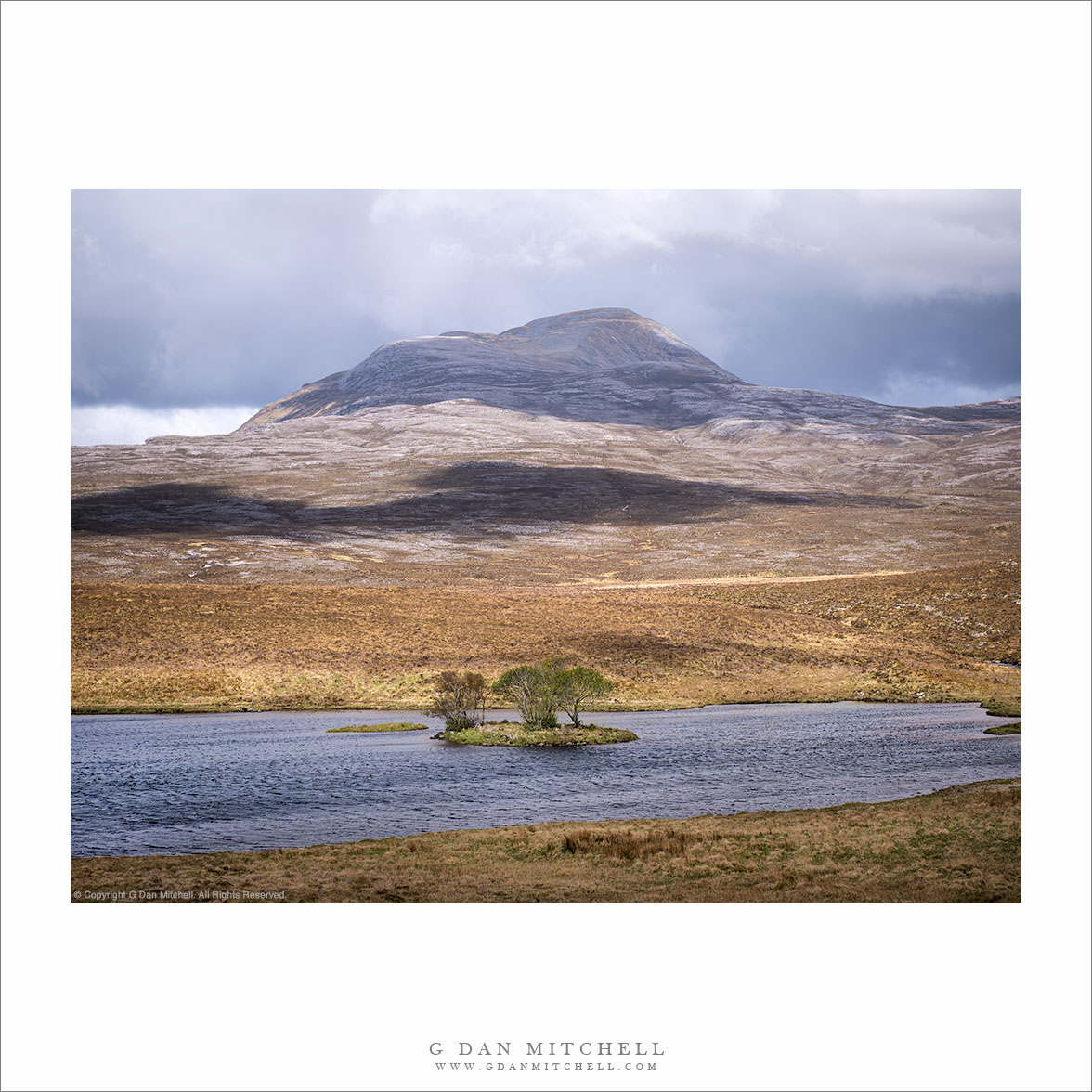
“Canisp and Loch Ewe — Canisp peak rises above Loch Ewe with a tree-covered island.
Some travelers like to know everything about their destinations before they depart. I can understand — one reason we travel is to learn about new places and, more practically, knowledge can help you travel efficiently. But I’m partial to not knowing everything in advance, instead leaving plenty of room for discovery. (Of course, it helps — a lot — that my wife is a planner!) The details of this photograph may be a case in point. (There has been an update to this post. Click the “more” link below to see… more.)
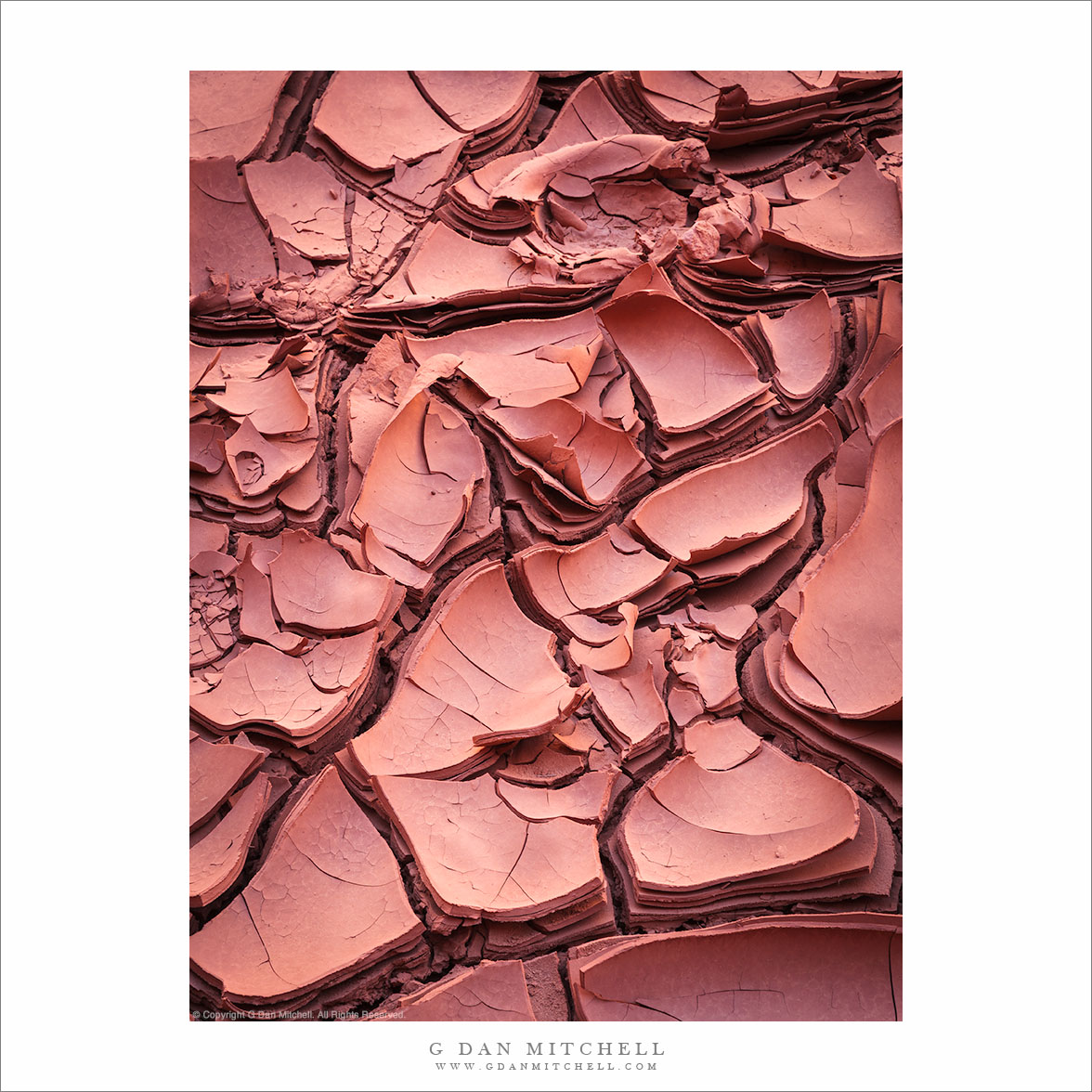
“Mud Patterns” — Colorful patterns formed in dry and cracked mud, Capitol Reef.
Recently I went through my archives to see just how many photographs of dried mud I have made over the years. It is a lot! There are perhaps a few dozen finished photographs of this subject that I have shared publicly. But there are scores of them sitting in my unprocessed raw file archives. This one, in fact, is one that I “discovered” during this search, and I’m now sharing it for the first time.
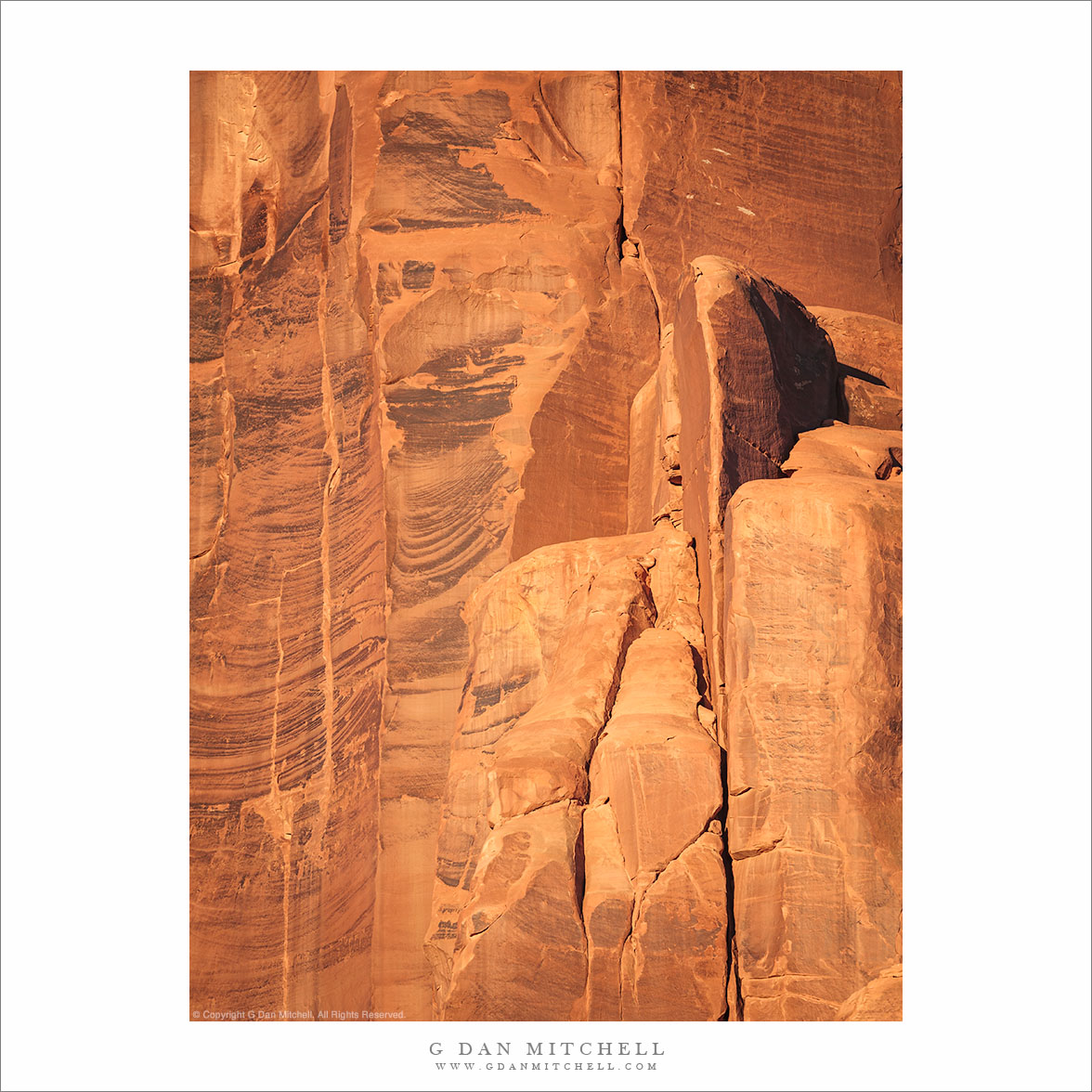
“Cliff Face in Morning Light” — Warm early-morning sunlight intensifies colors and textures of a sandstone cliff, Arches National Park.
We had finished dawn photography of nearby formations on this October morning at Arches National Park. As I was working that subject I kept noticing this remarkable bit of cliff, also in the direct morning sunlight. The larger formation of which it is a part did not offer me any obvious photographic subject, so I switched to a long lens and zeroed in on the colors and textures of this small portion of the scene.
Photographer and visual opportunist. Daily photos since 2005, plus articles, reviews, news, and ideas.
Manage Consent
To provide the best experiences, we use technologies like cookies to store and/or access device information. Consenting to these technologies will allow us to process data such as browsing behavior or unique IDs on this site. Not consenting or withdrawing consent, may adversely affect certain features and functions.
Functional
Always active
The technical storage or access is strictly necessary for the legitimate purpose of enabling the use of a specific service explicitly requested by the subscriber or user, or for the sole purpose of carrying out the transmission of a communication over an electronic communications network.
Preferences
The technical storage or access is necessary for the legitimate purpose of storing preferences that are not requested by the subscriber or user.
Statistics
The technical storage or access that is used exclusively for statistical purposes.The technical storage or access that is used exclusively for anonymous statistical purposes. Without a subpoena, voluntary compliance on the part of your Internet Service Provider, or additional records from a third party, information stored or retrieved for this purpose alone cannot usually be used to identify you.
Marketing
The technical storage or access is required to create user profiles to send advertising, or to track the user on a website or across several websites for similar marketing purposes.