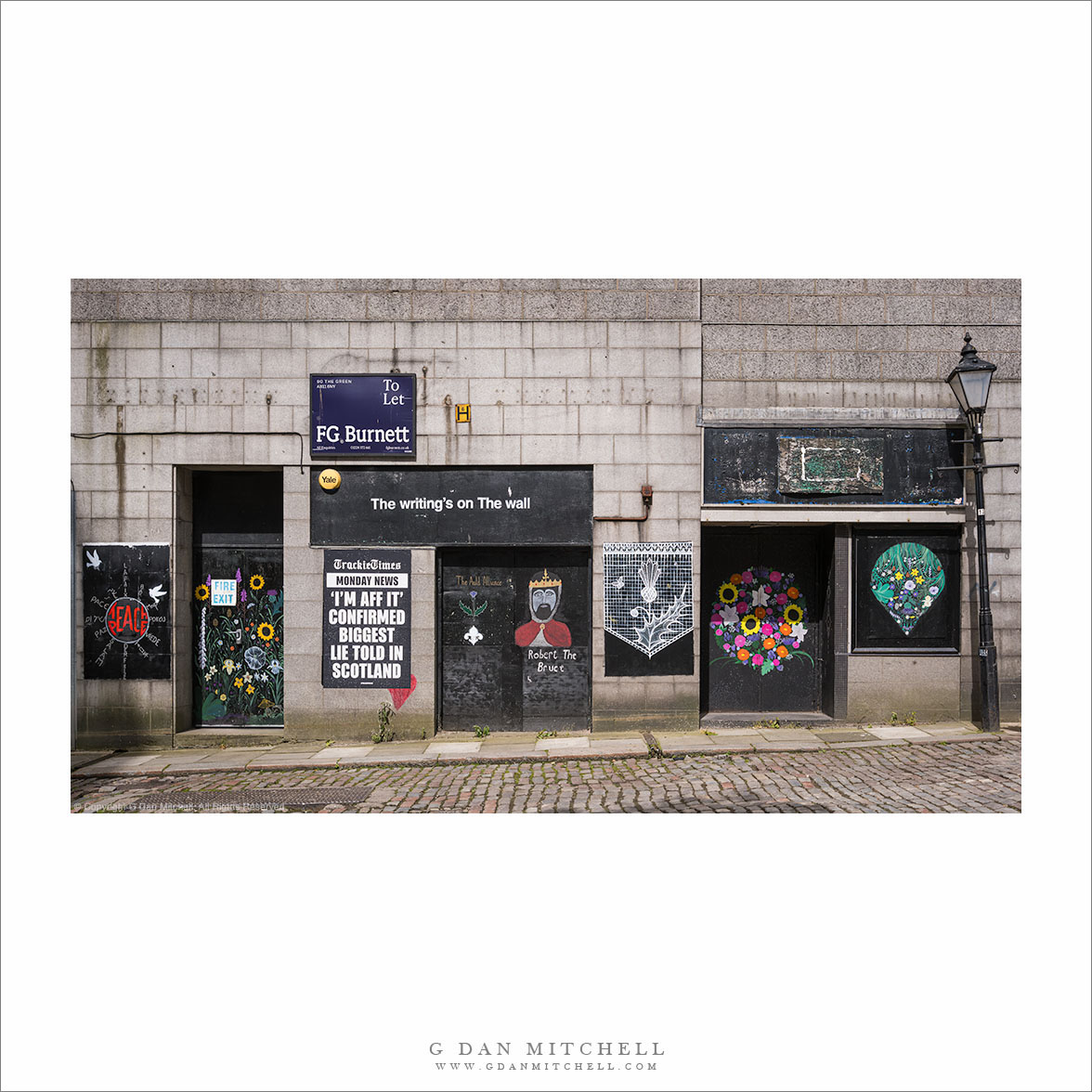
“The writing’s on the wall” — An Aberdeen wall covered in street art and other things.
This is another photograph from our day in Aberdeen, Scotland. We basically spent the majority of the day walking — going down toward the dock area from our lodgings and then wandering. In an old section of central Aberdeen we found ourselves in an area with a lot of street art — posters, paintings, graffiti, and more. One surprise was that it all seemed oddly organized and neat. View this photo large, and try to make sense of the collection of bits and pieces.
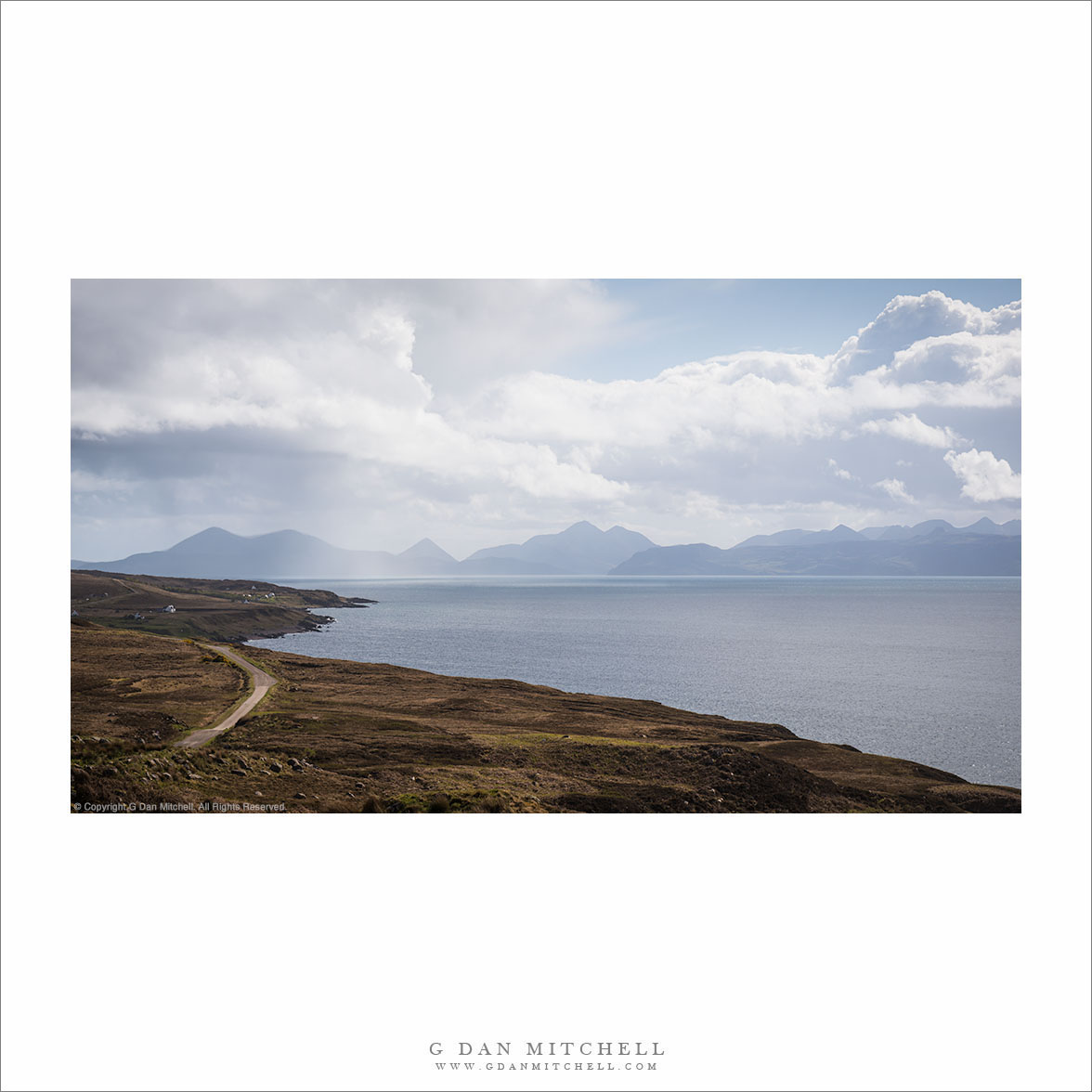
“Skye, Rain Over the Inner Sound” — Rain falls on the Inner Sound, with Isle of Skye.
It was a magical day on the far west cost of Scotland just above the Isle of Skye. We were on a long drive from Ullapool, and had just turned south along the shoreline towards the village of Applecross, which was going to be the far point of the day’s adventure. In a bit of a change from earlier weather, the sun was trying to make an appearance — and mostly succeeding, though there was an offshore rain shower between us and Skye.
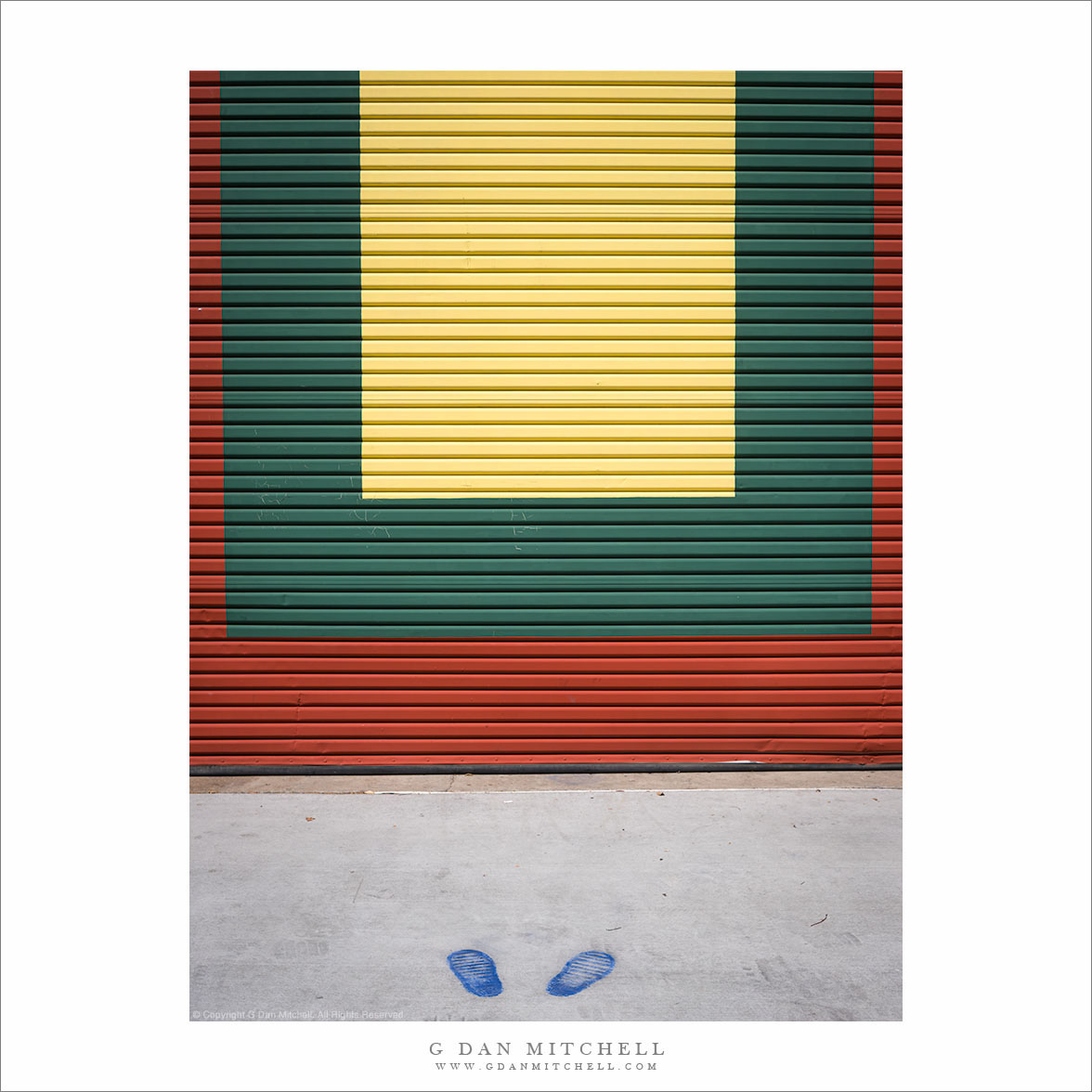
“Blue Feet” — Blue footprints in front of a colorful roll-up door.
I photographed this subject back in July on a long walk that took me to an area that is being redeveloped — or at least that is the story. The city (of San Jose) granted some extraordinary benefits to a very large corporation that promised to build a new campus in a somewhat blighted area. Hopes were high for renewal, but then the pandemic arrived, plans were delayed, and now no one knows when (or if) the plans will move forward. So, in the meantime, it seems that this corporation has decided to apply new paint to old buildings.
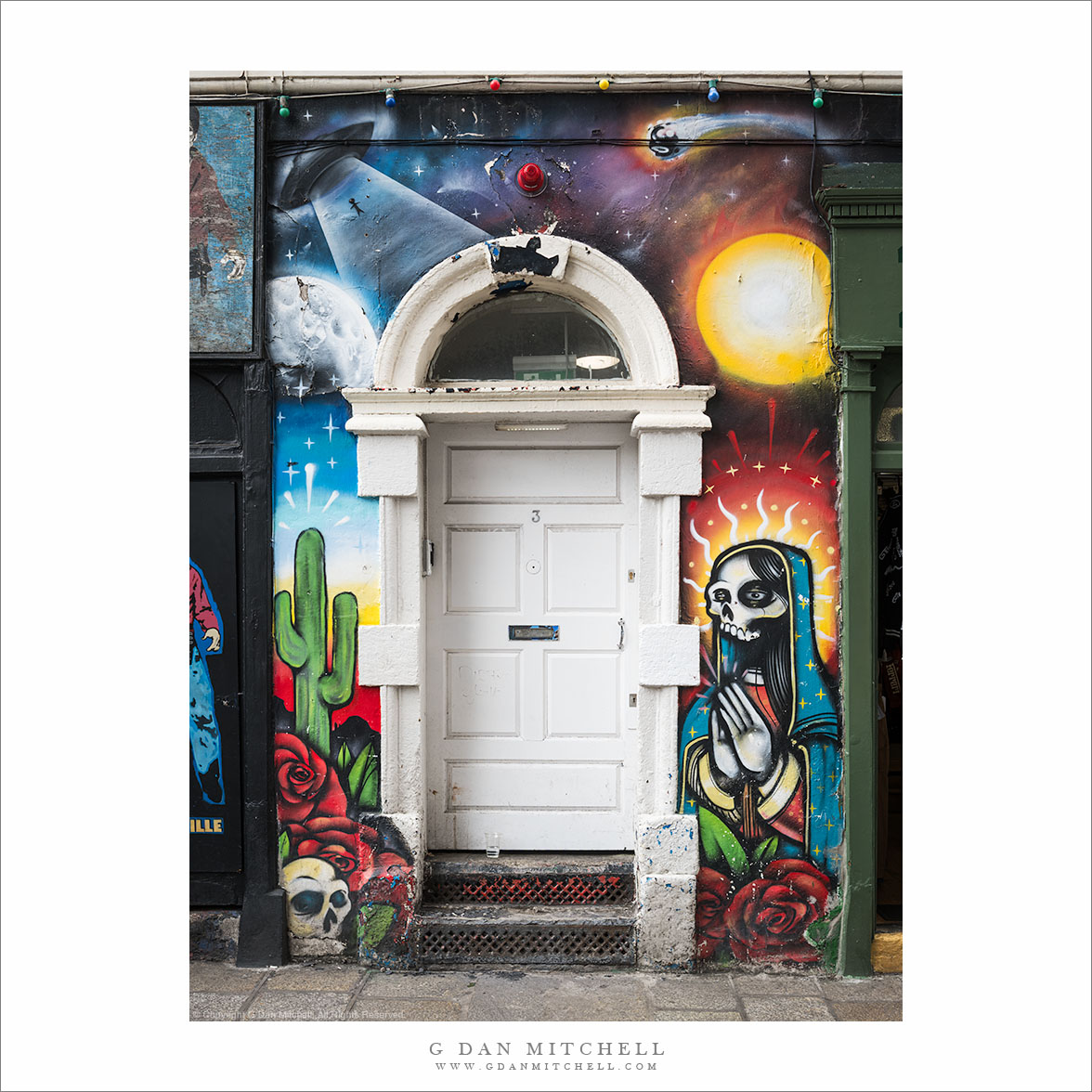
“White Door, Dublin” — A white door surrounded by colorful street art, Dublin.
I photographed this doorway on a block in Dublin’s Temple Bar District that features several little shops — eateries, a used clothing store, and so forth. Temple Bar is a busy place and not visually subtle. So I imagine that the bar is pretty high when it comes to attracting the eyeballs of passers-by. As a result, there is eye-catching exterior paint, large and colorful signs, and more.
Photographer and visual opportunist. Daily photos since 2005, plus articles, reviews, news, and ideas.
Manage Consent
To provide the best experiences, we use technologies like cookies to store and/or access device information. Consenting to these technologies will allow us to process data such as browsing behavior or unique IDs on this site. Not consenting or withdrawing consent, may adversely affect certain features and functions.
Functional
Always active
The technical storage or access is strictly necessary for the legitimate purpose of enabling the use of a specific service explicitly requested by the subscriber or user, or for the sole purpose of carrying out the transmission of a communication over an electronic communications network.
Preferences
The technical storage or access is necessary for the legitimate purpose of storing preferences that are not requested by the subscriber or user.
Statistics
The technical storage or access that is used exclusively for statistical purposes.The technical storage or access that is used exclusively for anonymous statistical purposes. Without a subpoena, voluntary compliance on the part of your Internet Service Provider, or additional records from a third party, information stored or retrieved for this purpose alone cannot usually be used to identify you.
Marketing
The technical storage or access is required to create user profiles to send advertising, or to track the user on a website or across several websites for similar marketing purposes.